Malnutrition: A Hidden Epidemic in Older Adults

Over the years, many older adults have let me into their homes because they have been referred to one of the health programs I work for. Part of my job as a geriatric clinician requires me to assess the person and to ask them information about their private lives, including their appetite. I then ask for their height and weight and if they have gained or lost any weight over the last few months. I am even required to ask if it is okay to open their fridges to see what kind of food they consume (I also check expiry dates to be sure no one is neglecting to dispose of rotten food).

Sometimes I come across older adults who have lost a lot of weight. Most of them live on their own. Many of these people have other conditions such as memory loss, decreased mobility, and serious medical problems such as diabetes or heart disease.

Some of the most remarkable weight loss situations in my experience has been found in people with Alzheimer’s or a related dementia. Someone with dementia may forget to eat, forget how to prepare a meal, or have a decreased appetite. They may simply forget how to get food (arrange transportation, grocery shop, order groceries) or have an inability to problem solve their situation.

Proper nutrition and hydration are very important to help keep a person’s body (and mind) strong and running optimally. Here’s a great video from Alliance for Aging Research that explains the hidden epidemic of malnutrition in older people.

If the video doesn’t work for you, try this YouTube link: https://youtu.be/iPNZKyXqN1U

Check out the YouTube channel for Alliance for Aging Research for more great videos like this.


Angela G. Gentile, MSW, RSW

www.AngelaGGentile.com


You’re Getting Old!

1

Time is ticking…

Useless trivia time! I came across this website that has some mildly interesting and unique facts that are based on a birth date. It’s called “You’re Getting Old!” You can enter your own birth date or that of someone else and come up with a whole bunch of useless information. Ha!

You can find out how many days old you are, or how many candles you’ve “lit” in your lifetime. You can find out when you will hit special milestones. For example, do you know what day you turn 20,000 days old? I do. And if I live to be 40,000 days old I’ll be almost 110. That will be on the 24th of September, in 2075!

There is so much I have learned, including:

  • The number of people on earth has more than doubled since I was born.
  • I have taken over 404 million breaths. (The number rolls over every breath I take, just like the odometer on the car.)

You can find out what special events occurred in history during your lifetime and how old you were. How old were you when the World Wide Web was announced to the public by Tim Berners-Lee? Were you even alive yet?

Check out this fun website for some useless trivia because, You’re Getting Old!

http://you.regettingold.com/


Angela G. Gentile, MSW, RSW


An Empowering Read for Women, Business Owners and Marketers

grey-new-greem-1

GeroFuturist Karen Sands’ book, “Gray is the New Green: Rock Your Revenues in the Longevity Economy” (2016) is THE book you need to read if you are a middle-aged career women, business owner or marketer and are looking for lucrative opportunities. This small but mighty book covers topics such as ageism in society, business trends, marketing, careers and entrepreneurial opportunities in the field of aging, unretirement, reinvention, and visionaries. Sands intersperses loads of great data and statistics and references other thought leaders throughout the book, providing convincing evidence and support to her thoughts and ideas on “gray is the new green.” She encourages a narrative “re-storying” approach to positively changing the way we think about aging, careers and business.

She uses some familiar and unfamiliar terms such as:

– Longevity Economy
– Ageless Women
– Ageless Technology
– Conscious Aging
– Positive Aging
– Educational Gerontologist
– Age-Friendly Workplace
– Boomerpreneurs
– Solopreneurs
– Grannypreneurs

Hopefully these terms will be defined in Sands’ online glossary (not available at time of printing).

The book is sectioned into three chapters. The last chapter repeats most of what was in the first two. There were many topics that stood out for me as a 50-year-old woman. Sands talks about “The Change” (menopause) and embracing our “Inner Crone.” She empowers the reader when she tells us we can “radically reframe the stories we tell ourselves about aging.” It jolted me a bit when she proclaims 50 is universally “Over the Hill” according to Human Resource (HR) directors.

Sands challenges marketers to get beyond the rampant “malevolent ageism” in corporate marketing. She gives a few examples of how advertisers are inadvertently turning off women aged 50 and up who are the “highest increasing-spenders” in the fashion and beauty industries by creating offensive ads that portray older women in a negative way.

For businesses to succeed in this “Gray Tsunami” era, Sands recommends that diversity, gender equality and work-life balance initiatives must be welcomed and incorporated. She warns businesses that don’t adopt and welcome these changes will be left behind.

For those interested in working with or for the aging population, she states the “field of aging is evolving at warp speed.” She gives a listing of up-and-coming careers and opportunities in the aging field such as “cutting-edge age-friendly technology and devices, home design…and adult education.”

karen-vhw

Karen Sands, GeroFuturist

Sands sheds some light on the notion of retirement and how our extended middle-age is changing the way we view working in our later years. She says, “Aging does not mean retiring.” She discusses how people are reinventing themselves, or they are “unretiring.” Others are choosing not to retire. She predicts employees and leaders alike will be working until they die.

For those Boomer Women who want to reinvent themselves by starting up a new business, she provides lots of great advice and questions to think about in Chapter 2. She offers a great tip for a business idea, which is to offer a product or service that can help people save time. She tells women to “awaken their visionary voice” and states “it is never too late to be a visionary.” In Chapter 3 she states although some women may not be ready for this change yet, she encourages them to do the “prep work” now so that they can “leap with confidence” when they are ready.

Although there is not much new in Chapter 3, I love the advice she gives regarding aging. Sands writes, “Marketing, and society as a whole, need to understand that we no longer wish to be told that aging is something we need to be against. Agelessness is about embracing and enhancing who we are, not blindly following an outdated standard of who we should be.”

“Gray is the New Green” is an empowering book for women. It is a goldmine for those in business. It is a lifesaver for marketers and organizations.

The book is available at Amazon.com in paperback and Kindle versions.

Note: I was given a copy of this book in exchange for an honest review.

Angela G. Gentile, MSW, RSW
http://www.AngelaGGentile.com

Caring for a Loved One with Dementia? You Are Not Alone

newcover cropped

Our society is greying. For the first time in Canada, we now have more older people (65+) than younger people (under 16). Although there are many benefits and advantages to getting older, the unfortunate facts are that as we age we become more susceptible to age-related diseases.

Alzheimer’s disease and other related dementias (also known as neurocognitive disorders) affect one in 11 Canadians aged 65 or older. For those 80 years of age and over, one in three have some form of dementia. Dementia is a syndrome that is usually of a chronic and progressive nature.The symptoms of dementia may include a loss or impairment of brain functions such as:

  • problems with short-term memory
  • confusion or impaired thinking 
  • disorientation to place or time
  • poor comprehension
  • trouble with calculation
  • decreased or loss of learning capacity
  • problems with language
  • poor reasoning
  • decreased judgement

Dementia can cause problems in everyday functioning and activities. People with dementia may not be able to drive safely, or they may get lost while driving to a doctor’s appointment. It may be more difficult for them to remember to take medications on a regular basis. They may get into more arguments with others.

Dementia can sneak up gradually (as in Alzheimer’s disease) or it can come on suddenly (as in a stroke that affects cognition). It can fluctuate day-to- day. Loved ones often have difficulty spotting the signs, and often mistakenly attribute the changes to aging, or a “stubborn” personality. Personality changes in the person with dementia can cause stress for loved ones.

At times it is difficult for family members to recognize the signs of dementia and to act upon them. Sometimes they are in denial, sometimes they hope the situation will improve. Others may not know what to do or who to talk to.

If a person with dementia requires more help, the main helper becomes the “caregiver.” Often a spouse or adult child (usually a daughter) takes over the primary role. The process of changing or incorporating this new caregiving role into the relationship can cause a variety of challenges. Although the person with dementia may not be aware (or be unable to recognize) he/she requires help, the caregiver can learn how to provide the assistance needed with practice, education and support.

In the early stage of Alzheimer’s disease or vascular dementia, the affected person may be aware of his/her memory problems. He/she may notice changes in frustration levels. He/she may be more open to the idea of accepting help. He/she may look to family members for help answering questions or “filling in the blanks.”

Caregiving for a loved one with dementia can be stressful due to increased demands, roles and responsibilities. A caregiver may worry about Dad’s safety with cooking or worry that Mom may wander off. There is also the issue of grieving. A wife may grieve the “loss” of the husband who no longer remembers who she is. A husband may grieve the loss of the future travel plans he had for himself and his wife.

With education, support, self-compassion and self-care practices, the caregiver can have a positive experience of caring for a loved one amidst all of the strain. Seeking out support and knowledge and knowing he/she is not alone are some of the most beneficial things a caregiver can do.

If you have concerns and think someone you know and care about has memory problems and/or dementia, encourage a thorough medical assessment for diagnosis, support and treatment options.


purple-swirl-separator-hi

Angela G. Gentile, M.S.W., R.S.W. is a clinical social worker and author of the book, “Caring for a Husband with Dementia: The Ultimate Survival Guide” and the “Dementia Caregiver Solutions” app for iPhone and iPad. She lives in Winnipeg, Manitoba with her husband and two adult children. For more information, visit: www.AngelaGGentile.com

Purple Was the Colour to Wear!


IMG_4498

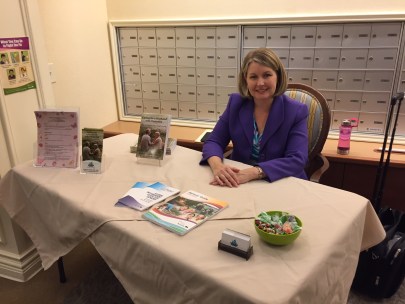
I am so glad I wore my purple suit to the Forget-Me-Not Fair at River Ridge Retirement Residence! When I arrived, there was purple everywhere! It was a very enjoyable event and was a successful fundraiser for the Alzheimer Society of Manitoba. My table was set up at River Ridge Retirement Residence near the “Post Office” and I had many people come by to ask questions about my book, other products and services.

There were about 7-8 other vendors onsite as well. I added their information to my website, “The Grey Pages – Winnipeg.” The other vendors I saw there were Wright 1 Care Inc., Friendly Caregiver Seniors Care, S.M.I.L.E. Fitness, Silvert’s Adaptive Clothing and Footwear, and Comfort Keepers. There were a couple of others I didn’t get around to connecting with.

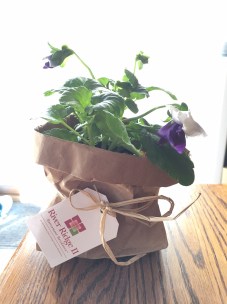
The fundraiser included selling a potted pansy which got the purchaser’s name into a raffle.IMG_4538

When it came to my turn, I spoke to about 60 people. It was a full house. Some even watched from the upper balcony! My topic was Dementia Caregiving and I used a power point presentation format. I referred to my book, “Caring for a Husband with Dementia: The Ultimate Survival Guide.” and educated the audience on dementia, caregiving, signs and symptoms of dementia, and what you can do. I also referred to my mobile app for iPhone and iPad called, “Dementia Caregiver Solutions” as well as my other services such as counselling and consulting. The audience was very attentive and some questions were asked about Lewy Body dementia and Frontotemporal dementia. A few were concerned about their own memory problems. Some current and former caregivers were there as well.

After I went back to my table, I answered many questions about memory concerns, family issues and how to get a diagnosis. My candies were a hit and all the jellies went very quickly (note to self-bring more jellies next time!).  I sold four copies of my book after the presentation.
IMG_4536 (1)

The other speaker was Elizabeth Murray, another Winnipeg author, who wrote a book called, “Holding on to Mamie. My Mother, Dementia and Me.” We swapped books. I am looking forward to reading her book as well.

I am very grateful to Leslie Fiorino, Director of Health and Wellness for inviting me to speak at the River Ridge Forget-Me-Not Fair. I am also grateful for all the new connections I have made. I look forward to more speaking engagements and providing education and support on all things related to aging and growing older.

Thanks for reading!

For more information on me, my products and services, please go to www.AngelaGGentile.com.

Have a great day!

Angela G. Gentile, MSW, RSW


Forget-Me-Not Fair

ID-100147753

Photo credit: iamnee

Invitation here: Forget-me-Not Fair invitation

Interested in learning more about Alzheimer’s and dementia? Come to the “Forget-Me-Not Fair” where I am one of the presenters.

Forget-Me-Not Fair
Sunday, May 15, 2016
1:00 – 3:30pm
River Ridge 1 Retirement Residence
50 Ridgecrest Avenue, Winnipeg, Manitoba
Phone: (204) 589-CARE (2273)

EVENTS:
1:00pm — Memory Beats Class
1:00-3:30pm — VENDORS onsite
1:30pm — First Guest Presentation: Elizabeth Murray
2:15-2:30pm — Alzheimer Society presentation
2:30pm — Second Guest Presentation: Angela Gentile, MSW, RSW
3:00pm — Theatre screening movie – “Still Alice”
3:00pm — LIVE Raffle

Coffee and refreshments served.


Hope to see you there!

Angela G. Gentile, MSW, RSW

How to Improve Memory Skills

ID-100349509

Photo credit: satit_srihin, freedigitalphotos.net

I work in Geriatric Mental Health. I see all kinds of people in my practice, and surprisingly I am rarely asked questions about preventative health measures when it comes to maintaining and improving brain health. One day I was asked by a man in his 80s, “How can I improve my short-term memory?”

I brought this question about brain health back to my team (which includes a psychiatrist, and an occupational therapist/clinician). Here is the latest advice that we are recommending. I didn’t want to keep it all to myself, so here it is:

1. Keep your body healthy. Your brain is an organ just like any other. Feed it nutritious foods (see the Mediterranean Diet for example), keep stress levels down, don’t smoke, limit alcohol, keep active (at least 30 minutes of exercise a day) and get an adequate amount of rest. Consider when you do something good for your body, you are doing it for your brain health, too.

2. Try practicing “mindfulness,” a nonjudgmental and present moment awareness way of being in the world. When you keep your mind focused on what your body is doing, it offers a sense of peace and relaxation. It connects the body to the mind. Instead of daydreaming while you wash the dishes, notice the feel of the warm water on your hands. The smell of the soap. The noise the dishes make. Google search “mindfulness” and see what the latest research is showing.

3. Try a “mindful” awareness practice like Tai Chi or Yoga. These exercises combine both exercise and mindfulness and are easily adapted to suit almost everyone.

4. Do novel things. Your mind needs to be challenged. Learning and doing new things is like exercising a muscle. If you want your muscles to grow, you need to add more resistance or weights. Similarly, your brain needs to be challenged in order to grow. Learn a new language. Take music lessons. Learn how to tango. Go back to school. Try something new.

5. Try a brain games and brain training programs like “Luminosity.” Do crossword puzzles or try Sudoku. “BrainyApps” and “Elevate” are applications you can get for your smartphone or tablet. Do a Google search on “brain training” or “brain games” and find something suited for you. For fun, try playing “Words With Friends,” a mobile app version of Scrabble.

I would add a few more things: Having a variety of social connections (all ages) and healthy relationships is very important. Taking care of ourselves helps us focus on what we need to do to keep healthy. Focusing on the health and well-being of others helps us feel good about the world and each other. Caregivers need to be mindful to ensure they take care of themselves, too, so they don’t burn out. Managing our chronic illnesses like diabetes and high blood pressure help reduce our likelihood of having a stroke.

No matter what your age, keeping active and living a healthy purposeful life helps us keep engaged and thriving.

Angela G. Gentile, M.S.W., R.S.W.

Disclaimer: This information is not intended to replace the advice of your health care professional. Always consult your doctor before starting a new exercise regime.

________________________________________________________________

Angela G. Gentile, M.S.W., R.S.W. is a clinician and older adult specialist who has more than 25 years of experience working with older adults and their families in a variety of capacities. She is currently employed as a Geriatric Mental Health Clinician and enjoys writing, traveling, photography and exploring what it means to age well. She is a realistic optimist who lives in Winnipeg, Manitoba with her husband and two children.

Embracing My Inner Dance Goddess

IMG_4224


Mama Gena would be proud.

A few years ago I read a book by Regena Thomashauer called, “Mama Gena’s School of Womanly Arts” (2002). I remember how cutting edge and liberating her advice was. She had women thinking about their “lady parts” and taught about flirtation as well as other forms of womanly behaviour. Her book’s subtitle, “Using the Power of Pleasure to Have Your Way with the World” was intriguing. Her use of the Goddess theme was empowering and mystical.

Fast forward to 2015, I was reading a book by Dr. Christiane Northrup, “Goddesses Never Age.” (2015). She referred again to our inner Goddess and she also referred to Mama Gena.

I think Mama Gena and Dr. Northrup would both be proud of me. Maybe even Loretta Laroche. Loretta wrote “Juicy Living, Juicy Aging” (2009). She encourages us to do something fun no matter what our age.

Why would they be proud? Because I decided to host a Dancing Diva Pole Party.

I have always been intrigued with pole dancing and pole fitness. I have seen scantily-clad women dancing in strip clubs in the movies. I have also seen videos of pole fitness classes. Those women (and men) are strong! On the extreme end of pole fitness think of the “human flag” performances and pole climbers in Cirque du Soleil. Those gymnasts are strong. (Check out the Florida Pole Fitness Champion of 2014 if you want to see some great pole fitness!)

I posted an Event on Facebook, talked to a few of my friends and my daughter, and we found a few women who were also interested in learning more about pole dancing. I contacted Debbie at Dancing Diva Parties and we set a date.

The Pole Dance Party Begins

As the ladies arrive our instructor Debbie sets up the big silver pole in my living room. It is complete with a stage and two 50 lb. sandbags to keep it stabilized.

As we settle in and sip on our wine, Debbie gave us waivers to sign. Then she explains the “rules” which aren’t really anything out of the ordinary.

She tells us there are typically three types of dancers. The first is a Goddess, the second is a Nun, and the third is in-between. We wonder which one we are. Time will only tell.

We are all given stage names. Mine is “Cherry Poppins.”

“It was fun, empowering and an encouraging environment.” – Sweet Vixen

Debbie says in the next two hours we are going to learn a pole dance routine. We will each receive instruction then take turns learning how to do a few moves.

Top 40 music was suggested and this gets us into the dancing mood. We are told  to think of a favourite song to dance to for our final “performance.”

The lights are dimmed, and I put on my mini laser light show. It makes the room sparkle.

Before we know it, my living room is transformed into an exciting nightclub.

Deciding who is to go first or next depends on each woman’s comfort level. We all take turns being first, being most courageous, being silly and sexy. We encourage each other through our shyness, awkwardness and insecurities. We cheer, clap and laugh. We laugh at ourselves and with each other.

This is an intergenerational event, as there are some moms and daughters. This does create some awkward moments. For example, my daughter (18) doesn’t like it when I make eye contact with her as I dance. So, I tell her for tonight I am not her mom. Instead, I tell her to pretend we are “friends.” Later on, we thought it would have been fun to have the grandmothers there!

“Really fun! I had a great time and felt really comfortable in the environment. Great support and teaching style!” – Dee Cupz

We learn all kinds of new moves, including the following (some are made-up names because I can’t remember them all!):

♦ The Sexy Walk
♦ The Christina Aguilera
♦ Make Love to the Pole
♦ Fan Kick
♦ Leg Hook
♦ Viva Slide
♦ Firefighter Spin
♦ Flamingo
♦ Floor Show including The V

We are encouraged to blow kisses, shake our booty and strut our stuff. We laugh, smile and giggle.

The older women show the younger women that we can be sexual beings and have fun at any age. The older women appreciate the energy and strength combined with innocence and freshness of the younger women. It teaches us that it’s healthy and good to explore and embrace the feminine inner dance Goddess within, no matter what our age.

Finally it is time to pick our songs for our final routine. I pick “Candy Shop” by 50 Cent. My inner dance Goddess is released. I strut, twirl, slide and kick. My encouraging audience throws play money at me as I do my floor show.  I blow kisses at everyone. I feel confident and silly at the same time. I am “outside my comfort zone.” I feel empowered.

After our performances are over, we take some photos. The boas come out. They add a feminine and glamourous touch. I thank Debbie for all her instruction and encouragement.

“It was an amazing time. The lady who ran it made us all feel confident and sexy. It was fun. It was so well put together and enjoyable for everyone, no matter your ability. I would totally do that again.” – Sparkly Juice

A Physical, Fun, and New Experience

Was it a workout? Well, I was a bit stiff the next morning. Maybe my aches were due to all the crazy moves I was trying out. Some ladies were able to do a cross leg hold high up on the pole. Some were really good at the spins. We all were good at having a great time.

In terms of aging well, this is a great (and safe) way to explore, express and celebrate our inner dance Goddess. I encourage learning new things and getting out of our comfort zone. This kind of dancing  helps us embrace our feminine playful spirit at any age. It helps keep us feeling vibrant and alive. It helps boost our confidence. Doing it in a safe, nonthreatening, supportive environment can do wonders for our soul.

“Very fun! Really enjoyed dancing! Good instructor!” – Miss Bootylicious

I would do it again for sure. I am fifty and fearless, perhaps? I would also recommend this type of ladies’ night to anyone who is willing to show off a bit, express her inner dance Goddess, learn something new, share some laughs and have fun.


Angela G. Gentile, MSW, RSW
Specialist in Aging
www.AngelaGGentile.com


Interesting, Stimulating and Draining: My first Death Café experience

art_image_704


So, what do you think of as you are driving to your first Death Café? Well, I can only speak for myself. For me, I started thinking about death, of course.

When I arrived at the first Death Café at Radiance Gifts in Winnipeg, I was greeted by a bouquet of black roses and Tiffany, our friendly facilitator (who used to be a palliative nurse). I was joined by three other women who were also interested in sharing their stories and talking about death and dying. The table was set with skulls, a raven and a beautiful tealight candle. The kettle was on and the smell of cupcakes was in the air. I was intrigued, curious and anxious to get started.

What is a Death Café

Before I go into the actual details of how the evening went, I wanted to share what I was thinking of as I drove to my first Death Café. I was trying to imagine how the two-hour meeting would go. I started thinking of many of the defining or significant death-related events in my life that have helped shape me and help me learn about the meaning of death (and life!). I have been to a few funerals in my lifetime. Some have been more memorable than others. Some have left a lasting impression. Some of my most memorable death-related events haven’t even been funeral-related. Before I get to my Death Cafe experience, I’d like to share a few of those other experiences here.

My first significant experience with death was when I went to a young man’s funeral when I was about 15. He was an acquaintance of mine, and he was a couple of years older. He had died suddenly in an accident. This was the first funeral I had attended and I went with my friends. As we went through the viewing line, I remember seeing his body lying in the casket. For some reason, I decided to place my hand on his hand as a kind and loving gesture. To my surprise and horror, his hand was so cold, hard and lifeless. I was not prepared for that. I was shocked and it haunted me for a long time. I still remember that image and feeling to this day.

Another death-defining moment was when my brother Craig died in 2005. I had to travel by plane to the town where he and my mom were living (from Winnipeg to Gravenhurst). By the time I got there, my mother and I had decided not to see his body. What I did see was his clothes, hat, belt, and wallet. It was a surreal feeling to know this is what he was wearing on the day he collapsed on the sidewalk on his way to the store and I’d never see him again. I had to take charge of the arrangements as my mother couldn’t do it. We decided to cremate him. I was in charge of carrying his ashes from the car to my mom’s apartment. This was another defining moment. To realize my brother’s body had been reduced to ashes and I was carrying him in my arms. To understand the true meaning of how life is so precious, and can be gone in an instant. I went to the United Church and they helped me put together a service for him. It was a Divine experience for me and I felt it was my duty and obligation to send my brother Craig off with a beautiful service.

The first time I saw the devastating effects of grief on my children (in a big way) was when their guinea pig died. I remember laying in our bed, with one on child on each side of me, under the covers. They were both crying and feeling absolutely devastated. We were supposed to go to swimming lessons that night, but I could not see them focusing on their lessons. We decided to stay home and cry and cuddle in bed instead. We had a little backyard ceremony the next day and buried the guinea pig in the backyard. It was my children’s first real experience with death and loss.

df682462331e11b004e5bb1dd542a444My most significant death-related experience was when I was present when my mother-in-law (who died of pancreatic cancer) took her last breath. Although it was a sad time for us, her passing was peaceful. Her son (my husband) was also there. For me, it was a very spiritual experience. It is probably because she was a very spiritual person. She was a devote Catholic, and she held the rosary in her hand up until her last breath. I felt an overwhelming sense of peace and pure love come over me the moment she died. I am forever grateful to have been there with her and my husband in that last moment of her life here on earth.

Back to my Death Café experience.

We took turns going around the table sharing what brought us to the Death Café. We all had different reasons for coming. My main reason was because I am a specialist in aging, and death and dying are important aspects of my work. I am also curious about exploring spirituality. I want to know how others view death and dying and I want to expand my understanding about the subject.

The conversation flowed easily. I learned a lot and shared my thoughts. I felt sad for those who were actively grieving, or anticipating losses due to death. We even had a few laughs, which helped us lighten up. Some funny funeral stories were told. Yes, I said funny. It comforted me.

IMG_3288

Death by Chocolate

On the evaluation form, we were asked to describe our experience in three words. I wrote: Interesting, Stimulating and Draining. Interesting isn’t really even the right word here. It was more than interesting. It was eye-opening, surprising and thought-provoking.

The discussions were stimulating. For example, we talked about “post-mortem photography”, personalizing white cremation urns with crayons, and recording burial services with a smartphone so others who can’t attend the service can get closure. We talked a lot about funerals and spirits. Reiki even made it into the conversation.

We talked about different ways the deceased are handled. There are many traditions, and there are many new ways, too. Some people are buried, some are cremated. We talked about organic burial pods that turn into trees, Viking funerals (here’s a video I found that I must warn you has some swear words!). We talked about the billion-dollar funeral industry and how some people are moving towards going green. I also learned how the Chapel Lawn Memorial Gardens and Funeral Home has a very lenient policy regarding urn options (like having the ashes put into a Ukrainian vase with a sugar bowl lid on top).

The draining part for me was listening to all the sad stories that were told of loss and grief. Three of us had lost a brother. Many of us had lost other relatives like grandparents and parents. Empathizing with people seems to come too easily for me. I guess it’s because I am a social worker and trained therapist. I tended to want to help those who were hurting. My heart went out to them.

I used to be deathly afraid of death – that is, my own death. I learned that is/was my ego that fears death. I don’t feel that way so much anymore. What changed me? I watched a TedTalk video that said it’s irrational to fear death. I also had a beautiful first-hand encounter with the death of my mother-in-law. I am living my life to the fullest now, as I know my days on earth are limited. I am comforted knowing and believing my legacy and spirit will live on.

As far as the Death Cafe goes, I enjoyed the cake and refreshments. I had blueberry herbal tea and I think Tiffany was trying to kill us – Death By Chocolate! The chocolate cupcake was divine and I even tried one of the mini vanilla cupcakes. Yummy! (Cake and tea are mandatory for Death Cafes).

IMG_3287

Death Cafe Winnipeg-Radiance Gifts

As takeaways, we each received a pen, a tealight candle and a Radiance Gifts bookmark. I particularly enjoyed the “selenite” crystal candleholder in the centre of the table. It was very angelic. I just may have to get myself one.

I made sure to join the Death Café Winnipeg Facebook group. I am looking forward to having more stimulating and interesting discussions.

If you are interested in attending a Death Café, please consider joining the Facebook group and I hope you get out to one. It will do your body, mind and soul good.


Sincerely,

Angela G. Gentile, MSW RSW

Specialist in Aging
www.AngelaGGentile.com


Edited to reflect corrections: Tiffany used to be a palliative nurse, and it was Chapel Lawn who has the lenient policy on urns, not Neil Bardal.

The DASH Diet Younger You – Book Review


41eZG4xDD9L._SX336_BO1,204,203,200_

DASH (Dietary Approaches to Stop Hypertension) has been named the Best Overall Diet and the Healthiest Diet by U.S. News & World Report for six years in a row. I am a fan of the Mediterranean diet (very similar to DASH) and healthy aging, so I had to pick up this book to see what all the fuss was about.

Marla Heller, MS, RD is a bestselling author and registered dietitian who has written four books on the DASH diet. Heller’s fourth book on the subject, “The DASH Diet Younger You” is written from the perspective that if we follow a DASH diet, and live the DASH lifestyle program, we will help prevent diseases that come with age (hypertension, stroke, dementia, cancer, etc.). Heller does a great job of convincing me that DASH is a great program by highlighting several scientific studies and quite a few testimonials from people who have had success with the program.

The book is full of reminders to eat lots of plant-based foods (and reasons for doing so) and to keep moving. Heller includes a 14-week meal plan complete with recipes (Chapter 8 is loaded with her favourites) and she tells us it’s okay to drink a glass of wine daily. DASH encourages us to choose foods with flavinoids (colourful foods), antioxidants and probiotics. We are discouraged to eat added sugar, added salt and processed foods. In order to help eliminate toxins and help us feel (and look) younger, she says it’s better to eat organic and to choose food that is “clean” or in its natural state.

One of the differences I noticed when comparing the two diets, is that Greek yogurt is preferred by the Mediterranean diet and discouraged in the DASH diet. Heller states she “discourages Greek yogurt…because much of the potassium and calcium is lost during the filtration process, and these are the key mineral you need for the DASH diet to work.” Instead, she recommends low-fat and nonfat dairy and states yogurt is a source of “good bacteria” for your gut.

Overall, the book is easy-to-read, informative and very convincing. The DASH program for a younger you (by lengthening telomeres) appears to be very easy to attain. I plan to implement some of the ideas I learned in this book to my own dietary and lifestyle habits in pursuit of healthy aging.

Watch a video on the subject: DASH Diet with Marla Heller, MS, RD, Preview

You can purchase the book from Amazon. 


Angela G. Gentile, MSW, RSW

Specialist in Aging   www.AngelaGGentile.com