

The best and the rest.
Thrifting (shopping in thrift stores) is enjoyed by many people. Whether they are looking for a deal, something unique, or the thrill of the hunt, thrifting is always fun for those who do it. You can find new, gently used, vintage, refurbished, and recycled items such as clothing, accessories, books, furniture, toys, and much more.
Following is a list of all the thrift stores I have tracked down in Winnipeg (in no particular order). I have not visited all of them but I hope to! Many of the comments are from Reddit uses from the r/Winnipeg subreddit. Please let me know if you have more information or corrections to share. Thanks!
– 5 Winnipeg locations: 70 Princess Street, 3431 Portage, 317 St. Anne’s Rd, 1540 Pembina Hwy, 17-2136 McPhillips St.
– Non-profit organization selected as a 2023 and 2024 Platinum Winner – Best in the Second Hand Clothing & Consignment in Winnipeg by Community Votes Winnipeg
– “St. Anne’s Location has great prices, and they often have sales. Minimal selection.”
– “The location in the exchange district (Princess) is the largest in Winnipeg. It has two stories.”
-Lots of sales. Seniors and post-secondary students receive 20% of regular priced items EVERY TUESDAY with valid ID.
-Each week a different colour of price tag is chosen, and times with that colour are discounted (often 50% off). The tag colours rotate weekly, so if you shop regularly, you’ll notice the discount colour changes from week to week.
-Open 7 days a week
–They also have silent auctions.
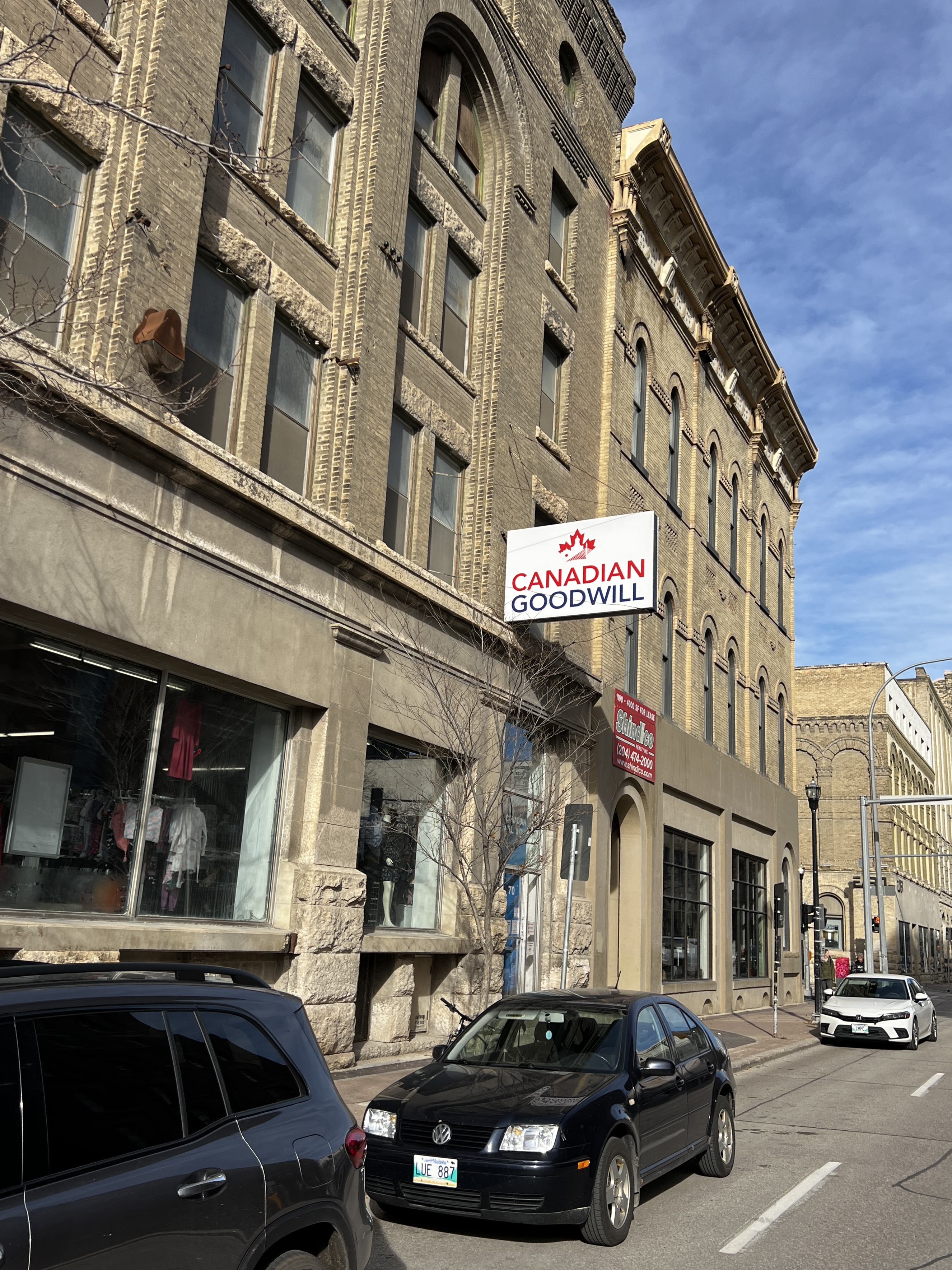
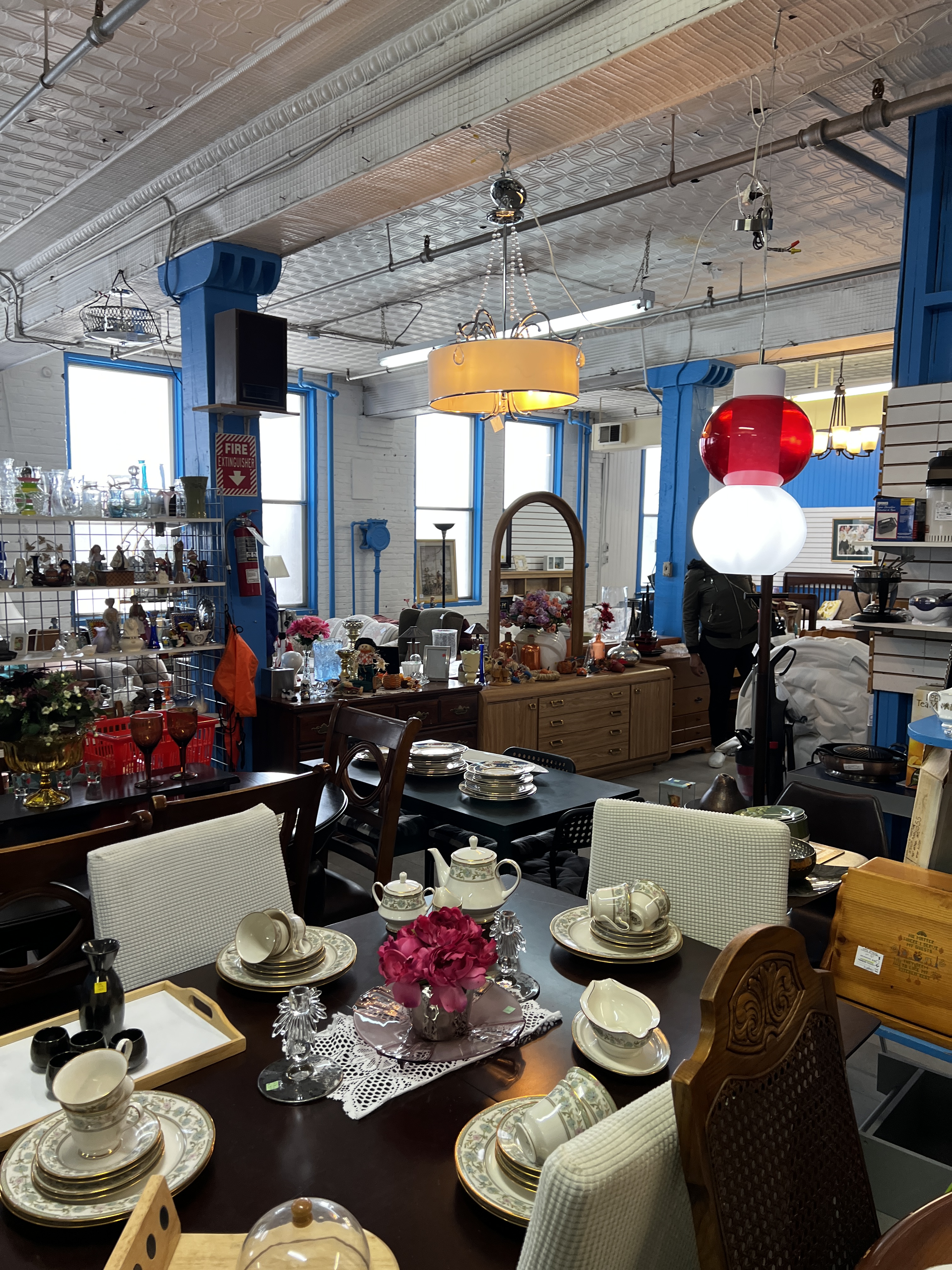
October 29/25 – I visited the Canadian Goodwill on 70 Princess Street in downtown (Exchange District) Winnipeg, Manitoba. It is a big two-story building. They say it’s the biggest Goodwill in Winnipeg. It’s the only Goodwill in Winnipeg that is two stories as far as I know! Parking was on the street, but I couldn’t find where to pay for parking and the lady inside the store didn’t know what app I was to use. So I chanced it as I didn’t think I would be long (I was okay!). The store was clean, bright, and busy and had a nice selection of everything. They had a 60% off Yellow Tags special the day I was there. There was an impressive book section which looked like a library.

Clothing and jackets were aplenty. I picked up a Northern Reflections hooded winter jacket that was only $15.00 and seemed brand new! I found the jacket on the main level so I had to pay for that before I went upstairs (as they had told me there was jewelry upstairs.) When I went up what seemed an unusual amount of stairs to get to the second level, I learned there wasn’t a lot of jewelry but enough to keep me interested. There was lots of furniture, housewares and collectibles as well. To my delight, they have this special machine-operated glass-covered case that rotates rows of jewelry with the touch of a button. It was fun to use! I found a couple of vintage pieces (Coro and Sarah Coventry) and a tiger’s eye necklace. I would have to spend more time there to get a better idea of what all they have. Prices were decent, too. It’s worth checking out for sure!
– 8 Winnipeg Locations: 2195 Portage, 2A-675 Empress, 1424 McPhillips, 145 Goulet, 97 Sherbrook, 3511 Roblin, 3421 Portage, 1080 Nairn
– Non-profit organization
– Mixed reviews on McPhillips location (across from Northgate). “McPhillips is the best” according to one Reddit user, “Overpriced” per one Redditor
– “Nairn area location is overpriced crap” per one Redditor
– “Roblin location is good.” (I’ve been there too).
– Seniors get 10% off daily. 60 years and older.
-Save 20% on your next thrift haul. Receive a thank you coupon for your next purchase when you make donations.
-NO TAX on most items (since they are a non-profit)
-SPC Members Save 15% Every Day
-Sign up on their email list and receive sale notices and coupons.
-Closed Sunday
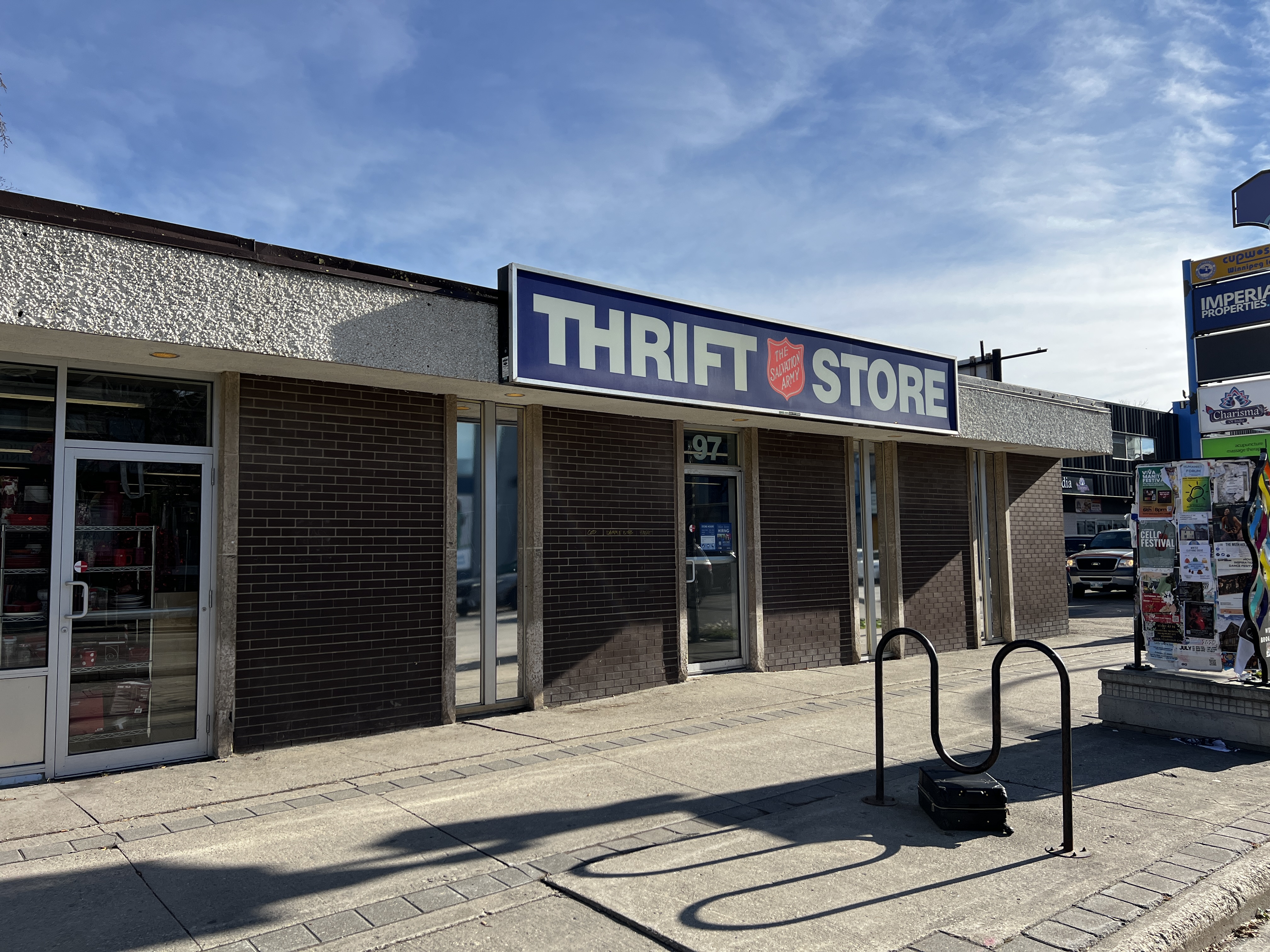
3.9 Stars for Salvation Army Thrift Store at 97 Sherbrook Street on Google Reviews as of October 29/25.
October 29/25. I visited the Salvation Army Thrift Store at 97 Sherbrook Street in Winnipeg, Manitoba. It is close to the Misericordia Hospital and Wolseley neighbourhood. There was ample street parking and it was free.
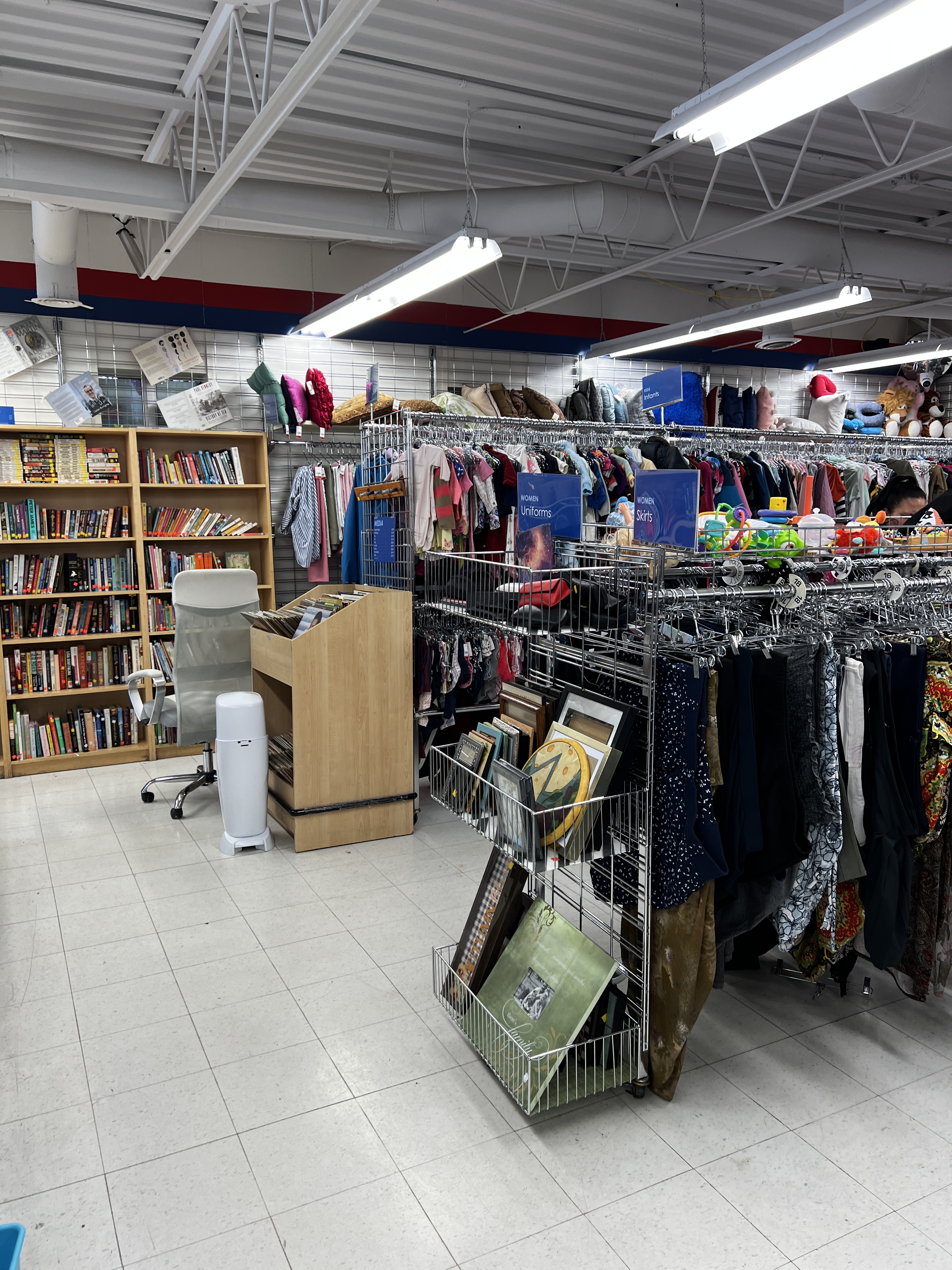
This store was surprisingly busy. It was small but clean and bright. A security guard greeted me and I felt safe. There was lots of treasures to be had. Their jewelry section was very small, however. I founds some collectibles and beautiful housewares such as Fitz & Floyd and some vintage decor. I didn’t take a basket so my hands were quite full! I even bought a “new” water bottle to replace the one that I have that is quite worn out. I would like to go back one day and take more time looking through this small buy mighty store.
– 6 Winnipeg Locations: 1729 Pembina, 1695 Ellice, 942 Jefferson, 970 Nairn, 3629 Portage, 1731 Kenaston Blvd (opening Sept. 11/25).
– It’s not a thrift store, it’s a “Second Hand Store”
– “We are a For-profit company that champions reuse.”
– “Prices are high!” per most Redditors
– Nairn location gets mixed reviews – “The crappiest” says one Redditor. “Overpriced and full of garbage.” Another Redditor says they “constantly find gems there.”
– VV has a “good selection of everything, and it’s curated and displayed really well.”
– Most VV stores have an unpleasant odour. Clothing is not necessarily washed before it is donated.
– Drop-off hours are good so many people donate their items there.
– Pembina location prices are high.
– Unicity prices come in with mixed reviews.
– Some say Ellice location has better prices.
– 20% off coupons available when you donate items
-Join their emailing list for frequent coupons and sales
-Open 7 days a week
Revive and Thrive Thrift Wholesale – CLOSED
Revive and Thrive Thrift (1032 Logan Ave) has closed as of Saturday, January 31, 2026. The team says the closure is due to multiple reasons and they intend to revamp their work-ready program. They’ve shared that the goal is to reopen once the program updates are in place.

– 1032 Logan Ave., Winnipeg, Manitoba
– Non-profit
– They have live music five days a week. A Karaoke performance gets you 35% off your purchase any time!
– Indigenous-led

– “Pretty cheap” per one Redditor
– “Cheapest in the city” per another Redditor
-Open 7 days a week

October 15/25. I visited Revive and Thrive and was impressed with how large the space was and the fact they were having a 50% sale on most items. I asked about live music, and Allan was on his way for a cigarette break. While he was on break, I headed straight for the jewelry counter. They didn’t have very much but I picked up a couple things. I got a bracelet and a watch. I hope the watch works when I put in a new battery! Soon after I had been there the music man started playing. He plays for tips. I then took a walk around the rest of the store. It was somewhat crowded and disorganized and items were quite dusty and in some cases dirty. They had a fire earlier in the year so that was unfortunate. I could look past the dirt and went to work looking for treasures!
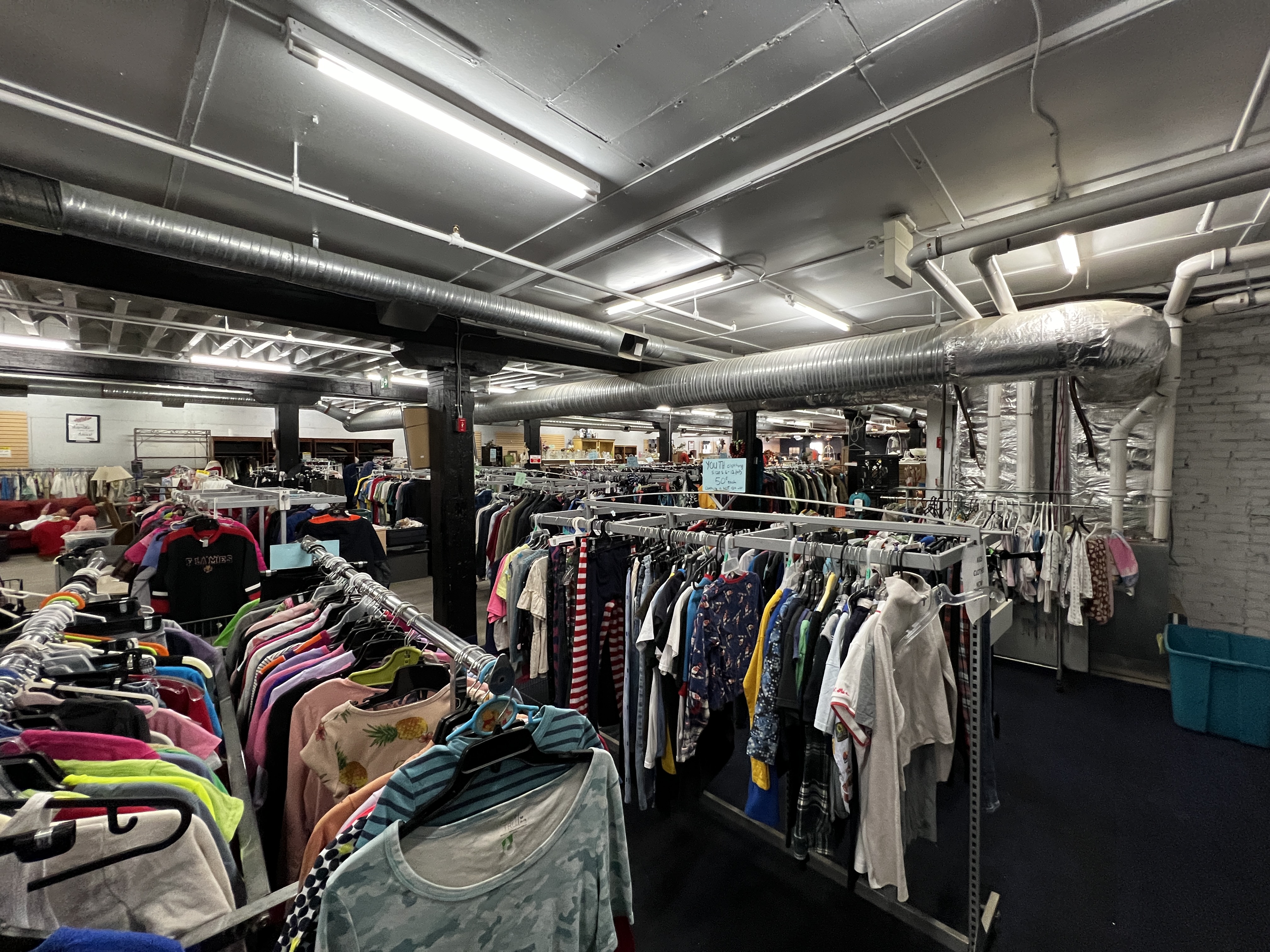
They had lots of clothing (which I didn’t look at), shoes, purses, household goods, and even displays on sale. They had a big couch and a young man laid down on it while the music played. It looks like a very chill and easy-going place. I spotted a poster with four flowers that I used to have at my office! It brought back some memories of my working days.

I didn’t spend very much there, as their prices were unbelievably cheap. I got a few treasures though. There are lots of parking spots available, and the store had about 5-6 people go through it while I was there. The shop could use some TLC. There were boxes and bags all over the store saying things like, “Coming Soon – Not for Sale Yet.” They had some free items that had some smoke damage (crystal glasses) and they said the yellow layer of smoke residue comes off when they are washed. They have great hours. I probably won’t go out of my way to go back, though. Donations accepted and the money goes towards the “Ready, Set, Go! Work Program.”
Facebook: https://www.facebook.com/people/Revive-and-Thrive-Thrift-donation-page/100032084366303/
Instagram: https://www.instagram.com/reviveandthrivethrift/?hl=en

– 382 Selkirk Ave., Winnipeg, Manitoba
– The non-profit social enterprise thrift store The Up Shoppe (382 Selkirk Ave) is open: Tu-Th 9-4pm & Fri 9-3pm (see posts for any change in hours)
– Supports the North End Women’s Centre
– Takes new and gently used clothing
Winnipeg Free Press Article: https://www.winnipegfreepress.com/our-communities/times/2018/10/29/the-up-shoppe-helps-women-help-themselves
Facebook – North End Women’s Centre: https://www.facebook.com/northendwomenscentre
Instagram – North End Women’s Centre: https://www.instagram.com/northendwomenscentre/?hl=en
-Closed Saturday, Sunday, Monday
September 5, 2025. I stopped in at the Up Shoppe and found it to be quite busy for a small store! There was free street parking. There were three very friendly ladies working. Two at the till and one putting out products.
The store is jam-packed with clothes, shoes and some housewares. It seems to be mainly focused on women’s apparel. There was a sale on the day I was there – $6.00 for a bag of clothes (on a certain rack).
There was a little bit of jewelry and I managed to find some Monet and Sarah Coventry pieces. The jewelry was very reasonably priced. There were hats, ties, purses, and even some new products in packages. I overheard one of the ladies saying “Giant Tiger gives us some items at times.” There were some beautifully handcrafted Indigenous earrings behind glass for $20. A lady came in and went straight for them, saying “I have enough money for them now!”
I am not sure if I would go out of my way to go there again but it would be worth stopping by if I was in the area. I got a card stamped so if I go back I will have to remember to get my card stamped again!
– Unit 1-919 McLeod Ave.
– Nonprofit
– Tuesdays is Seniors Day – Spend $10 or more and get 25% off. 50% off blue tag clothing.
– Supports two programs: Re/act Program and Riverwood House
-Closed Sunday
August 26/25. I stopped in to see what treasures they have at Prairie Crocus Thrift. The door was hard to find! There was some jewelry (not a lot), purses and hats plus a vintage area. There was lots of china and glassware. Clothing and housewares. Tons of toys, too. I went on Tuesday, Seniors Day (20% off). Many items were excluded from the 20% off. I came away empty handed this time.
SuperThrift Store – Adult & Teen Challenge
– 3-1320 Ellice Avenue (moved from James St. in July 2025)
– Nonprofit
– “Large store, but money goes to a questionable religious-based program”
– “Good” per one Redditor. “Prices are great” per another.
– Funding provides support to programs for freedom from the impact of life-controlling addictions (through the power of Jesus Christ)
-Closed Sunday
-Rotating sales
-Seniors Discount on Tuesdays
-They have a Facebook page
August 30/25 – I checked out their new store. It’s near Planet Fitness in a strip mall. It is very clean, large, and bright. Lots of jewelry behind the counter. They also have some other jewelry displays to check out. Lots of clothing and housewares. Friendly staff. Prices are very good. I bought some jewelry (including a silver double heart necklace) and some glass wear. I needed a new stemless wine glass as one broke and I found one that matched my set! They call their shoppers “Super Thrifters” (I heard it over the intercom). I would definitely visit again. Highly recommended!
Kildonan MCC Thrift Shop (Mennonite Central Committee)
– 445 Chalmers
–2024 Silver Winner – Best in the Second Hand Clothing & Consignment in Winnipeg by Community Votes Winnipeg
– Nonprofit
– “Good” per Reddit users. “Good for clothing and knick-knacks. Jewelry.”
– Has 50% off sticker days
– “Great book prices.”
-Closed Sunday
Selkirk Ave. MCC Furniture & Thrift Shop

-Located at 511 Selkirk Avenue, Winnipeg, Manitoba
-Closed Sundays
-Non profit
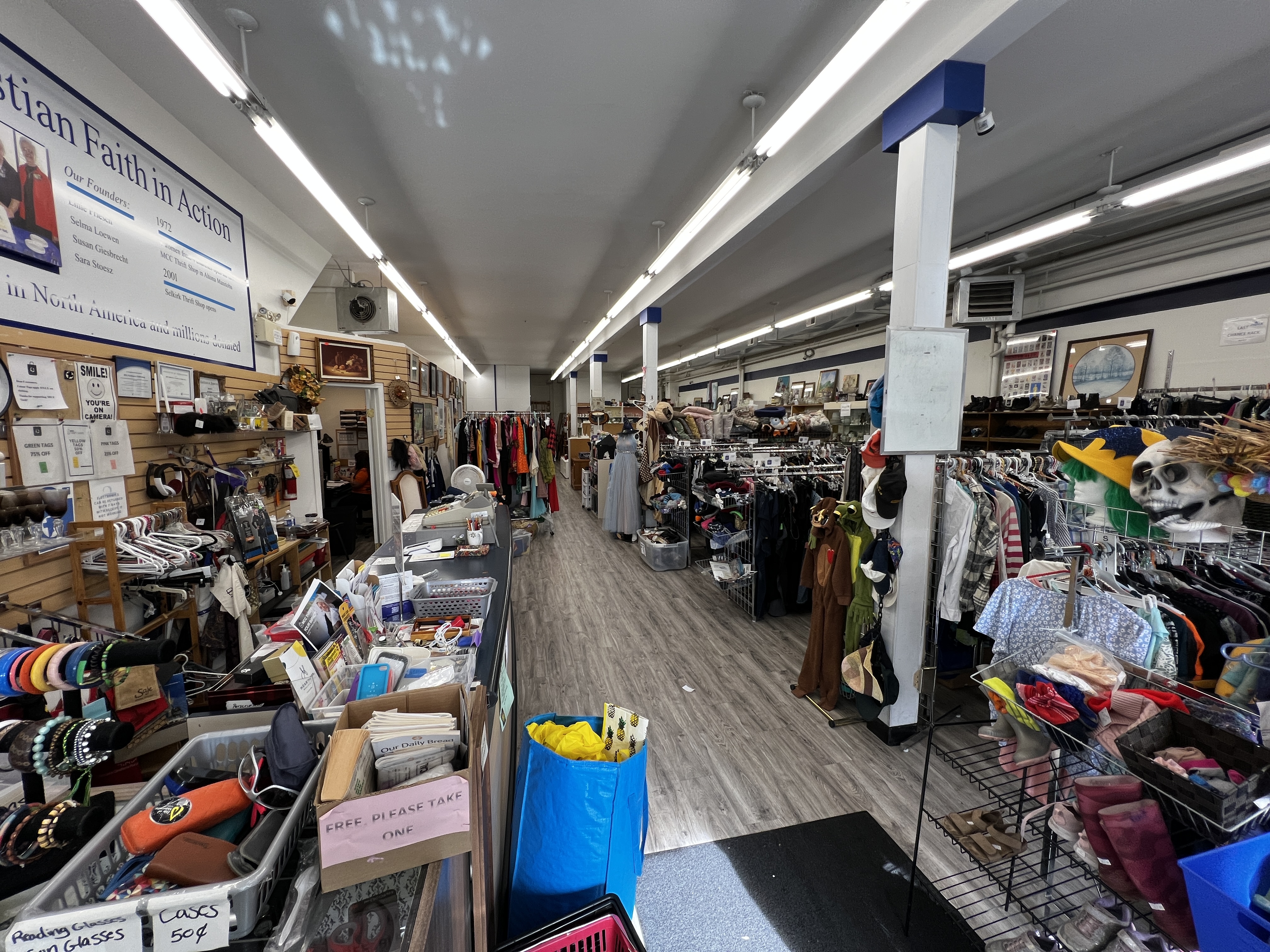
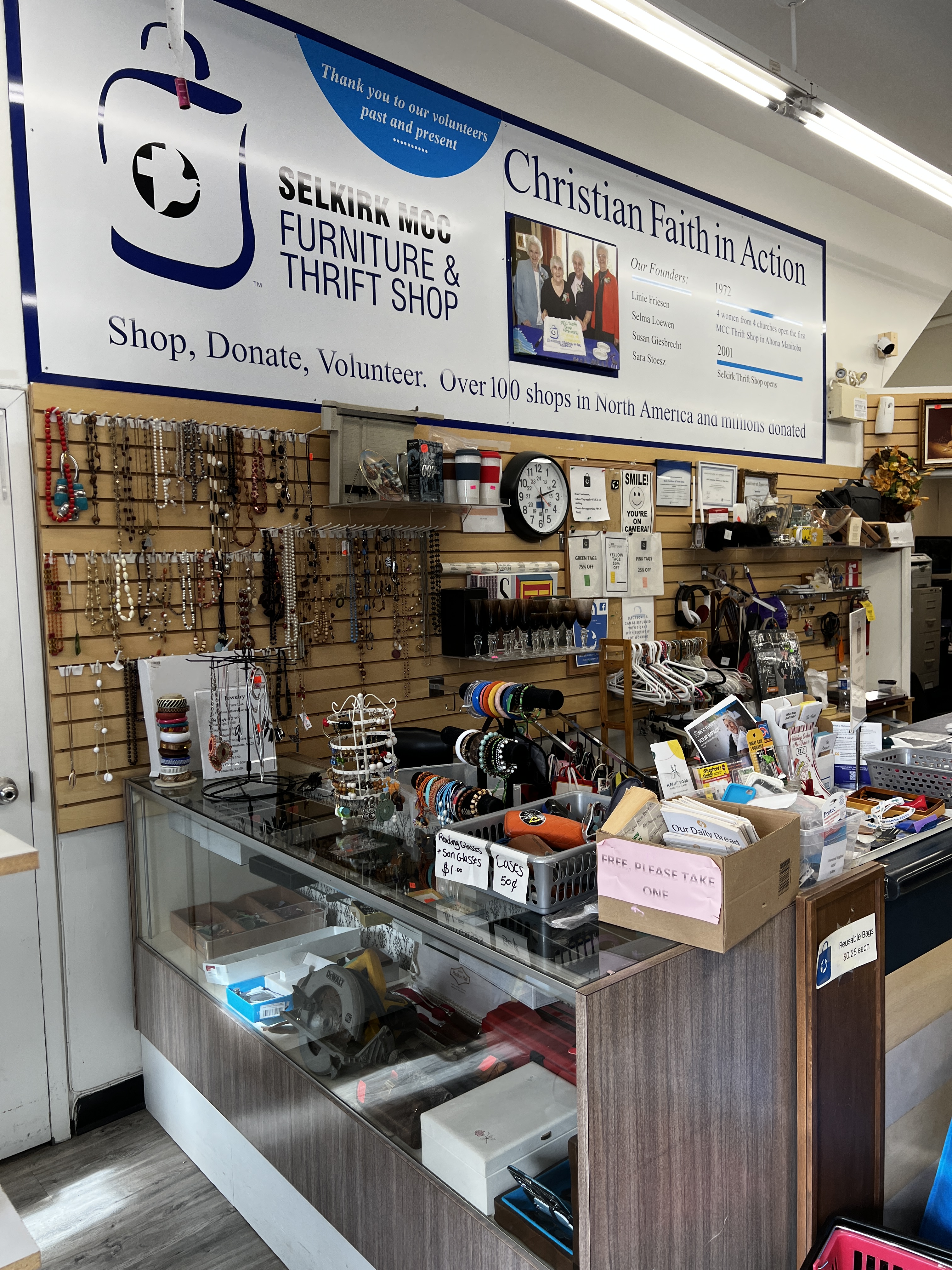
October 15/25. I visited the Selkirk MCC Furniture and Thrift Shop and was able to park right across the street on Selkirk Avenue. There is lots of street parking so that shouldn’t be an issue for anyone. When I entered the shop I noticed how bright it was and how it didn’t have any noticeable odour. The shop is run by volunteers and one paid manager. The ladies behind the counter were very friendly. I started with the jewelry and they had a lot. I managed to find a few pairs of earrings and some brooches. The prices were very reasonable ($1-3.00). I was very impressed with how clean the store was but then I noticed that not all the glassware was clean. I was able to look past the dirt and dust. I found a lot of treasures there for very affordable prices. I even found a Lucky Brand leather purse! There were a few customers coming and going. Some donations that had arrived the same day were purchased just as fast! There was a guy who came into the store and bee-lined for a chair and sat down. He was silent and very still for quite some time. There were people looking at mattresses and Halloween costumes, too. Great sales on the day I was there. MCC has four locations throughout the city and one of the volunteers told me I have to check out Altona MCC as they were the FIRST MCC thrift store in Manitoba. She also said the one in Steinbach is HUGE! I received a brochure of all the different MCCs and I am excited to take some road trips now. I will definitely check out the Selkirk Avenue MCC Thrift Shop again. I spent $57.00 there and came out with some beautiful and unique treasures.
Facebook: https://www.facebook.com/selkirkmccthrift
Instagram: https://www.instagram.com/mcc_selkirkave_thrift

-Located at 644 Burnell Street, Winnipeg, Manitoba
-Closed Sundays
-Non profit
October 21/25. This is the third MCC Thrift Store in Winnipeg that I have been to. It is located close to a Dairy Queen and just off of Sargent Avenue. It is a very small shop but it is well-laid out. It was clean and bright. No obvious odour was present. It was quite busy considering it was a smaller shop. There were at least three people working (volunteers?). There was a small selection of jewelry, but it was scattered about in different areas. I saw some jewelry on a rotating display over by one wall, then I saw a smaller locked display on the check-out counter. Then after I walked around the store, picking up some small collectibles and some shoes, I came to the counter to pay and I noticed MORE jewelry under the glass. I wish they had all the jewelry in the same area or at least they could have told me where I could have found all the jewelry. I bought $23.00 worth of goods. Not sure if I would go back.
– 18 Keewatin
– Nonprofit
– “Fantastic for furniture and larger purchases.”
-Closed Sunday and Monday
Annie’s Attic Thrift Shop and Cat Café
– 1560 Main just past Inkster
– Supports D’arcy’s ARC (registered charity animal rescue)
– “Cute as heck.” “Can hang out with cats.” $5 donation.
– “Amazing prices.” “Bonus sales on certain items on the weekends.”
-Closed on Sunday and Monday
-They have a Facebook page
– 1835 Main Street (at Leila)
– Thrift and consignment store
– “Overcrowded with lots of good stuff but limited selection.”
– “Erratic hours.” Closes early. 2 or 3 pm. Closed Sunday and Monday
– Has a Facebook page.
– Have 50% off markdowns weekly
– Check FB to see when they are open. Call 204-582-4334
-Closed Sunday and Monday
– I visited this shop on April 17/25 for a few minutes. It is a small shop, but it was busy. The door was locked so it said to knock to get in. The clothes are in the front of the store and the hard goods are at the back. Earrings are $1.99 AS IS and I found a pair of vintage clip-ons that were made with sparkly Aurora Borealis stones. Many of the stones were missing so I decided I can use the stones to repair other pieces I have. I also found a vintage Eaton’s gift box which was wrapped in plastic to keep it as clean as possible. I appreciated that. The two ladies there were very kind and helpful. I will go back again when I have more time to browse.
-144-701 Regent Ave W. on Brewster east of Plessis

– Nonprofit
–2024 Gold Winner – Best in the Second Hand Clothing & Consignment in Winnipeg by Community Votes Winnipeg
– Volunteer driven, Christian Organization, Closed Sunday
– “Large store”
– “Is pretty good” per one Redditor.
Instagram: https://www.instagram.com/missionthriftstorewpg/?hl=en
22 May 2025. I visited this thrift store and I was totally impressed with the selection of jewelry! I spent a lot of time at the jewelry counter and a younger woman volunteer (they are all volunteers!) helped me. She was very patient with me. I found quite a few low-cost treasures including a Michael Kors silver-tone necklace for $5.00. They have a loyalty program where by if you spend $100 you get $10 off your next purchase. The profits go towards Christian-based programs all over the world. The store is huge and very clean. Prices are very reasonable. I will be back!
h so much!
Nearly New Shop of the Children’s Hospital Guild
– 961 Portage Ave.
– Nonprofit volunteer-based thrift shop with 100% of the proceeds going to the Children’s Hospital Foundation!
– Very limited erratic hours because volunteer run
– 50% off sales. $5.00/bag sales
Instagram: https://www.instagram.com/nearlynewshopwinnipeg/
-Closed Sunday
Just Like New to You Thrift Store
– 635 Portage Ave.
– Nonprofit, proceeds go to the HSC Children’s Hospital
– HSC foundation. @Hsc.foundation
-See the Facebook page for more information.
– “Very limited erratic hours because it is volunteer run.” Closed Saturday, Sunday, Monday.
-Phone: 204-786-1653
– Accepts donations Tues-Fri, 10-3pm
-Closed Saturday, Sunday, Monday
-Often cited as one of the cleanest thrift shops in the city.
-I visited this small store in April 2025. The store was busy and the volunteers were busy, too. Their prices are very reasonable and I even heard the man sitting behind the cash register making a deal with someone who wanted to offer a lower price on a digital camera. I purchased a few goodies here (hard goods and a beautiful green scarf) and I will definitely be back.
Global News article – Volunteer Thrift Store Reaches New Milestones
The Overflow – Thrift Shop Winnipeg
– 1-433 River Avenue
– Women’s boutique clothing thrift store
– Designer, vintage, and everything in-between
– Supports exploited/trafficked women (sex trafficking).
– Hours Monday – Saturday, 10 am – 5 pm
– Backstory: Shona Stewart started the store in Winnipeg on Selkirk Avenue. Due to problems with crime, she had to close it down in 2021. Shona is a sex-trafficking survivor from the 80’s and she has this shop now to help others. She helps those in recovery get some work experience.
-I visited this store in May 2025. There were cheerful friendly volunteers helping and I was there mainly to check out the jewelry. Seems like they could use some help organizing the jewelry. A few things I was interested in weren’t for sale, so they could also put some labels on the things that aren’t for sale. I didn’t get a chance to see the clothes but there seemed to be lots of clothing and shoes, too. I bought a few pieces of jewelry to take home.
Check out the article in the Our Communities of the Winnipeg Free Press.
Kavod Thrift Store – Rediscover Style
– B’nai Brith Canada opened the Kavod thrift store in July 2024. They function as a regular thrift shop, open to the public, with every purchase directly supporting our most vulnerable community through a variety of programs.
-Located at 531 Notre Dame Avenue, Winnipeg, MB
-Open Sunday – Thursday, 10-5 pm. Closed Friday and Saturday
27 May 2025 – I stopped by this newish thrift store and parked across the street (free parking). On the way in there were two men standing outside near the front door and one asked me if I knew the time. There was no way I was going to stop making my way in to the store to tell him the time. I actually felt uncomfortable. When I arrived at the store, a security guard greeted me. I told him I felt uncomfortable with those guys outside and that they asked me for the time. He said they ask him for the time three times a day and he will keep his eyes on them. One of the volunteers told me they usually keep the doors locked. That seems to be a common occurence at many of these small stores.
Anyhoo, when I got into the brightly lit, spacious store, I was immediately greeted by a nice woman. I noticed tons of clothes and shoes. I told her I had sent a message about wanting to look at vintage jewelry and she showed me where the jewelry was kept. There was a nice selection and it was out in the open. The earrings were kept in a tray that had prices on the tray versus the earrings so I asked how did that work? One of the young ladies told me she would take it to the front and put a price on it so when I was ready to pay I would get them at the front desk. I showed her where I took them from (they were $2.00).
Most of their jewelry items were in the $2-4 price range. A few pieces were higher, I saw $15.00 on a bracelet which didn’t look vintage but was in good shape. I found a few semi-precious gemstone pieces, a pearl necklace, and some other special treasures. My favourite pieces were a signed Ivana Trump brooch which I got for $3.00 and a pearl necklace for $8.00. (Let me know if you want to see them!)
If I had more time I would have gone through the small collectibles and household decor so I will have to go back. They are non-profit and support many local community projects and even have a day where people can go and take items for free.
Other than the location which is not in my comfort zone (but the security guard made sure I was safe getting back to my car), I would recommend!
Facebook: https://www.facebook.com/profile.php?id=61567679350028
Instagram: https://www.instagram.com/kavodthriftstore/


-Thrift store (for-profit, supporting charities, missions, and St. Boniface Hospital)
-476 St. Mary’s Road
-Perpetual 50% OFF sale
-Closed Sunday
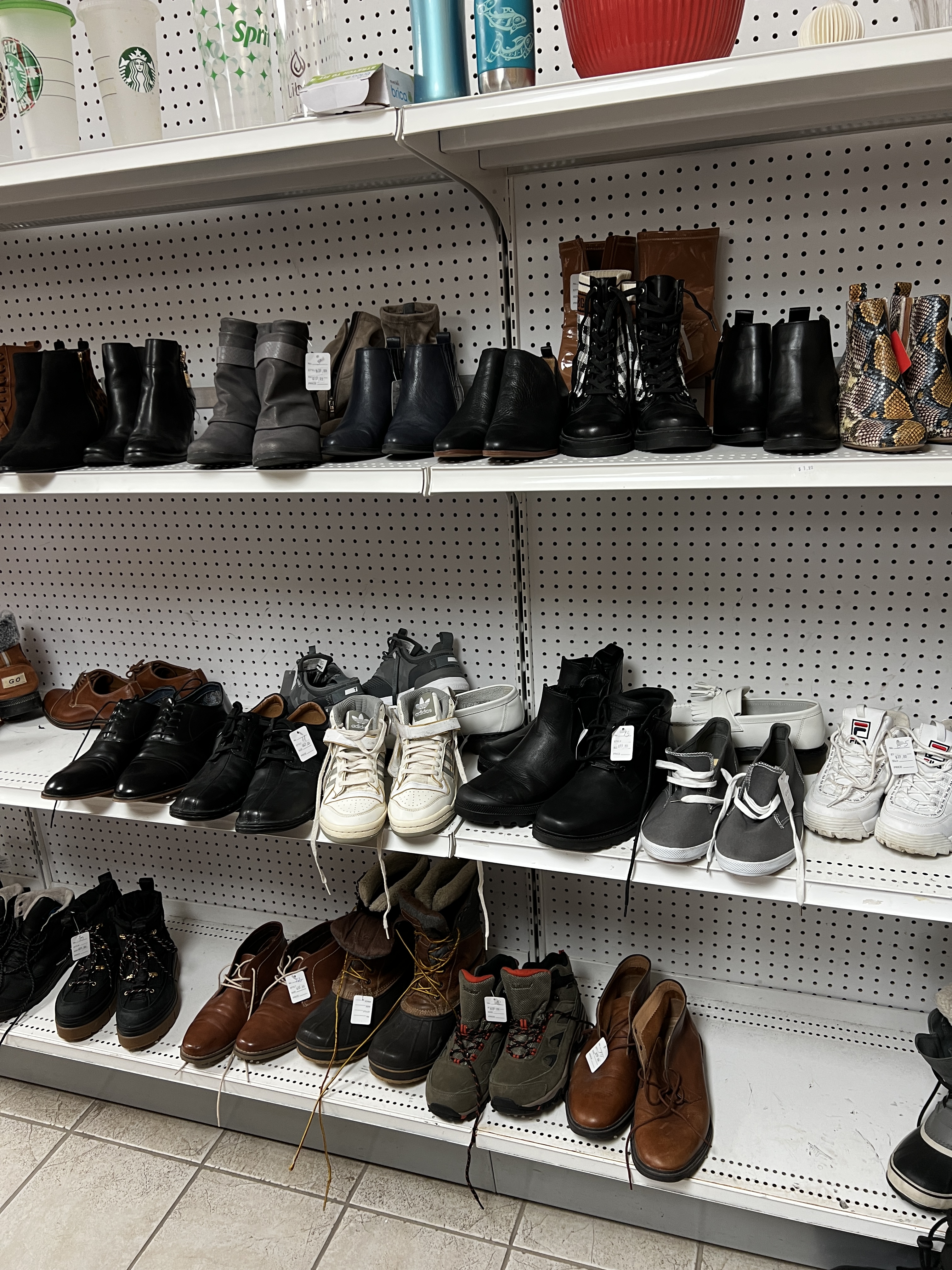
October 14/25. I visited this store and it is quite small. It smells very clean. Many of the items in the store look new and have original price tags. The prices seem inflated at first, but then I quickly came to realize everything is 50% off of the tagged price. Even considering the items were 50% off the tagged price, most items seemed pricey for a “thrift store.” I bought some very small Betsey Johnson earrings on the original jewelry card. The price sticker said $14.99 but the actual price was $7.50. I also bought a couple of board games which seemed quite new for a reasonable price. There were many clothes, shoes, boots, jackets, and a small amount of jewelry and housewares. Their main product is clothing and footwear. It was noted they had a nice selection of men’s clothing and footwear. They have two change rooms so that is a bonus. There were some belts and purses as well (a fake Coach purse, too). As soon as you walk in there are some books and DVDs. There were three other people shopping there during the time I was in there. There is free parking in the back (along the river) and the day I parked there it was very muddy! I am not 100% convinced this is a very charitable thrift store. I get the same feeling as when I go to Value Village. These are for-profit businesses but they make it seem like they are doing good for the community. I would have to see their annual reports to see exactly what they make and how much goes to charitable causes (such as missions, hospitals, etc.). This is one of only two independent thrift stores in the south half of the city. It is fairly close to downtown and the next closest would be the one in Osborne Village called “The Overflow.” Not sure I would donate to this store or return. Glad I visited though. They have been open for about 10 years. Their Instagram account (which is inactive) has a photo dated May 13, 2016. The Facebook account also is inactive, and it has posts from 2020. Their tag line on their Facebook page is, “The thrift store that everyone loves.” They are also “A Valued Member of Old St. Vital Biz.”
– Not a “thrift” store in the traditional sense
-Curating new, pre-loved, and locally made home decor
-Two locations: 1420 Clarence Ave. Unit H, and Outlet Collection Winnipeg at 555 Sterling Lyon Pkwy.
– Open 7 days a week
– In-store shopping and home delivery
– Instagram (@urbantreasuresshop)
CASH FOR ITEMS – THRIFT STORE PRICES – WITH CHANGE ROOMS:
- Two locations: Unit 2 – 1170 St. James St. and A-1094 Nairn Avenue by Style Encore
– Chain, private, for profit (related to Style Encore)
– Buy and sell. Gives cash for gently used items current style great condition. Good for clothes.
Instagram: https://www.instagram.com/platosclosetwinnipegeast/?hl=en
-Open 7 days a week
April 2025 – I popped in to the store on Nairn. I saw it is geared towards the younger woman. Lots of purses and wallets at the front of the store. I didn’t buy anything here, and went next door to Style Encore (see below).
August 30/25 – I stopped by the St. James location. Lots of. Lululemon, younger styles – clothing, shoes, purses, accessories. Some new hair accessories. Lots of dressing rooms. I bought some jewelry there and my 14 year old niece found some clothes for back to school. My sister-in-law found a nice jean jacket.
– Two locations: 1190 St. James Street (St. James Winnipeg) and B-1094 Nairn Ave (Winnipeg East) by Platos Closet
– Chain, private, for profit (related to Plato’s Closet). Women’s clothing and accessories.
– They give cash on the spot for your items. Must be clean and freshly laundered.
– Open 7 days a week
April 2025 – I visited the Winnipeg East store on Nairn. There was a lot of clothing and some accessories. Great change room in the back of the store. Clothing is for women of all ages. I tried on some capris and found a brand new pair with tags on for $8.00!
August 30, 2025 – I visited the St. James location. It was loaded up with lots of designer purses, shoes, jewelry, and clothes. I bought some jewelry and I found a ring that was damaged and let the sales clerk know. The designer brands were on the top shelf behind the counter. I also found an orange Lancome tote bag that was soiled inside for $24.00. I have the same one at home and I got it for free in a Lancome makeup promotion many years ago. I had no idea it was worth that much!
They buy and sell kids’ clothing, shoes, accessories, toys, and baby equipment. Earn cash on the spot or come shop their incredible selection of gently used kids’ stuff at prices up to 70% less than brand new retail!
-Two locations: Once Upon a Child Winnipeg East – 1600 Regent Avenue West, Winnipeg. Phone: 204-669-5437 and Once Upon a Child Winnipeg West – 1330 Ellice Avenue Unit A, Winnipeg
-Open 7 days a week
-For profit
It Takes a Village – A consignment shop for children’s and women’s clothes. There are also shoes, books, toys, and a few accessories (no jewelry). They pay 30% to the consigner of the approximate retail value (they pay on the spot!). Appointments have to be made if you would like to bring in your items. On their website they have a list of suggested brands they will take like Zara, H & M, North Face, and Gap. They only take on trend and seasonal items (plus an occasional unique and special vintage item!). Note: I visited this shop. It’s nicely curated and the ladies there are really nice. There are a lot of stairs to get into their shop!
-Located at 564 Osborne Street, Unit 3, Winnipeg Manitoba. Phone: 204-296-0161
-Closed Sunday and Monday
-For Profit
*********************************
Check out this map of Winnipeg Thrift Stores
Best Thrift Stores in Winnipeg that aren’t Value Village
#winnipegthrift. #thriftwinnipeg #winnipegthrifting
Angela G. Gentile








 Angela G. Gentile