Below is a list of shops in Winnipeg where you can bring your items for consignment. The flip side of that is that you can find great deals on previously loved and gently used treasures. There could be items that could be turned into cash in your closet and drawers!
So Over It Luxury Consignment– Clothing, Bags, Jewelry, Footwear, Accessories. Includes designer handbags, find jewelry, and high-end footwear. Shop online or at their Winnipeg location for everything from Gucci to Louis Vuitton. They have Authentication services (for a fee). Consignment rates start at 30% and go up to 70% commission (depending on value of item). Nice shop.
Located at 394 Academy Road in Winnipeg, MB. Phone: 204-306-7722
Things Supporting the Royal Winnipeg Ballet: Operated by the Volunteer Committee for the Royal Winniepg Ballet since 1967, Things is a specialty boutique that sells consigned and donated items. They offer gently used antique, vintage, and contemporary collectibles, including furniture, jewellery, china, crystal, silver, artwork, and linens. Some items are sold on consignment, others aren’t. Items have two prices depending on how long the item has been in the shop. Smaller store with nice things.
Located at 913 and 911 Corydon Avenue, Winnipeg, Manitoba. Phone: 204-284-7331
Upscale consigment thrift. “From cool to couture, The Closet Chick is a trendy upscale consignment/thrift boutique. Current major brands, one of a kind gems and authentic designer labels make up the great assortment. And they’ve got you covered in sizes XS- XXL. Pop in to The Closet Chick and you’ll go out smiling. Walking into the store is truly a lovely experience with a friendly atmosphere and unique selection of all things retro and modern…We are always accepting trendy, contemporary fashions that are in season, no older than 2-3 years, and in excellent condition.” They offer 50% commission store credit or 40% by cheque on items sold. They also have an online store. Preloved, retro, vintage. Lots of women’s clothes, shoes, and bags. Some jewelry. Belts.
Located at 956 Portage Avenue, Winnipeg, Manitoba. Phone: 204-774-2442
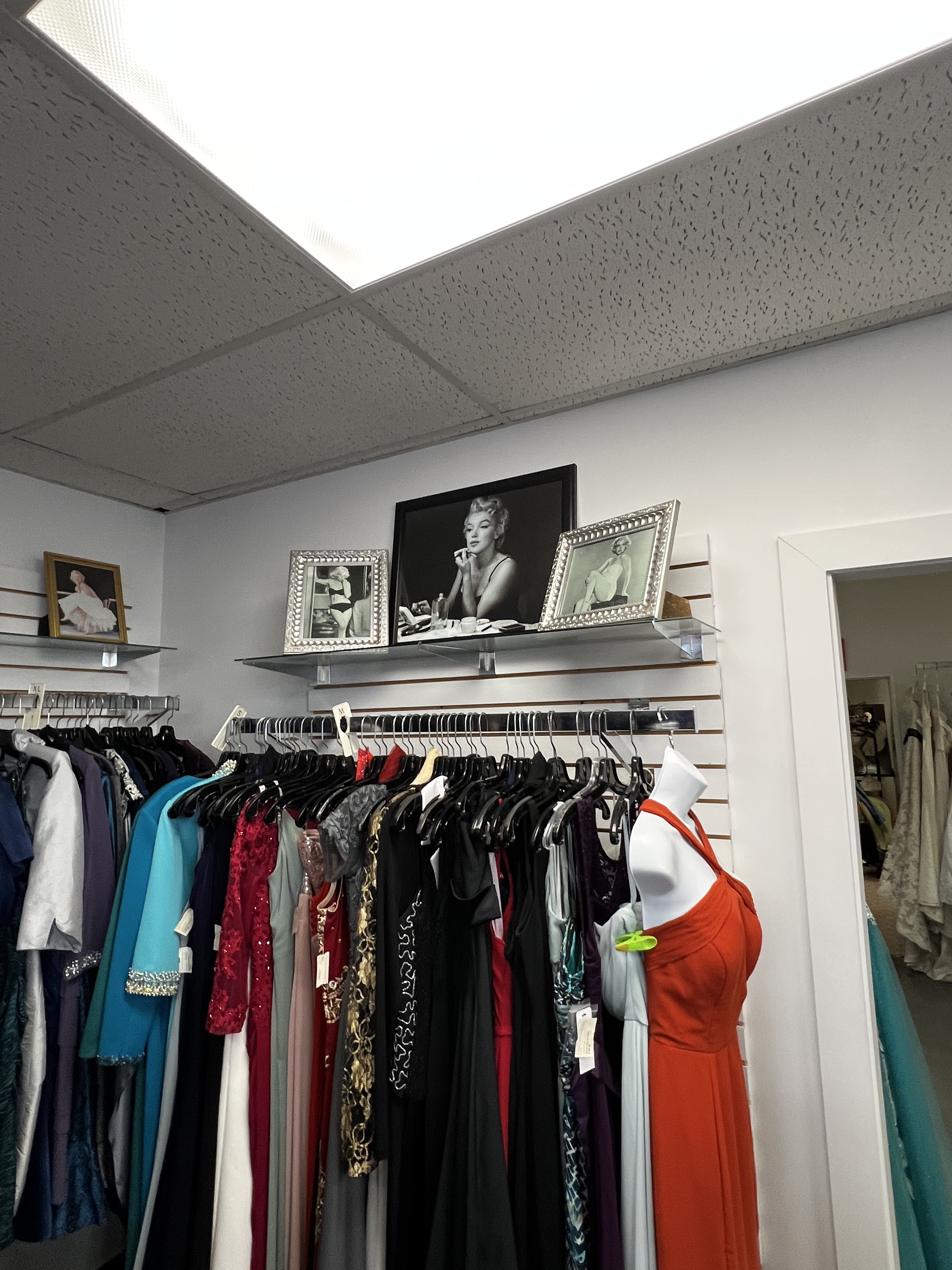
October 22/25. The Closet Chick has been around for many years. It is in the same building as the Italian store called DeLuca’s. The lovely fragrance of pizza was very dominant during my visit! It was right around lunch time, too. I was very impressed with the cleanliness and organization of the clothing and shoes. There were many photos of Marilyn Monroe throughout the store. I was very surprised to see the large assortment of formal dresses and even wedding dresses. Lots of shoes to go with them, too. There were some clearance racks just outside of the store. The lady in the shop had to unlock the door each time a customer went in. There were about 2 others ladies in the store. I tried on some jeans, other bottoms and tops. I ended up buying three items off of the $10 CLEARANCE rack. The prices seemed to be a bit high on most items. It was nice to see an assortment of brand names such as Michael Kors, Kate Spade, and Coach. All items were in excellent to like-new condition. There is ample parking along Lipton and Portage, plus some in the back behind the shop.
A & A Jewellers: Jewelry Repair, Engraving, & Vintage Jeweller. They sell jewelry on consignment. 60/40. I bought some Sherman jewelry there! And I have sold some of my mom’s jewelry on consignment at their store. They provide a cheque when items are sold.
When you think about mental health, what usually comes to mind? Therapy, maybe medication, or yoga classes on a quiet Saturday morning? Sure—those matter. But your brain and body crave more than just the standard checklist. Mental well-being doesn’t need to be a whole new lifestyle. Sometimes, what helps most are subtle, unexpected shifts—ones that trick your brain into feeling more alive, more grounded, or more at peace.
Plant Something With Your Hands
There’s a quiet kind of magic in dirt under your nails. Even a small container garden or a few pots on your windowsill can trigger a reset. Science increasingly points to how gardening calms anxiety by reducing cortisol, inviting rhythm into your routine, and reconnecting your senses with the natural world. The act of nurturing something slow- growing pulls you back into the present—no screens, no pressure, no performance. Just breath, soil, and the steady hum of becoming.
Create With AI, Not Just Your Hands
Creativity doesn’t need to start with blank paper. Some of the most powerful breakthroughs come from letting tools do the heavy lifting. With modern technology, AI painting in visual arts lets anyone, regardless of training, visually express ideas, memories, or moods in seconds. It’s not about becoming an artist—it’s about tapping into your own emotional processing in a language that words don’t always reach.
Use These Mental Health Apps
You don’t need a complicated system to get started—just a phone and a few minutes. These apps, widely used in Canada, are changing how people get access to support:
● PocketWell (Wellness Together Canada companion) — Backed by the federal government, this app offers mood tracking, self-assessments, and direct access to social workers or crisis responders—all in a private, judgment-free space. ● Fello — Designed to connect users with others who’ve lived through similar struggles, offering real stories from peer-support users without the pressure of formal therapy. ● MindShift CBT — Developed by Anxiety Canada, this app teaches evidence-based coping skills rooted in cognitive-behavioral therapy. You’ll find exercises for reframing anxious thinking, managing panic, and building long-term tools. ● MindBeacon — This app pairs you with a licensed therapist who guides you through a structured CBT program. Many Canadian health plans cover it, making professional care more accessible without traditional barriers. ● Calm — Known worldwide but widely adopted in Canada, Calm offers guided meditations, sleep stories, breathing exercises, and relaxing music. It’s designed to lower stress, help you sleep, and make mindfulness part of your day.
Give Your Time to Someone Else
You’re stressed, overwhelmed, and stretched too thin. And strangely, that’s why this works. One of the simplest shifts you can make is volunteering—an hour, a morning, nothing extravagant. Studies show volunteering boosts life satisfaction by giving you purpose, relational validation, and meaningful structure outside your personal grind. It reminds your nervous system that it still knows how to connect—and care—without needing to be fixed first.
Get Cold—On Purpose
The ice bath trend might feel performative on social media, but its benefits go deeper than hype. Cold water immersion has become a mental health intervention in its own right. Researchers explain how jumping into an ice bath can trigger neurological responses that regulate mood, reduce cortisol, and even promote mental clarity. You don’t need a tub—start with a cold shower burst. It’s discomfort that teaches your brain how to recover.
Try Virtual Reality Therapy
You don’t need to leave the house to confront your fears. Therapists are increasingly integrating immersive therapy with virtual reality into treatment plans, especially for trauma, phobias, and anxiety. The appeal is real: controlled, repeatable exposure in a safe simulation. It builds desensitization with precision, helping you develop regulation tools that transfer into real-world situations. Sometimes it takes another world to help you handle this one.
You don’t need to “be better.” You need more options. Not every strategy will resonate, but one might shift something. Try it. Small experiments lead to bigger change. And mental health? It’s a mosaic, not a makeover.
Discover a wealth of knowledge and support with Angela G. Gentile’s insightful books and resources—visit AngelaGGentile.com to explore her work and connect with a community dedicated to well-being and caregiving.
Bio: Sharon Wagner pens her thoughts from her personal retreat in Wisconsin. She finds it deeply satisfying to share about a wide range of topics to people across the US and Canada.
There comes a moment when the house that once echoed with life becomes too still, too large, or simply too difficult to manage. The decision to transition into assisted living is rarely easy—it’s emotional, complex, and often wrapped in memories that don’t let go without a fight. But within this major life shift lies an opportunity for reinvention. It’s a new chapter, not a closing one, and how that chapter unfolds depends greatly on mindset, preparation, and a willingness to discover new rhythms of living.
Reframing the Narrative Around the Move
One of the hardest parts of transitioning into assisted living is the sense of loss—of independence, routine, and in some cases, pride. But what helps ease the emotional toll is reframing the move not as giving something up, but as gaining something else. Assisted living communities can offer structured support, safety, and peace of mind, not to mention built-in companionship. It’s not about leaving behind what was, but about choosing what will be—with intentionality and a measure of hope.
The Power of Personal Touches
Turning a new apartment or room into a home starts with the tangible. Bringing familiar objects into the space—family photographs, a favorite armchair, well-loved books—helps preserve identity and continuity. These personal items are more than decoration; they’re emotional anchors. They tell the story of a life well lived and remind both resident and visitor that the move is just geography, not erasure. The more the space feels like theirs, the quicker comfort takes root.
Better Fuel, Better Focus
Healthy eating doesn’t have to mean overhauling your entire routine. Swapping out processed snacks for a handful of almonds, a crisp apple, or a homemade smoothie can give your body what it actually craves—real nourishment. These choices help curb hunger longer and provide steadier energy throughout the day, unlike the crash that follows sugar-heavy drinks or salty treats. With a few simple changes, staying alert and feeling good becomes a habit, not a chore.
Use Staff as a Resource, Not a Crutch
The care team in an assisted living facility isn’t just there to dispense meds or serve meals—they’re daily partners in well-being. Residents who actively communicate with staff about preferences, needs, and boundaries tend to feel more in control. That autonomy matters. It reinforces a sense of agency, which can slip during life transitions. Asking questions, making requests, and even offering feedback strengthens a collaborative environment where dignity leads the way.
Practical Tips to Smooth the Transition
Adjusting to assisted living is easier with a few thoughtful strategies. Here are some grounded ways to settle in and start strong:
Plan Visits in the First Month Familiar faces help anchor the new routine. Coordinate visits from friends or family during the early weeks to create soft landings after a day of change.
Label Personal Belongings A simple step, but invaluable in communal living. Marking clothing, books, or items with names ensures possessions don’t wander.
Stay Curious Trying a new class or hobby—even just once—can lead to surprising satisfaction. Growth doesn’t retire.
Keep One Foot in the Outside World Staying in touch with former neighbors, attending services, or keeping old routines alive bridges the past and the present.
Use the Community Bulletin Most residences offer calendars packed with activities. Treat it like a menu—circle what sounds interesting and commit to one new event each week.
Assisted living isn’t an ending. For many, it becomes a doorway to a different version of life—one with community, safety, and moments of joy folded into the everyday. The fear around such a move is real, but it doesn’t have to define the experience. What comes next can still feel deeply personal, still hold purpose, still carry pride. The second act is already underway, and the script is far from finished.
Discover a wealth of knowledge and support with Angela G. Gentile’s insightful books and resources—visit Care to Age to explore her work and enhance your journey today!
***
Sharon Wagner is a former bank manager who now spends her time helping seniors reach health and well-being goals. She created Senior Friendly to offer advice geared specifically toward seniors to help them make healthier choices and enjoy their golden years. She is also the author of the upcoming book, The Ultimate Guide to Senior-Friendly Workouts, Fitness Gear, Healthy Recipes, and More.
The American Heart Association put out two research study findings related to marijuana or cannabis usage. Smoking weed is NOT good for your health – especially your brain and heart health.
The Research Highlights included: “In one study, daily use of marijuana raised the risk of developing heart failure by about one-third, even after considering other factors, compared to people who reported never using marijuana.”
I wonder how Snoop Dog and Willie Nelson will fare in light of this news? Will it change their usage habits? Will it influence how often others are using it?
There is a particular focus on older adults in one of the studies. The research pointed out that there was an “increased risk of major adverse cardiac and cerebrovascular events in elderly non-smokers who used cannabis.” This reminds me that when I am asking clients about their alcohol use I also need to ask about their use of marijuana. The lead study author Avila’s Mondal, M. D., a resident physician, stated that, “Since 2015, cannabis use in the U.S. has almost doubled, and it is increasing in older adults, therefore, understanding the potential increased cardiovascular risk from cannabis use is important.”
Unfortunately, the research didn’t differentiate between eating and inhaling marijuana. I hope they can build upon these findings as we all know how bad smoking is for our health. But we don’t know if the edibles or ingesting it is also as bad.
I have recently discovered Dr. Cynthia Green and the work she is doing with Total Brain Health. I recently signed up to received emails and this is the first one I received. I think it’s a great article and I asked the Total Brain Health team if I could share this on my website and they gave me permission to do so. Please have a read and I would love to hear your comments. I like the idea of “playing against the clock.” Contact information for Total Brain Health and a few related links are found below.
10 Things You Can Do Right Now to Boost Your Brain Health
by
Cynthia R. Green, PhD
Brain health is today’s hottest topic. Here are the top 10 things everyone should know about improving brain health – they might just surprise you!
Take a Walk. Getting off the couch and onto your feet is the best thing you can do for your brain! Studies have shown that regular aerobic exercise (the kind where you can keep up but can’t keep up a conversation) boosts daily intellectual performance and significantly lowers the risk for dementia. Even walking at a vigorous pace at least 30 minutes a day 5-6 times a week will do the trick.
Lose that Spare Tire. Studies have shown that maintaining a healthy weight with a low ratio of “belly fat” can significantly lower the risk for a memory disorder. Stick to a healthy, well-balanced diet, maintain an appropriate weight, and balance your intake of alcohol and caffeine. Want to go that extra step? Try adding foods high in Omega-3 fatty acids and antioxidants to your diet, such as fish and berries, as some studies suggest these may lower dementia risk.
Follow Doctor’s Orders. Staying on top of your medical care is key in addressing issues that affect memory. Managing chronic conditions, such as hypertension or diabetes, can significantly reduce the risk for stroke and dementia. Also, taking care of medical issues such as hearing or vision loss can have tremendous impacts in your ability to learn new information, such as names. Find out if your medications may be making it harder for you to remember. Talk with your doctor about any concerns you might have.
Get Your Zzzzz’s. Lifestyle choices we make daily, such as how much sleep we get, how stressed we feel, to what risks we take (such as whether we use a helmet when we ride a bike or ski) impact our daily memory performance and brain health. Emotional distress – anxiety, feeling blue – also can lower our everyday ability and may even increase the risk for memory impairment. Get a good night’s sleep, avoid risky behaviors, and don’t ignore emotional upsets.
Play PacMan. As we age, we experience changes in our everyday intellectual skills. Those changes commonly affect our ability to stay focused, think quickly, multitask, and learn new information (after all, learning new things require the previous three skills!). Want to stay sharp no matter what your age? Play games against the clock. Timed activities force you to pay attention, work fast, and think nimbly – you can’t beat the clock without doing so!
Learn How to Remember. While things such as timed brain games or eating a brain healthy diet certainly support better memory, you might need a bit of a boost when it comes to remembering things such as passwords, directions and – everyone’s favorite – names! Learn strategies to enhance your daily recall, such as making a connection between something you are learning (like the name “Florence”) and something you already know (such as the actress Florence Henderson). And don’t forget date books and “to-do” lists as these “memory tools” are essential for keeping track of the things you have to do but that aren’t worth memorizing.
Get Schooled. Staying intellectually engaged can significantly lower risks for memory impairment, in some cases by as much as 63%! Such challenges encourage brain plasticity and may offer protection against deterioration over time. Intellectual engagement offers opportunities to socialize and supports emotional well-being. Look for activities out of your comfort zone – if you like to read, try a pottery class. Also, look for little ways to “change up” your brain’s routine, such as brushing your teeth with your nondominant hand, or taking a new route to work.
Go Out with the Gang. Staying social has been shown to potentially cut your risk for memory impairment in half. That’s a pretty powerful reason to get away from the TV and go outdoors! Social situations offer great challenges for everyday thinking. Keeping up a conversation forces you to stay focused, think fast and be nimble with our neurons. Look for ways to get out informally with friends, as well as other ways to engage through your community or other resources.
Get a Job. Working or volunteering can improve your daily intellectual performance. You get a good brain workout on the job, which offers you the chance to engage both mentally and socially. What you may not know is that more complex work settings, such as those that require you to supervise others, have been associated with a reduced risk for dementia later in life. Working or volunteering might give you a sense of purpose, which researchers at Rush Medical Center in Chicago recently found may also protect from memory impairment.
Perfect the Power of Positive Thinking. If you want to remember more effectively, believe that you can! Self-perception can impact performance. If a baseball player thinks he’ll never hit it a home run, chances are he never will. Similarly, if you are convinced your memory is lousy, it probably will be! Studies have shown that memory self-belief impacts how well you do on tests of memory ability. What you think about yourself can make a difference to how motivated you are to even try to remember something! Practice the power of positive thinking and believe in your memory.
YouTube video by Marilyn Christian: Sail on by Brent Hoag https://www.youtube.com/watch?v=TyRAhRZ4ud0. Brent Hoag wrote a poem for his wife, Sally, who suffers from Alzheimer’s. The words were put to music by Songfinch and sung by Effee.
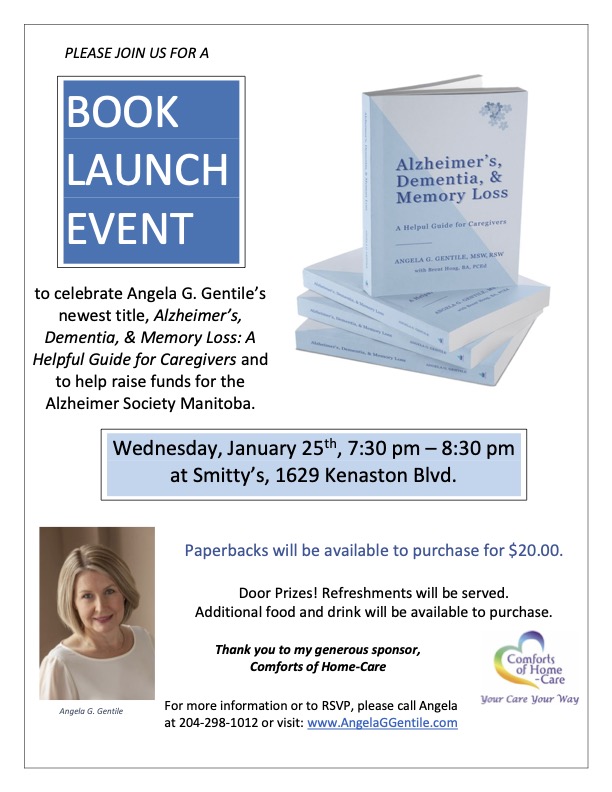
On page 92 of, Alzheimer’s, Dementia, & Memory Loss: A Helpful Guide for Caregivers, which Brent Hoag helped me with, I explain about ambiguous loss, a term coined in the 1970s by Dr. Pauline Boss. It is the unfortunate situation whereby a loved one is still alive, but “lost” at the same time. They are physically present but psychologically absent. This happens when someone is affected by a disease such as Alzheimer’s or one of the many other neurocognitive disorders. Damage to and dying parts of the brain ultimately affects one’s personality. Some caregivers find writing can help them cope with their grief. Brent Hoag wrote a poem in 2021 called “Sail On” which is dedicated to his wife Sally (see below). He then had it made into a song, then naturally a video on YouTube followed (see above).
The book, “Alzheimer’s, Dementia, & Memory Loss: A Helpful Guide for Caregivers” that I helped author Angela G. Gentile in part to write, has been well-received with a lot of positive feedback. My original poem “Sail On,” which I dedicated to my wife Sally who is in the later stages of Alzheimer’s, appears on page 93 which follows Chapter 9 that I wrote addressing humour and coping in relation to Alzheimer’s/Dementia.
For your ease of reference purposes, I am also including the original poem that I wrote that went viral across Canada, the USA, and beyond. I am so grateful to have heard back from countless people who thank me and let me know how much the poem (and now song) resonate with them. It is also great to learn that it has been disseminated/shared within the Alzheimer Society British Columbia and amongst personnel primarily at the renowned UBC Brain Health Centre. The song “Sail On” was also played at a national conference on-line discussion at the University of Waterloo in Ontario, Canada.
Brent Hoag
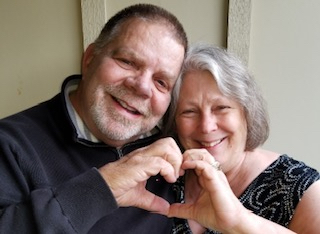
Brent and Sally Hoag
DEDICATED TO SALLY
SAIL ON
So far from the shore
I feel like I am no more
So far from land
I am now a lost husband
I am losing you
You are going away
Like a lost horizon on a cloudy day
From the deck I will release a dove
As a sign for you the one I love
Even though you are still here
I find that you are no longer near
Because you went adrift at sea
I will never again really be me
I love you Sally wherever you are
My heart is broken because you have forever gone afar
Even though I have found the shore
The “we” and “us” are never more
Sail on my love
Sail on my love
I pray that you find my dove
That I sent to you my love
Sail on
Sail on
Until you are finally free
From the bonds of this cruel sea
I will see you one day beyond the horizon
And my heavy tears will be no more
As we join together once again
So far from the shore
Love, Brent 💙
A special thank you goes out to Brent for sharing his beautiful poem. My heart goes out to him.
Angela G. Gentile, MSW, RSW
Note: Brent says, “Feel free to share and further disseminate this.”
Quality Senior Services – Trusted Professionals for All Your Needs. Member Angela G. Gentile.
Edit: I left the group on 12 Sep 2024.
Who can you trust to provide you with services and products that tried, tested, and true? Who do you call when you need professional services, products, or advice? If you are not sure, I have the answer for you!
I am proud to announce I am now a member of the Quality Senior Servicesnetwork of trusted professionals in Winnipeg, Manitoba. Who are we?
We are dedicated to providing quality products and services to seniors.
Are you a senior looking for assistance or someone caring for an older person? The goal of QSS is to help meet the diverse needs of older adults providing easy access to a variety of products and services. Call one of our trusted professionals or visit our website at qualityseniorservices.com to discover how SQQ members can help you or someone you care about.
Quality Senior Services, 2023
Our brochure and website lists an impressive variety of professionals, including:
Realtor
Financial Planner
Disability Tax Credit Advisor
Licensed Insolvency Trustee (Accountant)
Lawyer
Mortgage Broker
Clinical Social Worker (me!)
Dental Care
Nurse Practitioner
Pharmacist
Speech and Swallowing Therapy (SLP)
Private Home Care
Home Medical Supplies
Professional Movers, Transition Specialists, and Estate Sales
Funeral Services
and MORE!
Quality Seniors Services (QSS) was founded in 2007 to provide a trusted and reliable space for seniors and caregivers alike, to find credible professionals with a strong rapport in the older adult community. QSS strives to offer a comprehensive variety of health services providers, professional service providers, and quality of life services providers. Each member of QSS is held to a high standard and is required to have an up-to-date criminal record check, vulnerable persons abuse registry check, and industry certification and professional requirements.
Quality Senior Services, 2023
Many of our members provide mobile or home visits. Accessibility is key. We know.
Our membership is always evolving and we are open to having new members who provide services to older adults and their families. All service providers are vetted and trusted, whether they are health sector, quality of life, or general professionals. We all come with a wealth of experience.
You will see us out at the “Pros Know Expos” and we are always willing to chat with you about your needs.
Angela G. Gentile, MSW, RSW
Clinical Social Worker for Quality Senior Services
For more information on QSS or email us at qseniorservice@gmail.com.
I helped coach a caregiver and his friend through what was a very stressful and horrible day. It ended well, but the experience leaves me angry and I thought I should share it, in the hopes that it will help someone else.
This is a true story of a father and son. Names and other identifying information has been changed to protect identity and confidentiality. I will call the father Mr. Smith, the son Donald, and the friend Krista.
Mr. Smith, 62 years old, was diagnosed with dementia about five years ago. He and his family learned about this diagnosis while he was a patient at the hospital. His son had told the hospital staff that he and his partner at the time couldn’t look after his dad at home any longer and there was no other family members who could look after him. The hospital told the son that if he didn’t take his dad home, he would be sent to a homeless shelter. This didn’t sit right with Donald, so he took his father home.
Fast forward five years later. Donald calls me to say his father has been needing increased care and supervision. He needs to be fed, showered, dressed, and on three occasions he has left the home without notice and was unable to safely return due to his declining cognition. He was unsafe to be left alone for long periods of time. More recently, Mr. Smith left the home and the police were called. Mr. Smith was found on a bus. He didn’t know where he was or where he was going. This was the last straw for Donald. He knew it was time to have his father placed into long-term care.
I advised Donald that he could call Home Care and get the ball rolling for either home care services (which they tried in the past but had failed) or an assessment for long term care, such as personal care home admission. Donald said that it was getting too difficult for him to manage and that he needed this dealt with, urgently. I then advised that he should take his dad to the hospital and tell the medical professionals that his dad is not safe and he can no longer safely and adequately care for his father at home. Donald is the only care provider and told me that any other family members who are aware of the situation agree with the hospitalization and potential admission to personal care home.
Donald and his friend Krista took Mr. Smith to the emergency department that had a shorter waiting time than the other hospitals. They arrived at 9:00 am with an anticipated three-hour wait. I had coached Donald on what to say when he and his dad arrived at triage. That seemed to go well.
What didn’t go well was the three-hour wait turned out to be much longer. Mr. Smith was starting to get agitated. He didn’t understand why he was there. Donald didn’t know what to do so he asked me if I thought he should leave his dad there. I advised against it, however, Donald was getting very stressed and I suggested he talk to the nurse to let them know how he was feeling and to find out how long the wait was going to be.
Donald asked the nurse what would happen if they left. There were four people waiting ahead of Mr. Smith. The nurse at the time said, “Just let us know if you leave.”
Donald and Krista decided to wait another hour. When the hour was up, Donald called me again. He said, “We want to leave dad here, but are worried about what will happen if he decides to leave the hospital.” I said that now that he is in the hospital, he should be safe. The nurse had told you to let them know you are leaving, so if you must, just advise them and then go.
When he told the nurse (a different nurse as there had been a change), they told Donald that he can’t just leave his dad there. Donald said, “Well, you have two security guards at the door, so why can’t you just watch him so that he doesn’t leave. We don’t want him to get hurt.” They then told Donald that if he left his dad there, it would be considered “elder abuse.” Krista immediately responded with, “Don’t go using that term. You don’t know what we have been through. We are here because we want Mr. Smith to be safe. We don’t want a burnt out son and a possible mental breakdown on our hands.” Donald then said, “I have no legal authority over my dad. I have no Power of Attorney, I don’t run his life for him. He is not well, he has dementia, and he needs more care than what I can provide for him. I can’t take him home.”
I told Donald that he in no way would be guilty of elder abuse and that that was an absolutely inappropriate and unprofessional accusation by the person who said that. I told him the hospital have a very vested interest (and responsibility) in keeping his dad safe. I said, “Could you imagine the front page news tomorrow if, heaven forbid, your dad was injured or worse yet, killed, after he left the hospital under their watch?” It would not be your fault, it would be theirs. You have done all you can do and you are done. You are to be commended for the care and concern of your dad until now. It will take a team of trained staff to look after him. You can’t do it anymore.”
Soon after this, they miraculously found Mr. Smith a bed. Donald walked with his dad and the nurse to the emergency room bed. The nurse asked why Donald was following, and he said he wanted to make sure his dad was settled before he left. The nurse told Donald that there were going to be a lot of people seeing his dad, such as social workers, and other professionals and that this may take a while. Donald was satisfied, told them to call with any questions, and with that, went home.
The fact that Donald was accused of “elder abuse” is absolutely unacceptable. This absurd, unfounded accusation towards a burnt-out, stressed, grief-stricken son is horrific. I feel so badly for Donald. He had to basically “surrender” his dad to the healthcare system. One that has failed Mr. Smith and his son miserably. I sometimes wonder if the emergency departments do this on purpose in situations involving dementia – delaying the exam so long that the family decides to take their agitated, confused, frail loved one home rather than wait. Things have to change.
Donald went above and beyond over the last few years to care for his father at home, on his own. Home Care was tried, but it didn’t work for a variety of reasons. The healthcare system fails our family member caregivers time and time again. I see it and hear about it quite often.
For example, I know a dear older woman who is the wife of a man with dementia. She is also stressed and wanting to get her husband on the list for personal care home (PCH). She went through all the proper channels and she was told that he doesn’t qualify for PCH as he is “still able to do so much for himself.” She is burnt out, grieving, and at a loss for what to do next.
Our healthcare system here in Winnipeg, Manitoba needs to change. It needs to recognize the stress put upon the caregiver of a person with dementia. Our healthcare system needs to stop blaming caregivers, and telling them that they are guilty of elder abuse, when in fact they are doing the most difficult thing any loving family member can do (surrender their loved one to the long-term care program) to keep their loved one safe and cared for, while at the same time saving their own sanity. A caregiver already feels shame and guilt. Why add more pressure?
If you need any coaching, advocacy, or counselling regarding the difficulties associated with dementia care, please contact me for a free 15-minute consultation.
My official last day of “work” was on Monday, June 7, 2021. I am reflecting on my last month as a new retiree and I wanted to share my thoughts with you. Most of my thoughts are good ones, so if you are into that sort of thing, you may enjoy what I have to say.
I had read in many places that it is good to retire with “a plan.” Instead of retiring FROM something, you should know what you are retiring TO. My plan for the three months following retirement was to rest, reflect and rejuvenate. One month into it, and I think I am accomplishing that. What I am going to do in the fall has not yet been determined.
Being newly retired after working in various social work positions feels like being on vacation. I felt the immediate sense of pressure, burnout, and overwhelm lift in the first couple of days of my retirement. I started feeling like “me” again. I was sleeping better (and longer), looking after myself, and enjoying the FREEDOM of not having any pressing plans or demands on my time and energy. Getting back to making myself a priority included serious and fun stuff, like:
colouring my hair blue, then purple
painting my finger nails and toe nails
reading/listening to books
started a “Diamond Art” project
saying “No” to some opportunities and commitments to honour my time of reflection and rest
shopping for new non-work clothes, shoes, and other fun things
getting a three-month yoga membership and doing yoga three times weekly
catching up with my friends and talking with them on the phone or FaceTime
going for walks
enjoying my backyard and my flower garden
The other things I have enjoyed is our camping trips with our travel trailer to two of our provincial parks. We went to Spruce Woods and Grand Beach. Although the temperature was around 30 degrees celsius, we made the beset of it!
Now that I have reconnected with myself and my husband (on our camping trips for sure!) my mind and heart are now starting to think about what I want to do with my time starting in the fall. As my energy and passion starts to return, I feel that the sky is the limit on what I can do. I am open to new opportunities, but I don’t want to overwhelm myself just yet.
I have taken my mom’s advice and have written a list of things I want to do each day. Getting a routine and building some structure to my day is helping. (And if I don’t get to it one day, I can carry it over to the next day!)
The biggest surprise so far is how fast the days fly by. I would have thought the days would drag on, but that is not the case for me! This is a reminder to make sure I am intentional with how I spend my time, for fear of “wasting” my life away. No other negatives have been experienced thus far.
I asked my doctor, “What advice would you give me, as a newly retired person?” She said, “Stay active.” I will definitely take her advice seriously.
I am still waiting on my retirement pension papers to arrive. It’s weird not having an income. Hopefully that will get sorted out soon.
No one has asked me (yet) “How’s retirement?” If someone asked me, I would say, “Great!” It still feels like a vacation to me – which is a good thing. How long will this feeling last? Only time will tell. I’ve never been retired before, so this is all new and exciting in it’s own way.








 Angela G. Gentile