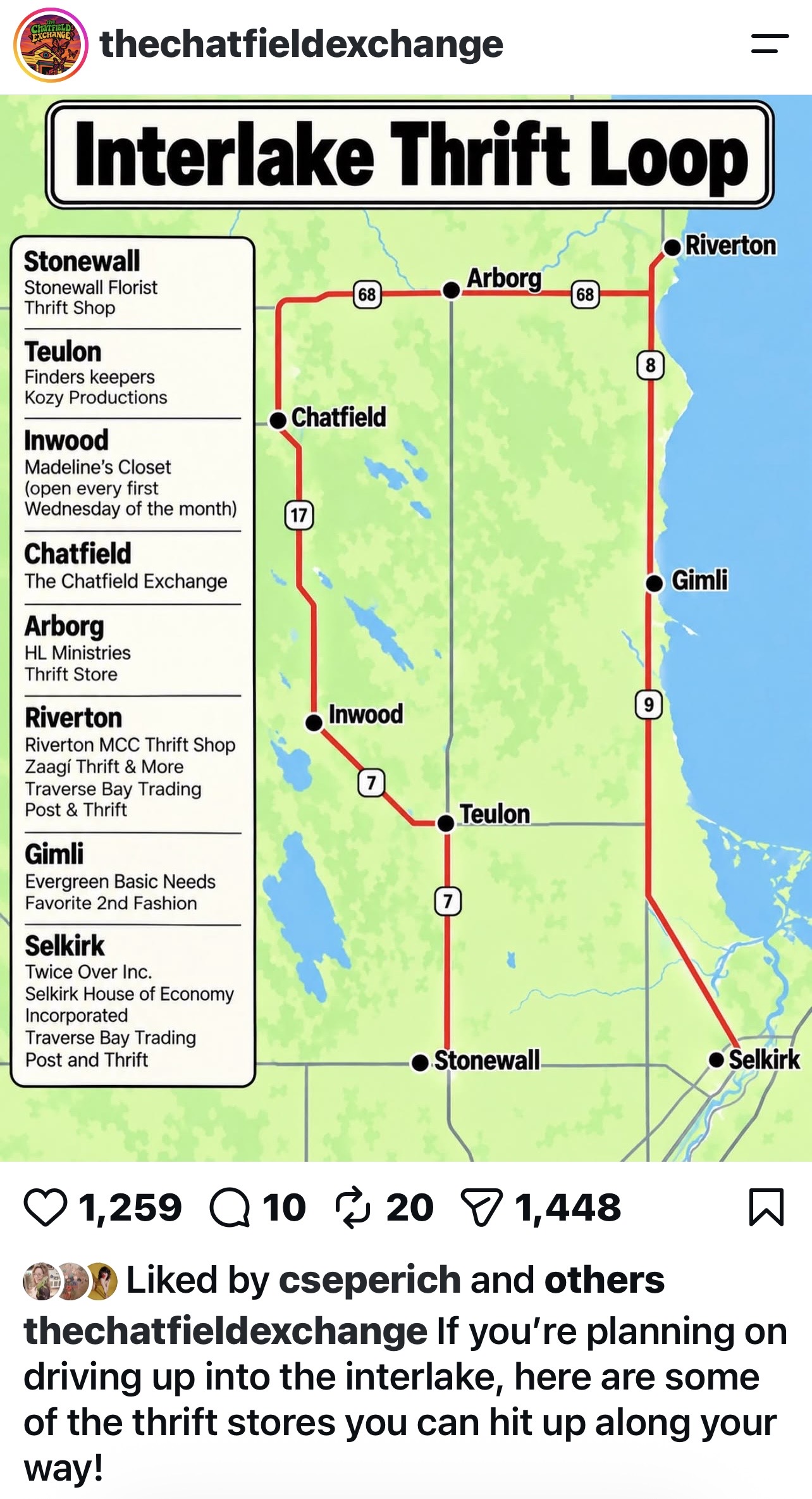
Vintage Finds & Wild Encounters: A Friday Road Trip to the Interlake Region of Manitoba

Chatfield Gallery

There’s something special about combining a love of treasure hunting with a scenic drive through small-town Manitoba. Our Friday May 15, 2026 day-long adventure took my daughter Simone and I from charming second hand shops and thrift stores to delicious local eats and the world-famous Narcisse Snake Dens. Along the way, we uncovered vintage treasures, met wonderful shop owners, and enjoyed some unforgettable wildlife encounters.

Stonewall Florist and Antiques

Stonewall Florist & Antiques, 407 Main Street, Stonewall

Our first stop was this delightful shop in Stonewall. Part flower shop and part antique store, it’s housed in a charming building full of character.

In the basement, we found a cozy vintage section featuring glassware, books, oil lamps, clothing, and a small but interesting assortment of jewelry. Although the jewelry selection was limited, there was plenty to browse.

I came across a sweet little vintage biscuit jar that I immediately imagined using for sugar cubes. The owner was busy taking flower orders but still took the time to chat and offer me a very fair price. We spent about 20 minutes there, and it was the perfect start to our adventure.

Kozy’s and 2nd Time Around Market, Teulon, MB

2nd Time Around Market, 92 Main Street, Teulon

Next, we headed to Teulon and explored 2nd Time Around, a large thrift store that is combined with Kozy’s print shop.

The store offered a wide variety of clothing, dishes, kitchenware, collectibles, and jewelry. Prices were very reasonable, though many items showed signs of wear, so careful inspection was essential.

We left with several treasures, including an adorable Biddy figurine that I couldn’t resist.
Farmhouse Cafe & Bakery, Teulon, MB

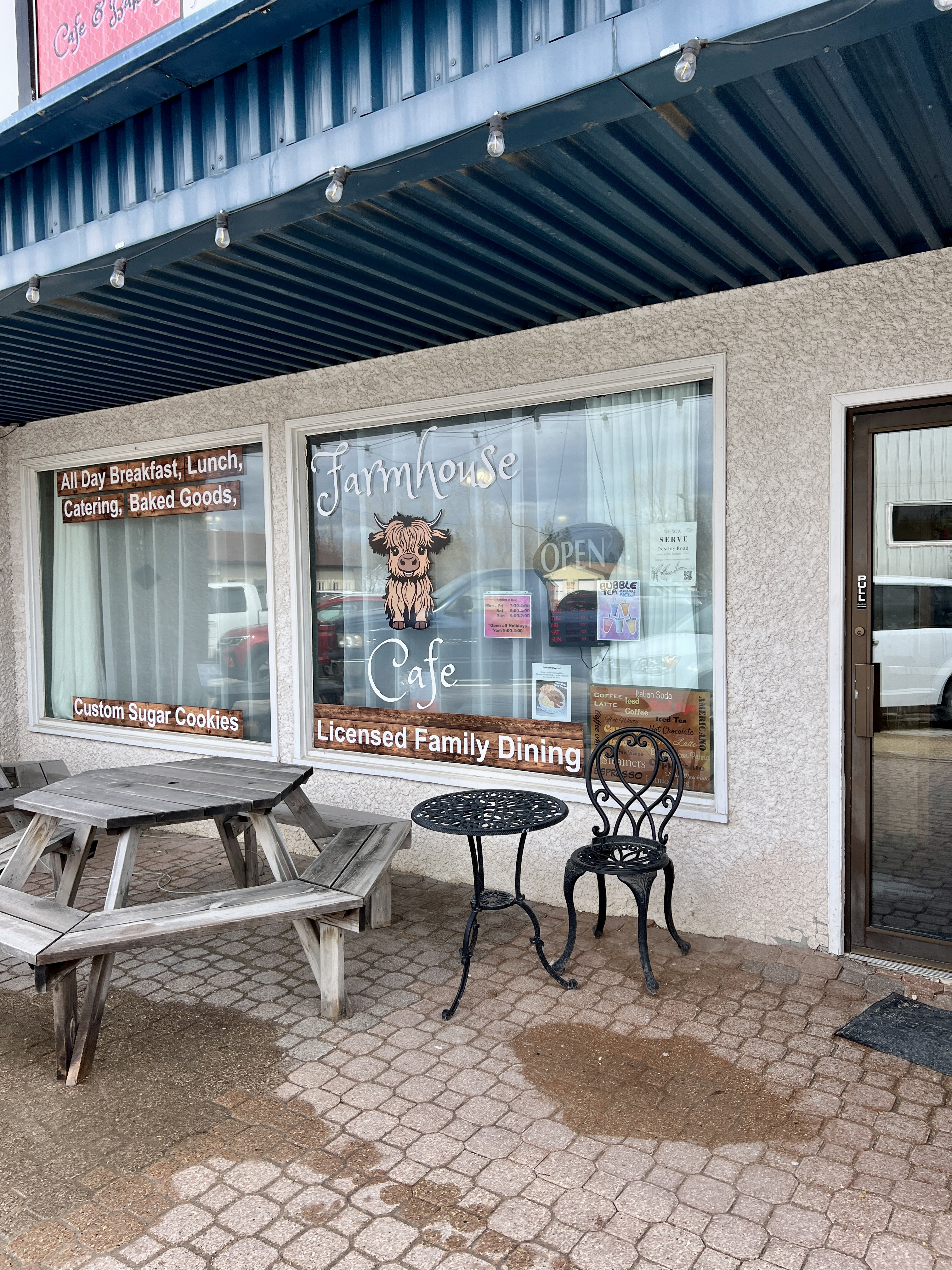
Farmhouse Café & Bakery, 48 Main Street, Teulon

After a successful morning of thrifting, we stopped for lunch at Farmhouse Café.

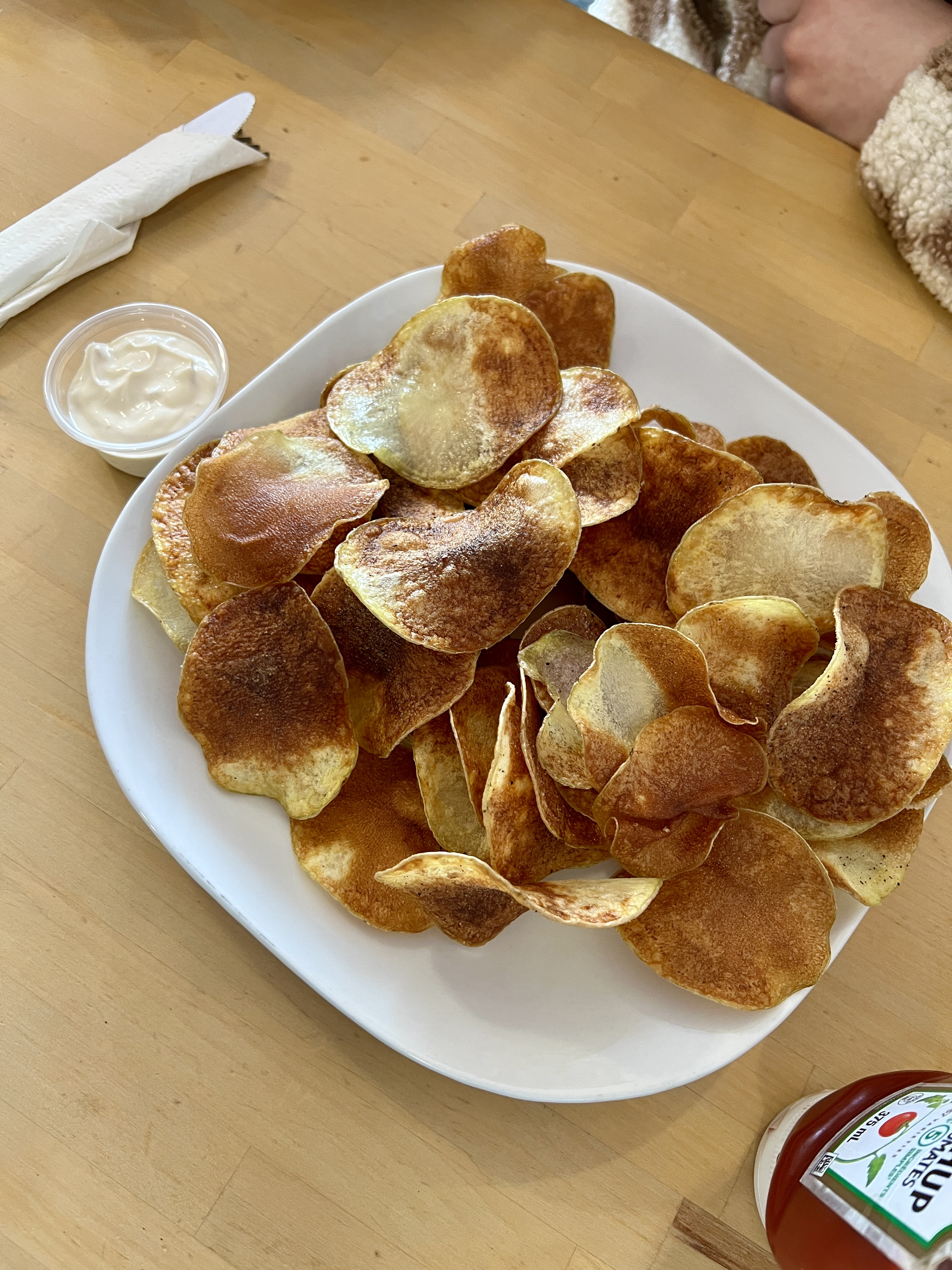
If you visit, I highly recommend the beef tallow potato chips. Thin and crispy, they were absolutely delicious. We chose the French onion dip from three dipping options, and it paired perfectly with the fries.
I also enjoyed a smoked turkey and cheese croissant sandwich, and the service was warm and attentive.

Unfortunately, Finders Keepers was closed due to poor weather (high winds), which gives us a good excuse to return another day.

Chatfield Gallery & Thrift, Chatfield, MB

Chatfield Gallery & Thrift, 4131 Hwy 419, Chatfield

This stop was truly magical. This was the shop that we built our day trip around. We gave ourselves an hour to see everything, but realistically, we could have used two hours!

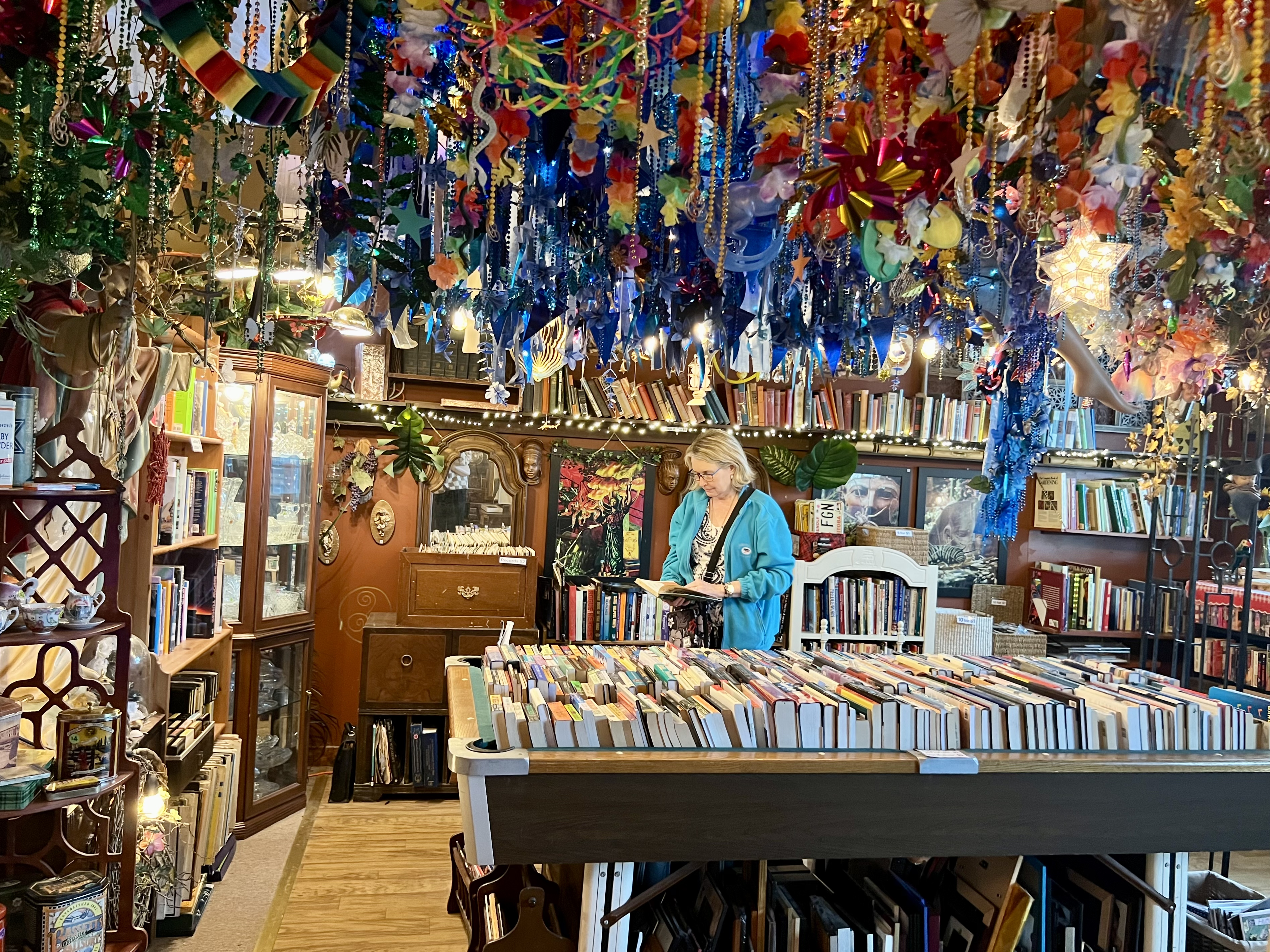
The Gallery was an eclectic wonderland filled with hanging décor, sparkling lights, music, a cozy fireplace, books, trinkets, crystal, china, and countless creative displays. Around every corner there was something interesting to discover—and plenty of opportunities for memorable photos.

Three additional buildings expanded the experience: two filled with thrift treasures and one dedicated to discounted items.

Here we found some wonderful pieces, including a stained-glass clock, vintage watches, earrings, and a pair of tealight candles.

The owner was exceptionally friendly and mentioned that business has been three times busier this year than in previous years.

Narcisse Snake Dens, Garter Snake, Manitoba

Narcisse Snake Dens

Our next stop brought us face to face with one of Manitoba’s most remarkable natural attractions.

Despite the cool 14°C temperature and powerful winds, we saw an impressive number of snakes basking near the dens. I even had the opportunity to hold one—an experience I won’t soon forget.

Adding to the excitement, the Canadian Broadcasting Corporation (CBC National) was there filming a story expected to air later that weekend. This wonder is only witnessed once yearly, usually in the first three weeks of May.

Narcisse Snake Dens, Manitoba

Twice Over Thrift Store, 214 Manitoba Avenue, Selkirk

Our final thrifting destination was Twice Over in Selkirk.

I noticed several items that were still there from my previous visit a few weeks earlier, but I still managed to find a few practical treasures, including a couple of belts (one was leather), and some plastic bowls made in Thailand.

Sometimes the best finds are the ones that are both useful and affordable.

Tim Hortons and the Drive Home

Before returning to Winnipeg, we stopped at Tim Hortons for a warm drink to enjoy on the ride back home to Winnipeg.

Wildlife, Weather, and Wonderful Memories

This road trip offered more than just great shopping.

Along the way, we saw snakes, herons, horses, cows, suicidal ducks, and many other birds.

Although the sky appeared dark and overcast, the dramatic look was caused largely by 70 km/h winds sweeping dust across the prairie.

Final Thoughts

Our Friday road trip had everything I love: spending time with my daughter, vintage treasures, welcoming people, delicious food, fascinating wildlife, and the thrill of discovering the unexpected.

From a charming biscuit jar and a sweet Biddy figurine to a stained-glass clock and memorable snake encounter, every stop added something special to the day.

Some adventures are about where you go. Others are about what you discover along the way.

This was definitely one of those unforgettable Manitoba adventures. 

Angela G. Gentile

(Written with the help of ChatGPT 5.5. Photos are my own or my daughter’s.)
Why Intelligent People Are Drawn to Antiques — And 10 Other Surprising Home Habits

Photo by Gu00fcl Iu015fu0131k on Pexels.com

11 Unusual Things People With High Intelligence Do In Their Homes

By Zayda Slabbekoorn | Written Oct 16, 2025

Even if you imagine the home of the most intelligent person you know as a tidy, incredibly organized, and sterile space, chances are you’re wrong. A study from the University of Minnesota actually argues that untidy, cluttered, and slightly chaotic living spaces are more indicative of intelligence than organization and cleanliness.

Of course, there are many other unusual things people with high intelligence do in their homes — all of which might be a bit of a surprise. From collecting eccentric vintage décor to keeping a physical calendar in the digital age, intelligent people are often drawn to cultivating their homes in a way that prompts mental stimulation. They want to be sparked with inspiration as they get ready for the day or drawn into a state of deep thought when relaxing on their couch — and their décor choices often reflect those desires.

Here are 11 unusual things people with high intelligence do in their homes

1. They keep a whiteboard or a physical calendar

Many studies suggest that physical calendars and brainstorming whiteboards support deeper thinking. They serve as visual reminders and open space for curiosity, intention, and learning to flourish through handwritten notes and prompts. Intelligent people often invest in these physical tools, even if they also use phone or digital versions. It gives them a way to track tasks, brainstorm, and remind themselves visually.

2. They rearrange their furniture often

Research indicates that people with high intelligence tend to be more prosocial, and making their home inviting for guests and conducive to connection is important. They frequently rearrange furniture or tweak spaces so conversations flow, social connection is enhanced, and people feel comfortable in their homes.

3. They keep a desk full of “controlled chaos”

A messy desk can facilitate curiosity and creativity, according to psychological research. Intelligent people often allow a certain amount of clutter in their creative zones — not out of neglect, but because it fuels inspiration. What may look chaotic to others is sometimes the perfect blend of stimulation and creative energy for them.

4. They scatter books and journals everywhere

Highly intelligent people tend to use free moments intentionally — reading, journaling, reflecting — rather than turning to passive entertainment. You’ll find books on nightstands, notebooks in kitchens, journals by the couch. These habits feed self-awareness, help process thoughts, and support reflection in daily life.

5. They are intentional about lighting

Lighting influences mood and mental health. Harsh, bright light can become overstimulating, while soft, warm light brings calm. Intelligent people are mindful of this — choosing bright or natural light for productivity, then switching to softer, ambient lighting when unwinding.

6. They use sticky notes for reminders

Because intelligent minds often make connections across many ideas, visual reminders like sticky notes become useful. Tasks, thoughts, or insights are jotted down and posted around the house: on mirrors, desks, doors. These external cues help track ideas and responsibilities.

7. They unwind in a dedicated space

Though many are social, intelligent people often highly value solitude. They create quiet, intentional places to relax — a reading nook, a small studio, even a corner in the garage. These spots offer refuge for reflection, calm, and mental rest.

8. They use cookbooks with recipes outside their comfort zone

Open-mindedness is a common trait among highly intelligent people. In the kitchen, that means experimenting: trying new cuisines, techniques, or unusual ingredients. Even if the result isn’t perfect, the process of exploration and learning is valued.

9. They learn how to fix random things

High intelligence often goes hand in hand with curiosity, resilience, and self-sufficiency. Many prefer to learn hands-on skills — repairing appliances, patching walls, or doing small maintenance — rather than immediately outsourcing work. The challenge stimulates growth.

10. They create spaces just for thinking

Even during downtime, intelligent minds crave stimulation. Many carve out places — a comfortable chair, a quiet corner, a small room — dedicated to thinking, reflecting, or dreaming. These spaces allow curiosity to flourish without distraction.

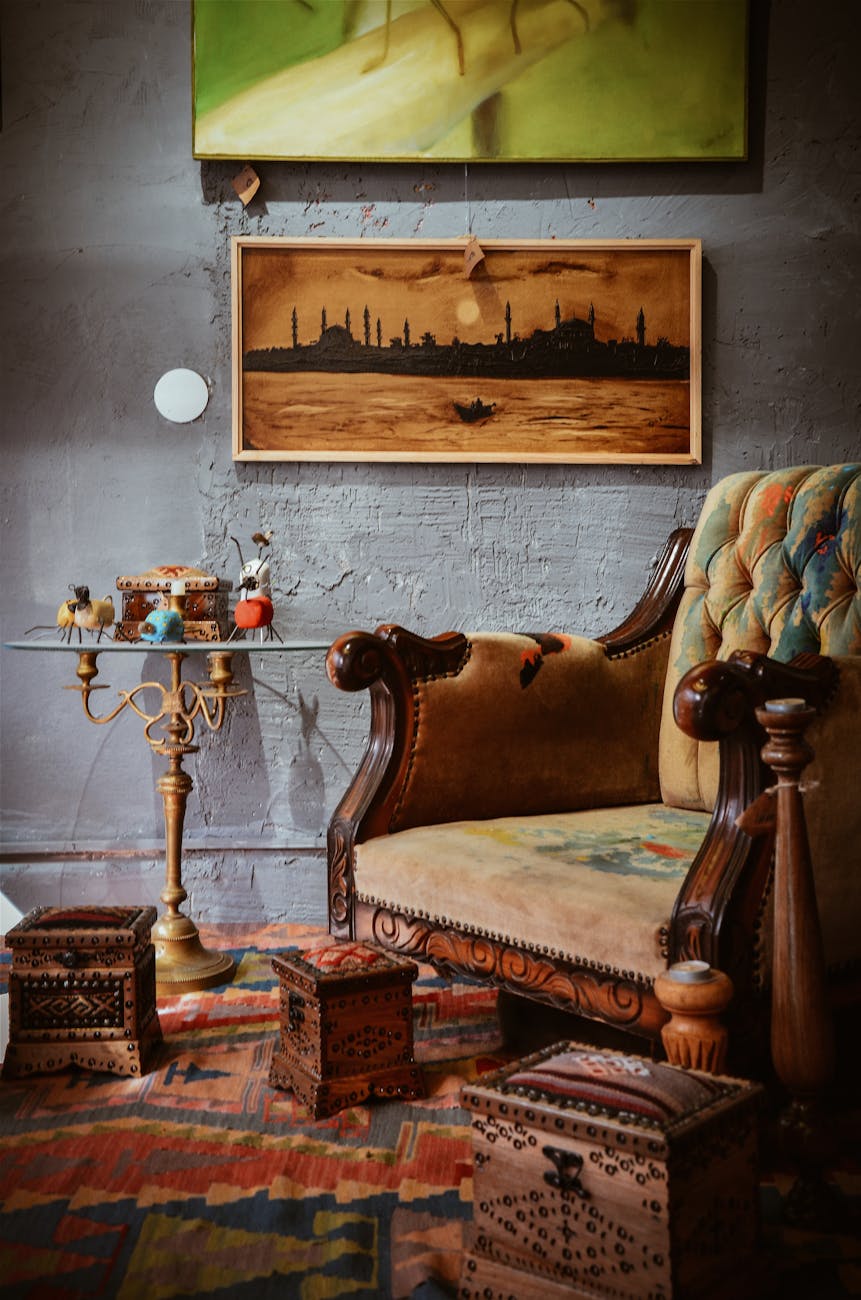
11. They collect unusual antiques

Rather than chasing trends, intelligent people often gravitate toward meaningful, unique, or vintage items. They appreciate the stories, history, and authenticity behind antiques and curiosities. Over time, their homes may fill with eclectic collections that spark thought and reflection.

Here is where the original article can be found: https://www.yourtango.com/self/unusual-things-people-with-high-intelligence-do-in-their-homes

Note: Awaiting permission to republish. If you wrote this article, please contact me, Angela Gentile.

Ways to Boost Your Mental Health Without Overhauling Your Life [Guest Post]

Image via Pexels

By Sharon Wagner

When you think about mental health, what usually comes to mind? Therapy, maybe
medication, or yoga classes on a quiet Saturday morning? Sure—those matter. But your
brain and body crave more than just the standard checklist. Mental well-being doesn’t need
to be a whole new lifestyle. Sometimes, what helps most are subtle, unexpected
shifts—ones that trick your brain into feeling more alive, more grounded, or more at peace.

Plant Something With Your Hands

There’s a quiet kind of magic in dirt under your nails. Even a small container garden or a
few pots on your windowsill can trigger a reset. Science increasingly points to how
gardening calms anxiety
by reducing cortisol, inviting rhythm into your routine, and
reconnecting your senses with the natural world. The act of nurturing something slow-
growing pulls you back into the present—no screens, no pressure, no performance. Just
breath, soil, and the steady hum of becoming.

Create With AI, Not Just Your Hands

Creativity doesn’t need to start with blank paper. Some of the most powerful
breakthroughs come from letting tools do the heavy lifting. With modern technology, AI
painting in visual arts
lets anyone, regardless of training, visually express ideas, memories,
or moods in seconds. It’s not about becoming an artist—it’s about tapping into your own
emotional processing in a language that words don’t always reach.

Use These Mental Health Apps

You don’t need a complicated system to get started—just a phone and a few minutes. These
apps, widely used in Canada, are changing how people get access to support:

PocketWell (Wellness Together Canada companion) — Backed by the federal
government, this app offers mood tracking, self-assessments, and direct access to
social workers or crisis responders—all in a private, judgment-free space.
Fello — Designed to connect users with others who’ve lived through similar
struggles, offering real stories from peer-support users without the pressure of
formal therapy.
MindShift CBT — Developed by Anxiety Canada, this app teaches evidence-based
coping skills rooted in cognitive-behavioral therapy. You’ll find exercises for
reframing anxious thinking, managing panic, and building long-term tools.
MindBeacon — This app pairs you with a licensed therapist who guides you
through a structured CBT program. Many Canadian health plans cover it, making
professional care more accessible without traditional barriers.
Calm — Known worldwide but widely adopted in Canada, Calm offers guided
meditations, sleep stories, breathing exercises, and relaxing music. It’s designed to
lower stress, help you sleep, and make mindfulness part of your day.

Give Your Time to Someone Else

You’re stressed, overwhelmed, and stretched too thin. And strangely, that’s why this works.
One of the simplest shifts you can make is volunteering—an hour, a morning, nothing
extravagant. Studies show volunteering boosts life satisfaction by giving you purpose,
relational validation, and meaningful structure outside your personal grind. It reminds
your nervous system that it still knows how to connect—and care—without needing to be
fixed first.

Get Cold—On Purpose

The ice bath trend might feel performative on social media, but its benefits go deeper than
hype. Cold water immersion has become a mental health intervention in its own right.
Researchers explain how jumping into an ice bath can trigger neurological responses that
regulate mood, reduce cortisol, and even promote mental clarity. You don’t need a
tub—start with a cold shower burst. It’s discomfort that teaches your brain how to recover.

Try Virtual Reality Therapy

You don’t need to leave the house to confront your fears. Therapists are increasingly
integrating immersive therapy with virtual reality into treatment plans, especially for
trauma, phobias, and anxiety. The appeal is real: controlled, repeatable exposure in a safe
simulation. It builds desensitization with precision, helping you develop regulation tools
that transfer into real-world situations. Sometimes it takes another world to help you
handle this one.

You don’t need to “be better.” You need more options. Not every strategy will resonate, but
one might shift something. Try it. Small experiments lead to bigger change. And mental
health? It’s a mosaic, not a makeover.

Discover a wealth of knowledge and support with Angela G. Gentile’s insightful books and
resources—visit AngelaGGentile.com to explore her work and connect with a community
dedicated to well-being and caregiving.

Bio: Sharon Wagner pens her thoughts from her personal retreat in Wisconsin. She finds it deeply satisfying to share about a wide range of topics to people across the US and Canada.

From Malls to Meaning: How I Fell Out of Love with Big-Box Shopping

Photo by Deybson Mallony on Pexels.com

by Angela Gentile – GA Vintage & Gentle Angel Treasures

For most of my life, shopping meant malls, bright lights, and endless rows of shiny, new products. Big-box stores were my go-to for almost everything. I liked the convenience, the variety, and the thrill of finding something new. I even liked the smell of new — walking into a store that smelled like plastic, chemicals, perfume, and fake fragrances was something I grew accustomed to.

But over the past few years — especially since diving into my love for thrifting, vintage treasures, and handmade items — I’ve noticed a big shift in myself:

I rarely feel like going to the mall anymore. Those big-box aisles just don’t hold the same magic.

And here’s why.

1. The Thrill of the Hunt

When I walk into a thrift shop, antique store, or flea market, I don’t know what I’ll find — and that’s the fun of it. Every shelf holds a mystery. Maybe it’s a hand-painted vase from the 1950s, a brooch that’s seen decades of celebrations, or a hand-stitched tablecloth that someone poured hours of love into.

In contrast, big-box shopping feels predictable. Rows of identical items, mass-produced (usually made in China) and ready to be replaced the minute the “new season” arrives. Once you’ve experienced the joy of finding something truly unique, it’s hard to get excited about something you know thousands of other people have in their carts.

2. The Emotional Connection

Vintage and handmade items come with a story. Even if I don’t know every detail, I can feel the history in them. They’ve been loved, used, and cherished before — awaiting a new life.

New products rarely carry that weight of meaning. They’re just “things,” fresh from the factory, waiting for a story to begin.

3. Quality That Lasts

The more I thrift, the more I realize how well older items were made. Small hand-painted collectibles. Jewelry with intricate details. Dishes and glassware that have lasted decades without losing their charm.

Compare that to many new items today — lightweight, mass-produced, sometimes built to last only until the next trend rolls in. Once you know the difference, it’s hard to go back.

4. Better for the Planet

Every time we buy second (or third) hand, we keep something out of the landfill and reduce demand for new manufacturing. That means less waste, less energy use, and less strain on our planet. The same goes for handmade items — often created in small batches, with care, rather than churned out in massive factories.

5. The Happiness Psychology Behind It

There’s even a brain science reason for my shift. Thrifting is like a treasure hunt. When we find something unexpected and special, our brains release dopamine — that little “yay!” hit of happiness.

Big-box shopping? You usually know exactly what you’ll find. Without surprise, there’s less excitement.

My Personal Shopping Checklist

Before I buy anything new now (except for intimates and makeup), I ask myself:

  • Can I find this secondhand or handmade?
  • Will it last?
  • Does it make me feel something?

If the answer is “no” to most of those… I walk away.

Why This Matters to You

When you choose vintage, handmade, or secondhand, you’re not just buying an object — you’re preserving history, supporting small businesses, and giving beautiful, unique, or useful things a new life. It is also more likely you are keeping your money in Canada at a time when the economy is counting on it.

That’s exactly what I do with GA Vintage and Gentle Angel Treasures. Every item I sell is chosen with care, for its charm, quality, and story. Whether it’s a piece of jewelry, a collectible, or home décor, it’s something that deserves to be loved again. Every piece of jewelry I make is “Made with Love.”

So next time you’re tempted by the mall, maybe try a different kind of shopping trip. Wander into a thrift store. Visit a local artisan market. Or browse my latest finds. You might be surprised by what you discover — and how good it feels to own something truly unique.

Let’s give the past a future — one beautiful item at a time.

(Written with the help of ChatGPT 5)

Creative Ways to Reduce Your Stress and Improve Your Mindset [Guest Post]

Image from Pexels

By Sharon Wagner

Reducing stress sounds like a monumental task, but thinking outside the box is often key. What you need is space—a pause long enough to let your thoughts and feelings take shape. Between DIY projects, journaling, painting, or just rearranging a room, there’s an invitation to process, reflect, and affirm who you are becoming. This article isn’t about mastering technique; it’s about giving form to your inner landscape. Let’s explore practical, soul-nourishing ways to do that.


Craft to Build Resilience


Creating something tangible with your hands trains your brain to stay curious and adaptive. Whether you’re knitting, building a wreath, or trying hand lettering, the process wires patience into your nervous system. Over time, these small acts of creation reinforce a growth mindset through arts and crafts—teaching you to pivot when mistakes happen, and to finish what you start. It’s not about perfection; it’s about endurance. That kind of psychological muscle pays off in every part of life. A hot glue gun might not seem like self-care, but don’t underestimate it.

Journaling for Insight


When thoughts spin too fast to write clearly, sketching them out can reveal things words can’t reach. If you haven’t tried it, visual journaling merges word and image to build a record of what you’re thinking, feeling, and shifting through. Some days, it’s watercolor and a date. Other days, it’s angry lines and a glued-down receipt. Each page becomes proof that your internal life deserves attention. You don’t need a narrative—just presence. The goal is not clarity, but contact.


Externalize with Digital Tools


Sometimes, your ideas and emotions are vivid but hard to express through traditional mediums. That’s where tech can help—not to replace your creativity, but to expand it. Using a free AI art generator online, you can turn phrases, moods, or even questions into visual pieces without picking up a brush. It’s not about “cheating” the creative process—it’s about meeting it from a new direction. When you see your thoughts rendered as shape and color, something clicks. It becomes real, and sharable if you choose.


Focus on Sensory Input


We often think of mindfulness as sitting still, eyes closed—but what if it looked like finger painting in silence, or hand-building a planter from clay? Practicing mindful creativity through presence practice helps redirect your attention from outcome to sensation. The feel of the brush, the sound of scissors, the quiet of choosing a palette—these are meditations in motion. You’re not multitasking or producing. You’re noticing. And that noticing is where ideas bloom from the inside out.


Use Creativity for Growth


Art is more than a hobby—it’s a compass when your identity feels in flux. Divorce, retirement, empty nesting, career changes—these are chapters without clear outlines. And that’s where creativity shines. You get to shape your narrative without needing to explain it. One powerful way to reset is to explore creativity as a tool for personal growth, giving your emotions form even when your plans are fuzzy. Think of it as planting a flag in the present moment. It marks the ground where you’re becoming.


Take a Moment to Reset


Looking for a speedy fix? Here’s a quick-hit list of simple 5–10 minute activities that relieve stress—no prep, no guilt, just a reset:


● Go for a brisk walk — even just around the block or indoors.
● Do a 5-minute meditation — focus on breath, sound, or a simple mantra.
● Jot down 3 thoughts in a journal — don’t filter, just write what’s in your head.
● Make a cup of tea mindfully — notice the warmth, aroma, and pace.
● Listen to one favorite song — no distractions, just pure listening.

● Water or repot a plant — engage with something living and low-stakes.
● Wash your hands slowly — tune into scent, temperature, and feel.
● Doodle or color freely — no goal, just motion and visual flow.
● Try a 5-senses scan — name one thing you can see, hear, smell, touch, and taste.
● Write a short thank-you note — to someone who comes to mind, no perfection
needed.

When stress is overwhelming, it can be challenging to find a way forward. What you need is space—to make, to explore, to affirm. Being creative is a great way to regain your voice and your composure. And every project, every messy attempt, every scribbled page is a message: I’m still here. I still get to choose how I show up in the world.


Courtesy links:
One free AI art generator online: https://www.adobe.com/products/firefly/features/ai-art-generator.html
A free online list of ten more creative activities to reduce stress:
https://smartschoolsusa.org/blog/10-ways-to-use-creativity-for-healing-and-personal-growth

References:
https://azenera.com/en-us/blogs/inspiration/arts-and-crafts-how-creativity-enhances-your-life-and-wellbeing
https://psychcentral.com/health/mindful-moment-creative-self-expression
https://www.rmcad.edu/blog/expressive-journeys-understanding-art-journaling
https://smartschoolsusa.org/blog/10-ways-to-use-creativity-for-healing-and-personal-growth

Bio: Sharon Wagner pens her thoughts from her personal retreat in Wisconsin. She finds it deeply satisfying to share about a wide range of topics to people across the US and Canada.

Vintage Treasures – Crocheted Doilies and Table Runners

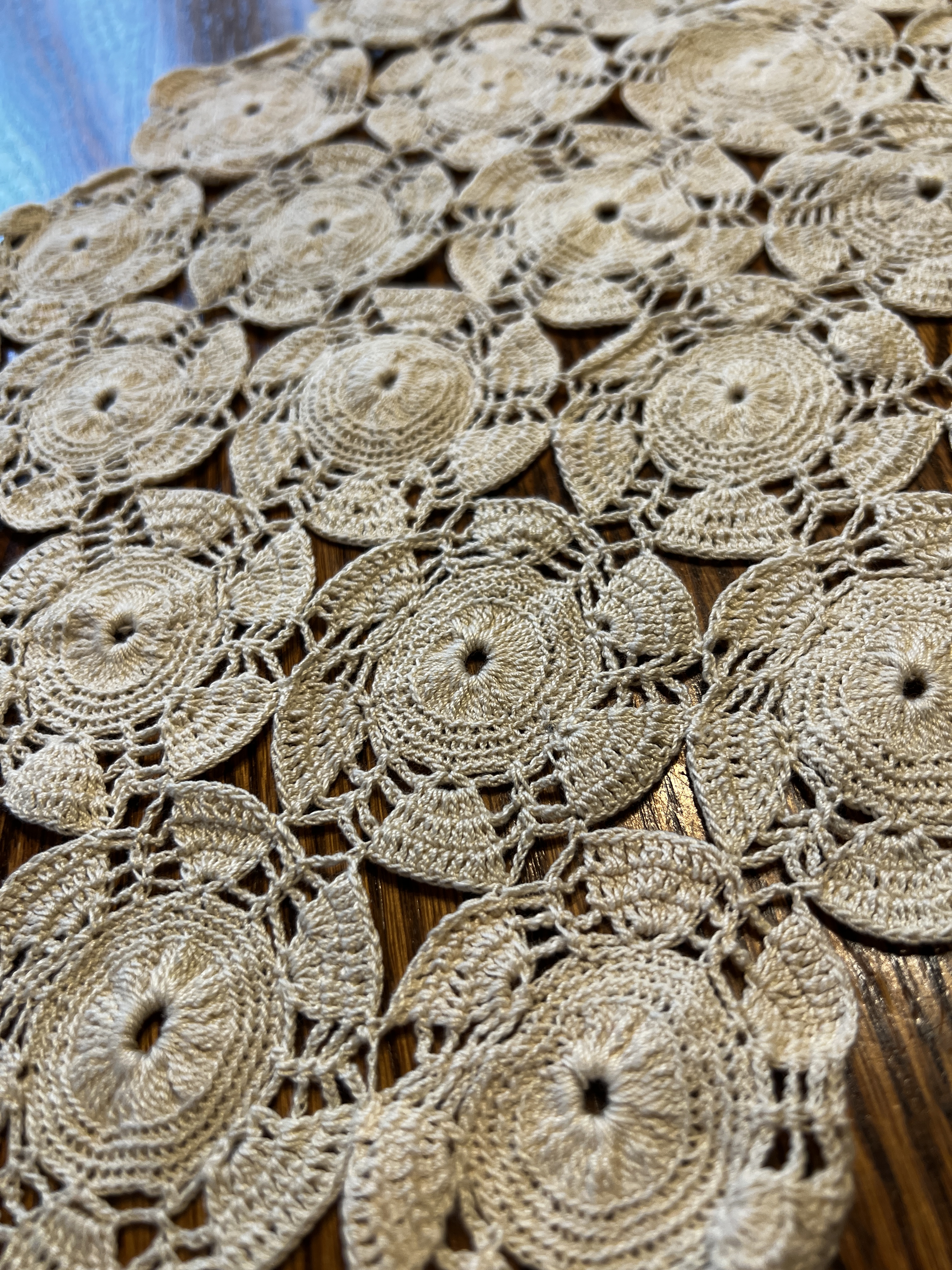
On one of my treasure hunts at a local thrift store I came across this beautiful crocheted table runner. It is quite long (about 30”) and I started to think about the time, effort, and skill needed to handcraft such a beautiful heirloom. I asked ChatGPT 4.0 to give me more information on this timeless piece and it came up with some very interesting information which I will share here.

I used to have a few of these on my dark antique furniture and they had been purchased in Italy. They are long gone now.

This hand-crocheted table runner made of joined lace medallions, is often referred to as a motif table runner or a crochet lace doily table runner. Each round motif is typically called a pineapple motif, rose motif, or simply a floral medallion, depending on the specific design.

It appears to be made from fine cotton thread—likely mercerized cotton, giving it that soft sheen and durability. This type of thread was and still is common for intricate doilies and runners.

This type of work was especially popular between the 1930s to 1960s, with a resurgence in the 1970s during the craft revival. If this one was inherited or sourced from a vintage estate, it is likely from mid-20th century.

Each floral motif would have been hand-crocheted individually and then joined together in a grid-like arrangement. Based on the complexity and uniformity of the stitches, it was likely made by an experienced crafter.

A piece like this could take anywhere from 20 to 40 hours or more, depending on the skill of the crocheter. Each medallion may take 30–45 minutes to complete and join, and there are at least 60 motifs in the runner shown.

Value (2025 Estimate):

  • Market resale value (Canada/US): CAD $30–$85 depending on condition, local demand, and presentation.
  • Higher-end pricing (Etsy, vintage boutiques): up to CAD $120+ if marketed as “handmade vintage lace crochet table runner.”
  • Craftsmanship value (not resale, but to appreciate the work): priceless—these are often family heirlooms.

Tips for Selling or Displaying:

  • Mention that it is handmade vintage crochet, cotton thread, and highlight the floral motif pattern.
  • Use terms like cottagecore, grandmillennial, shabby chic, or French country—these styles are popular with decor buyers.
  • To display it: layer it over a dark or solid color to highlight the intricate work.

What a beautiful treasure I found. Do you have any memories of these beautiful furniture adornments? Can they be repurposed or made into other things?

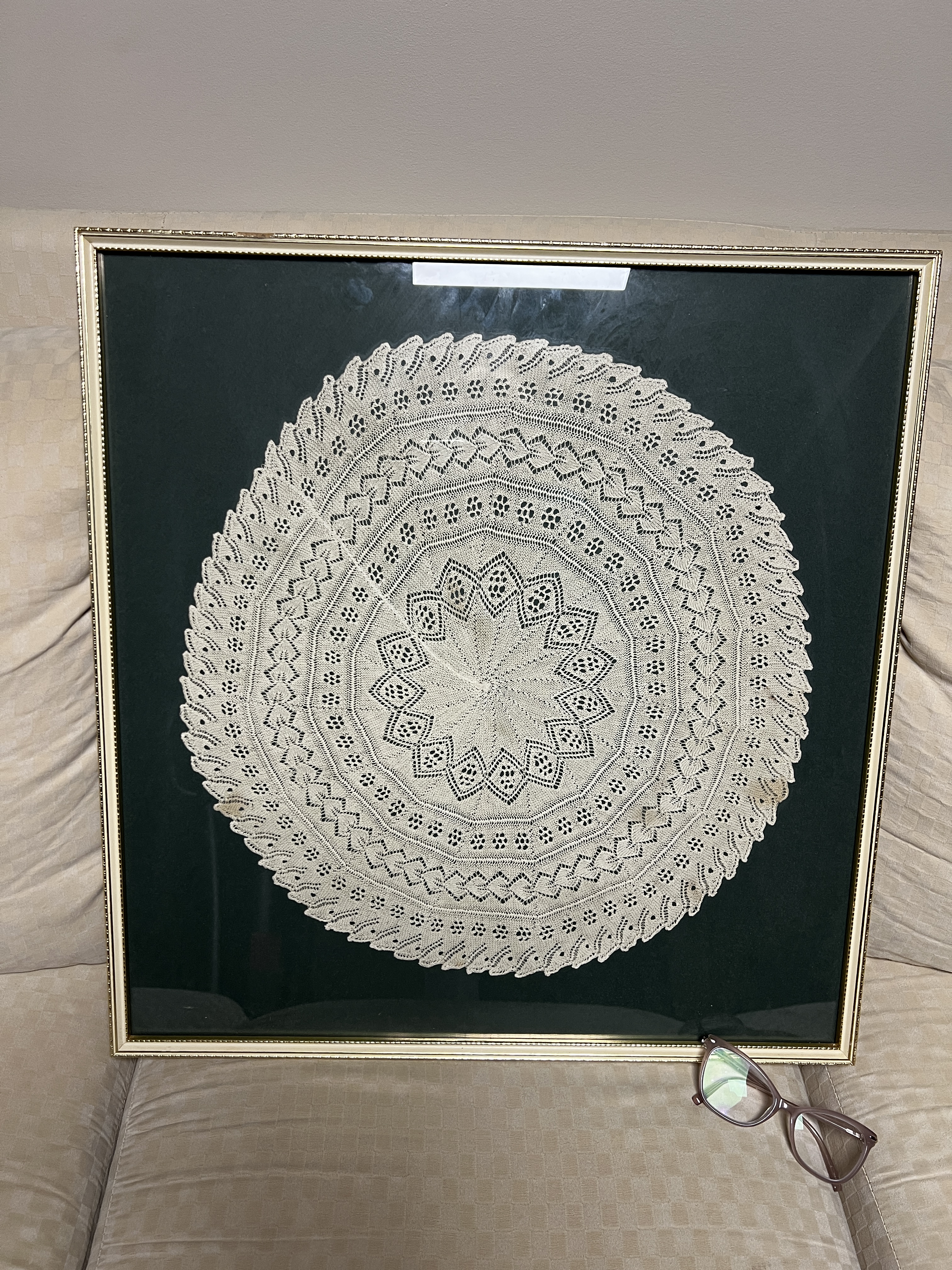
How about this large framed doily (stains and all!) that I inherited from my grandmother. Is this worthy of putting up on a wall somewhere? If this doily could talk!

How many hours did this one take I wonder?

Share your thoughts below or send me an email by completing the contact form.

Angela Gentile

← Back

Thank you for your response. ✨

Gentle Angel Treasures Shop Update

Gentle Angel Treasures (est. 2021)

Hi! Here’s an update on my hobby/business! (This little business is in addition to my private therapy/counselling practice).

Go to the catalog of ideas: Gentle Angel Treasures: Gifts to comfort, encourage, and inspire

THANK YOU for all your continued support. We are making the world a better place, one special gift at a time!

We have been working hard at sourcing out the very best for the shop. I strive to have good quality at reasonable prices. I think I have the lowest prices on semiprecious gemstone bracelets around! Now I am getting ready for the busy holiday season of Christmas and giving, believe it or not! 

I have also enjoyed selling my items at markets around Winnipeg and Manitoba and meeting lots of new people. 🙂

Check out what we have available:

  • Semiprecious Gemstone Crystal Healing Bracelets (stretch)
  • Spinner Fidget Rings (Stainless Steel, Women’s/Men’s/Unisex sizes 5-12)
  • Huggies Earrings (Stainless Steel, Hypoallergenic, Tarnish Resistant)

I also have physical copies of my books written by Angela G. Gentile, MSW, RSW (nonfiction, self-help, and education)

Custom orders available.

I also do restringing and minor jewelry cleaning and repair.

Most items are handmade and handcrafted here in Winnipeg, Manitoba! Some items are upcycled or renewed (this will be noted on my items that this applies to). All items are packaged with love. 

Check out the Gentle Angel Treasures Shop on Square (it’s my catalog of sorts, thanks to Linda Homenick for the suggestion!). We have over 700 items/categories listed for your browsing pleasure – https://gentleangeltreasures.square.site.  If you see something you like, contact me and I will make sure to get it to you!

Follow us on Facebook, Instagram, and TikTok: @gatreasures to see what’s new and what I am up to.

Contact me, Angela Gentile on all social media sites, by phone/text 204-298-1012, or email: gentleangeltreasures@gmail.com. I’d love to hear from you!

I want to hear from you!

Angela G. Gentile

← Back

Thank you for your response. ✨