My 72-Hour Fasting Experience, Part 1

72-hour fastthat's three days!

On 14 Jan 2019, I saw my doctor and discussed my interest in trying a 72-hour fast. I explained that I have been doing intermittent fasting for the last 20 days and I also experienced one 24-hour fast already. I am feeling great, and I wanted to explore the possibility of a prolonged fast that could also help boost my immune system.

I had chemoradiation 17 months ago, and my white blood cell count has been running at a moderately-low level for a few months now. I was told that if I got a fever, I would have to go to the hospital, as “leukopenia” can make it difficult for my body to fight off infection. Also, whenever I get a little cut or something, I am very diligent at making sure I keep it clean and put Polysporin on it.

My doctor explained to me that a prolonged fast will make the liver work harder and my body may experience “starvation” mode. She explained that there are many people who fast for religious reasons, and in fact, her mom has done 72-hour fasts (she would drink only water and black tea or coffee.) She told me that she, herself, couldn’t do it. She also said she can’t “promote fasting” and suggested I speak to a dietician (as it is provided by our provincial healthcare services). I was quite convinced that I can do it without the dietician’s involvement, and I am motivated to see if it can help improve my immune system (as there are studies that show it can help).

Watch: Fasting: Awakening the Rejuvenation from Within

TedXEchoPark with Dr. Valter Longo

My doctor cautioned that if I feel faint or lightheaded, that I should stop the fast and eat something. I told her I will make sure I stay safe and I will always have water and something to eat with me. She gave me a requisition for lab work – including blood glucose and white blood cell counts. She said to get my blood tested in a fasting state and about one month after my prolonged fast has ended.

I plan to do my 72-hour fast starting tonight, after dinner. I will document how it goes in a subsequent post. Wish me luck!

Warm regards,

Angela G. Gentile, MSW, RSW


Intermittent Fasting – A New Way of Eating for Health and Weight Loss

white tableware

Photo by Kaboompics .com on Pexels.com

A couple of months ago, I read an article in a newsletter written by an acquaintance about her five-day “fasting” experience. For health reasons, she drank only water for five days. I was both shocked by this news (how could any live for five days without food?!) and curious (she said she felt better and wants to try for seven days next time.) I tucked this knowledge away in my back pocket, with the intent of learning more.

Then a few weeks after that, I listened to an interview by D’vorah Lansky, bestselling author, who interviewed Gin Stephens who wrote the bestseller, “Delay, Don’t Deny.” D’vorah had adopted the “intermittent fasting” lifestyle and Gin was talking about this way of living and her book sales. This interview was so powerful, I hung on to every word Gin said about how the time-restricted feeding pattern freed her from years of dieting. She lost 80 pounds and has kept it off.

Intermittent fasting (IF) is when you choose to not eat anything for at least 12 hours and for as long as 24 hours. It can be done for religious or health reasons.

I purchased her book (ebook for Kindle) and read it in one day. I loved everything about this new way of eating (WOE) and vowed to myself that I would start on December 26, 2018. I was going to start by not eating after supper and skip breakfast, and only consume water and black tea during my 16-hour fast.

It was much easier than I thought! I felt in control. My hunger pains were short-lived and I soon realized that I was not only eating too much but TOO FREQUENTLY. We are a “well fed” society, and the more I learn about this, the more I understand why there is so much obesity and other related health problems (central abdomen obesity, high blood pressure, high bad cholesterol, low good cholesterol, and high blood sugar). Metabolic syndrome –– which includes three of the five previously-mentioned conditions –– causes an increased risk of cardiovascular disease (heart problems) and type 2 diabetes. Increasing age also causes us to have an increased risk in these areas. I realized in order to reduce my caloric intake, instead of “dieting,” I needed to give myself a “window” of time where it was okay to eat. I am learning how to delay my meals, instead of denying them.

As I write this I am on Day 12 of my new WOE. There is a lot of flexibility with intermittent fasting. For example, my usual pattern is 16 hours of fasting with an 8-hour window of feasting or eating. This is a good place for most people to start. I “close my window” at 8pm, and I don’t eat anything until noon the next day. This gives my body a good 16-hour break from eating. I can drink all the water or black tea (or coffee if I wanted) during the fast. I found I was closing my window earlier, so some of my days were 17 hours of fasting (or more).

Some people choose this 16:8, others choose 18:6 or 20:4 – or some other variation. There are also other patterns, and “extended fasting” which is what the lady did who I mentioned at the beginning of this article. (I’ve also read any fast over 72 hours is dangerous, so be mindful of that.)

For special occasions, where I know I will want to eat or drink outside of my regular window, I can switch up the fasting time. For example, I went for a 21.5-hour fast before new year’s eve so I could have champagne and snacks during the evening. This weekend, I knew I would be having two different family meals, so I did a 24-hour fast. This is also called “alternate day fasting” (ADF) which is another pattern of eating. There is also one-meal-a-day (OMAD) in which the eating window is very short, which could be anywhere between 2-4 hours. Each person finds their own “sweet spot” and you learn how to listen to your body. The Mediterranean diet is what I prefer, as it has the most research behind it for health and longevity. Oh, and my sugar addiction is being curbed as the fasts force me to abstain.

Many people find a lot of benefits associated with intermittent fasting (IF). Improved health and weight loss are the two biggest reasons why people try it. I belong to a few groups on Facebook, and the success stories and non-scale victories (NSV) are very inspiring and encouraging.

IF isn’t for everyone, however, and there isn’t a lot of research on it as it is quite new. I’ve read Gin Stephens’ books and I am also learning from Dr. Jason Fung and will be reading his books, too. Gin says IF is not for pregnant women or children. For those who have pre-existing medical conditions, they should talk to their doctor. In fact, I’ve heard of a few people now who say their doctor recommended IF for their health! It’s been known to reverse type 2 diabetes. If you are considering trying it, please speak to your doctor first.

I am enjoying this new WOE and I am already feeling less bloated and I am sleeping better. I lost 30 pounds a couple of years ago going through my cancer ordeal, and I put most of it back on. The way I lost it was not in a good way. This time I want to lose it in a way that is intentional and will benefit my well-being. I want to reap the benefits of a healthier body that is well fed –– not frequently fed. I also have my own group on Facebook for women who are 40 and better. If you’d like to join us, please drop me a line.

Age well, my friend.

Angela G. Gentile, MSW, RSW


Chair Exercises for Older Adults or those with Mobility Limitations

chair-in-field-785232_1920

Photo credit: jill111 – pixabay.com

I was approached by Joseph Jones at California Mobility to provide my recommendation on how to help an older adult with dementia stick to an exercise routine. My comments are in the article 21 Chair Exercises for Seniors: A Comprehensive Visual Guide.

This extensive guide on chair exercises for older adults (or anyone with mobility issues) includes easy-to-follow videos, helpful images, and lots of great tips on chair exercises. These exercises can be adapted for anyone! Please check out the article for helpful tips on keeping active, at any age.

Age well my friends!

Angela G. Gentile, MSW, RSW


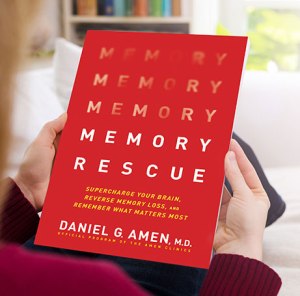
Memory Rescue by Dr. Daniel Amen (2017) – Book Review

img01


I am a geriatric mental health clinician, and frequently I am asked: “How can I improve my memory skills?” The usual recommendations from doctors are, “Exercise and learn new things.” I have been on a quest to find some other tips and tools that people can use to help improve or maintain their brain and memory functions as they age. This need has led me to try to find the perfect book to recommend to those who are looking for more information. “Memory Rescue” has some useful information but it’s not the book I was looking for.

I purchased a copy (Amazon) of psychiatrist Dr. Amen’s book “Memory Rescue: Supercharge your brain, reverse memory loss, and remember what matters most” which has a second subtitle, “The official program of the Amen Clinics.” The Amen Clinics are found all over the USA, and the services and programs offered there are to help people with various mental health and brain health concerns (such as memory loss, ADD, and traumatic brain injury).

This book starts out with 20 testimonials and reviews which is very impressive until I realized they were all from men. The male-dominated view about memory problems and the Amen Clinic program was very strong. The only female presence I felt was from Dr. Amen’s wife, Tana, which was very sparse. There were also a handful of case studies that were about females. As a woman reader and professional, I wish there had been a more balanced perspective.

The overall takeaway of this book, for me, was that this was a big advertisement for his Memory Rescue Program that he offers through his Amen Clinics and the MyBrainFitLife.com website. There were case examples of how his clinics help people, and there were lots of “SPECT” (single photon emission computed tomography) scan photos to “prove” it. Even after looking at numerous SPECT images, I still wasn’t 100% sure what I was looking for. I felt these images were a bit overkill.

Here in Canada, we don’t have access to Amen Clinics, and SPECT scans are reserved for those exceptional cases (which I am still not sure what those cases are.) We tend to favour CT, MRI and PET scans.

Ultimately I was looking for concrete tips on “how to improve memory skills” and “how to improve memory problems.” Amen’s program is intended to enhance your mood and memory skills using the BRIGHT MINDS risk factor approach, with each letter standing for a component of the “ultimate memory formula.” Blood Flow, Retirement and Aging, Inflammation, Genetics, Head Trauma, Toxins, Mental Health, Immunity/Infection Issues, Neurohormone Deficiencies, Diabesity, and Sleep Issues. There was quite a lot of repetition throughout the book, with the main recommendations being: Exercise, Nutrition, Nutraceuticals (and supplements).

On pages 28-30, you can take the “Amen Clinics’ Early Warning Signs Questionnaire.” Your score will provide you with a risk of “significant memory issues,” from low to high. Amen states, if you are at moderate to high risk, it is important to get a thorough medical evaluation.

This book brought up some new terms and concerns. Those including my need for nutraceuticals (which Amen sells on his BrainMD website), getting tested for the APOE gene (related to Alzheimer’s disease), an integrative medicine doctor (but doesn’t say where I can find one). He was heavy on the recommendation of Gingko Biloba (a natural supplement that has limited research evidence to help prevent memory problems, see GEM study). He was anti-marijuana use and wasn’t that clear on what the recommendation was for alcohol use (was it 2-4 servings a week or only 2?).  He suggests coconut oil is good for our brains, but I have read that it is not good for our bodies. There is a lot of reference to the Memory Rescue Diet, but it is not discussed until chapter 16. There are a lot of references to the Bible, which surprised me. He also suggested that “praying to release your worries and to rejoice over the good things around you can help reduce your risk of mental health problems” (p. 337).

Ultimately, as I mentioned earlier, I was looking for specific tips and techniques to help people improve their memory skills. The most helpful part of the book in this regard is found in Chapter 17 “Sharpen Your Memory––Brain Workouts for a Richer Life.” He provides a lot of suggestions of what activities can help strengthen the different areas of the brain such as playing Scrabble, completing crossword puzzles, and learning to play a new musical instrument. He suggests engaging in “map reading” without a GPS device. He’s a big fan of table tennis and other coordination activities, such as dancing, yoga, and tai chi. He says we should travel to new and interesting places and develop relationships with smart people. Music, especially classical, can enhance memory and cognitive function. Surprisingly, I didn’t find the instruction to “pay attention” to what we are doing, which I believe is an essential tip for being able to remember things in the first place. He doesn’t speak to word-finding difficulties, either, which is one thing a lot of older folks are initially concerned about.

The book is well-referenced, and he claims to walk the talk. The index is sub-par, and it could have been enhanced to make finding things a lot easier to find. Some of the reviews online of Amen Clinics state it is a very costly program. There is no mention of costs, but there is mention that the process of improving cognition or mental health often takes months. It’s assumed the program costs thousands of dollars. The MyBrainFitLife.com online program also has a cost, a yearly fee of USD 99. There are some free Brain Assessments (which I completed) which can help one decide on the level of risk one is at. If someone already has memory impairment, a caregiver or loved one will need to read this book as it tends to have some jargon and technical language, and there is lots to read and learn about.

I would recommend this book to anyone who is interested in the Amen Clinic Memory Rescue Program. For specific information on brain health and tips for improving memory skills, Chapter 17 is where you want to start. If you believe in God or a higher power, this will also confirm your faith in how prayer and scripture can support your mental health. The book is somewhat repetitive, however, it drives home the main message––that having a healthy body means better chances for a healthy brain.

I’ll leave you with this: Amen provides hope––“Yet new research suggests that a ‘memory rescue’ program, like the one presented in this book, can dramatically improve memory and can prevent and sometimes even reverse some forms of dementia. Given how most doctors approach this issue, however, you cannot count on traditional medicine to rescue your memory.” (p. 4).

Angela G. Gentile, MSW, RSW (Specialist in Aging)


Cancer Up the Wazoo Book Launch — Photos and Video

Reading

Angela Gentile reading from Cancer Up the Wazoo

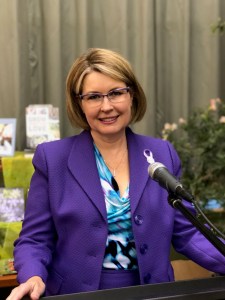
Portrait

Purple suit to match the ribbon!


On Thursday, September 27, 2018, my two latest books Cancer Up the Wazoo and How to Edit an Anthology were presented and launched at McNally Robinson Booksellers in Winnipeg, Manitoba. It was also a fundraiser for the “CancerCare Manitoba Foundation.” 60 people attended and Tache Pharmacy sponsored the beverages. There were also decorated sugar cookies (made with love by me, Sheila and Simone) and brownies (made by Cupp, my husband).


Hope

Cancer Up the Wazoo, How to Edit an Anthology, Hope symbol, and Me (Angela Gentile)

I also revealed my latest project — a symbol of HOPE. It includes the anal cancer ribbon in green and purple and a dragonfly. The logo was created with the talented help from Fusion Communications. The dragonfly is a creation of Chinese brush artist Virginia Lloyd-Davies. Her artwork is also found in the book, Cancer Up the Wazoo. I have plans to help share this beautiful logo with those as a symbol of strength and hope.

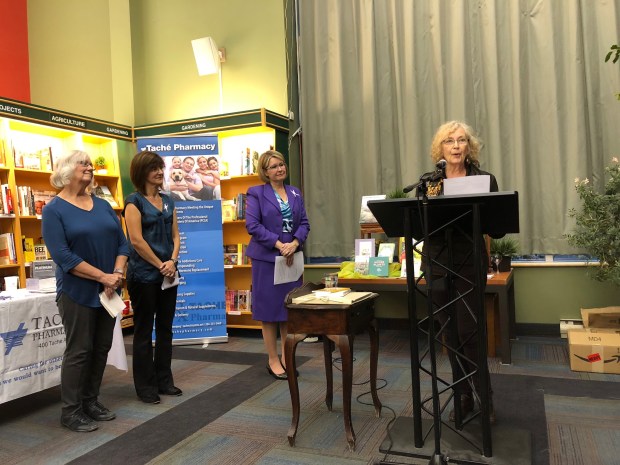
Although there are 25 people who contributed to the book, only 5 of us were able to be at the launch. These three short speeches were very touching.

Speakers

Three guest speakers. Left to right: Lynda Sie Greaves, Maureen Warren, Me (Angela Gentile) and Virginia Davis Wilson).

Fr Sam

Me and Father Sam, one of my esteemed guests!

The presentation was 26 minutes in total. I have put it on YouTube, in two parts.

Part 1:

Part 2:


Signing

People bought books and I signed them if they wanted me to!

cookies


Overall, the launch was a success and we raised $300 for the CancerCare Manitoba Foundation! In addition to that, $1 from the sale of each copy of Wazoo will be donated to the HPV and Anal Cancer Foundation.

To purchase copies, you can find Cancer Up the Wazoo and How to Edit an Anthology on Amazon or at McNally Robinson Booksellers.


A special thank you to all who attended, donated and purchased books.

Warm regards,

Angela G. Gentile

www.AngelaGGentile.com

Book Launch—September 27, 2018, 7:00 p.m.

1535395109

BOOK LAUNCH: Thursday, September 27, 2018, 7:00pm. McNally Robinson Booksellers—1120 Grant Ave., Winnipeg. Refreshments served!

Print

Generously sponsored by Tache Pharmacy


Inspirational. Empowering. Enlightening.

Anal cancer strikes approximately 1 in 500 people, and incidence is on the rise. More women than men are affected. There is little information on this rare, frightening, embarrassing, and often-stigmatized cancer. Although treatment can be quite traumatizing for some, the outcomes are usually positive. Being prepared can help you deal with this life-changing diagnosis.

Cancer Up the Wazoo includes chapters and excerpts written by those whose lives have been affected by anal cancer. Topics include:

  • Anal cancer basics
  • Help for the newly diagnosed
  • Pelvic radiation disease (PRD)
  • Mental health and coping
  • Cancer “blessings”
  • Sexual issues (that arise)
  • Shame and stigma
  • Family and friends’ experiences
  • Advocating for change
  • Helpful supplies list
  • Support and resource reference

… and much more!

This book is filled with tips and personal stories to help prepare and support you (and your loved ones). You will laugh, cry, and be amazed as you read stories of courage and resilience from people who “get it.” There are many resources and supports available to help you cope. You are not alone: Cancer Up the Wazoo will help you feel more confident, prepared, and hopeful as you face this daunting cancer diagnosis.

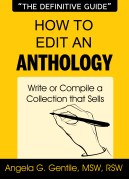
How to Edit an Anthology


Angela will also be launching her other new book, How to Edit an Anthology! Come to hear about both books! 


Other books by Angela:

3dcover (2)agentileebook091015v2

purple-swirl-separator-hi

_DSC6188 4 x 6


Angela G. Gentile, B.S.W., M.S.W., is a registered social worker and is employed as a Geriatric Mental Health Clinician in Winnipeg, Manitoba. She is married to Agapito and has two adult children, Lorenzo and Simone. Angela enjoys writing, reading, and travelling and considers herself a realistic optimist. For more info: www.AngelaGGentile.com

How a Dog or Puppy Can Bring Joy and Companionship into Your Life

Dog-Quotes-2

When I was going through my cancer ordeal, my dog, Rocky (a senior), was my constant companion. He lay beside me on my bed, he followed me downstairs when I went to get something to eat, and on the days I was bedbound, he seemed to be aware of my plight. When my family went out to work or school, or attended family functions that I wasn’t well enough to go to, Rocky was there with me. He seemed to get me more than anyone else. We bonded in a special way. I was never alone.

After my treatments were completed (which were absolutely torturous!), my daughter Simone started talking about wanting a new puppy. She was saying how she was missing having a little girl-dog around, so I encouraged her to get one for herself. I told her we would help her look after it. It didn’t take her long to decide and she went for it!

Well, what a joy this little one has brought to our lives. The fun and excitement started when my daughter called us to say one of the breeders she called said she had puppies that were just a few days old, and she could come and take a look! Soon after, Simone and I made plans to go out to the country to see the puppies. They were purebred Havanese (like a small poodle).

Simone picked out a blond female and named her Berkeley. We visited her every week as she grew old enough to be weaned from her mother. I (we) had something fun, sweet and exciting to look forward to. This helped get my mind off my cancer ordeal. Rocky was still my trusty companion, and this little addition was going to bring a new dynamic to our household. The anticipation of the day we could bring her home was killing us! We were in love.

Dog-Quotes-1

When we went to get Berkeley to bring her back to her forever home, it was as if we had brought home a new baby! We had visitors, puppy gifts, even a “Puppy Shower” my daughter planned. Simone wanted to bond with the puppy so she made sure she looked after all the pup’s needs – such as comfort, food, water and a warm comfy place to sleep. She had to get up in the night to let her out to do her business. The household and family dynamics were changed. Even Rocky had to adapt to having a little one around. Heck, I am even called Gramma now!

I was house-bound for many months during my healing and recovery, so I was the main one helping with the house-training. Often I played with Berkeley as she had lots of energy and a playful spirit (when she was awake). When she started teething, we had to make sure she had lots of appropriate chew toys and made sure the house was “puppy-proofed.”

Berkeley has added so much joy to our lives. I can’t imagine what my recovery journey would have been like without Rocky and our new little one. Raising a puppy is hard work, but the rewards are tremendous.

Please share your dog (or pet) story.

Angela G. Gentile

purple-swirl-separator-hi

Angela G. Gentile  MSW, RSW is a clinical social worker and author of the book, “Caring for a Husband with Dementia: The Ultimate Survival Guide”, “A Book About Burnout: One Social Worker’s Tale of Survival” and the “Dementia Caregiver Solutions” app for iPhone and iPad. She lives in Winnipeg, Manitoba with her husband and has two adult children. For more information, visit: www.AngelaGGentile.com.

“Cancer Up the Wazoo” – Upcoming Book Announcement

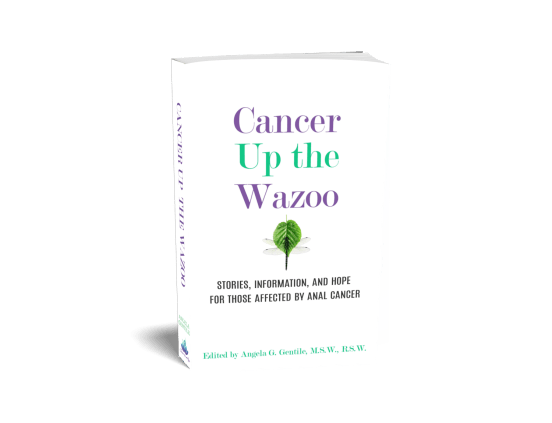
Cancer Up the Wazoo book cover

Cancer Up the Wazoo

Buy “Cancer Up the Wazoo” on Amazon.com


I have been working on a new book! It’s an anthology for people who have been affected by a rare form of cancer – anal cancer. I have a great group of writers who are putting together their experiences and thoughts and I am editing it and putting it all together. It will be professionally copy-edited and I will be self-publishing through Amazon Kindle Direct Publishing. It will be available on Amazon. We are planning for a paperback copy. An electronic version will be provided if there is a demand for that.

The target date for release is in Fall 2018. If you want to be advised when the book is available, please contact me and I will put you on my notice list!

The book is inclusive and diverse and will have stories written by men and women. Friends and family members of those affected also have some advice and experience to share. We have contributions by teachers, professors, nurses, social workers, technicians, clinicians, principals, counsellors, personal support workers, and so many more! It will be helpful to anyone who is affected with cancer, especially anal cancer. Professionals, family members, caregiver, patients and survivors will enjoy this book. It will include almost everything you need to get through!

Topics in Cancer Up the Wazoo to include:

  • Anal Cancer – The Basics
  • For the Newly Diagnosed
  • Mental Health and Coping
  • Anxiety and Depression
  • Advocacy and Awareness
  • List of Supplies You May Need
  • Positive Affirmations to Help You Get Through
  • A Transformational Journey Through Cancer
  • When a Close Friend Has Cancer
  • The Power of a Mother’s Love
  • Cancer Blessings
  • What Cancer “Taught” Me
  • Overcoming the Shame of Anal Cancer
  • The Seven Phases of the Cancer Journey
  • Moving On After Cancer
  • Etc.

There will be tons more! This book will have tips, support, resources, advice and especially HOPE for those who are going through this cancer experience. There are references to God and faith. There will also be some humor sprinkled throughout!

Warm regards,

Angela G. Gentile

P.S. There is still time to contribute if you want to have your voice heard!

purple-swirl-separator-hi

Angela G. Gentile  MSW, RSW is a clinical social worker and author of the book, “Caring for a Husband with Dementia: The Ultimate Survival Guide”, “A Book About Burnout: One Social Worker’s Tale of Survival” and the “Dementia Caregiver Solutions” app for iPhone and iPad. She lives in Winnipeg, Manitoba with her husband and has two adult children. For more information, visit: www.AngelaGGentile.com


SaveSave

The Truth Is – Alternative Therapies Provide Nothing More than Placebo Effects (Book Review)

trick-or-treatment-cover-vs

Trick or Treatment by Singh & Ernst

Dr. Simon Singh and Professor Edzard Ernst team up in Trick or Treatment: Alternative Medicine on Trial (2008) to bust the myths of the effectiveness of some of the most popular complementary and alternative treatments. Ernst’s impressive occupational and education history make him far more than qualified to be the one to take on this task. He was formerly a clinical doctor and studied homeopathy. Singh has a Ph.D. in particle physics and is a New York Times bestselling author. Trick or Treatment was written in response to His Royal Highness, The Prince of Wales’ request to have alternative treatments examined closely for their efficacy based on scientific testing. Ernst and Singh put together an impressive lineup of reasons why unorthodox and ancient treatments such as acupuncture, homeopathy, chiropractic and herbal medicine are mainly nothing more than a placebo and also come with risks.

This controversial stand on alternative treatments has me convinced, as I am a scientific-based kind of believer – especially when it comes to healthcare, risks and providing false hope. I am a cancer survivor and have done my due diligence of researching treatments and cures, both orthodox and integrative. I do sway sometimes into the “fantasy” and “wishful thinking” camp when it comes to some of the energy healing modalities, such as Spiritual, Reiki, Chakras and Pendulum (or dowsing) healing. I consider myself very open-minded, and if there are little costs and little risks involved, I am willing to give anything a try.

The book is quite repetitive on some points, mainly, that alternative therapies don’t work. It also seemed to be one big advertisement for St. John’s Wort, an herbal medicine that has been proven to treat mild to moderate depression. There was also some support for “fish oil” to combat inflammation in arthritis.

I liked the fact that Ernst has a history in homeopathy and he took the time to research many of the alternative and complementary therapies according to scientific-based evidence. Many of these therapies have been studied and he has dug up the dirt and given us a couple quick reference tools to refer to. For example, he has two pages of “Herbal Medicine Ratings” and cautions people that even though these are categorized as “natural” remedies, they are not always safe. He also strongly urges people to let their doctor know what herbs they are taking as they can interfere with pharmaceuticals. His second guide will be discussed below.

There are many references throughout the book giving examples of how people with cancer often seek alternative therapies (or at least are recommended by others to seek them). For example, the often-recommended “natural anti-cancer” treatment of laetrile (apricot pits) has been used and promoted since the nineteenth century. Due to scientific rigors, laetrile has since been labelled as “quackery” due to its ineffectiveness and risky side effects. Although this information is out there, people continue to use it to this day. This is true for many other alternative treatments.

The authors list ten culprits why these unproven and disproven treatments continue to be used, promoted and wrongfully touted as effective. It is an actual eye-opener, especially when we realize the power of the media, universities and alternative gurus such as Deepak Chopra and Dr. Andrew Weil.

There is an impressive “Rapid Guide to Alternative Therapies” which has about 35 different modalities covering many popular and not-so-popular techniques and gadgets people are using (e.g., crystals, magnets, special diets). The authors include a definition, background, evidence and conclusion and reassure the reader these therapies have been rigorously investigated against scientific evidence and meta-analyses where available.

This is a well-written book which has helped me open my eyes to the reasons why these alternative therapies are still around, despite the truth, that they are nothing more than placebos (and some come with risks that are rarely talked about). Placebos that are harmless offer nothing more than psychological benefits. Where there is belief and hope that something will work, it most likely will. That’s the power of the mind at work. If nothing else, it will provide the person with a sense of hope for the future, a feeling of wellness and a certain level of comfort that there is something “magical” at work. As long as there are little risks, little costs and big rewards, people will continue to seek out these treatments. Unfortunately there are some very expensive “treatments” as well, and charlatans and quacks are taking advantage of people when they are vulnerable.

Some people feel that doing something is better than doing nothing – as the placebo effect works in mysterious ways.

I would recommend this book to anyone who wants to know the truth about alternative medicine and would rather put their efforts, resources and hope into reliable, scientific-based, effective medical treatments and cures.

The other book I read on this topic came up with the same conclusion about the placebo effect – Do You Believe in Magic? The Sense and Nonsense of Alternative Medicine by Paul A. Offit.

Angela G. Gentile


purple-swirl-separator-hi

Angela G. Gentile  MSW, RSW is a clinical social worker and author of the book, “Caring for a Husband with Dementia: The Ultimate Survival Guide”, “A Book About Burnout: One Social Worker’s Tale of Survival” and the “Dementia Caregiver Solutions” app for iPhone and iPad. She lives in Winnipeg, Manitoba with her husband and has two adult children. She is creator of the Facebook communities – “Aging Well for Women” as well as “Living Well With and After Cancer” For more information, visit: www.AngelaGGentile.com

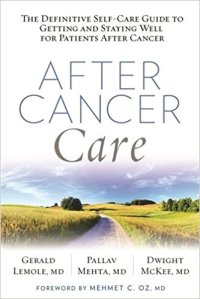
A Holistic Wellness and Rehabilitation Program for Those Who Have Completed Cancer Treatment – Book Review

515HM5o4t9L._SX331_BO1,204,203,200_
“After Cancer Care: The Definitive Self-Care Guide to Getting and Staying Well for Patients After Cancer” (2015) by doctors Gerald Lemole, Pallav Mehta and Dwight McKee is based on the premise that cancer patients would benefit from a rehabilitation program same as cardiac patients. These doctors who work within an integrative care model argue that a well-designed and personalized program which includes exercise, nutrition and stress management would help those who have been treated for cancer live a better quality of life and help reduce the risk for relapses or recurrences. The body, mind and spirit are well-covered in this holistic approach to wellness after cancer.

Although the font was very small in the paperback I read, I was able to read it although I needed my reading glasses! Most people with cancer are aged over 50 so I was surprised to see such a small font.

The nutrition section talks about the use of coconut oil as a recommended choice for cooking. Even though the authors say coconut oil is a saturated fat, they still recommend it. They also do not recommend canola oil. This information is contradictory to what some Canadian dieticians are recommending now. The recipe section near the end of the book also has coconut oil as an alternate for olive oil. These recipes and the advice re: canola and coconut oils should be researched a bit more before making your own choice in what oils you use.

The book has some repetitive information, however, the repeats seem to stress some of the important points. On the other hand, it completely neglected some important topics (or there was very little information on) such as Human Papilloma Virus (HPV) and Mindfulness. The importance and benefits of journalling and writing were not stressed and it would have been nice to see a little more written about that.

The index is not as good as it could be. I found some key terms were missing such as cervical cancer and paillomavirus.

I would have loved to see a listing of “approved” complementary or supplemental treatments, services and modalities. There is a sprinkling of ideas throughout the book, but it would have been nice to have a chapter that explained each idea and the science around them when it comes to wellness and health. It would have also been helpful to see a listing of harmful modalities or treatments.

Chapter 7, “Avoiding Toxins”, was too unrealistic for me. One of the recommendations was to rid your house of your carpets. This is an extreme measure for those of us who have carpets, and it would be a very costly venture. Some of the advice such as using non-toxic cleaning supplies and avoiding toxins in your food (such as mercury in fish) are more realistic goals to achieve. This would have been a good place to add information about HPV and the vaccine.

Chapter 8, which comprises about a quarter of the book, focuses on 11 common types of cancers and the doctors share their “Cancer Protocols” on cancers such as breast, lung and prostate. The cancer I had, anal cancer, was not mentioned in the book, unfortunately.

Overall, it’s a well-edited and researched book with a lot of scientific references in the “Endnotes” section. The “Conclusion” is an excellent reference as it lists 28 points the doctors call “The Quick Hits.” A great book for anyone who has been diagnosed with cancer, is at or near completion of treatment, and is proactive in restoring, maintaining and maximizing his or her health.

Angela G. Gentile

purple-swirl-separator-hi

Angela G. Gentile  MSW, RSW is a clinical social worker and author of the book, “Caring for a Husband with Dementia: The Ultimate Survival Guide”, “A Book About Burnout: One Social Worker’s Tale of Survival” and the “Dementia Caregiver Solutions” app for iPhone and iPad. She lives in Winnipeg, Manitoba with her husband and has two adult children. She is creator of the Facebook communities – “Aging Well for Women” as well as “God, Cancer and Me.” For more information, visit: www.AngelaGGentile.com