
Appropriate and/or Correct Words and Phrases (No offense!)

words by https://redzenradishphotography.com

Photo credit: Words by Kristina Krause of Redzenradish Photography

√ Use … × Instead of…

Mental Health:

√ Died by suicide

× Committed/Completed/Successful suicide

√ Suicidal ideation with a plan; suicide without a plan

× Active suicidal ideation; Passive suicidal ideation  

√ Alcohol use disorder/Benzodiazepine use disorder

× Alcohol dependence or use continuous

√ Person with a mental health disability; person who has/person diagnosed with depression/schizophrenia, etc.; Terminology varies throughout countries – “insane” and “insanity” are generally legal terms and reported as such in news programming

× Negative references to mental health and well-being such as: lunatic, mental patient, mental disease, neurotic, psychotic, crazy

Physical Abilities:

√ Hard of hearing; deaf; deafened or late-deafened; Deaf (uses sign language)

× Hearing-impaired; blanket term “deaf” used at the wrong time 

√ Person who uses a wheelchair

√ Wheelchair user

× Wheelchair-bound  

√ Non-disabled

× Normal

√ Person living with vision loss

√ Person who is blind

√ Person who has a vision impairment

× Blind; visually impaired  

√ Person with a disability

√ Persons with disabilities

√ People with disabilities

√ Individuals with disabilities

× Disabled, invalid, handicapped, physically challenged (challenges and handicaps are environmental conditions) 

√  Person born with a disability

× Birth defect, deformity/deformed, congenital defect

√ Person with a disability or a person with a/who has a motion disability;

√ Person with (e.g., a spinal cord injury)

× Crippled or lame

Medical Conditions:

√ Has (e.g., asthma, cancer)

× Suffers from (e.g., asthma, cancer)   

√ Person/people/individual with (a) dementia

√ Person/people/individual living with dementia

√ Person/people living well with dementia

√ A person with Alzheimer’s disease

× Dementia sufferer; demented; senile or senile dementia; burden; victim; plague; epidemic; living death (e.g., dementia is a living death)

♥ Re: “dementia patient” – okay to use when talking about people in a hospital or actually using a care service).

√  Person who has (a particular disease or condition). Ex: A person who has had a stroke.

× Suffers from; was stricken with; is confined to; or is afflicted by/with. These terms patronize, pity, victimize or insult.

Other Terms:

√ Older people; older person; older adult

× Elderly; old people; old person

 ♥ Seniors or senior citizens is an acceptable term for most.

√ Accessible parking

× Handicapped parking

√ Accessible bathrooms

× Handicapped bathrooms

√ Person with an intellectual disability or persons with learning disabilities

× Mentally retarded; retarded; mentally defective; mentally challenged

 √ Indigenous Peoples, First Nations Peoples, Inuit Peoples, Metis Peoples, Aboriginal Peoples. Note: Always go with what they are calling themselves. 

Eskimo, Indian, Native are less-used terms and can be taken as derogatory.

√ Black (as an adjective); African-American/African-Americans (as nouns) (both are acceptable, but not necessarily interchangeable.) In Canada, Black or Black Canadian.

× N-word 

SIMPLE RULE: It’s people first. The person comes first.

The disability or disease comes second.

REGARDING IMAGES: Use images that reflect the whole person, rather than a fading face or wrinkled hands. This is especially important when the article is about living a positive life or overcoming challenges.

Angela G. Gentile

purple-swirl-separator-hi

Angela G. Gentile  MSW, RSW is a clinical social worker and author of the book, “Caring for a Husband with Dementia: The Ultimate Survival Guide,” “A Book About Burnout: One Social Worker’s Tale of Survival,” “How to Edit an Anthology: Write or Compile a Collection that Sells,” and the “Dementia Caregiver Solutions” app for iPhone and iPad. She lives in Winnipeg, Manitoba with her husband and has two adult children. For more information, visit: www.AngelaGGentile.com


Search terms: politically correct, political correctness, terminology, writing, speaking, sensitive, appropriate, modern, neutral, acceptable
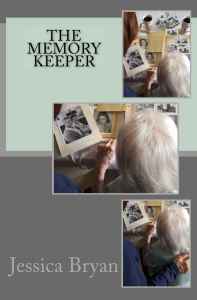
 

“The Memory Keeper” Will Touch Your Heart and Tickle Your Funny Bone – Book Review

692172687

Five Stars *****

JESSICA BRYAN’S SWEET AND HUMOROUS ACCOUNTS of life with her 99-year-old mother who has Alzheimer’s disease will touch your heart and tickle your funny bone. Jessica states there is never a dull moment in the Bryan household, and you will be entertained as she writes about her experiences in an easy-to-read, conversational tone. Jessica believes “When things get too heavy, you just have to lighten the mood.”

Although it is heart-wrenching when she writes about her mother “disappearing moment by moment, memory by memory,” her stories will encourage you—knowing that caring for a loved one who has Alzheimer’s has its rewards and there is humour to be found in any situation. The photos sprinkled throughout add a beautiful, personal touch. Anyone who values the importance of love and caring for one another in difficult times (especially caregivers and family members) will enjoy reading “The Memory Keeper” (2018).

Available in Kindle and paperback on Amazon.

Angela G. Gentile

purple-swirl-separator-hi

Angela G. Gentile  MSW, RSW is a clinical social worker and author of the book, “Caring for a Husband with Dementia: The Ultimate Survival Guide,” “A Book About Burnout: One Social Worker’s Tale of Survival,” “How to Edit an Anthology: Write or Compile a Collection that Sells,” and the “Dementia Caregiver Solutions” app for iPhone and iPad. She lives in Winnipeg, Manitoba with her husband and has two adult children. For more information, visit: www.AngelaGGentile.com

Ways to Improve Your Memory Skills Podcast Interview

Angela-Gentile-Episode-Image

I had the pleasure of being interviewed by Kathe Kline in March 2017 for the Rock Your Retirement Show and it went live on 23 Oct 2017. Have a listen to my 30-minute audio only podcast (it’s like a radio show) to hear me talk about various topics including tips on how to improve memory skills. You can play it off your device, or download and listen to it later. There is a freebie on this as well, you just have to sign up to get a copy of it (see link below).

Link to the interview – Ways to Improve Memory Skills

Here are links to the show in popular smartphone apps:

iTunes

Stitcher

iHeartRadio

I have also provided a Freebie for the listeners – Five Strategies to Help Improve Memory Skills.

After you’ve had a listen, please feel free to comment on the Rock Your Retirement Show interview link page (see link above), or down below, here. Or just send me a personal note.

About Rock Your Retirement and Kathe Kline.

Rock on!

Angela G. Gentile

purple-swirl-separator-hi

Angela G. Gentile  MSW, RSW is a clinical social worker and author of the book, “Caring for a Husband with Dementia: The Ultimate Survival Guide”, “A Book About Burnout: One Social Worker’s Tale of Survival” and the “Dementia Caregiver Solutions” app for iPhone and iPad. She lives in Winnipeg, Manitoba with her husband and has two adult children. She is creator of the Facebook communities – “Aging Well for Women” as well as “God, Cancer and Me.” For more information, visit: www.AngelaGGentile.com


Aging Specialist Offering Two New Courses This Spring (Winnipeg)

7fd3c75caf166af80aef7cb58709152dWinnipeg, Manitoba – There are two new courses being offered by Angela Gentile, a registered clinical social worker. Angela has a Master’s degree in Social Work and a graduate specialization in aging. She has worked with many older adults and their families and she has written two books and an app. She is passionate about helping people and exploring what it means to age well. Attend these informative and interactive sessions and get Angela’s professional advice. Come away feeling confident and empowered.

10 Tips for Graceful Aging

Learn what you can do to help yourself thrive in your middle years and beyond. The dimensions of wellness will also be covered.

►Date and Time: Tuesday April 25, 2017; 7:00 – 9:00 pm.

►Location: St. James Civic Centre, 2055 Ness Avenue, Winnipeg Manitoba.

►Fee: $25.00

When a Loved One Has Memory Loss

Are you living with or do you know someone who has been experiencing memory loss and you’re not sure how to help? Get some information and tips on how to approach this sensitive and difficult topic.

►Date and Time: Thursday May 11, 2017;  7:00 – 9:00 pm.

►Location: St. James Civic Centre, 2055 Ness Avenue, Winnipeg Manitoba.

►Fee: $25.00

Registration Information:

Both courses are listed in the City of Winnipeg Leisure Guide, Spring/Summer 2017 pages 69 and 70. See page 4 of the guide for registration information which begins Wednesday March 15, 2017 at 8:00 am. It can be done online, by phone, or in-person. Limited spots available!

Contact Angela toll-free at: 1-(855) 974-4219 or online at www.AngelaGGentile.com for more information.

Eternal Love

rose-heart

Image courtesy of Ben Schonewille at FreeDigitalPhotos.net.


As a geriatric specialist, I hear all kinds of stories. A nurse colleague told me this touching love story (I have changed the details to protect anonymity). – Angela G. Gentile, MSW, RSW.


One time I was speaking to a man who told me the love story about his parents Gerald (82) and Mary (80) who both had dementia. They had been married for almost 60 years.

Gerald’s dementia was more advanced that his wife’s so he was moved into a Personal Care Home. Mary moved into a seniors’ residence, which was attached to the long-term care centre.

Soon after, Mary’s needs progressed to the point where she needed to be moved into the Personal Care Home as well.

Gerald had no memory of his wife, but soon fell in love with his new neighbour, Mary (who was actually his wife.) He spent every waking minute with her.

One day, Mary needed to be rushed to the hospital. Not long after her hospital admission, she died.

After having no luck finding his love again, Gerald gave up. He died 37 days after Mary’s death.

It looks like eternal love is possible after all.


purple-swirl-separator-hi

Angela G. Gentile  MSW, RSW is a clinical social worker and author of the book, “Caring for a Husband with Dementia: The Ultimate Survival Guide”, “A Book About Burnout: One Social Worker’s Tale of Survival” and the “Dementia Caregiver Solutions” app for iPhone and iPad. She lives in Winnipeg, Manitoba with her husband and two adult children. She is passionate about all things related to Aging Well. For more information, visit: www.AngelaGGentile.com


Alzheimer Caregivers Need Help, Too

fof_20170125_a10_01_c-1-page-001-1

fof_20170125_a10_03_k-2-page-001

Courtesy of the Fort Frances Times

I enjoyed presenting at the Alzheimer Society Forget Me Not Dinner in Fort Frances, Ontario. It was my first out-of-town request to be a guest speaker. It was a sold-out crowd and they raised over $4,000.00.  Duane Hicks did a great job of covering the story. The only thing I would like to correct is that I have two children, a son (Lorenzo) and daughter (Simone). Lorenzo is the app developer for the mobile app, “Dementia Caregiver Solutions.”


img_6936

Courtesy of Fort Frances Times/Duane Hicks

Above is a picture of my husband, Agapito, and I getting ready to dig in! He was a big help to me as he drove the whole way (4 hours one way). He was my official assistant during my presentation as he advanced the slides for me.

If you would like more information on my services or products, please check out my website, www.AngelaGGentile.com.

Sincerely,

Angela G. Gentile, MSW, RSW

This Self-Help Book for Caregivers Educates, Supports and Comforts

THUMBNAIL_IMAGE

When I titled my book “Caring for a Husband with Dementia: The Ultimate Survival Guide” (2015) I did not expect to have people mistakenly assume that I am a wife caring for a husband with dementia. The warmth and sympathy I receive from people who don’t know me personally has been incredible. I gently explain that I am not a wife caregiver and that the book is inspired by the experience I had in counseling eight amazing caregiving women.

When I was deciding on a topic for my master’s degree final project, I decided to focus on older women. I explored what issues are affecting them, and the subject of caregiving came up quite often. I did some research on the subject and discovered that there was very little written about women who care for husbands with Alzheimer’s or a related dementia. My career as a geriatric clinician and social worker exposes me to many different mental health issues, and dementia is unfortunately a common one. I quickly became an expert in assessing and screening for dementia, and recognizing the symptoms of caregiver stress and burnout.

The short-term, individual counseling program I designed, implemented and evaluated with eight caregiving wives was very rewarding and successful. It inspired me to want to help others like the women I had learned so much from. What started out as a small booklet turned into a 16-chapter book. “Caring for a Husband with Dementia” was written specifically to help women who care for husbands who have been diagnosed with a dementing illness such as vascular dementia or Alzheimer’s disease. I dedicated this book to caregiving wives, everywhere.

Writing this book came surprisingly easy to me. I called it a “Divine Intervention.” I received help from colleagues and other experts in the field who generously donated their time reviewing, editing and offering feedback. It is a unique, informative and therapeutic self-help type of book. The book offers opportunity to make it personal for the reader. There is space for self-reflection on important questions. Don’t know what to “Google” to find your local resources? I’ll help with that, too. There is a listing of helpful and important resources, plus more.

All of the reviews and feedback I have received thus far has been very positive. Some of the more helpful feedback has been that this book is written not only for wives, but for all caregivers. I have been told this book is like a bible and it is kept at the bedside and is read every night. It’s a reference guide, a companion, and a source of education and support. It’s like a year’s worth of therapy all in one book.

I know this book has helped spouses and other caregivers. They have told me, “Everything I was thinking, feeling and wondering about was written in this book.” I am honoured to be able to help those who are struggling with the issues of diagnosis, getting help, difficult behaviours, grief and loss, legal issues and more. I have been at book signing events where even men say they want their wives to buy this book as they want them to be prepared – “…just in case.”

My hope is that this book reaches those who are in need of education, support and tips on how to survive the difficult task of caring for a loved one with dementia. It is also a great gift for someone in need.

Angela G. Gentile, MSW, RSW

Link to original article on #AlzAuthors, published 23 Nov 2016.


purple-swirl-separator-hi


Angela G. Gentile  MSW, RSW. is a clinical social worker and author of the book, “Caring for a Husband with Dementia: The Ultimate Survival Guide”, “A Book About Burnout: One Social Worker’s Tale of Survival” and the “Dementia Caregiver Solutions” app for iPhone and iPad. She lives in Winnipeg, Manitoba with her husband and two adult children. She is passionate about all things related to Aging Well. For more information, visit: www.AngelaGGentile.com

Senior Moments: Should I Be Worried?

senior-moment2

Although I don’t particularly like the term “senior moment,” most older people know what that means. When someone who is at middle age or beyond has difficulty remembering something such as, “Where did I put my reading glasses?” or “I can’t remember her name” he/she may find someone else responding in a joking fashion, “Are you having a ‘senior moment?'” The other person is replying with a joke about having a poor memory. I have heard people themselves make jokes about their own “senior moments” in hopes of making light of the situation. It’s true that as people age there are normally changes in memory and thinking skills. On one end of the spectrum there is normal aging that affects everyone. At the other end is dementia which is common but not normal.  In between is a condition known as mild cognitive impairment. I will touch on all three.

We all have memory lapses on occasion

It’s true we all have occasional lapses in our memory. I even see my teenage children doing it. I even remember walking into a room years ago, forgetting what I went in there for, having to go back to what I was doing in order to jog my memory. Little lapses in memory is common for everyone. We get distracted or side-tracked especially when it is something that is not really that significant. Forgetting names is a common occurrence for example.

I have been working with older adults for over 25 years now and I see all different types of memory and thinking problems. I also know many older people (including caregivers) who do not show any signs of cognitive (brain function) decline.

I often note increased anxiety in people who are struggling with the loss of cognitive abilities. It must be a scary feeling to know that they are losing their faculties.

One of the common fears people have is developing dementia. Declining memory skills are often one of the first signs of dementia. The good news is that memory problems do not always lead to dementia.

Normal aging, mild cognitive impairment and dementia

Slowed thinking and minor problems with remembering things is quite common and almost expected in our later years. There are some things we can do to help reduce our risks of further problems with our cognition such as exercising (to get the blood pumping to our organs including the brain) and doing brain exercises (such as crosswords and learning a new musical instrument). Normal aging causes us to slow down in more ways than one.

Sometimes our memory problems become more problematic and they are noticed by other people. If you are continuously forgetting someone’s name or miss appointments, this may start to interfere with your relationships and daily functioning. You may have to learn new ways of coping with the normal changes in your brain such as keeping lists handy and using your calendar more regularly. Memory and thinking problems that can be noticed by others but don’t really affect your day-to-day functioning is called Mild Cognitive Impairment (MCI).

By the way, it’s a good sign if a person is aware of or concerned about their changing memory skills as one of the skills lost in dementia is the ability to know they have problems with their memory. If you ask someone with dementia if he/she has memory problems, he/she will most likely say “No.” It’s true that long term memory may still be intact.  It’s the ability to remember recent events and learn new information that is lost.

In some cases your memory skills, thinking and cognitive functioning may be impaired to the point where you can no longer do things on your own. For example, you may need someone to give you your medication on a daily basis or else you will forget. Or you can no longer drive because your sense of direction is off. Dementia is a syndrome and can be found in a variety of conditions  that affect cognition (such as Alzheimer’s disease). In early stages of dementia you can  live on your own as long as you can enlist the support you need to keep yourself safe. Dementia can create a variety of problems. For example, sometimes people with dementia forget to eat, or think they have already eaten. In this case it’s important to have someone provide a reminder or stop by to ensure he/she eats. In the later stages of dementia, it is not possible to live alone.

Seek a memory assessment if you are concerned

If you are concerned about your memory skills or other brain-related functions (such as language, problem-solving or judgment skills), please speak to your doctor for a memory assessment. Let your doctor know if you are concerned your problems are beyond the changes seen in normal aging (such as slowed thinking, and the occasional difficulty remembering things). Only a skilled practitioner can diagnose and determine the difference between normal aging, mild cognitive impairment and dementia, and provide treatment and management solutions.

For more information, check out National Institute on Aging’s  Memory, Forgetfulness, and Aging: What’s Nomal and What’s Not.

You may also like to check out Senior Moments Explained by Terry Hollenbeck, M.D.

Angela G. Gentile, MSW RSW

www.AngelaGGentile.com

Malnutrition: A Hidden Epidemic in Older Adults

Over the years, many older adults have let me into their homes because they have been referred to one of the health programs I work for. Part of my job as a geriatric clinician requires me to assess the person and to ask them information about their private lives, including their appetite. I then ask for their height and weight and if they have gained or lost any weight over the last few months. I am even required to ask if it is okay to open their fridges to see what kind of food they consume (I also check expiry dates to be sure no one is neglecting to dispose of rotten food).

Sometimes I come across older adults who have lost a lot of weight. Most of them live on their own. Many of these people have other conditions such as memory loss, decreased mobility, and serious medical problems such as diabetes or heart disease.

Some of the most remarkable weight loss situations in my experience has been found in people with Alzheimer’s or a related dementia. Someone with dementia may forget to eat, forget how to prepare a meal, or have a decreased appetite. They may simply forget how to get food (arrange transportation, grocery shop, order groceries) or have an inability to problem solve their situation.

Proper nutrition and hydration are very important to help keep a person’s body (and mind) strong and running optimally. Here’s a great video from Alliance for Aging Research that explains the hidden epidemic of malnutrition in older people.

If the video doesn’t work for you, try this YouTube link: https://youtu.be/iPNZKyXqN1U

Check out the YouTube channel for Alliance for Aging Research for more great videos like this.


Angela G. Gentile, MSW, RSW

www.AngelaGGentile.com


Caring for a Loved One with Dementia? You Are Not Alone

newcover cropped

Our society is greying. For the first time in Canada, we now have more older people (65+) than younger people (under 16). Although there are many benefits and advantages to getting older, the unfortunate facts are that as we age we become more susceptible to age-related diseases.

Alzheimer’s disease and other related dementias (also known as neurocognitive disorders) affect one in 11 Canadians aged 65 or older. For those 80 years of age and over, one in three have some form of dementia. Dementia is a syndrome that is usually of a chronic and progressive nature.The symptoms of dementia may include a loss or impairment of brain functions such as:

  • problems with short-term memory
  • confusion or impaired thinking 
  • disorientation to place or time
  • poor comprehension
  • trouble with calculation
  • decreased or loss of learning capacity
  • problems with language
  • poor reasoning
  • decreased judgement

Dementia can cause problems in everyday functioning and activities. People with dementia may not be able to drive safely, or they may get lost while driving to a doctor’s appointment. It may be more difficult for them to remember to take medications on a regular basis. They may get into more arguments with others.

Dementia can sneak up gradually (as in Alzheimer’s disease) or it can come on suddenly (as in a stroke that affects cognition). It can fluctuate day-to- day. Loved ones often have difficulty spotting the signs, and often mistakenly attribute the changes to aging, or a “stubborn” personality. Personality changes in the person with dementia can cause stress for loved ones.

At times it is difficult for family members to recognize the signs of dementia and to act upon them. Sometimes they are in denial, sometimes they hope the situation will improve. Others may not know what to do or who to talk to.

If a person with dementia requires more help, the main helper becomes the “caregiver.” Often a spouse or adult child (usually a daughter) takes over the primary role. The process of changing or incorporating this new caregiving role into the relationship can cause a variety of challenges. Although the person with dementia may not be aware (or be unable to recognize) he/she requires help, the caregiver can learn how to provide the assistance needed with practice, education and support.

In the early stage of Alzheimer’s disease or vascular dementia, the affected person may be aware of his/her memory problems. He/she may notice changes in frustration levels. He/she may be more open to the idea of accepting help. He/she may look to family members for help answering questions or “filling in the blanks.”

Caregiving for a loved one with dementia can be stressful due to increased demands, roles and responsibilities. A caregiver may worry about Dad’s safety with cooking or worry that Mom may wander off. There is also the issue of grieving. A wife may grieve the “loss” of the husband who no longer remembers who she is. A husband may grieve the loss of the future travel plans he had for himself and his wife.

With education, support, self-compassion and self-care practices, the caregiver can have a positive experience of caring for a loved one amidst all of the strain. Seeking out support and knowledge and knowing he/she is not alone are some of the most beneficial things a caregiver can do.

If you have concerns and think someone you know and care about has memory problems and/or dementia, encourage a thorough medical assessment for diagnosis, support and treatment options.


purple-swirl-separator-hi

Angela G. Gentile, M.S.W., R.S.W. is a clinical social worker and author of the book, “Caring for a Husband with Dementia: The Ultimate Survival Guide” and the “Dementia Caregiver Solutions” app for iPhone and iPad. She lives in Winnipeg, Manitoba with her husband and two adult children. For more information, visit: www.AngelaGGentile.com