Twelve Areas to Consider When Thinking About a Retirement Community with Lifelong Services

id-100468984

Image courtesy of powerbee-photo at FreeDigitalPhotos.net

(This article has been written with guest blogger, Alan Wolkenstein MSW, ACSW)

As family members age, there may come a time when an older person’s needs can no longer be met in his/her current home. It may be unsafe, there may be too many worries, or it may be stressful for all involved. For example, if Mom and Dad lived in their moderate-sized bungalow for the past 40 years, things may change dramatically when one of them passes away. Maybe Mom is now left in this house on her own, and she is overwhelmed with all there is to do. Even with family support, and the supports from other agencies and programs, Mom is still not being cared for the same way she was when dad lived with her. Although Mom does not want to move from the home she has known for so many years, sometimes a move to a more supportive environment is needed. Having this discussion can be difficult.

There are many issues that can arise with respect to an aging family member and housing needs. Illness, finances, mobility, socialization, recreation and access to services are some of the issues that may have to be considered. How does one make the right choice? Should the older family member stay in the house longer, or move to an appropriate “elderly persons housing”? Maybe he/she should move to a retirement community, or a place that also has lifelong service options. Should the person move to a 24-hour care facility like a nursing home? A good quality of life is usually the overall goal.

Conversations About Moving Can Be Difficult

Conversations about relocation may become uncomfortable and anxiety-provoking because they usually consist of making major changes in where one lives, relationships and even in family dynamics. The older person him/herself or other family members may be thinking about these issues, but the conversations may be avoided in order to prevent upset or problems in the relationship. We already know that everyone seems to have a slightly different opinion on the subject.

For those directly involved, the stakes are very high, and previous attempts to have such conversations may have not turned out very well. People can feel unsure of themselves and the older adult may experience that their own wishes may be disregarded by their children who push for changes to ensure a more safe and healthy environment. Relocation usually involves downsizing, a major disruption, adjustment issues, loss, and a change in daily routines. Ultimately, it should also come with benefits that outweigh the negatives.

This may be the first time adult children have seen their parent(s) unsure of themselves, possibly afraid of the future, and even angry or refusing to participate in these talks. It seems that no matter what is decided, many feelings may be hurt and someone will feel disregarded and not appreciated for their wishes.

Conversations About Moving Can Be Welcomed

However, in many situations, the family discussions around this topic go well. For example, an older adult may want to move on. In this case, the family can come together with a unified plan that seems positive and helpful to the whole family. Then the issues become where to look, how to assess, and when to choose a place.

Making Decisions Regarding Housing Needs Can Be Confusing and Complex

For others navigating the housing dilemma, the situation is confusing and complex, and there seems to be no way to satisfy all. In the end, no one feels or experiences satisfaction. If an older person moves into a retirement community following this scenario, the likelihood of a successful adjustment is deeply compromised.

Many situations regarding decision-making related to relocating an older family member require and benefit from professional intervention. Professional assistance could come in the form of:

  • helping the older person and his/her family members choose a suitable place
  • mentor and support the family so they can choose for themselves
  • help them sort through the levels of conflict

12 Areas to Consider When Choosing Seniors’ Housing

The following are a number of questions to be used as a working outline in maneuvering through these scenarios. Each requires input and shared conversation with a guide or mentor to monitor and direct the conversations and the powerful emotions they generate. In order to get answers to these question, you (the person seeking housing and/or the person’s advocate) will have to make arrangements for tours and meetings with key people. A trusted professional or seniors’ organization can help you get a list of possible options to choose from. Keep a log of the answers so when decision time comes, you will have some notes to look back on. The questions are not listed in any rank order of importance, but as they come to our mind as we have worked with older adults and families during these potentially troubling and stressful times. As always, take with you what seems most helpful to your unique situation. Note: These questions are written for the person who will be moving. Sometimes a trusted family member or advocate (someone who knows the older person very well) can assist through this process.

1. Costs and how they will be paid for. Remember that the highest cost establishments may not be the most rewarding one. Many have entrance fees that may or may not be refundable in some degree if you leave or pass on. All require fees for their services. Ask if there are any move-in incentives. What is included in the costs (i.e., meals, housekeeping, recreation, etc.). Do they have a free or low-cost “trial stay” option? In the United States, some may take Medicare. In Canada, some of the facilities may be government subsidized. Get the facts down right. Higher cost is not always an indicator of better service and dedication to you. You may also want facts about the establishment’s financial health to guarantee their viability.

2. Location, location, location. How far is it from your family and friends? How close or far are familiar places such as services, restaurants, theatre, clubs, church or synagogue? Are there plans to establish all these in the retirement community once there, or will your time be split? Remember that connection with important people in your life is a definite component of good quality of life.

3. Values and commitment. Ask the management or representative at the establishment about values and commitment to each person. Get this from the people you talk with, not the brochures they send out. While it is good to talk to folks who are available to talk and share their experiences there, they will probably have you speak with the most satisfied members.. Ask for a list of complaints they have received and dealt with. Seek a place that shares your values about what is important in your life and maintaining a high quality of life: continuity here is also important to your quality of life. Ask what procedures are in place to ensure they uphold their commitment to these core values. Ask how these core values are implemented and evaluated. Are they open to improvements? Is there a “Comment Card” system where the residents/tenants can forward their comments and concerns anonymously? Alternatively, what avenues are in place to motivate, celebrate and encourage outstanding service and achievements by staff?

4. Religious affiliation is only part of the equation. Try not to select by religion alone. You may find the system falls far short of meeting your overall needs. While many families share they receive much comfort if the community is of their religion, this does not guarantee a successful placement.

5. Processes in place to ensure a warm welcome and adjustment. What processes are in place to help you or your loved one transition into their system and become part of their “community”? Who is the “go-to” person if there are questions?

6. Supports to help with the adjustment. How will they assist you or your loved one in coping and adapting to their environment? You or your loved one may find it more complicated and anxiety-provoking to move through the process of adjusting there. Who are the staff and what are their qualifications to do this with you or your loved one?

7. Availability of care and counseling after a major life stressor. Many people and families seek out a place following a serious loss to them, such as death of a loved one; illness; financial problems; or diminished ability to provide activities of daily living (ADLs). Attempting to adjust now can strain an individual’s ability to cope and adapt. How will the community provide care and counseling? Does administration view the need for counseling as necessary for enhanced quality of life for some tenants/residents? Is this included in the overall fee? Is it an add-on expense? If counseling is an additional expense (versus an available built-in service), administration does not view this need as a normative cost to them.

8. Counseling and advocacy for relocation concerns. Most people have some degree of ambivalence and uncertainty about such an important move. Who is there to smooth the way and champion their concerns?

9. Counseling for family members. What family counseling services are available to your family? Not all of us have made our amends with our family, dealt with the issues that cause us strife and worry, and resolved any family guilt or anger between members.

10. Regular assessments to assist with adjustment. Are there regularly scheduled assessments of how you or your loved one is coping and adapting? Who are the people and what are their qualifications?

11. Health services. Your health is crucial. How do they incorporate physicians, nursing, and allied health services into their system?

12. Future care needs. What does the facility offer in terms of long-term care needs? Do they adhere to an “aging in place” concept? Meaning, if your health or condition declines, do they continue to support you in their facility, or do you have to move again? Ask them how long you could stay, and what are the reasons you may be asked to leave (“Exit-criteria” or reasons for “eviction”).

We have listed for you 12 areas of concern we feel are important. There are certainly more and some may be equally as important or more important that any on this list. Think for a moment what they might be for you or your loved one. You may be surprised how these questions and concerns bring other ones to the surface. For example, is there a pet involved? Is the pet welcomed?

Reconsidering a Move

What if you began to rethink about your loved one remaining in their home? What services would they need? What services would they accept? Where would the funds come from? Is this just a temporary measure, and if so, would it give everyone time to breathe easier and simply let the person remain in his/her home for a little while longer? Would this be reasonable for a family with many different opinions? Would it be reasonable for an older person who may perceive these service providers as strangers intruding their home further solidifying their sense and awareness of growing frailty and needs?

Seek Professional Consultation

Consider a consultation by a specialist during this challenging time. Seek out someone who has the experience and expertise to guide you and your family with and through this process. Meeting with this person can illuminate a path that you may not have thought of, and provide guidance to see you through.

Many older adults and their families find selecting appropriate seniors’ housing and the accompanying transition somewhat stress-free. Many do not. If your loved one or family is finding this transition difficult, there is help available. There are many fine people in the community to serve you. Start by discussing with your loved one’s mental health professional or doctor. Start by making an appointment.

We wish you and your family well.

Alan S. Wolkenstein, MSW, ACSW
Clinical Professor of Family Medicine (Ret.)
University of Wisconsin School of Medicine and Public Health
Wolkenstein and Associates, LLC
Mequon, Wisconsin, 53092
Alan.Wolkenstein@gmail.com

Angela G. Gentile MSW, RSW
Specialist in Aging

 

purple-swirl-separator-hi


Angela G. Gentile  MSW, RSW. is a clinical social worker and author of the book, “Caring for a Husband with Dementia: The Ultimate Survival Guide”, “A Book About Burnout: One Social Worker’s Tale of Survival” and the “Dementia Caregiver Solutions” app for iPhone and iPad. She lives in Winnipeg, Manitoba with her husband and two adult children. She is passionate about all things related to Aging Well. For more information, visit: www.AngelaGGentile.com


Senior Moments: Should I Be Worried?

senior-moment2

Although I don’t particularly like the term “senior moment,” most older people know what that means. When someone who is at middle age or beyond has difficulty remembering something such as, “Where did I put my reading glasses?” or “I can’t remember her name” he/she may find someone else responding in a joking fashion, “Are you having a ‘senior moment?'” The other person is replying with a joke about having a poor memory. I have heard people themselves make jokes about their own “senior moments” in hopes of making light of the situation. It’s true that as people age there are normally changes in memory and thinking skills. On one end of the spectrum there is normal aging that affects everyone. At the other end is dementia which is common but not normal.  In between is a condition known as mild cognitive impairment. I will touch on all three.

We all have memory lapses on occasion

It’s true we all have occasional lapses in our memory. I even see my teenage children doing it. I even remember walking into a room years ago, forgetting what I went in there for, having to go back to what I was doing in order to jog my memory. Little lapses in memory is common for everyone. We get distracted or side-tracked especially when it is something that is not really that significant. Forgetting names is a common occurrence for example.

I have been working with older adults for over 25 years now and I see all different types of memory and thinking problems. I also know many older people (including caregivers) who do not show any signs of cognitive (brain function) decline.

I often note increased anxiety in people who are struggling with the loss of cognitive abilities. It must be a scary feeling to know that they are losing their faculties.

One of the common fears people have is developing dementia. Declining memory skills are often one of the first signs of dementia. The good news is that memory problems do not always lead to dementia.

Normal aging, mild cognitive impairment and dementia

Slowed thinking and minor problems with remembering things is quite common and almost expected in our later years. There are some things we can do to help reduce our risks of further problems with our cognition such as exercising (to get the blood pumping to our organs including the brain) and doing brain exercises (such as crosswords and learning a new musical instrument). Normal aging causes us to slow down in more ways than one.

Sometimes our memory problems become more problematic and they are noticed by other people. If you are continuously forgetting someone’s name or miss appointments, this may start to interfere with your relationships and daily functioning. You may have to learn new ways of coping with the normal changes in your brain such as keeping lists handy and using your calendar more regularly. Memory and thinking problems that can be noticed by others but don’t really affect your day-to-day functioning is called Mild Cognitive Impairment (MCI).

By the way, it’s a good sign if a person is aware of or concerned about their changing memory skills as one of the skills lost in dementia is the ability to know they have problems with their memory. If you ask someone with dementia if he/she has memory problems, he/she will most likely say “No.” It’s true that long term memory may still be intact.  It’s the ability to remember recent events and learn new information that is lost.

In some cases your memory skills, thinking and cognitive functioning may be impaired to the point where you can no longer do things on your own. For example, you may need someone to give you your medication on a daily basis or else you will forget. Or you can no longer drive because your sense of direction is off. Dementia is a syndrome and can be found in a variety of conditions  that affect cognition (such as Alzheimer’s disease). In early stages of dementia you can  live on your own as long as you can enlist the support you need to keep yourself safe. Dementia can create a variety of problems. For example, sometimes people with dementia forget to eat, or think they have already eaten. In this case it’s important to have someone provide a reminder or stop by to ensure he/she eats. In the later stages of dementia, it is not possible to live alone.

Seek a memory assessment if you are concerned

If you are concerned about your memory skills or other brain-related functions (such as language, problem-solving or judgment skills), please speak to your doctor for a memory assessment. Let your doctor know if you are concerned your problems are beyond the changes seen in normal aging (such as slowed thinking, and the occasional difficulty remembering things). Only a skilled practitioner can diagnose and determine the difference between normal aging, mild cognitive impairment and dementia, and provide treatment and management solutions.

For more information, check out National Institute on Aging’s  Memory, Forgetfulness, and Aging: What’s Nomal and What’s Not.

You may also like to check out Senior Moments Explained by Terry Hollenbeck, M.D.

Angela G. Gentile, MSW RSW

www.AngelaGGentile.com

Caring for a Loved One with Dementia? You Are Not Alone

newcover cropped

Our society is greying. For the first time in Canada, we now have more older people (65+) than younger people (under 16). Although there are many benefits and advantages to getting older, the unfortunate facts are that as we age we become more susceptible to age-related diseases.

Alzheimer’s disease and other related dementias (also known as neurocognitive disorders) affect one in 11 Canadians aged 65 or older. For those 80 years of age and over, one in three have some form of dementia. Dementia is a syndrome that is usually of a chronic and progressive nature.The symptoms of dementia may include a loss or impairment of brain functions such as:

  • problems with short-term memory
  • confusion or impaired thinking 
  • disorientation to place or time
  • poor comprehension
  • trouble with calculation
  • decreased or loss of learning capacity
  • problems with language
  • poor reasoning
  • decreased judgement

Dementia can cause problems in everyday functioning and activities. People with dementia may not be able to drive safely, or they may get lost while driving to a doctor’s appointment. It may be more difficult for them to remember to take medications on a regular basis. They may get into more arguments with others.

Dementia can sneak up gradually (as in Alzheimer’s disease) or it can come on suddenly (as in a stroke that affects cognition). It can fluctuate day-to- day. Loved ones often have difficulty spotting the signs, and often mistakenly attribute the changes to aging, or a “stubborn” personality. Personality changes in the person with dementia can cause stress for loved ones.

At times it is difficult for family members to recognize the signs of dementia and to act upon them. Sometimes they are in denial, sometimes they hope the situation will improve. Others may not know what to do or who to talk to.

If a person with dementia requires more help, the main helper becomes the “caregiver.” Often a spouse or adult child (usually a daughter) takes over the primary role. The process of changing or incorporating this new caregiving role into the relationship can cause a variety of challenges. Although the person with dementia may not be aware (or be unable to recognize) he/she requires help, the caregiver can learn how to provide the assistance needed with practice, education and support.

In the early stage of Alzheimer’s disease or vascular dementia, the affected person may be aware of his/her memory problems. He/she may notice changes in frustration levels. He/she may be more open to the idea of accepting help. He/she may look to family members for help answering questions or “filling in the blanks.”

Caregiving for a loved one with dementia can be stressful due to increased demands, roles and responsibilities. A caregiver may worry about Dad’s safety with cooking or worry that Mom may wander off. There is also the issue of grieving. A wife may grieve the “loss” of the husband who no longer remembers who she is. A husband may grieve the loss of the future travel plans he had for himself and his wife.

With education, support, self-compassion and self-care practices, the caregiver can have a positive experience of caring for a loved one amidst all of the strain. Seeking out support and knowledge and knowing he/she is not alone are some of the most beneficial things a caregiver can do.

If you have concerns and think someone you know and care about has memory problems and/or dementia, encourage a thorough medical assessment for diagnosis, support and treatment options.


purple-swirl-separator-hi

Angela G. Gentile, M.S.W., R.S.W. is a clinical social worker and author of the book, “Caring for a Husband with Dementia: The Ultimate Survival Guide” and the “Dementia Caregiver Solutions” app for iPhone and iPad. She lives in Winnipeg, Manitoba with her husband and two adult children. For more information, visit: www.AngelaGGentile.com
Purple Was the Colour to Wear!


IMG_4498

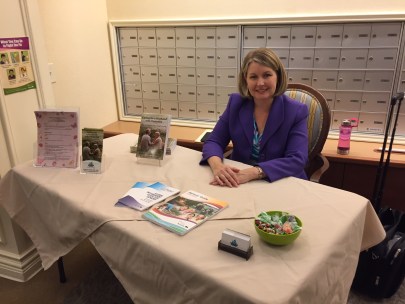
I am so glad I wore my purple suit to the Forget-Me-Not Fair at River Ridge Retirement Residence! When I arrived, there was purple everywhere! It was a very enjoyable event and was a successful fundraiser for the Alzheimer Society of Manitoba. My table was set up at River Ridge Retirement Residence near the “Post Office” and I had many people come by to ask questions about my book, other products and services.

There were about 7-8 other vendors onsite as well. I added their information to my website, “The Grey Pages – Winnipeg.” The other vendors I saw there were Wright 1 Care Inc., Friendly Caregiver Seniors Care, S.M.I.L.E. Fitness, Silvert’s Adaptive Clothing and Footwear, and Comfort Keepers. There were a couple of others I didn’t get around to connecting with.

The fundraiser included selling a potted pansy which got the purchaser’s name into a raffle.IMG_4538

When it came to my turn, I spoke to about 60 people. It was a full house. Some even watched from the upper balcony! My topic was Dementia Caregiving and I used a power point presentation format. I referred to my book, “Caring for a Husband with Dementia: The Ultimate Survival Guide.” and educated the audience on dementia, caregiving, signs and symptoms of dementia, and what you can do. I also referred to my mobile app for iPhone and iPad called, “Dementia Caregiver Solutions” as well as my other services such as counselling and consulting. The audience was very attentive and some questions were asked about Lewy Body dementia and Frontotemporal dementia. A few were concerned about their own memory problems. Some current and former caregivers were there as well.

After I went back to my table, I answered many questions about memory concerns, family issues and how to get a diagnosis. My candies were a hit and all the jellies went very quickly (note to self-bring more jellies next time!).  I sold four copies of my book after the presentation.
IMG_4536 (1)

The other speaker was Elizabeth Murray, another Winnipeg author, who wrote a book called, “Holding on to Mamie. My Mother, Dementia and Me.” We swapped books. I am looking forward to reading her book as well.

I am very grateful to Leslie Fiorino, Director of Health and Wellness for inviting me to speak at the River Ridge Forget-Me-Not Fair. I am also grateful for all the new connections I have made. I look forward to more speaking engagements and providing education and support on all things related to aging and growing older.

Thanks for reading!

For more information on me, my products and services, please go to www.AngelaGGentile.com.

Have a great day!

Angela G. Gentile, MSW, RSW


How to Improve Memory Skills

ID-100349509

Photo credit: satit_srihin, freedigitalphotos.net

I work in Geriatric Mental Health. I see all kinds of people in my practice, and surprisingly I am rarely asked questions about preventative health measures when it comes to maintaining and improving brain health. One day I was asked by a man in his 80s, “How can I improve my short-term memory?”

I brought this question about brain health back to my team (which includes a psychiatrist, and an occupational therapist/clinician). Here is the latest advice that we are recommending. I didn’t want to keep it all to myself, so here it is:

1. Keep your body healthy. Your brain is an organ just like any other. Feed it nutritious foods (see the Mediterranean Diet for example), keep stress levels down, don’t smoke, limit alcohol, keep active (at least 30 minutes of exercise a day) and get an adequate amount of rest. Consider when you do something good for your body, you are doing it for your brain health, too.

2. Try practicing “mindfulness,” a nonjudgmental and present moment awareness way of being in the world. When you keep your mind focused on what your body is doing, it offers a sense of peace and relaxation. It connects the body to the mind. Instead of daydreaming while you wash the dishes, notice the feel of the warm water on your hands. The smell of the soap. The noise the dishes make. Google search “mindfulness” and see what the latest research is showing.

3. Try a “mindful” awareness practice like Tai Chi or Yoga. These exercises combine both exercise and mindfulness and are easily adapted to suit almost everyone.

4. Do novel things. Your mind needs to be challenged. Learning and doing new things is like exercising a muscle. If you want your muscles to grow, you need to add more resistance or weights. Similarly, your brain needs to be challenged in order to grow. Learn a new language. Take music lessons. Learn how to tango. Go back to school. Try something new.

5. Try a brain games and brain training programs like “Luminosity.” Do crossword puzzles or try Sudoku. “BrainyApps” and “Elevate” are applications you can get for your smartphone or tablet. Do a Google search on “brain training” or “brain games” and find something suited for you. For fun, try playing “Words With Friends,” a mobile app version of Scrabble.

I would add a few more things: Having a variety of social connections (all ages) and healthy relationships is very important. Taking care of ourselves helps us focus on what we need to do to keep healthy. Focusing on the health and well-being of others helps us feel good about the world and each other. Caregivers need to be mindful to ensure they take care of themselves, too, so they don’t burn out. Managing our chronic illnesses like diabetes and high blood pressure help reduce our likelihood of having a stroke.

No matter what your age, keeping active and living a healthy purposeful life helps us keep engaged and thriving.

Angela G. Gentile, M.S.W., R.S.W.

Disclaimer: This information is not intended to replace the advice of your health care professional. Always consult your doctor before starting a new exercise regime.

________________________________________________________________

Angela G. Gentile, M.S.W., R.S.W. is a clinician and older adult specialist who has more than 25 years of experience working with older adults and their families in a variety of capacities. She is currently employed as a Geriatric Mental Health Clinician and enjoys writing, traveling, photography and exploring what it means to age well. She is a realistic optimist who lives in Winnipeg, Manitoba with her husband and two children.

Communication Skills 101

couple arguing

Couple Arguing by Ambro, freedigitalphotos.net

Communicating when you are angry, upset or frustrated can be very difficult. Our emotions sometimes get the best of us, and it is very easy for us to point fingers and lay blame on others.

For example, if you are angry at someone for not listening to you, it is tempting to yell out, “Quit ignoring me!” The person will take this as you are blaming them, and it will not end happily.

A little skill that you can try is called,”I-Messages” or “I-Statements.” There are four easy steps, and with practice, it can be done.

Start by getting the person’s attention in a kind way. That may mean tapping them, holding their arm, and asking them to look at you.

Step 1. “I feel…”

Use a feeling word to help the person understand how you are feeling.

Step 2. “When you…”

Describe what the behaviour is that is making you upset.

Step 3. “Because…”

Describe how the behaviour relates to your feelings.

Step 4. “And I’d like…”

State what you would like the person to do instead.

An example would be, “I feel ignored when you keep reading when I talk to you. Your reading shuts me out, and I’d like you to stop reading and look at me when I talk to you.”

This is a great technique that can be used any time.

Angela G. Gentile, MSW RSW
Specialist in Aging
www.AngelaGGentile.com

“Caring for a Husband with Dementia” Book Now Available In Winnipeg Libraries

IMG_1977

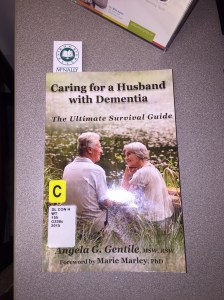
As seen at J.W. Crane Memorial Library at Deer Lodge Centre

I am pleased to announce that the book, Caring for a Husband with Dementia: The Ultimate Survival Guide (2015) is now available in the Winnipeg Public Library* as well as J. W. Crane Memorial Library (Deer Lodge Centre, 2109 Portage Avenue, Winnipeg).

(*As of 05 Oct 2015, the book was on order for three Winnipeg libraries: Henderson Library, Louis Riel Library and Millenium Library. Request your copy now!).

Angela G. Gentile, MSW, RSW


New Book, App Promotion and Women’s Group Announced

Angela has been very busy these days and she wanted to make sure all her subscribers don’t miss out on the news. Here are some of the projects she’s been working on.

New Book

agentileebook091015v2


Her new book, A Book About Burnout: One Social Worker’s Tale of Survival is now available on Amazon.com. It’s an eBook for Kindle and it’s a personal memoir plus tips on how to recognize and survive job burnout and compassion fatigue.


FREE APP PROMOTION

Ce1xkPeBp3iH43Lal6Zrbb6b4b0hlJtyNtTo1sIRUbs


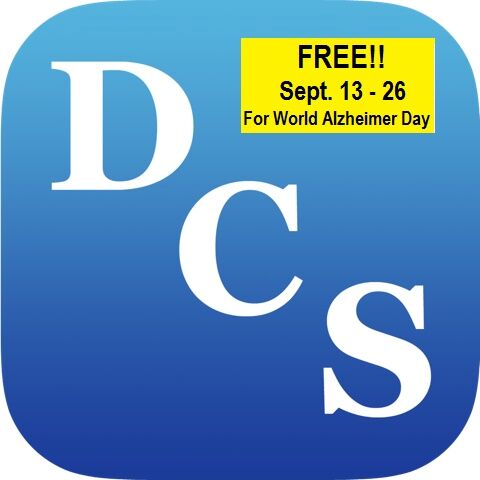
The mobile app, Dementia Caregiver Solutions for iOS 8 and up, is being offered for FREE from September 13 – 26, 2015 in recognition of World Alzheimer’s Day (September 21, 2015). Tell your friends.


NEW WOMEN’S Group

11226047_10153042578306128_1169184377110265414_n

Aging Well for Women Group on Facebook

A new members-only, CLOSED, Facebook group has been started, Aging Well for Women Group. Angela’s community Facebook page, Aging Well for Women has reached millions of people and she is excited to announce a more personalized and private experience for women. Request to join!

For more information: www.AngelaGGentile.com


Men Concerned About Developing Dementia Want Their Partners to Read This Book

IMG_1407

“Caring for a Husband With Dementia: The Ultimate Survival Guide” has been out for almost two months now. I have been to a few events since my book launch. On Saturday, May 9, 2015, Coles – Kildonan Place (Winnipeg) hosted a book signing event for me. This is my second time doing an event like this, and I couldn’t find any “How To” on the subject. I’ve been learning as I go.

BUY THE BOOK – Caring for a Husband with Dementia

I suited up; packed up my signing pen, rack cards, business cards and candy dish and headed over to Coles with a positive mindset. I was looking forward to the event, hoping to connect with lots of people. Since I only sold one book at my first event (and the author sharing a table with me that day sold two books) I hoped to sell one or two books at my second event.

What I find most memorable from the event are the people who stoped by to chat. I appreciate when people open up and tell me their stories. My sister-in-law even stopped by on her lunch break to see me and I got her to take a picture (see above).

A middle-aged man stopped by to say he wants to buy the book for his wife. I wasn’t sure if he was joking or not. But he went on to explain that he feels his chances of developing dementia are high because both of his parents had Alzheimer’s. He said his wife doesn’t want to talk about it. I encouraged him to take a rack card and wished him all the best.

People seemed to enjoy the candies I was offering. Many children stopped by to take a caramel or a Lifesaver. It was interesting to hear the parents direct them to, “Say thank you.” Some asked for permission to take, others just dove right in.

A younger couple told me about the man’s head injury from years ago and that he has been told he’ll most likely develop dementia when he gets older. He wanted his girlfriend to get the book so that when and if that time comes she’ll be well prepared. They were a sweet couple and she appears to be committed to the relationship and whatever may come down the road.

20150508_075554_resized

A few people took my rack card. It’s a bigger version of a bookmark with information about me and my products including my mobile app for caregivers. One young woman said she couldn’t afford to buy the book ($19.95 CDN) but asked me to sign the rack card for her. I told her I am working on getting the book into the library but that it takes time.

I chuckled to myself when a man in his late 70’s flirted with me. He told me how good I looked as he gave me a little wink and whistle. About a half-hour later he came back my way and he said I had nice legs. Both times I smiled and said, “Thank you.”

At the end of my two-hour event, a woman came to me with a smile, and told me I looked lonely. She went on to tell me about her experience of looking after her husband who had dementia. He eventually became quite aggressive and had to be moved to a nursing home. He died about a year ago. Now her neighbour is going through the same thing. She bought a book and asked me to sign it in memory of her late husband. She planned on sharing it with her neighbour or anyone else who may benefit from it.

I ended up reaching my goal for sales. Selling two books in two hours doesn’t seem like a lot, but I was told that some authors don’t sell any books. It has been the bookstore’s experience sometimes the customers come back during the week to purchase the book. Some of them don’t buy when the author is there, but choose to come back at a different time. I have also read that sometimes a person needs to hear about, read about, or see a book seven times before they buy it. So, any exposure is good exposure.

Overall, I really enjoyed my book signing event and I would say it went well. I especially enjoyed talking to people about their experiences. I learned that men want their partners to read this book. I also learned that men in their late 70’s like to flirt with middle-aged authors. 😉

Have a great day!

Angela G. Gentile

purple-swirl-separator-hi

Angela G. Gentile, MSW, RSW is a clinical social worker who specializes in aging. She has helped hundreds of people who are struggling with the challenges aging can bring. Angela is passionate about challenging ageist myths and stereotypes and exploring what it means to age well. She considers herself a realistic optimist but she still can’t tell her left from her right. Find out more at http://www.angelaggentile.com.

Book Launch Highlights and Video

 Caring for a Husband with Dementia:

The Ultimate Survival Guide

On Thursday, April 16, 2015, a book launch celebration for Caring for a Husband with Dementia was held at McNally Robinson Booksellers in Winnipeg. There were approximately 55-60 people attending the event, and there was wine and other refreshments. The event was sponsored by Comforts of Home – Care. Click on the arrow above to watch the 26-minute video or go to this link: https://www.youtube.com/watch?v=CyjUQcmnc14

Find out how to get the book: http://www.angelaggentile.com/book

SAMSUNG CAMERA PICTURES

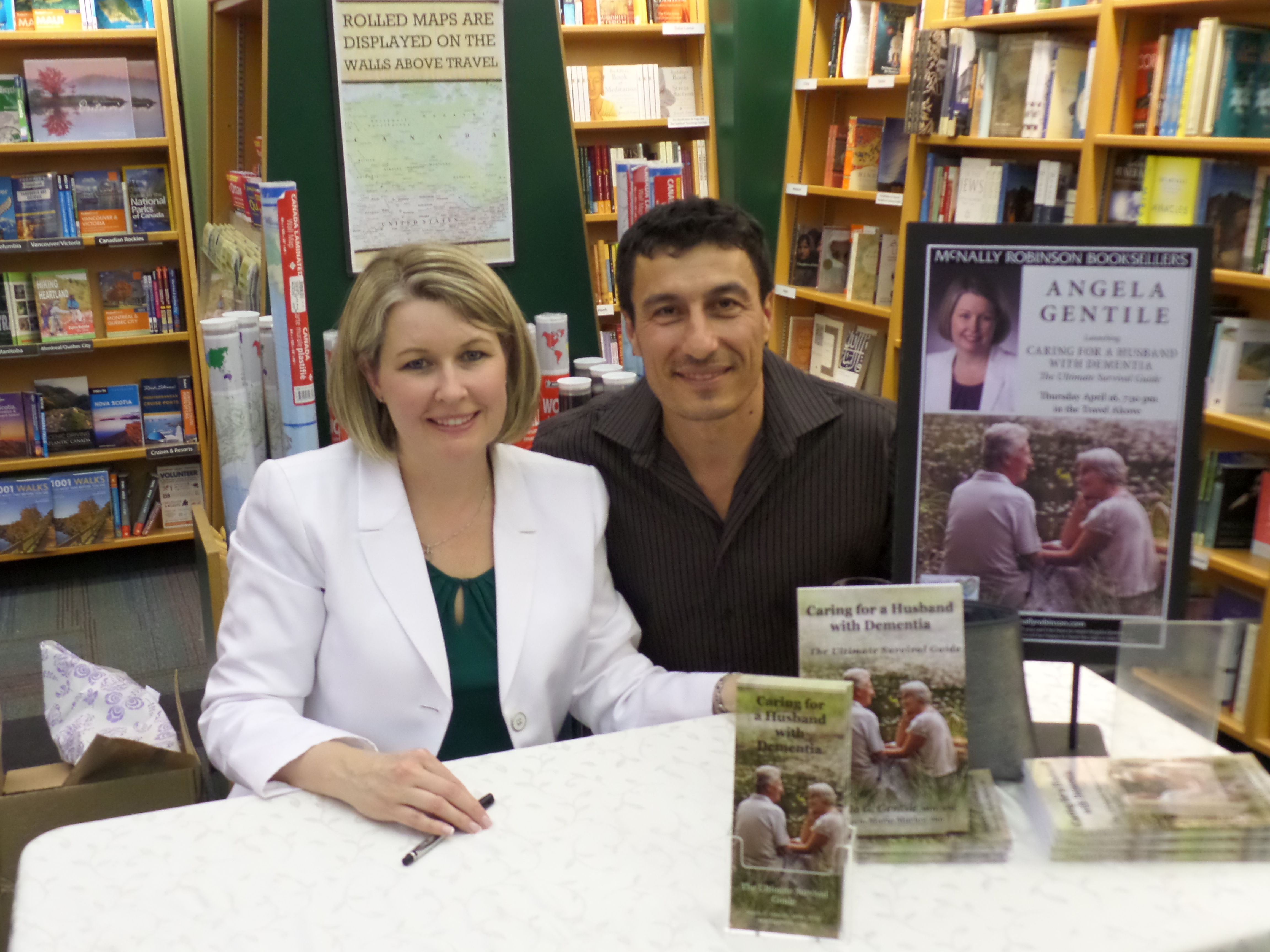
Pictured above is my husband Agapito (who doesn’t have dementia) and I. He made brownies and they were very yummy.

IMG_1554

I started out mixing with the crowd and I was pleased to see so many friendly and familiar faces. I handed out the books that I had gifted to some of the guests. I then moved on to do my presentation. It lasted about 25 minutes.

IMG_1571

One of the wife caregivers (Merrilee) also presented and she did a great job. She presented with warmth, humour and honest emotion.

IMG_1572

After the presentation, I signed books. It was a bit of a challenge to figure out what to say. I goofed up a couple of times, but I guess that’s to be expected. Not sure if it was the excitement or the wine, LOL. 🙂

IMG_1606

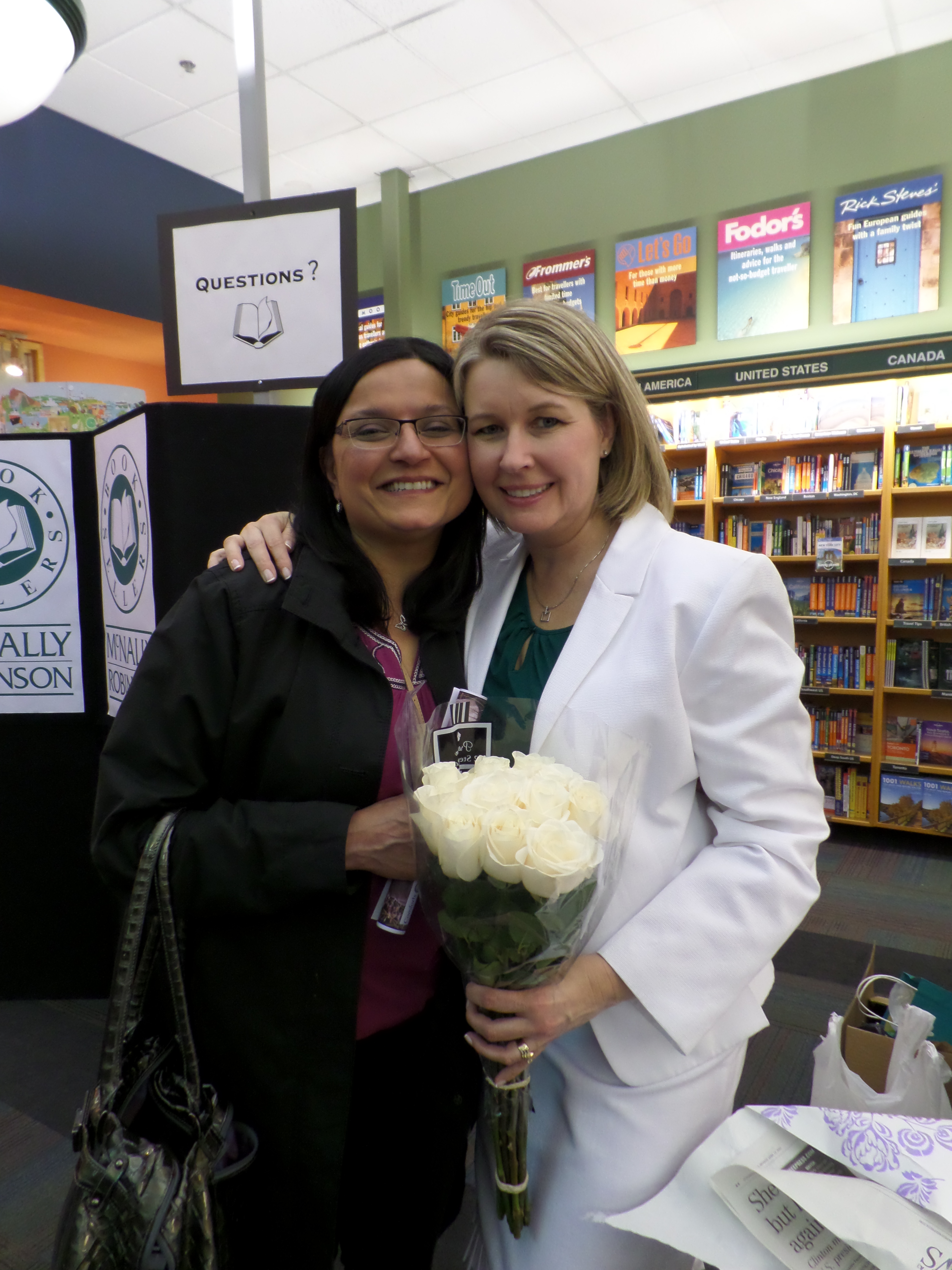
I had a designated photographer and videographer, and I got some great shots and video. It went from 7:30 – 9:00pm. I received a dozen beautiful white roses and a gift of David’s Tea from some special friends.

SAMSUNG CAMERA PICTURES

All in all, it was a fantastic event, and I found the whole evening surreal. Thank you to all who made the event a memorable one.

Sincerely,

Angela G. Gentile

purple-swirl-separator-hi

Angela G. Gentile, M.S.W., R.S.W. is a clinical social worker who specializes in aging. She has helped hundreds of people who are struggling with the challenges aging can bring. Angela is passionate about challenging ageist myths and stereotypes and exploring what it means to age well. She considers herself a realistic optimist but she still can’t tell her left from her right. Find out more at http://www.angelaggentile.com.