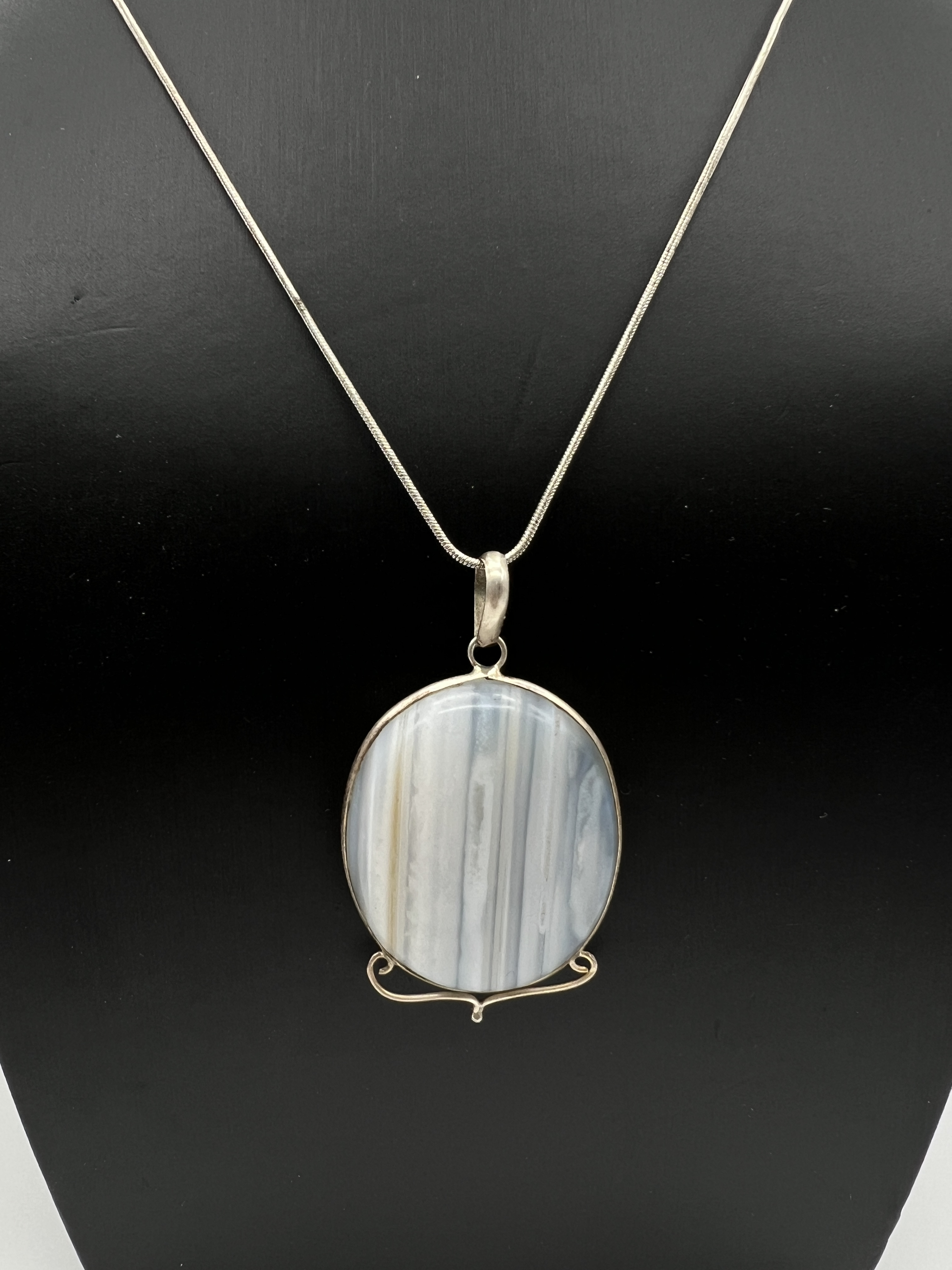
Sherman Jewelry and “Jet”: Jet, French Jet, and What Gustav Sherman Actually Used

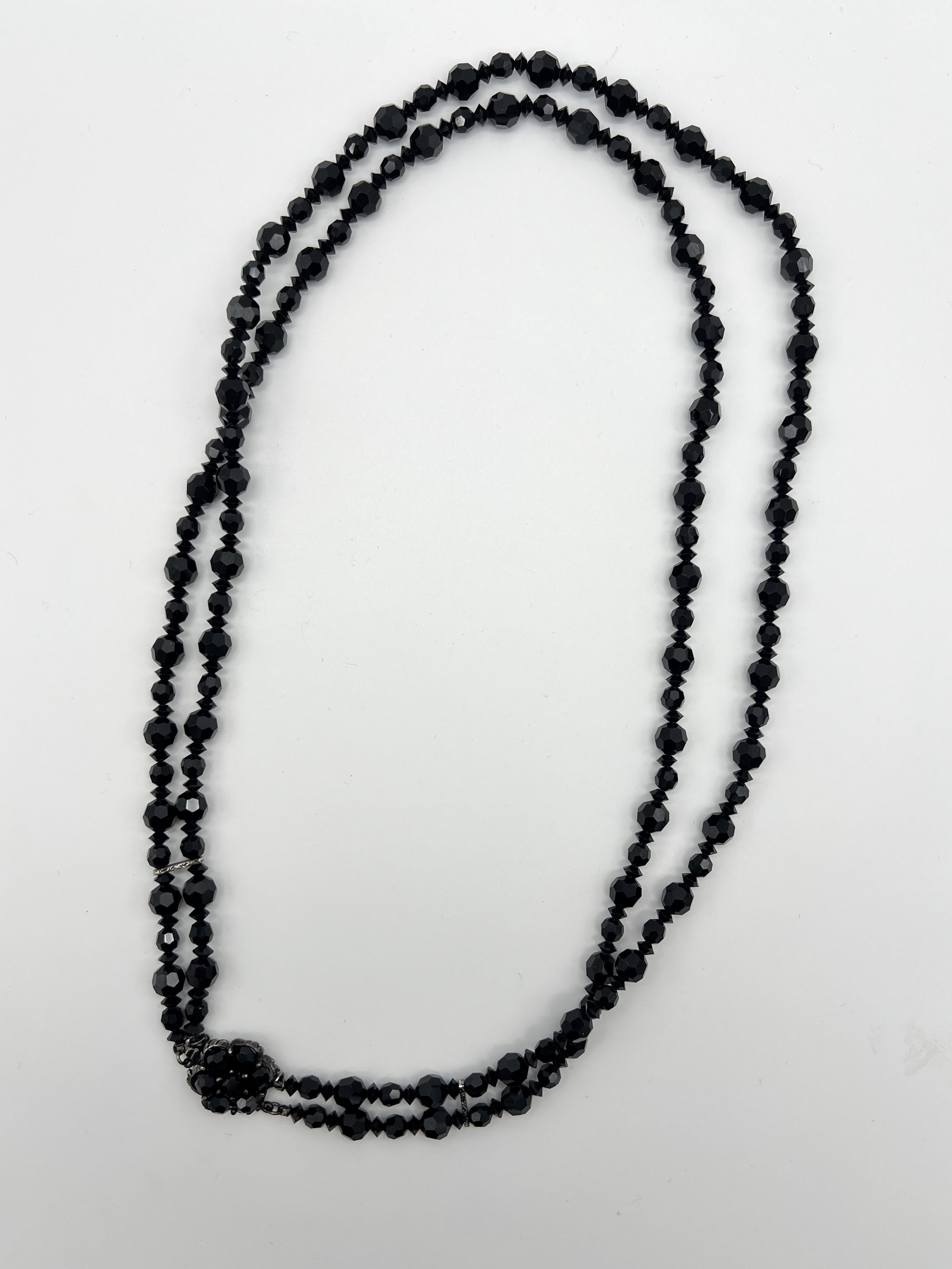
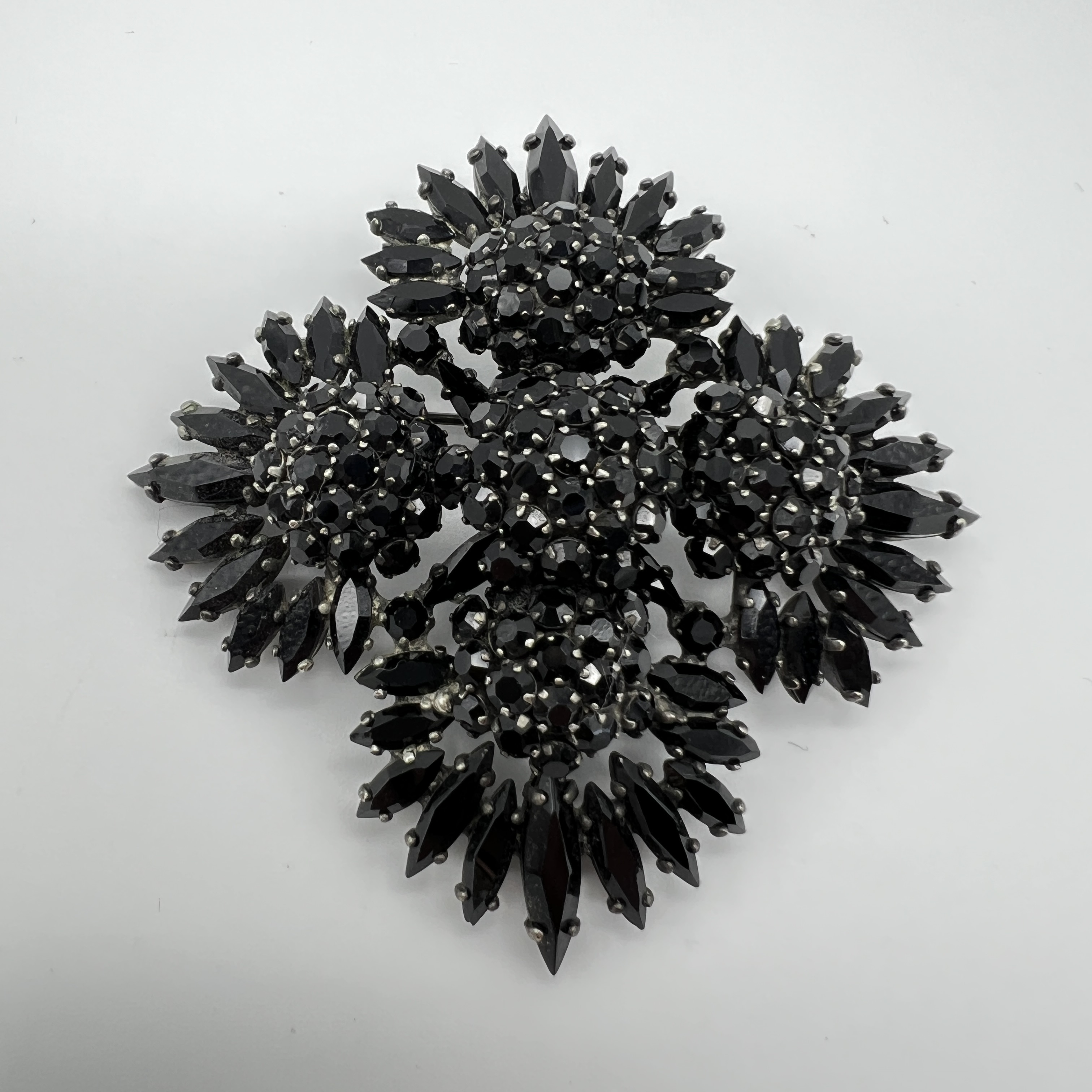
Signed Sherman Double Strand Jet Faceted Crystal Bead Necklace (48″) with Floral Clasp

Prepared by ChatGPT 5.2 for Angela Gentile of GA Vintage • December 31, 2025

Why this matters

If you sell or collect Sherman jewelry, the word “jet” can get confusing—because it can mean different things depending on era and material:

• Real jet (a natural, fossil-based gemstone)

• French jet (Victorian black glass made to imitate real jet, especially in mourning jewelry)

• Sherman “jet” (jet-black Swarovski crystal—“jet” as a color name)

This article unpacks all three so your descriptions stay accurate and buyer-trustworthy.

1) What Sherman jewelry is

G. Sherman (founded in 1949 in Canada by Gus Sherman) is well known for high-quality mid-century costume jewelry. Sherman pieces are especially prized for crisp stone setting, strong plating, and premium crystal.

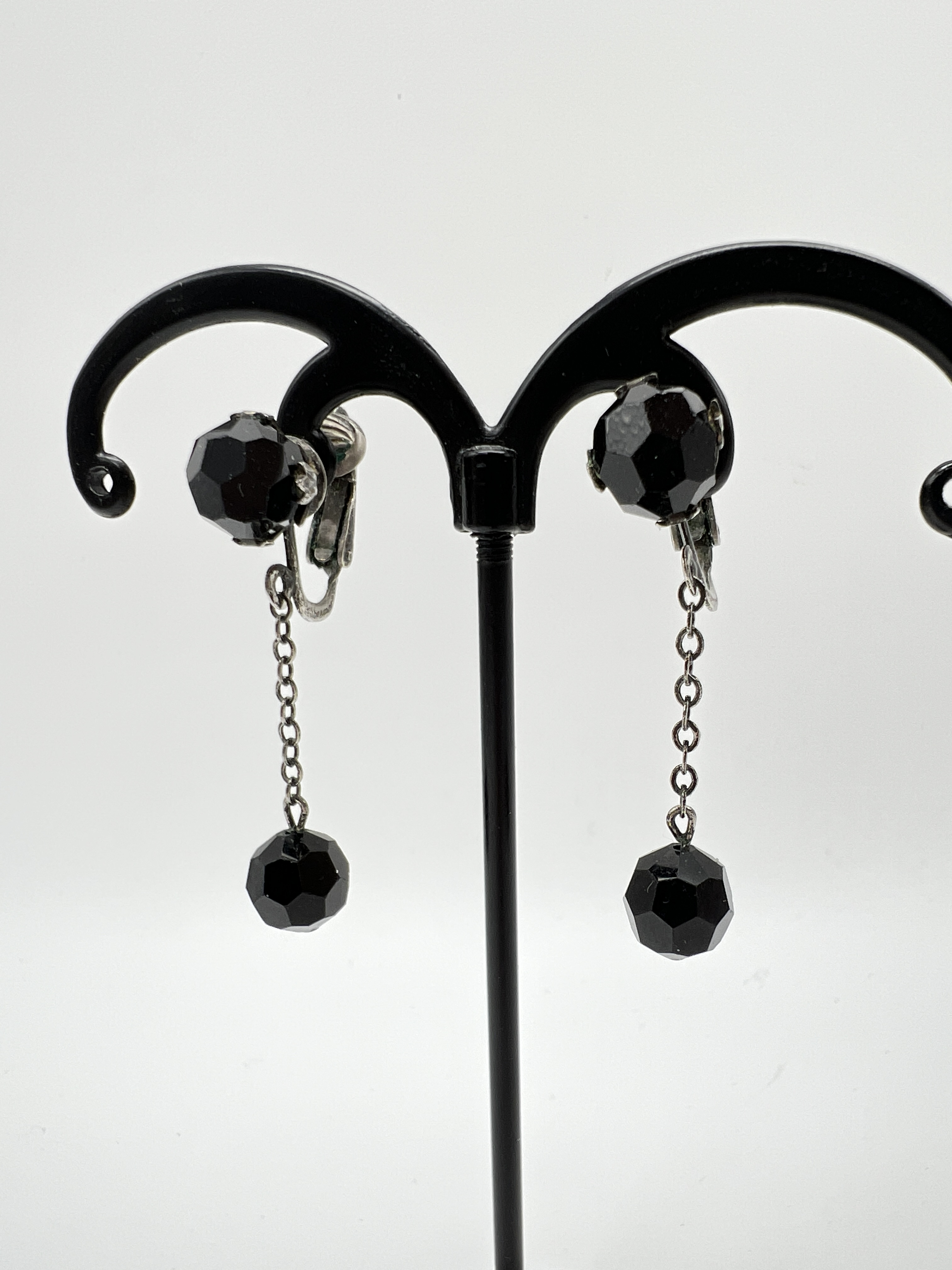
Signed Sherman Jet Black Crystal Dangly Earrings

2) What “Jet” means in Sherman jewelry

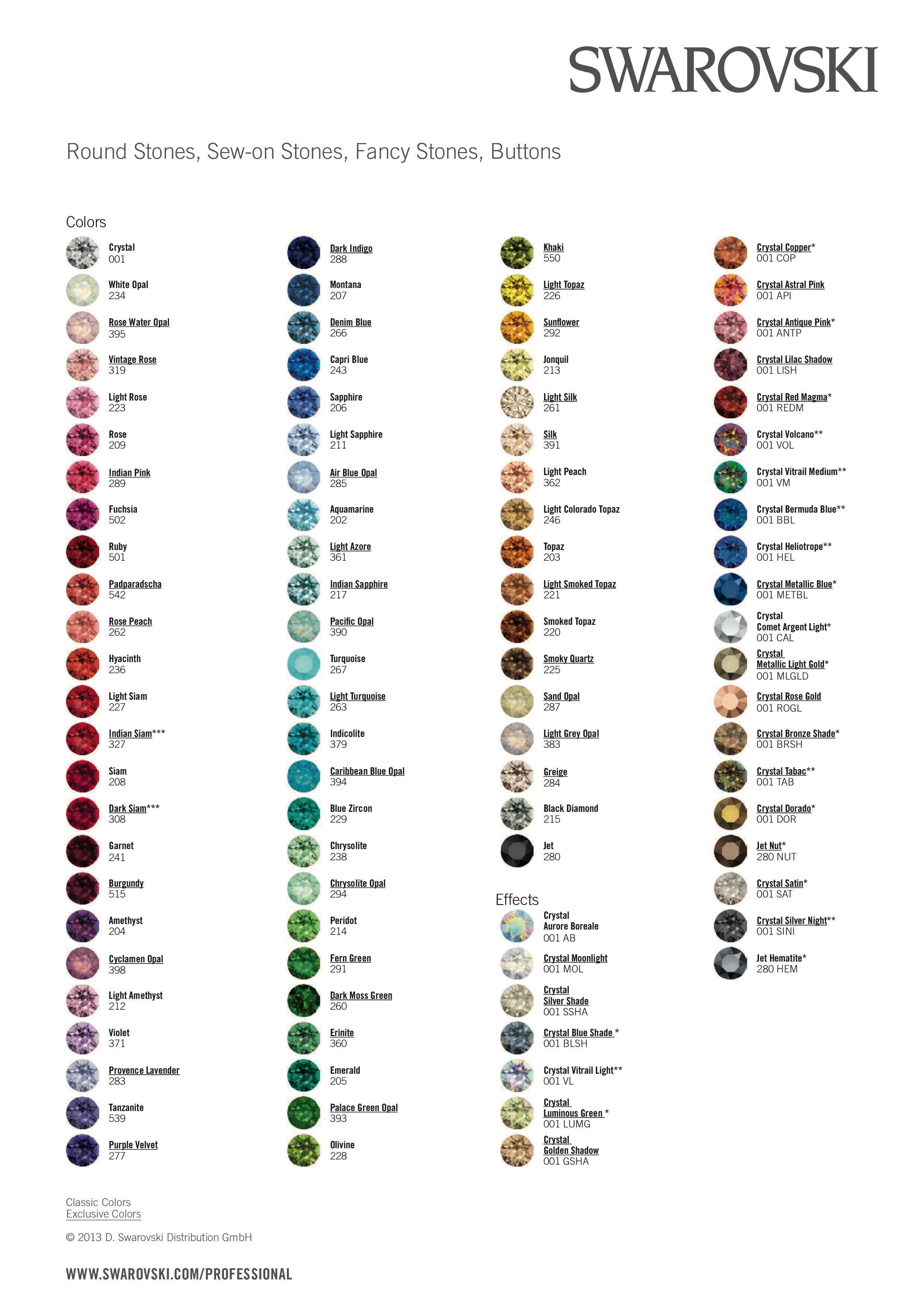
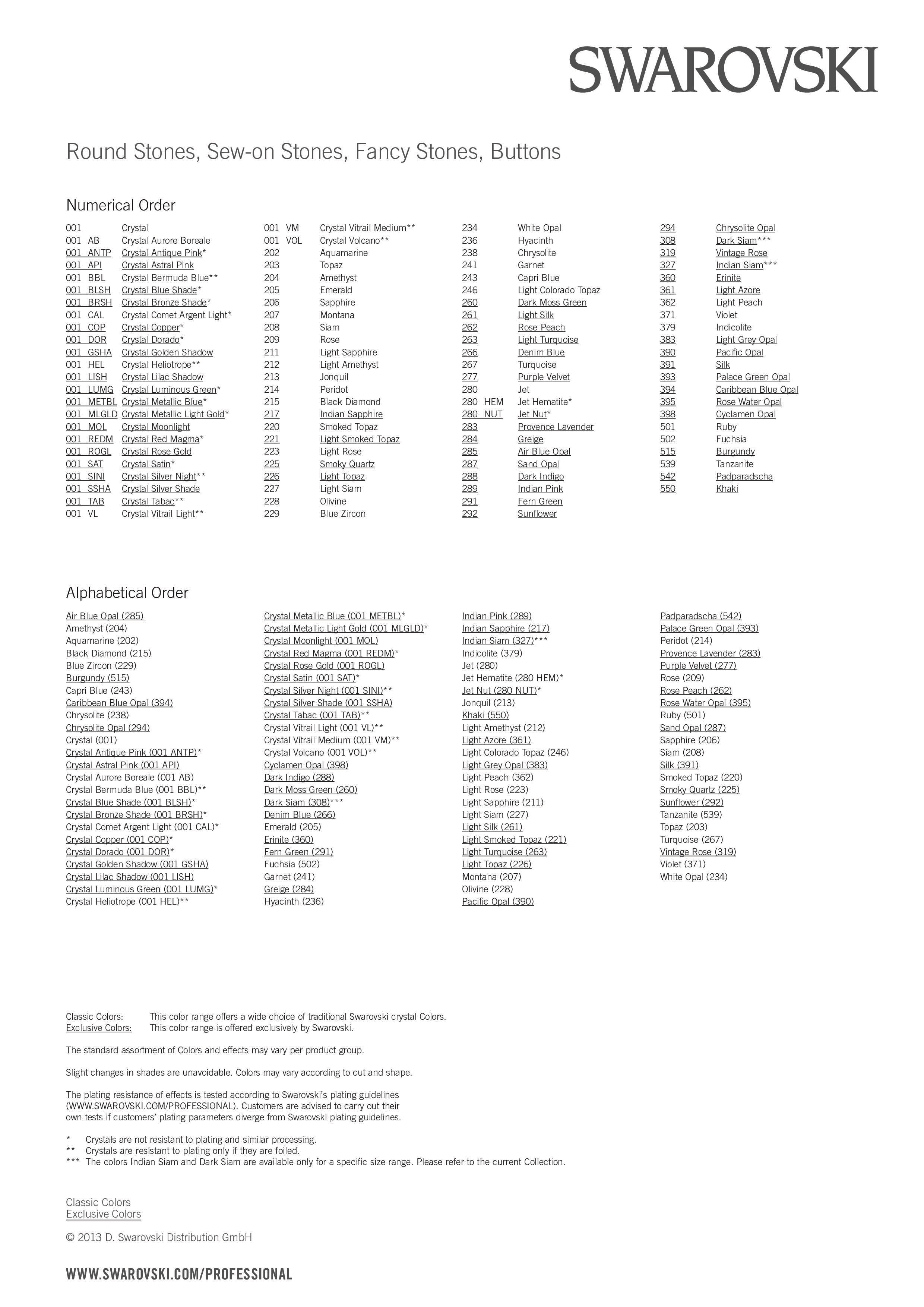
In Sherman collecting and selling, “jet” typically refers to a color: jet-black crystal beads, not Victorian “French jet” glass. Swarovski uses “Jet (280)” as a standard black color designation, along with related finishes/effects such as Jet Hematite.

Practical, seller-friendly wording for a black Sherman piece:

• “Sherman brooch with jet-black Swarovski crystals (Jet/280)” (if you’re comfortable stating Swarovski)

• Or more conservative: “jet-black crystal beads” (include faceted if there are small cuts which make the beads catch the light and sparkle)

Avoid using “French jet” for a Sherman piece unless the item truly uses black glass components in the Victorian sense (see below).

3) The history of the term “French jet”

French jet is a Victorian-era trade term for black glass jewelry components made to imitate genuine jet. It became widely used during the 19th century (especially in mourning jewelry and dress trims) when demand for authentic Whitby jet (a unique, deep black, lightweight, semi-precious gemstone formed from fossilized wood found in Whitby, England – often called “black amber”) and substitutes were popular.

4) Real jet vs. French jet (key differences)

Real jet and French jet can look similar in photos, but they behave differently:

• Material: Real jet is an organic gemstone (fossilized wood/lignite – coal). French jet is black glass.

• Weight: Real jet is noticeably lightweight. French jet (glass) is heavier.

• Feel to the touch: Real jet often feels warmer; glass usually feels cooler.

• Wear patterns: Glass may chip at facet edges; jet tends to abrade/scratch rather than chip like glass.

• Inspection clues: Glass may show mold seams or bubbles; genuine jet should not show glass-molding seam lines.

Swarovski Crystal Chatons Colour Chart
Swarovski Crystal Colour Chart Names and Numbers

5) The big takeaway for Sherman sellers

If your piece is signed Sherman and the stones are black crystal beads, the most accurate explanation is usually:

• “Jet” = jet-black crystal color (often Swarovski Jet 280), not Victorian French jet glass.

You’ll sometimes see “Sherman French jet” in modern online listings, but that is typically seller phrasing. For clarity and accuracy, describe Sherman black-stone pieces as jet-black crystal beaded jewelry, and reserve “French jet” for Victorian black glass imitation-jet items.

Sources / Further reading

• Waddington’s – “Jewels of Elegance: Sherman Jewellery”

• Costume Jewelry Collectors – “Sherman: Enduring Elegance”

• Swarovski (PDF) – Color chart showing Jet (280)

• Whitby Museum – “Jet and Jet Jewellery” (ID notes incl. warm/light vs glass)

• Whitby Jet Store – “How to Tell the Difference Between French Jet and Whitby Jet”

• Antique Jewellers – “Whitby Jet and Its Substitutes in Victorian Mourning Jewellery”

Resellers, Thrift Stores, and the Myth of ‘Stealing from the Poor’

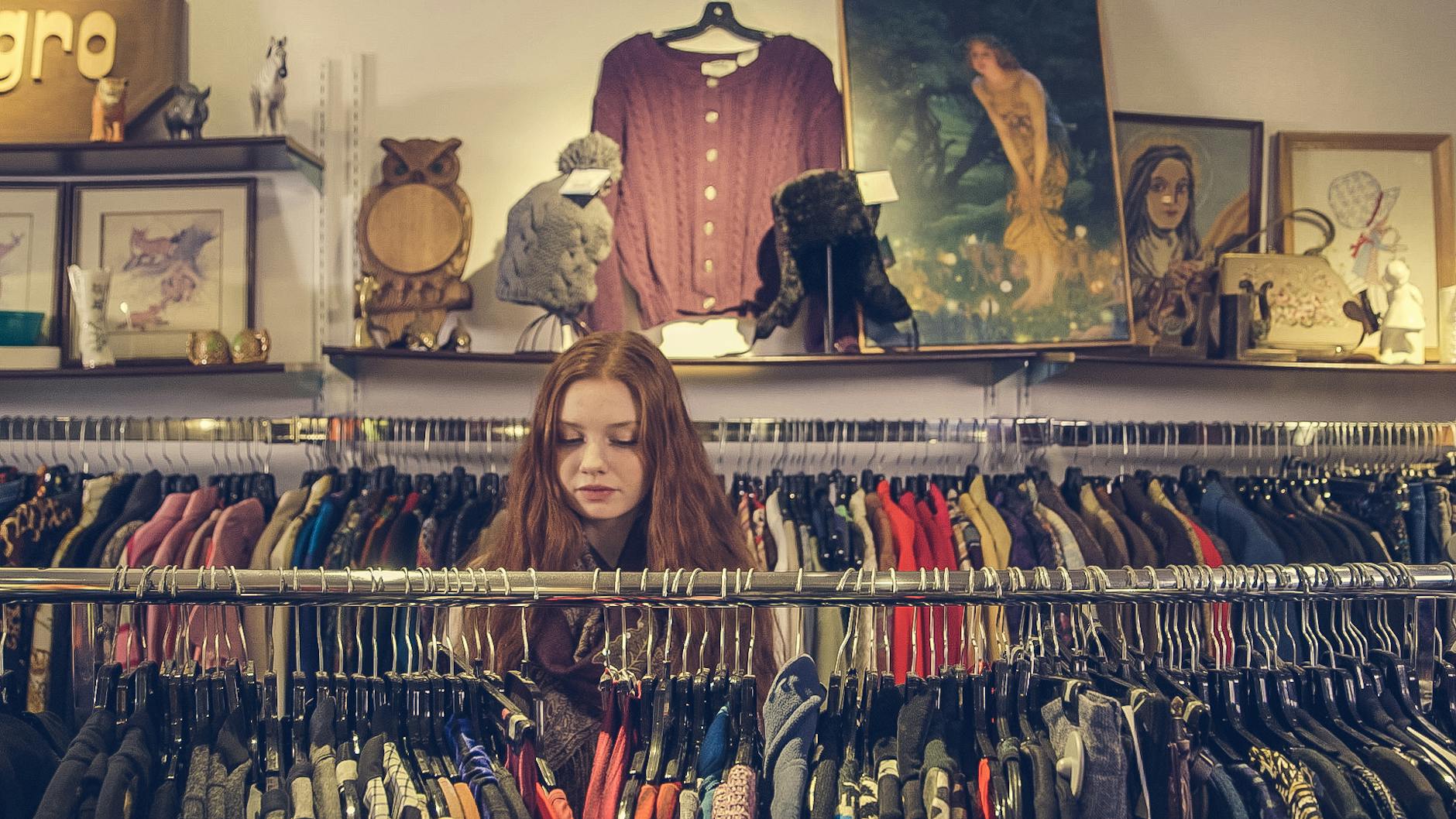
Photo by Burst on Pexels.com

I buy and sell vintage jewelry and small collectibles, and I know many others who resell clothing. A criticism we sometimes hear is that we’re “stealing from the poor” when we shop at thrift stores and resell our finds. That idea sounds slightly plausible, but it really misses how the thrift system actually works.

Thrift Stores Have an Oversupply

Most major thrift organizations receive far more donations than they can sell. Items are rotated quickly and, if they don’t sell, they are:

  • Sent to outlet stores or clearance bins
  • Baled and sold by the pound, often to overseas markets
  • Sometimes discarded
  • Donated to other charities

Resellers often “rescue” pieces that might otherwise end up in a landfill, giving them a new home and a new life.

Thrift Stores Serve Multiple Missions

Many thrifts are mission-driven businesses. Revenue from sales helps fund things like job training, housing support, addiction recovery, or other community services. Whether an item is bought by someone in need, a middle-income shopper, or a reseller, the store benefits the same.

In fact, regular buyers like resellers provide consistent income that helps keep those doors open.

Accessibility Isn’t Only About Price

Price is only one barrier for people living in poverty. Transportation, sizing, health, mobility, and what’s actually on the racks and shelves all matter too. Many people in the lowest income brackets rely more on:

  • Free clothing closets
  • Church or community giveaways
  • Vouchers or outreach programs
  • Friends and family

Typical thrift stores are just one piece of a wider support network, not the only option.

Resellers Don’t Set Thrift Prices

There’s also a myth that resellers are the reason thrift prices are going up. In reality, stores set their own prices based on things like:

  • Rising rent and operating costs
  • Wages and staffing
  • Corporate pricing and branding strategies
  • The overall popularity of thrifting

If something is marked $5, it’s because the store chose that price. A reseller is not obligated to leave it behind “just in case” someone else might want it.

Part of a Healthy Circular Economy

Resellers of clothing, jewelry, and collectibles are part of a circular economy that:

  • Promotes reuse over fast fashion and disposable decor
  • Helps people find specific sizes, styles, and eras online and locally
  • Keeps unique or higher-quality items in circulation for longer

There is an overabundance of stuff in our world. Thoughtful reselling isn’t taking from the poor; it’s helping reduce waste, support charities, and connect beautiful, well-made pieces with the people who will truly appreciate them.

What are your thoughts on the subject? I would love to hear it.

Angela Gentile

Written with the help of ChatGPT

Your Guide to Consignment Shops in Winnipeg

Photo by Erik Mclean on Pexels.com

Below is a list of shops in Winnipeg where you can bring your items for consignment. The flip side of that is that you can find great deals on previously loved and gently used treasures. There could be items that could be turned into cash in your closet and drawers!

So Over It Luxury Consignment – Clothing, Bags, Jewelry, Footwear, Accessories. Includes designer handbags, find jewelry, and high-end footwear. Shop online or at their Winnipeg location for everything from Gucci to Louis Vuitton. They have Authentication services (for a fee). Consignment rates start at 30% and go up to 70% commission (depending on value of item). Nice shop.

Located at 394 Academy Road in Winnipeg, MB. Phone: 204-306-7722

Things Supporting the Royal Winnipeg Ballet: Operated by the Volunteer Committee for the Royal Winniepg Ballet since 1967, Things is a specialty boutique that sells consigned and donated items. They offer gently used antique, vintage, and contemporary collectibles, including furniture, jewellery, china, crystal, silver, artwork, and linens. Some items are sold on consignment, others aren’t. Items have two prices depending on how long the item has been in the shop. Smaller store with nice things.

Located at 913 and 911 Corydon Avenue, Winnipeg, Manitoba. Phone: 204-284-7331

The Closet Chick

Upscale consigment thrift. “From cool to couture, The Closet Chick is a trendy upscale consignment/thrift  boutique. Current major brands, one of a kind gems and authentic designer labels make up the great assortment. And they’ve got you covered in sizes XS- XXL. Pop in to The Closet Chick and you’ll go out smiling. Walking into the store is truly a lovely experience with a friendly atmosphere and unique selection of all things retro and modern…We are always accepting trendy, contemporary fashions that are in season, no older than 2-3 years, and in excellent condition.” They offer 50% commission store credit or 40% by cheque on items sold. They also have an online store. Preloved, retro, vintage. Lots of women’s clothes, shoes, and bags. Some jewelry. Belts.

Located at 956 Portage Avenue, Winnipeg, Manitoba. Phone: 204-774-2442

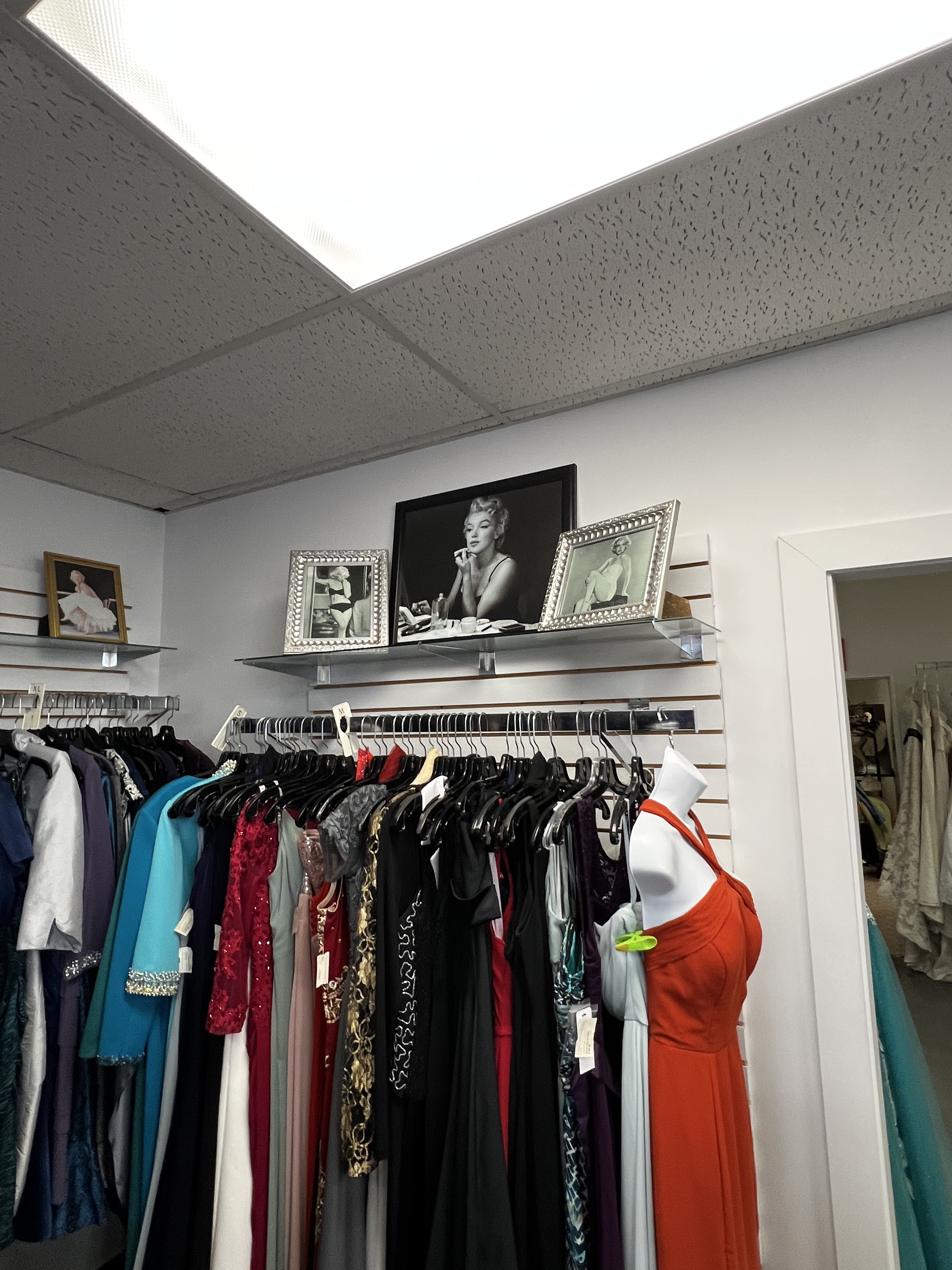
October 22/25. The Closet Chick has been around for many years. It is in the same building as the Italian store called DeLuca’s. The lovely fragrance of pizza was very dominant during my visit! It was right around lunch time, too. I was very impressed with the cleanliness and organization of the clothing and shoes. There were many photos of Marilyn Monroe throughout the store. I was very surprised to see the large assortment of formal dresses and even wedding dresses. Lots of shoes to go with them, too. There were some clearance racks just outside of the store. The lady in the shop had to unlock the door each time a customer went in. There were about 2 others ladies in the store. I tried on some jeans, other bottoms and tops. I ended up buying three items off of the $10 CLEARANCE rack. The prices seemed to be a bit high on most items. It was nice to see an assortment of brand names such as Michael Kors, Kate Spade, and Coach. All items were in excellent to like-new condition. There is ample parking along Lipton and Portage, plus some in the back behind the shop.

A & A Jewellers: Jewelry Repair, Engraving, & Vintage Jeweller. They sell jewelry on consignment. 60/40. I bought some Sherman jewelry there! And I have sold some of my mom’s jewelry on consignment at their store. They provide a cheque when items are sold.

Location: 196 Henderson Hwy, Winnipeg, Manitoba (204-661-3494).

*****

I will add to this list as I find suitable shops! If you know of any great shops, please let me know.

Angela Gentile

Why Intelligent People Are Drawn to Antiques — And 10 Other Surprising Home Habits

Photo by Gu00fcl Iu015fu0131k on Pexels.com

11 Unusual Things People With High Intelligence Do In Their Homes

By Zayda Slabbekoorn | Written Oct 16, 2025

Even if you imagine the home of the most intelligent person you know as a tidy, incredibly organized, and sterile space, chances are you’re wrong. A study from the University of Minnesota actually argues that untidy, cluttered, and slightly chaotic living spaces are more indicative of intelligence than organization and cleanliness.

Of course, there are many other unusual things people with high intelligence do in their homes — all of which might be a bit of a surprise. From collecting eccentric vintage décor to keeping a physical calendar in the digital age, intelligent people are often drawn to cultivating their homes in a way that prompts mental stimulation. They want to be sparked with inspiration as they get ready for the day or drawn into a state of deep thought when relaxing on their couch — and their décor choices often reflect those desires.

Here are 11 unusual things people with high intelligence do in their homes

1. They keep a whiteboard or a physical calendar

Many studies suggest that physical calendars and brainstorming whiteboards support deeper thinking. They serve as visual reminders and open space for curiosity, intention, and learning to flourish through handwritten notes and prompts. Intelligent people often invest in these physical tools, even if they also use phone or digital versions. It gives them a way to track tasks, brainstorm, and remind themselves visually.

2. They rearrange their furniture often

Research indicates that people with high intelligence tend to be more prosocial, and making their home inviting for guests and conducive to connection is important. They frequently rearrange furniture or tweak spaces so conversations flow, social connection is enhanced, and people feel comfortable in their homes.

3. They keep a desk full of “controlled chaos”

A messy desk can facilitate curiosity and creativity, according to psychological research. Intelligent people often allow a certain amount of clutter in their creative zones — not out of neglect, but because it fuels inspiration. What may look chaotic to others is sometimes the perfect blend of stimulation and creative energy for them.

4. They scatter books and journals everywhere

Highly intelligent people tend to use free moments intentionally — reading, journaling, reflecting — rather than turning to passive entertainment. You’ll find books on nightstands, notebooks in kitchens, journals by the couch. These habits feed self-awareness, help process thoughts, and support reflection in daily life.

5. They are intentional about lighting

Lighting influences mood and mental health. Harsh, bright light can become overstimulating, while soft, warm light brings calm. Intelligent people are mindful of this — choosing bright or natural light for productivity, then switching to softer, ambient lighting when unwinding.

6. They use sticky notes for reminders

Because intelligent minds often make connections across many ideas, visual reminders like sticky notes become useful. Tasks, thoughts, or insights are jotted down and posted around the house: on mirrors, desks, doors. These external cues help track ideas and responsibilities.

7. They unwind in a dedicated space

Though many are social, intelligent people often highly value solitude. They create quiet, intentional places to relax — a reading nook, a small studio, even a corner in the garage. These spots offer refuge for reflection, calm, and mental rest.

8. They use cookbooks with recipes outside their comfort zone

Open-mindedness is a common trait among highly intelligent people. In the kitchen, that means experimenting: trying new cuisines, techniques, or unusual ingredients. Even if the result isn’t perfect, the process of exploration and learning is valued.

9. They learn how to fix random things

High intelligence often goes hand in hand with curiosity, resilience, and self-sufficiency. Many prefer to learn hands-on skills — repairing appliances, patching walls, or doing small maintenance — rather than immediately outsourcing work. The challenge stimulates growth.

10. They create spaces just for thinking

Even during downtime, intelligent minds crave stimulation. Many carve out places — a comfortable chair, a quiet corner, a small room — dedicated to thinking, reflecting, or dreaming. These spaces allow curiosity to flourish without distraction.

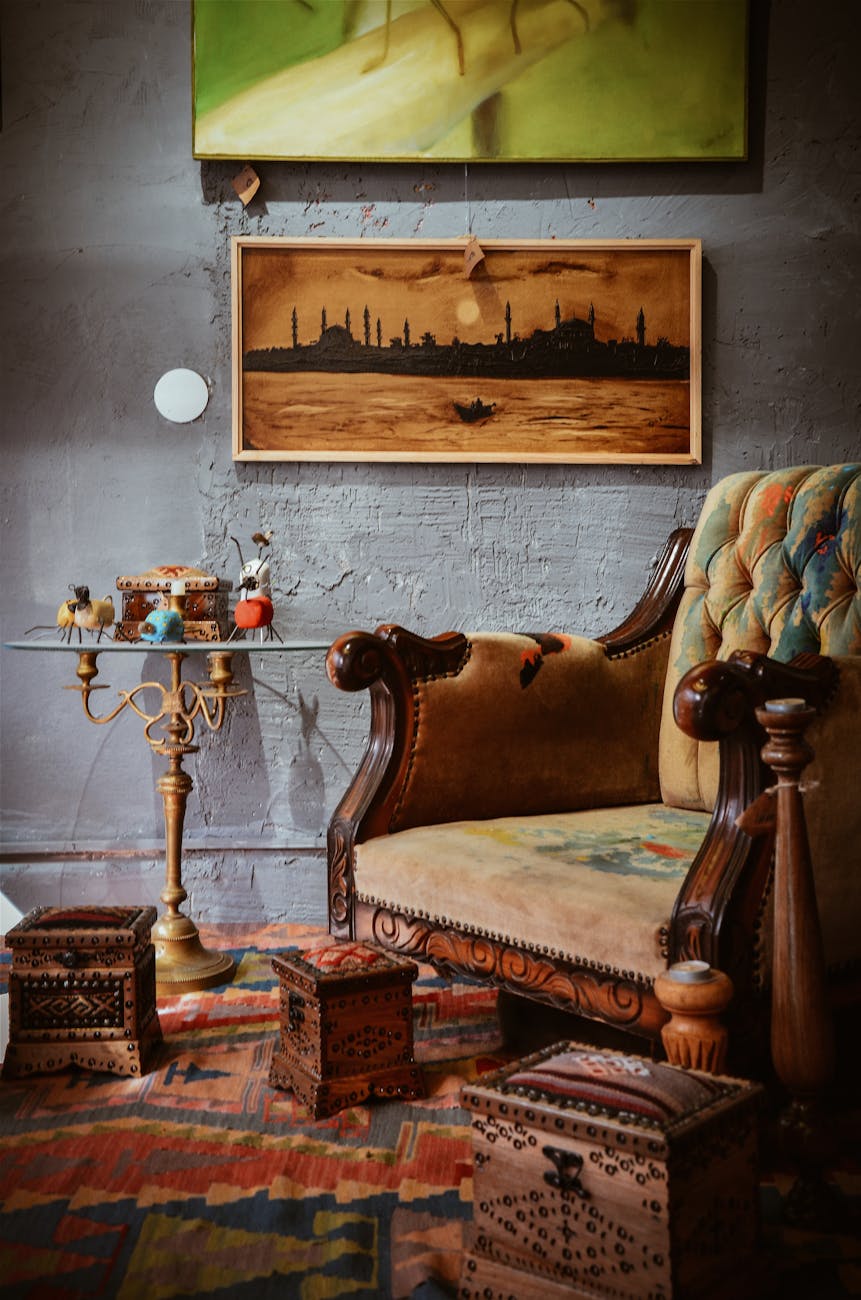
11. They collect unusual antiques

Rather than chasing trends, intelligent people often gravitate toward meaningful, unique, or vintage items. They appreciate the stories, history, and authenticity behind antiques and curiosities. Over time, their homes may fill with eclectic collections that spark thought and reflection.

Here is where the original article can be found: https://www.yourtango.com/self/unusual-things-people-with-high-intelligence-do-in-their-homes

Note: Awaiting permission to republish. If you wrote this article, please contact me, Angela Gentile.

Centre Flavie Winnipeg: From Boutique to Basics, How the Charity Provides Free Goods to Those in Need

Photo Credit: Facebook https://www.facebook.com/CentreFlavie/

Centre Flavie Mission: The Centre Flavie provides comfort and support to the impoverished and the vulnerable by distributing at-no-cost material goods.

I have been a customer of “Boutique Unique” for a year or so which is a sister program to the Centre Flavie at 301 Archibald Street in Winnipeg, Manitoba. Centre Flavie is a charitable program that provides free clothing, household goods, appliances, and furniture to those in need. Boutique Unique is an online auction program which provides a number of unique and higher-valued items that wouldn’t necessarily be needed for everyday use. I have bid on and won items like a Lalique glass statue and some Sherman jewelry. I buy confidently knowing that my money is going towards a good cause.

On the day I was picking up my newly acquired Sherman jewelry, I asked if I could go into the Centre Flavie side to see what it was all about. He said it was up to me. He explained that I would have to “register” at Reception and he warned me that because it was a Monday, it may not be the best day to go as there are many “clients” who come on Mondays. He said it will be very busy. I then realized that there were a lot of people outside the building so that made sense.

I proceeded to the Reception area and was surprised to see about 25 people sitting in a small waiting room in a lecture-style seating arrangement. There were three receptionists behind plexiglass. I explained I was there to get an idea of how the Centre worked and one of the young women told me to go speak to one of the other women around the corner.

I proceeded to the back side of the plexiglass reception area. I had entered the warehouse where all the goods were. There were small piles of clothing and other items lined up. There was a younger woman speaking with the receptionist already, so I waited my turn.

As I was waiting, a man came up to me and asked if he could help. I explained that I was a customer of Boutique Unique and also a retired social worker. I was interested in knowing more about the Centre Flavie side of the business.

He explained that people who are interested in getting free items have to be assessed or screened first. They are asked questions like if they have a car and what year it is. They are asked questions about why they need free items. People new to Canada, immigrants from Ukraine, house fires, and family breakdowns are some of the examples of why people may need their services. If the person qualifies, then they are asked to wait their turn to enter the warehouse.

He pointed out that there are clothes, shoes, books, DVDs, toys, appliances, and furniture. He said they accept all kinds of donations, even underwear (unstained and clean). He said they really appreciate bags, too.

We provide free basic life essentials (clothes, beds, furniture, etc) to people in need / Nous donnons les besoins essentiels gratuitement aux démunis – Instagram

Many of the clients or customers who come to the Centre take taxis. The bus route is #50. Also, parking is very limited. If items are too big or heavy, customers can pay $40 to have their goods delivered to their home.

When the person is done their “shopping,” they have to report back to Reception in order to document and itemize everything that was taken. This is for statistics purposes, and also to prevent people from taking more than they need. For example, if someone needs a bed, it will be recorded. If they come back in a week or two and want another bed, they will have to explain why they need another bed.

When I was there, I saw volunteers, a security guard, and people including children shopping for their needed items. Two people were arguing over a microwave oven. When things are free I guess enforcing the honour system is tricky. Tempers can flare.

The Donation Centre doors were also opened, so things were coming in as fast as they were leaving!

I figured the piles of clothing on the floor that I spotted when I arrived were selected items that the clients had put aside for themselves. I didn’t see any shopping carts so I guess this also helps curb how much people take.

The man who was giving me a tour said he was an employee. Volunteers are asked to give about two hours a month of their time. He explained that the customers who visit the Centre usually come about three times to help them get set up. I asked him what happens to the stuff that doesn’t go or isn’t needed, and he said, “Oh, it ALL goes.”

Welcome to our customers! From Thursday, September 1, 2022, customers will once again be able to come in person at the Flavie Centre to find the items they need. A reminder that we are now located at 301 Archibald Street (Winnipeg Mb) and assistance is available Monday-Friday between 9am and 1pm. Those attending the Centre at 8.30am Mon-Fri will be entered into a random draw we have each morning to decide the order of entry – there is no need or advantage to arrive earlier to line up. Customers arriving following the draw will have to line up. – Facebook

What I learned from this experience is that Centre Flavie is doing great work at providing free items including necessities to those in need. If you or someone you know is either looking to donate items or is in need, please consider Centre Flavie.

Centre Flavie accepts donations of clothing, furniture, appliances, beds, pots/pans, cutlery, household items, etc. They can arrange to have donations picked up at no charge, or donations can be dropped off during the day, Monday-Saturday.

For more information, call 204-231-9513, email fl@centreflavie.com or visit their website: https://centreflavie.com/en/

Follow on Facebook: https://www.facebook.com/CentreFlavie/ and Instagram: https://www.instagram.com/flavius3439/

Angela Gentile

Canadian Goodwill Thrift Stores in Winnipeg, Manitoba: A Fan Favourite

Photo credit: https://canadiangoodwill.ca

Angela G. Gentile, Winnipeg Manitoba

Proudly Canadian since 1931!

I have been visiting all of the thrift shops in Winnipeg and Canadian Goodwill Industries (The Goodwill Store) and I have been doing some research on each location. I also learned through my research that Canadian Goodwill has been voted “Best in the Second Hand Clothing & Consignment in Winnipeg by Community Votes Winnipeg in 2023 and 2024”! I wonder if they will keep their title for 2025? Goodwill thrift stores in Winnipeg have ongoing window “auctions” and this is a unique aspect of what they do. They all also famous for weekly coloured tag specials. I decided to do reviews by location so that you, the shopper, can check out for yourself what you think of the Canadian Goodwill thrift stores.

There are five locations in Winnipeg. I will list them in order of highest Google reviews ratings as of August 31, 2025. I will start at tied for first with the Portage Avenue and McPhillips Avenue locations.

Goodwill on Portage Avenue (West Winnipeg)

The 3431 Portage Avenue Goodwill has a Google rating of 4.5 stars (from 62 reviews) (as of August 31/25) and is often described as one of Winnipeg’s more reliable thrift options. Shoppers appreciate the coloured tag sales, 50% off discounts, and $0.50 or $1 days, which make prices especially attractive. Reviews highlight the store as clean and well-organized, with friendly staff who create a welcoming environment. While some note that pricing can be a bit inconsistent, most agree that the Portage Goodwill is a solid stop for thrifters looking for deals on clothing, housewares, and unique finds.

Goodwill on McPhillips (North Winnipeg)

The Canadian Goodwill store at 17-2136 McPhillips consistently earns praise from shoppers, with a 4.5-star rating on Google (based on 62 reviews) (as of August 31/25). Reviewers highlight it as one of the last remaining decent thrift stores in Winnipeg, known for affordable pricing and rotating sales, such as coloured tag discounts, 50% off promotions, and special $0.50 or $1 days.

Customers often comment on the friendly and helpful staff, with several noting how welcoming the team is and how clean the store feels. Bargain hunters especially appreciate the senior and student discount days, making thrifting even more budget-friendly.

While some reviewers mention that selection can be limited at times and donations are always needed to keep the racks full, many see this Goodwill as a hidden gem for finding affordable clothing, housewares, and unique treasures. Compared to other thrift chains, locals note that McPhillips Goodwill has stayed true to reasonable thrift pricing rather than creeping toward retail-level costs.

Feedback on Yelp echoes these sentiments: shoppers say prices can be “hit or miss,” but the sale days make it worthwhile. Overall, the McPhillips Goodwill stands out as a community-focused thrift store where great deals, helpful service, and charitable giving come together.

Goodwill on Pembina Highway (South Winnipeg)

Reviews for the Canadian Goodwill at 1540 Pembina Hwy highlight its reputation as one of Winnipeg’s most affordable thrift shops. Shoppers frequently comment on the “super cheap” pricing and the ever-changing variety of donations, while donors appreciate the staff’s friendliness and willingness to help unload items. Customers also value that their contributions support local programs, with some noting they prefer giving here over large chain thrift stores. A few reviews mention the store’s smaller, somewhat cramped layout and occasional mixed customer service experiences, but overall, the Pembina location maintains a strong Google Reviews rating of about 4.2 out of 5 (as of August 31/25). With its combination of low prices, community impact, and helpful staff, it stands out as a trusted spot for both thrifting and donating in Winnipeg.

Goodwill on Princess (Downtown Winnipeg)

The Canadian Goodwill Industries location at 70 Princess Street in Winnipeg holds a Google rating of 4.1 stars (based on 260 reviews) (as of August 31/25). Shoppers praise its affordability, neat layout, and eclectic inventory—spanning clothing, furniture, books, electronics, housewares, and even seasonal finds. Its compact, well-organized space makes quick browsing effective, with most clothing under $10 and attractive retro or vintage pieces, particularly upstairs. Staff are often described as polite and helpful, and many appreciate its role as a longstanding charitable fixture in Winnipeg’s Exchange District. On the flip side, weekday-only hours (closing at 5 PM) make visits difficult for many working shoppers, and limited downtown parking can be a challenge.

Goodwill on St. Anne’s (Winnipeg East)

The Canadian Goodwill Industries location at 317 St. Anne’s Road in Winnipeg has a 3.5-star Google rating (108 reviews) (as of August 31/25), with opinions divided between glowing praise and pointed criticism. Regulars highlight friendly staff, community spirit, and the thrill of finding unique treasures—including anime merchandise that excites collectors. Many donors and shoppers describe positive, helpful experiences. However, others report frustration with donation drop-off rules, occasional rudeness, and a hazardous parking lot. Overall, this location offers plenty of hidden gems and a loyal customer base, though experiences can vary widely.

If you have any experience with the Canadian Goodwill shops in Winnipeg, please add your comments below. I would love to hear from you.

For more information on Canadian Goodwill, check out https://canadiangoodwill.ca. They also have a presence on Facebook.

Angela G. Gentile

(Written with the help of ChatGPT 5)

Ways to Boost Your Mental Health Without Overhauling Your Life [Guest Post]

Image via Pexels

By Sharon Wagner

When you think about mental health, what usually comes to mind? Therapy, maybe
medication, or yoga classes on a quiet Saturday morning? Sure—those matter. But your
brain and body crave more than just the standard checklist. Mental well-being doesn’t need
to be a whole new lifestyle. Sometimes, what helps most are subtle, unexpected
shifts—ones that trick your brain into feeling more alive, more grounded, or more at peace.

Plant Something With Your Hands

There’s a quiet kind of magic in dirt under your nails. Even a small container garden or a
few pots on your windowsill can trigger a reset. Science increasingly points to how
gardening calms anxiety
by reducing cortisol, inviting rhythm into your routine, and
reconnecting your senses with the natural world. The act of nurturing something slow-
growing pulls you back into the present—no screens, no pressure, no performance. Just
breath, soil, and the steady hum of becoming.

Create With AI, Not Just Your Hands

Creativity doesn’t need to start with blank paper. Some of the most powerful
breakthroughs come from letting tools do the heavy lifting. With modern technology, AI
painting in visual arts
lets anyone, regardless of training, visually express ideas, memories,
or moods in seconds. It’s not about becoming an artist—it’s about tapping into your own
emotional processing in a language that words don’t always reach.

Use These Mental Health Apps

You don’t need a complicated system to get started—just a phone and a few minutes. These
apps, widely used in Canada, are changing how people get access to support:

PocketWell (Wellness Together Canada companion) — Backed by the federal
government, this app offers mood tracking, self-assessments, and direct access to
social workers or crisis responders—all in a private, judgment-free space.
Fello — Designed to connect users with others who’ve lived through similar
struggles, offering real stories from peer-support users without the pressure of
formal therapy.
MindShift CBT — Developed by Anxiety Canada, this app teaches evidence-based
coping skills rooted in cognitive-behavioral therapy. You’ll find exercises for
reframing anxious thinking, managing panic, and building long-term tools.
MindBeacon — This app pairs you with a licensed therapist who guides you
through a structured CBT program. Many Canadian health plans cover it, making
professional care more accessible without traditional barriers.
Calm — Known worldwide but widely adopted in Canada, Calm offers guided
meditations, sleep stories, breathing exercises, and relaxing music. It’s designed to
lower stress, help you sleep, and make mindfulness part of your day.

Give Your Time to Someone Else

You’re stressed, overwhelmed, and stretched too thin. And strangely, that’s why this works.
One of the simplest shifts you can make is volunteering—an hour, a morning, nothing
extravagant. Studies show volunteering boosts life satisfaction by giving you purpose,
relational validation, and meaningful structure outside your personal grind. It reminds
your nervous system that it still knows how to connect—and care—without needing to be
fixed first.

Get Cold—On Purpose

The ice bath trend might feel performative on social media, but its benefits go deeper than
hype. Cold water immersion has become a mental health intervention in its own right.
Researchers explain how jumping into an ice bath can trigger neurological responses that
regulate mood, reduce cortisol, and even promote mental clarity. You don’t need a
tub—start with a cold shower burst. It’s discomfort that teaches your brain how to recover.

Try Virtual Reality Therapy

You don’t need to leave the house to confront your fears. Therapists are increasingly
integrating immersive therapy with virtual reality into treatment plans, especially for
trauma, phobias, and anxiety. The appeal is real: controlled, repeatable exposure in a safe
simulation. It builds desensitization with precision, helping you develop regulation tools
that transfer into real-world situations. Sometimes it takes another world to help you
handle this one.

You don’t need to “be better.” You need more options. Not every strategy will resonate, but
one might shift something. Try it. Small experiments lead to bigger change. And mental
health? It’s a mosaic, not a makeover.

Discover a wealth of knowledge and support with Angela G. Gentile’s insightful books and
resources—visit AngelaGGentile.com to explore her work and connect with a community
dedicated to well-being and caregiving.

Bio: Sharon Wagner pens her thoughts from her personal retreat in Wisconsin. She finds it deeply satisfying to share about a wide range of topics to people across the US and Canada.

From Malls to Meaning: How I Fell Out of Love with Big-Box Shopping

Photo by Deybson Mallony on Pexels.com

by Angela Gentile – GA Vintage & Gentle Angel Treasures

For most of my life, shopping meant malls, bright lights, and endless rows of shiny, new products. Big-box stores were my go-to for almost everything. I liked the convenience, the variety, and the thrill of finding something new. I even liked the smell of new — walking into a store that smelled like plastic, chemicals, perfume, and fake fragrances was something I grew accustomed to.

But over the past few years — especially since diving into my love for thrifting, vintage treasures, and handmade items — I’ve noticed a big shift in myself:

I rarely feel like going to the mall anymore. Those big-box aisles just don’t hold the same magic.

And here’s why.

1. The Thrill of the Hunt

When I walk into a thrift shop, antique store, or flea market, I don’t know what I’ll find — and that’s the fun of it. Every shelf holds a mystery. Maybe it’s a hand-painted vase from the 1950s, a brooch that’s seen decades of celebrations, or a hand-stitched tablecloth that someone poured hours of love into.

In contrast, big-box shopping feels predictable. Rows of identical items, mass-produced (usually made in China) and ready to be replaced the minute the “new season” arrives. Once you’ve experienced the joy of finding something truly unique, it’s hard to get excited about something you know thousands of other people have in their carts.

2. The Emotional Connection

Vintage and handmade items come with a story. Even if I don’t know every detail, I can feel the history in them. They’ve been loved, used, and cherished before — awaiting a new life.

New products rarely carry that weight of meaning. They’re just “things,” fresh from the factory, waiting for a story to begin.

3. Quality That Lasts

The more I thrift, the more I realize how well older items were made. Small hand-painted collectibles. Jewelry with intricate details. Dishes and glassware that have lasted decades without losing their charm.

Compare that to many new items today — lightweight, mass-produced, sometimes built to last only until the next trend rolls in. Once you know the difference, it’s hard to go back.

4. Better for the Planet

Every time we buy second (or third) hand, we keep something out of the landfill and reduce demand for new manufacturing. That means less waste, less energy use, and less strain on our planet. The same goes for handmade items — often created in small batches, with care, rather than churned out in massive factories.

5. The Happiness Psychology Behind It

There’s even a brain science reason for my shift. Thrifting is like a treasure hunt. When we find something unexpected and special, our brains release dopamine — that little “yay!” hit of happiness.

Big-box shopping? You usually know exactly what you’ll find. Without surprise, there’s less excitement.

My Personal Shopping Checklist

Before I buy anything new now (except for intimates and makeup), I ask myself:

  • Can I find this secondhand or handmade?
  • Will it last?
  • Does it make me feel something?

If the answer is “no” to most of those… I walk away.

Why This Matters to You

When you choose vintage, handmade, or secondhand, you’re not just buying an object — you’re preserving history, supporting small businesses, and giving beautiful things a new life. It is also more likely you are keeping your money in Canada at a time when the economy is counting on it.

That’s exactly what I do with GA Vintage and Gentle Angel Treasures. Every item I sell is chosen with care, for its charm, quality, and story. Whether it’s a piece of jewelry, a collectible, or home décor, it’s something that deserves to be loved again. Every piece of jewelry I make is “Made with Love.”

So next time you’re tempted by the mall, maybe try a different kind of shopping trip. Wander into a thrift store. Visit a local artisan market. Or browse my latest finds. You might be surprised by what you discover — and how good it feels to own something truly unique.

Let’s give the past a future — one beautiful item at a time.

(Written with the help of ChatGPT 5)

Creative Ways to Reduce Your Stress and Improve Your Mindset [Guest Post]

Image from Pexels

By Sharon Wagner

Reducing stress sounds like a monumental task, but thinking outside the box is often key. What you need is space—a pause long enough to let your thoughts and feelings take shape. Between DIY projects, journaling, painting, or just rearranging a room, there’s an invitation to process, reflect, and affirm who you are becoming. This article isn’t about mastering technique; it’s about giving form to your inner landscape. Let’s explore practical, soul-nourishing ways to do that.


Craft to Build Resilience


Creating something tangible with your hands trains your brain to stay curious and adaptive. Whether you’re knitting, building a wreath, or trying hand lettering, the process wires patience into your nervous system. Over time, these small acts of creation reinforce a growth mindset through arts and crafts—teaching you to pivot when mistakes happen, and to finish what you start. It’s not about perfection; it’s about endurance. That kind of psychological muscle pays off in every part of life. A hot glue gun might not seem like self-care, but don’t underestimate it.

Journaling for Insight


When thoughts spin too fast to write clearly, sketching them out can reveal things words can’t reach. If you haven’t tried it, visual journaling merges word and image to build a record of what you’re thinking, feeling, and shifting through. Some days, it’s watercolor and a date. Other days, it’s angry lines and a glued-down receipt. Each page becomes proof that your internal life deserves attention. You don’t need a narrative—just presence. The goal is not clarity, but contact.


Externalize with Digital Tools


Sometimes, your ideas and emotions are vivid but hard to express through traditional mediums. That’s where tech can help—not to replace your creativity, but to expand it. Using a free AI art generator online, you can turn phrases, moods, or even questions into visual pieces without picking up a brush. It’s not about “cheating” the creative process—it’s about meeting it from a new direction. When you see your thoughts rendered as shape and color, something clicks. It becomes real, and sharable if you choose.


Focus on Sensory Input


We often think of mindfulness as sitting still, eyes closed—but what if it looked like finger painting in silence, or hand-building a planter from clay? Practicing mindful creativity through presence practice helps redirect your attention from outcome to sensation. The feel of the brush, the sound of scissors, the quiet of choosing a palette—these are meditations in motion. You’re not multitasking or producing. You’re noticing. And that noticing is where ideas bloom from the inside out.


Use Creativity for Growth


Art is more than a hobby—it’s a compass when your identity feels in flux. Divorce, retirement, empty nesting, career changes—these are chapters without clear outlines. And that’s where creativity shines. You get to shape your narrative without needing to explain it. One powerful way to reset is to explore creativity as a tool for personal growth, giving your emotions form even when your plans are fuzzy. Think of it as planting a flag in the present moment. It marks the ground where you’re becoming.


Take a Moment to Reset


Looking for a speedy fix? Here’s a quick-hit list of simple 5–10 minute activities that relieve stress—no prep, no guilt, just a reset:


● Go for a brisk walk — even just around the block or indoors.
● Do a 5-minute meditation — focus on breath, sound, or a simple mantra.
● Jot down 3 thoughts in a journal — don’t filter, just write what’s in your head.
● Make a cup of tea mindfully — notice the warmth, aroma, and pace.
● Listen to one favorite song — no distractions, just pure listening.

● Water or repot a plant — engage with something living and low-stakes.
● Wash your hands slowly — tune into scent, temperature, and feel.
● Doodle or color freely — no goal, just motion and visual flow.
● Try a 5-senses scan — name one thing you can see, hear, smell, touch, and taste.
● Write a short thank-you note — to someone who comes to mind, no perfection
needed.

When stress is overwhelming, it can be challenging to find a way forward. What you need is space—to make, to explore, to affirm. Being creative is a great way to regain your voice and your composure. And every project, every messy attempt, every scribbled page is a message: I’m still here. I still get to choose how I show up in the world.


Courtesy links:
One free AI art generator online: https://www.adobe.com/products/firefly/features/ai-art-generator.html
A free online list of ten more creative activities to reduce stress:
https://smartschoolsusa.org/blog/10-ways-to-use-creativity-for-healing-and-personal-growth

References:
https://azenera.com/en-us/blogs/inspiration/arts-and-crafts-how-creativity-enhances-your-life-and-wellbeing
https://psychcentral.com/health/mindful-moment-creative-self-expression
https://www.rmcad.edu/blog/expressive-journeys-understanding-art-journaling
https://smartschoolsusa.org/blog/10-ways-to-use-creativity-for-healing-and-personal-growth

Bio: Sharon Wagner pens her thoughts from her personal retreat in Wisconsin. She finds it deeply satisfying to share about a wide range of topics to people across the US and Canada.

Top 10 In-Demand Vintage Jewelry Categories on eBay

GA Treasures & Vintage Market Insight – updated July 2025

The following highlights current eBay watch counts, sold-item data, and 2025 style coverage into a quick-reference guide. It was written with the help of research by Chat o3. Prices are in Canadian dollars. I have added some examples of items that will give you an idea of what some of these pieces look like. I have also added a link to where more info on the items can be found, therefore credit given to the respective owners.


1. Art Deco Engagement & Cocktail Rings (1920-30s)

Art Deco Ring Screenshot – https://ebay.us/m/q3SWYh

Geometrics in platinum or white gold, calibre-cut coloured stones, and transitional-cut diamonds continue to headline 2025’s heritage trend. Authentic rings regularly qualify for eBay’s Authenticity Guarantee.

Typical price range: $800 – 5,000+ (diamonds); $300 – 900 (coloured-stone platinum).

2. Carved Bakelite Bangles & Figural Brooches (1930-50s)

Ripley Auctions – Vintage Scottie Dog Bakelite Brooch Screenshot – https://www.ripleyauctions.com/auction-lot/vintage-bakelite-carved-figural-scottie-dog-brooc_4D44EA2B8D

Stacked lamination, “Philadelphia” style carving, cherries, Scotty dogs—collectors bid fast on rare colours or motifs.

Typical price band: $120 – 600 (bangles); exceptional brooches can top $ 1,000.

3. Signed Mid-Century Costume Sets – Trifari, Coro, Eisenberg, Weiss, Sherman

eBay – Vintage Sherman Parure Screenshot – https://ebay.us/m/KJ4jE0

Brand searches remain among the highest-volume keywords on eBay’s Terapeak tool. Full parures outsell singles roughly two-to-one.

Typical price range: $60 – 300 per brooch; $250 – 900 for complete sets (Sherman Aurora Borealis pieces often higher).

4. Native-American Sterling & Turquoise (Navajo, Zuni, Hopi)

Etsy – Vintage Navajo Cluster Cuff Bracelet Screenshot – https://www.etsy.com/ca/listing/1636753018/vintage-native-american-navajo-cluster?ref=share_ios_native_control

Squash-blossom necklaces, cluster cuffs, storyteller rings. Maker’s marks and natural stones drive value.

Typical price range: $150 – 1,500+ depending on size and artist.

5. Victorian & Edwardian Mourning / Hairwork Jewelry

eBay – Vintage Locket – https://ebay.us/m/PC3GSD

Jet, gutta-percha, onyx, and woven-hair lockets attract a devoted niche audience; many listings show 20–30 watchers.

Typical price range: $95 – 400 (brooches); gold-backed pieces climb higher.

6. Vintage CHANEL, Dior & Other Couture Logo Pieces (1970s-1990s)

eBay Sold – Christian Dior necklace and earring set – https://ebay.us/m/o8mq2g

CC medallion chains, Gripoix poured-glass crosses, CD earrings. Logo-mania and limited production runs keep demand high.

Typical price range: $500 – 2,500; boxed sets fetch a premium.

7. Scandinavian Modernist Sterling (Georg Jensen, David Andersen, Larin)

eBay – Vintage Minimalist Torque Necklace – https://ebay.us/m/HbPLYC

Minimalist torque necklaces and brutalist pendants enjoy a steady global buyer pool and limited supply.

Typical price range: $250 – 1,200; rare Jensen torques can top $2,000.

8. Hand-Carved Shell or Lava Cameos (1800s-1950s)

eBay – Hand-Carved Lava Cameo https://ebay.us/m/ydgK3r

Large (40 mm+) profiles or unusual subject matter stand out.

Typical price range: $80 – 500+; gold-framed examples escalate quickly.

9. Baroque Pearl Strands & Statement Earrings (1940s-1980s)

eBay – Vintage Akoya Baroque Pearl Necklace – https://ebay.us/m/wdlR6l

Irregular “keshi” or Akoya pearls match today’s designer obsession with organic forms.

Typical price range: $250 – 1,000 for quality Akoya; vintage faux bibs still clear $60+.

10. 1990s Chokers & Bold Gold-Tone Chains

eBay – Vintage Velvet Choker – https://ebay.us/m/5wtoHK

Velvet cameo chokers, heavy Napier collars, curb-link Y2K chains ride the ’90s nostalgia wave.

Typical price range: $30 – 180 (costume); designer couture much higher.

Check out ga-treasures on eBay to see what treasures are available for sale – https://www.ebay.ca/usr/ga-treasures

Angela Gentile