Why beautiful fine china dinner sets often cause their owners a tricky dilemma
Fine china was once a symbol of adulthood, hospitality and good taste. Couples, including myself and my hubby, commonly selected a pattern before their wedding, and relatives helped them build a complete service one place setting at a time. A large dinner set could represent years of gifts and a considerable financial investment. We imagine it becoming an important and valuable family heirloom that we can pass down to the future generation.
Today, many of these once-treasured sets are being inherited or brought out of china cabinets as their owners downsize. Families are often surprised—and sometimes deeply hurt—to learn that their children or other relatives do not want the beautiful china that was carefully chosen, lovingly preserved and, in many cases, quite expensive. Yet letting it go to just anyone can feel equally difficult, especially when the set carries years of family history.
My mother hardly ever used her china, and it was still in pristine condition when she passed away. I had encouraged her many times to take it out and enjoy it, but sadly, she never had the opportunity to fully do so. I now use her china every day, and I love giving it the life she had been saving it for.
Not every family has someone who wants to take on the china, however. Donating it can feel almost unthinkable when you do not know where it will end up or whether anyone will appreciate it. Then comes another rude awakening: a set that was once costly and considered valuable may be difficult to sell and may bring only a fraction of its original price. For an owner who always believed the china would be passed down and treasured by the next generation, hearing “I don’t want it” can be genuinely painful. When beautiful dishes are intertwined with family memories, deciding what to do with them is about much more than their monetary value.
That does not mean the china is poor quality or that it has no value. It means that the way people live, entertain and shop has changed. The resale market is determined by current demand, not by what an item originally cost or what it means to a family. It’s like offering your old but valuable CD player to your kids and they decline. It seems like nobody wants this old stuff! Add insult to injury when you realize the china set was barely used and it is in pristine condition. Most of us saved our china for special occasions like Christmas and Easter. So these 30-40-50-60 year-old plates are still perfectly good!
There is much more china available than there are buyers
The basic problem is one of supply and demand. For much of the twentieth century, fine china was a standard wedding gift and an expected part of setting up a household. Huge numbers of dinner services were purchased between the 1940s and the 1990s.
Many of those sets are now reaching the resale market at the same time. Their original owners are downsizing, moving into smaller homes or settling estates, while the next generation often already has dishes and does not want another large set. The result is a plentiful supply and a relatively small group of buyers.
Even very attractive china can be common. A respected maker, bone-china body or gold trim does not necessarily make a pattern rare. If numerous families own the same pattern and are trying to sell it, buyers have plenty of choices and prices remain low.
Formal dining is no longer part of everyday life
Fine china was designed for a style of entertaining that is much less common today. Many households no longer host formal dinners with separate plates for each course, matching serving dishes and carefully arranged place settings.
People still enjoy gathering for meals, but entertaining tends to be more casual. Everyday dishes, simple white dinnerware, colourful pottery and mix-and-match vintage pieces fit that lifestyle more easily. A complete matching service for eight or twelve can feel more like a storage obligation than a useful household item.
Modern households often value convenience
Many buyers want dishes that can go directly into the dishwasher and microwave. Older fine china may have gold or platinum trim, delicate hand decoration or manufacturer recommendations that make careful washing necessary. Even when a pattern is technically dishwasher-safe, a buyer may hesitate to use it that way because of its age or decoration.
Storage is another issue. A full set can include dinner plates, luncheon plates, bread-and-butter plates, cups, saucers, bowls, platters, vegetable dishes, a gravy boat, covered serving bowls, a tea and coffee pot, cream and sugar, and other pieces. That requires a great deal of cupboard space. People living in apartments, condominiums or smaller homes may simply have nowhere to put it. We used to store these sets in large and bulky china cabinets. People don’t want those china cabinets anymore, either.
Younger households also tend to move more frequently. Heavy boxes of fragile dishes are not especially appealing to someone expecting another move in a few years.
Taste has changed
Quality and desirability are not the same thing. A set can be beautifully made and still reflect colours, floral motifs or formal styling that are not currently popular.
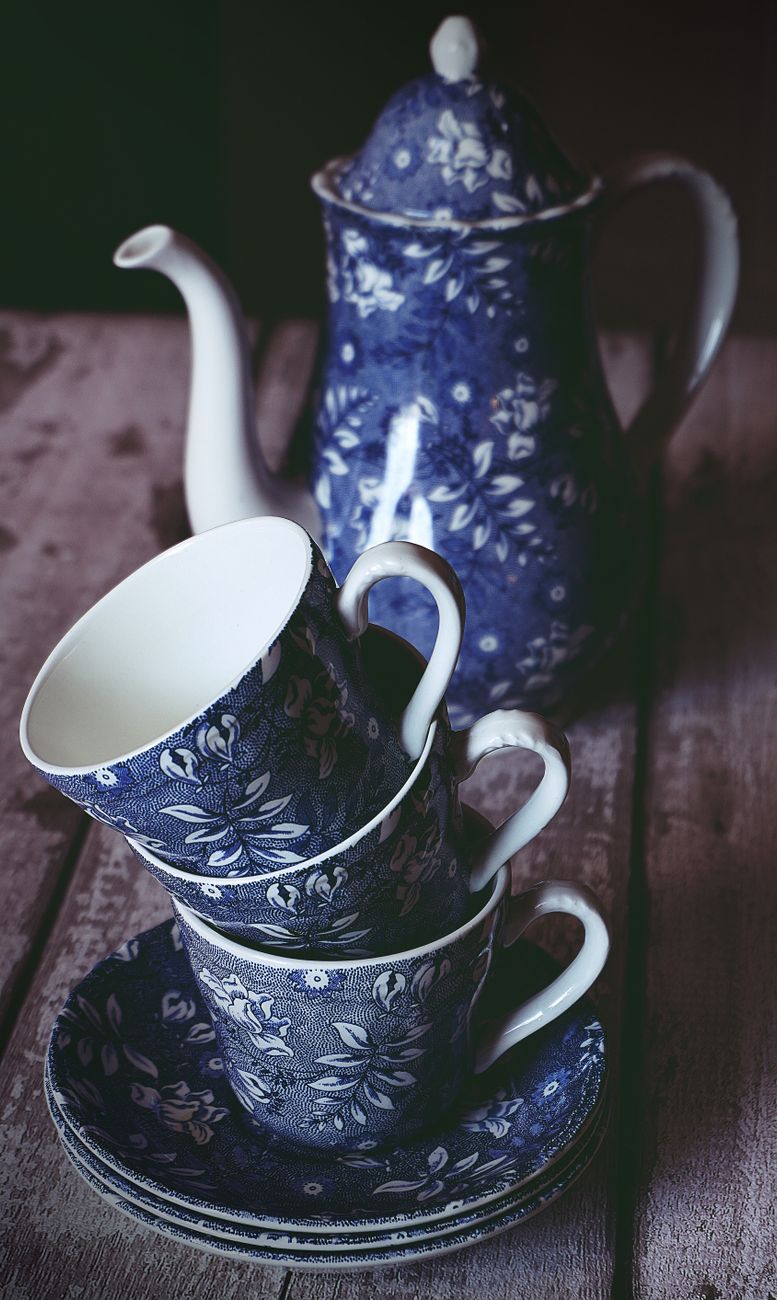
Some buyers prefer minimalist dishes. Others are attracted to bold mid-century patterns, handmade pottery or intentionally mismatched vintage pieces. Traditional floral borders and heavily gilded patterns still have admirers, but that audience is smaller than it once was.
There can also be an emotional complication. A person inheriting a family set may appreciate its history but not feel that it suits their own home. Declining the china is not necessarily a rejection of the relative who owned it; it may simply be an honest decision about space, lifestyle and personal taste.
Original price is not the same as resale value
One of the greatest sources of confusion is the difference between original retail price, replacement price and current resale value.
The original retail price included manufacturing costs, importing, advertising, department-store markups and the prestige of purchasing a coordinated service new. Wedding-registry pieces were often bought individually over several years, making the completed set feel—and actually be—very expensive.
Resale value is different. It is the amount a buyer is willing to pay now for a previously owned set. That buyer has many alternatives, including other inherited sets, estate auctions, thrift stores and online listings. The seller is competing with all of them.
An insurance appraisal is also not a resale offer. Insurance or replacement value estimates what it could cost to replace an item through retail or specialist channels. It does not predict what the owner will receive when selling it.
Why one replacement plate can be expensive
Owners sometimes look up their pattern and find individual pieces advertised by a replacement service at impressive prices. It is natural to multiply that price by the number of pieces in the set and assume the entire service must be worth thousands of dollars. Unfortunately, that calculation does not reflect how the replacement market works.
A replacement company is selling convenience to a very specific customer: someone who owns that exact pattern and needs one missing dinner plate, cup or serving piece. The company may store the piece for years before that customer appears. Its advertised price helps cover identification, cataloguing, photography, storage, administration, careful packing, possible breakage and profit.
The amount the company can pay the original owner must be far lower than its eventual selling price. Some pieces may sell quickly, while others may never sell. A high retail price for one replacement plate is therefore not evidence that a complete set will sell for the total of all those individual prices.

Complete sets can actually be harder to sell
A complete service sounds as though it should be more valuable, and completeness certainly helps. However, it also narrows the market. The buyer must want that exact pattern, need approximately that number of place settings, have room to store it and be willing to transport it safely.
In some patterns, individual replacement pieces or unusual serving pieces may be easier to sell than the entire set. Breaking up a service can eventually produce more revenue, but it requires considerable time, storage and work—and leaves the seller with unsold pieces. For most private sellers, that is not an enjoyable or practical project.
Fine china is difficult and expensive to ship
A large dinner service is heavy, fragile and awkward to pack. Every plate needs protection, cups require special attention, and empty space inside the box must be filled properly. A large set may require several boxes, double-boxing and substantial packing material.
Shipping costs can easily discourage a distant buyer. There is also the possibility of chips or breakage, followed by an insurance claim or dispute. Local pickup avoids shipping, but it limits the seller to buyers within driving distance. That makes the potential market much smaller.
Selling a set is a lot of work
Before china can be listed, it should be unpacked, washed, counted and inspected piece by piece. The maker and pattern must be identified accurately. The seller needs photographs of the complete set, representative pieces, serving pieces, backstamps and any flaws.
Questions from buyers must be answered, arrangements made and the set packed even for local pickup. Because the likely return is often modest, the time involved can outweigh the financial benefit. This is why many antique dealers and consignment stores are selective about the china they accept. They face the same storage, labour and demand problems as the private seller.
Condition matters more than many owners realize
Fine china does not need to be visibly broken to have condition problems. Chips, hairline cracks, crazing, staining, utensil marks, worn gilding and old repairs can all reduce desirability. A set that has been stored for decades may still need careful inspection.
Replacement specialists generally need pristine pieces because their customers are buying to complete cherished sets. A small flaw that seems unimportant when using the dishes at home may make a piece unsuitable for consignment.
What kinds of china may still sell well?
Fine china is not worthless, and some pieces or sets remain desirable. Stronger candidates may include:
Rare or actively collected patterns
- Unusual serving pieces that are difficult to replace
- Exceptional antique or hand-painted porcelain
- Certain prestigious makers and artist-signed pieces
- Distinctive Art Deco or mid-century designs
- Pristine sets with sought-after patterns and useful serving pieces
The important factors are the exact maker, pattern, age, rarity, condition, completeness and current buyer demand. Being old, delicate, marked as fine bone china or decorated with gold does not automatically guarantee a high resale price.
Sentimental value is real—but it is personal
Family china can carry memories of holidays, weddings and relatives who are no longer here. That sentimental value is genuine and should not be dismissed. However, it usually cannot be transferred to an unrelated buyer.
Before selling, a family may wish to keep one place setting, a serving platter or a few favourite pieces. China can also be used rather than saved indefinitely: mismatched pieces work beautifully for desserts, tea parties, holiday tables, jewellery dishes or wall displays.
If no family member wants the full set, accepting the current market value does not diminish its history. It simply recognizes that personal meaning and resale demand are two different things.
A realistic way to think about selling
When deciding what to do with fine china, an owner usually has to prioritize one of three goals:
- obtaining the highest possible return,
- spending the least amount of time and effort, or
- having the set removed quickly.
It is rarely impossible to achieve all three.
Specialized consignment may provide access to pattern-specific buyers but can take considerable time. An auction or estate service is easier, but the final price is not guaranteed. A private sale gives the owner control over the asking price, but requires the most work and patience. Donation may provide no financial return, but it can be the simplest way to ensure the dishes are used again.
Understanding today’s market helps families make that decision without feeling that their china—or their family history—has somehow been devalued. The china may still be beautiful and meaningful. It is simply being offered in a world that lives and entertains differently than the one in which it was purchased.
Coming in Part Two
In Part Two, I will look at practical options for selling or consigning fine china in Winnipeg, including specialized replacement services, consignment shops, auction houses and estate-sale companies—and how to decide which route best fits the set and the owner’s priorities.
Angela G. Gentile, Winnipeg
(Written with the help of ChatGPT 5.6)