
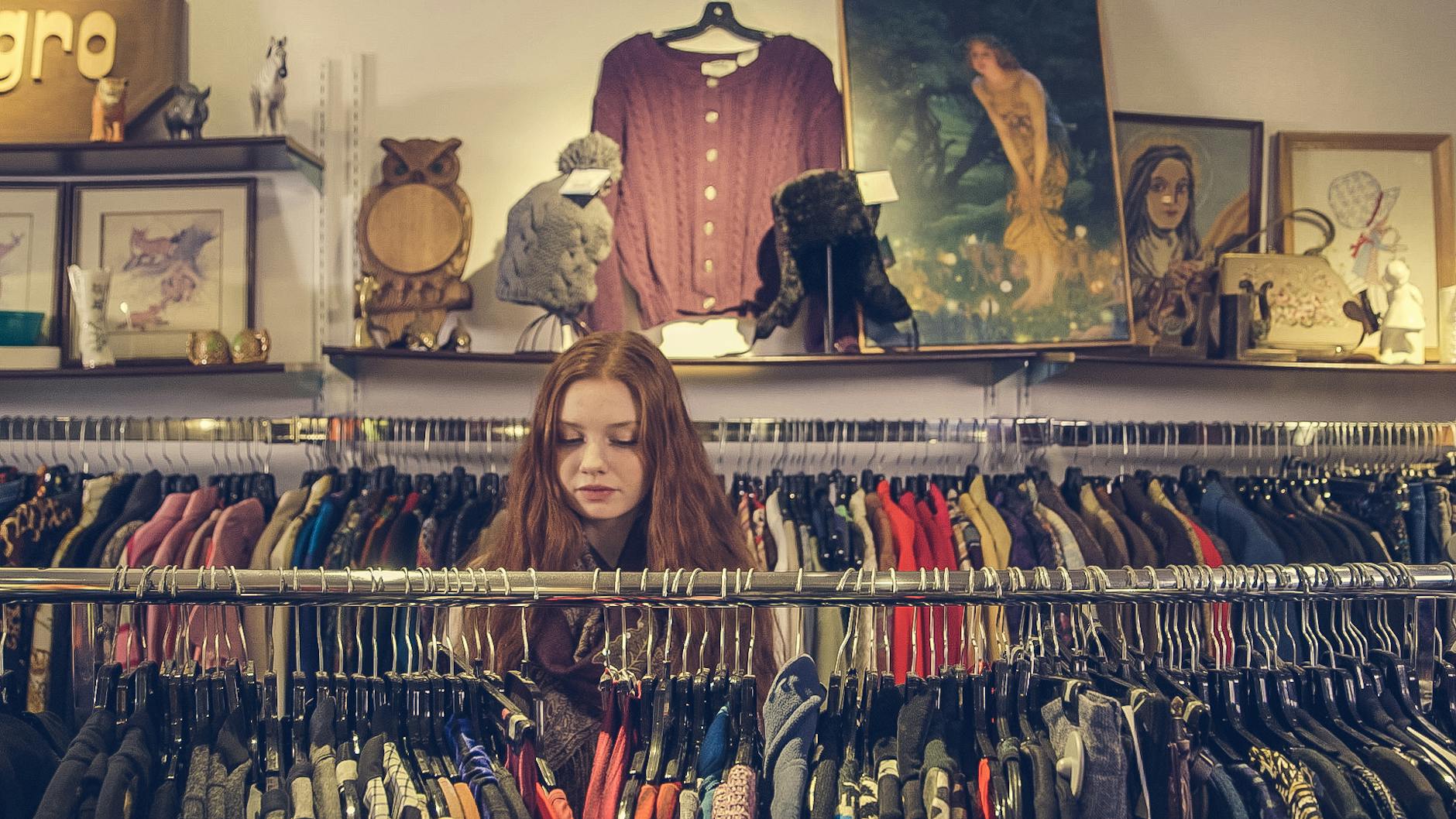
I buy and sell vintage jewelry and small collectibles, and I know many others who resell clothing. A criticism we sometimes hear is that we’re “stealing from the poor” when we shop at thrift stores and resell our finds. That idea sounds slightly plausible, but it really misses how the thrift system actually works.
Thrift Stores Have an Oversupply
Most major thrift organizations receive far more donations than they can sell. Items are rotated quickly and, if they don’t sell, they are:
- Sent to outlet stores or clearance bins
- Baled and sold by the pound, often to overseas markets
- Sometimes discarded
- Donated to other charities
Resellers often “rescue” pieces that might otherwise end up in a landfill, giving them a new home and a new life.
Thrift Stores Serve Multiple Missions
Many thrifts are mission-driven businesses. Revenue from sales helps fund things like job training, housing support, addiction recovery, or other community services. Whether an item is bought by someone in need, a middle-income shopper, or a reseller, the store benefits the same.
In fact, regular buyers like resellers provide consistent income that helps keep those doors open.
Accessibility Isn’t Only About Price
Price is only one barrier for people living in poverty. Transportation, sizing, health, mobility, and what’s actually on the racks and shelves all matter too. Many people in the lowest income brackets rely more on:
- Free clothing closets
- Church or community giveaways
- Vouchers or outreach programs
- Friends and family
Typical thrift stores are just one piece of a wider support network, not the only option.
Resellers Don’t Set Thrift Prices
There’s also a myth that resellers are the reason thrift prices are going up. In reality, stores set their own prices based on things like:
- Rising rent and operating costs
- Wages and staffing
- Corporate pricing and branding strategies
- The overall popularity of thrifting
If something is marked $5, it’s because the store chose that price. A reseller is not obligated to leave it behind “just in case” someone else might want it.
Part of a Healthy Circular Economy
Resellers of clothing, jewelry, and collectibles are part of a circular economy that:
- Promotes reuse over fast fashion and disposable decor
- Helps people find specific sizes, styles, and eras online and locally
- Keeps unique or higher-quality items in circulation for longer
There is an overabundance of stuff in our world. Thoughtful reselling isn’t taking from the poor; it’s helping reduce waste, support charities, and connect beautiful, well-made pieces with the people who will truly appreciate them.
What are your thoughts on the subject? I would love to hear it.
Angela Gentile
Written with the help of ChatGPT
 Angela G. Gentile