When the Going Gets Tough: A Best Practice Guide for Caring for People Living With Dementia

ambro

Image courtesy of Ambro at FreeDigitalPhotos.net

The Alzheimer Society of Canada website states that in 2011, there were 747,000 people living with some form of cognitive impairment, including dementia. This number is expected to double to 1.4 million by 2031. This means that many of us will be affected by dementia in some way, if we haven’t been already.

The Canadian government and health care sectors are well aware of the need for improved dementia care strategies, and a lot of research has been done on how to best serve this growing population. In some cases, dementia can affect a person such that his or her behaviour becomes very difficult to manage. Agitation, aggression, sundowning, and repetitive vocalizations are some of the most challenging behaviours to manage. In many of these cases, people living with dementia are over medicated or inappropriately managed which often results in other problems which can be quite disconcerting.

The Government of British Columbia has produced a document titled, “Best Practice Guideline for Accommodating and Managing Behavioural and Psychological Symptoms of Dementia in Residential Care: A Person-Centered Interdisciplinary Approach” (2012). In this 16-page document care providers at all levels will find ways to help improve the quality of care for people living with dementia, which includes better engagement with the person’s advocates and family members. The appropriate use of antipsychotic drug treatment is discussed, and it stresses that the first steps to best practice care are to look at environmental and behavioural modifications as well as psychosocial interventions.

In terms of pharmacological management, antipsychotic use in the older adult population comes with its own set of risks. In fact, there is a “black box” warning, as it is a well-known fact that there is increased mortality risk as well as other side effects that can be quite serious. Other psychotropic drugs, such as anxiolytics or benzodiazepines can also cause increased risk for falls and confusion. These medications should be used with caution. Other ways of managing the behavioural and psychological symptoms of dementia are now strongly encouraged as we are encouraged to shift away from using medication as a first line of defense. A risk and benefit analysis of the use of these medications is always recommended.

Person-centered care is now recognized as the most appropriate and effective way to care for people affected by dementia. It means that we consider each person as an individual, with his or her own unique history, personality, strengths, weaknesses, and challenges. It means that we take the time to learn about the person, which makes our care towards that person special, unique, and most effective.

For example, if there is a problem with a man who is up at night wandering the halls, we may want to look into his social and work history to find out what may be going on. We learn by talking to his family that he was a night shift supervisor for a large factory. This helps us learn more about his routines and lifestyle as he may be “back there” in his mind. This person-centred approach can be applied in all situations with every person we deal with. Many care providers believe that there is a reason for every behaviour. It is up to us to find out what the person is trying to communicate to us through their actions.

Another useful tool that is referenced in the aforementioned document is the concept of the person-centred “P.I.E.C.E.S. (TM)” approach. The cornerstones of this approach include looking at the following aspects of the person: Physical, Intellectual, Emotional, Capabilities, Environment, and Social. I am a P.I.E.C.E.S. trained assessor and these concepts help provide the best assessment and interventions from a person-centred approach.

A person-centred approach to the care of those with dementia or other related cognitive disorders takes into account aspects such as the person’s likes, dislikes, cultural and religious preferences, medical health, as well as their social history. An interdisciplinary team approach to care which includes professionals, non-professionals, family members and others with a vested interest is highly effective and recommended. Proper assessment, symptom management and ongoing evaluation is needed in order to continuously improve and manage a person’s care, especially as their dementia progresses and challenging behaviours present themselves.

Angela G. Gentile, MSW, RSW

Sources:

The Alzheimer Society of Canada: http://www.alzheimer.ca/en/About-dementia/What-is-dementia/Dementia-numbers

Best Practice Guideline for Accommodating and Managing Behavioural and Psychological Symptoms of Dementia in Residential Care: A Person-Centered Interdisciplinary Approach (2012): http://www.health.gov.bc.ca/library/publications/year/2012/bpsd-guideline.pdf

P.I.E.C.E.S. – http://piecescanada.com/

purple-swirl-separator-hi

Angela G. Gentile  MSW, RSW is a clinical social worker and author of the book, “Caring for a Husband with Dementia: The Ultimate Survival Guide”, “A Book About Burnout: One Social Worker’s Tale of Survival” and the “Dementia Caregiver Solutions” app for iPhone and iPad. She lives in Winnipeg, Manitoba with her husband and two adult children. She is passionate about all things related to Aging Well. For more information, visit: www.AngelaGGentile.com

Save

How to Improve Your Sense of Belonging: The lifelong desire to feel connected and accepted by others

image-courtesy-of-xedos4-at-freedigitalphotos-net

Image courtesy of xedos4 @ FreeDigitalPhotos.net

One of the basic needs of humans (other than food and shelter) is the need to feel loved and like we belong. Belonging in the sense that we feel connected and accepted by others. We all have a different level of need. Some want more, some want less. I have seen many people who feel lonely, and I believe it has to do with the fact that they don’t feel like they belong. This drive for belonging never goes away, and is present at all stages of our lifespan. Sometimes our motivation for belonging lacks due to mental health problems like depression or dementia. Sometimes loss can trigger our sense of connectedness in this world. We can work on improving our need for belonging by becoming self-aware and taking a good look at our life. It may mean we need to make some changes or seek some professional help.

The need for belonging evolves across the lifespan

If we are fortunate enough to be born and raised into a family that helps us feel loved and cared for, that is one thing. However, if we are born into a family that lacks the love and protection we need, we may feel abandoned. Renowned psychologist Matthew Lieberman studies “social pain” and he believes the drive to alleviate or relieve our social pain is more important than the basic needs of food and shelter.

Those of us who feel abandoned in our younger years may not develop a sense of what “love” is. We may crave and search for that feeling of being accepted and cherished. We may search for this in relationships that are presented to us, such as in teachers, other relatives and peers. Sometimes these relationships are good and helpful. Our needs can be met in a positive way through these other relationships as long as they are healthy and free from abuse.

Sometimes we find the comfort, acceptance and connection through unhealthy relationships. Until we are mature enough to figure out what is healthy for us, we may end up learning the hard way. That is why it is so important for families (no matter what the family consists of such as a single parent) to pay attention to the basic needs of their children.

As we mature, we learn what is healthy and not healthy for us. As teenagers we may end up in troubling relationships to gain the love and acceptance we are innately or instinctually craving. We may end up getting involved with the “wrong crowd” because they are the only ones who seem to understand and accept us.

The need to feel like we belong never goes away. Just like our need for water and safety. We are social beings. We depend on others. We do things in groups. Our connections to others changes as we grow and become wiser. The basic personality traits remain the same, but our values and morals may change over time. Having children and starting our own families usually wakes up our moral compass. What is right and wrong suddenly becomes clear.

Our own innate need for belonging is often met by having children. Young children usually offer us unconditional love and acceptance (things may and will change as they become more independent). Our small and sometimes growing family helps us meet our needs for feeling loved and like we belong. For those of us who don’t have children, pets, other relatives (nieces/nephews) and friends can also provide a sense of belonging.

How do we help others feel like they belong?

Fostering a sense of belonging goes both ways. For example, if we go to a family gathering or a social outing, we may or may not feel like we belong based on our actions or the actions of others. For example, do you feel “connected” to others there? Do you feel “accepted”? Do you willingly and freely accept those in the group or do you tend to disconnect? Do you accept others as they are or do you judge or avoid?

I find that those who feel a sense of belonging have good connections with others through family, friendships and other social connections. They also know who to avoid based on the way they are treated. When we consider adults, I think about workplaces and clubs such as cultural or religious based. Friendships and family relationships can be, and need to be, fostered and nurtured.

With respect to older adults (those 65 and older) families are often a main source of love and belonging. If this is not possible, or if a person feels they want more, there are clubs and other groups that can help fulfill these needs. Examples of groups and other social opportunities for older adults include:

  • Seniors Centres
  • Retirement Communities
  • Church/Synagogue or other Spiritual Based Groups
  • Cultural Clubs
  • Women’s Groups (e.g., Red Hat Ladies, Crown Jewels of Canada Society)
  • Men’s Sheds

Feel like you don’t belong?

In some ways, we are all pieces of a puzzle and we all want to “fit in.” If you answer yes to any of the following questions (modified from the Sense of Belonging Instrument SOBI-P), then you may want to explore some ways to seek connection so you feel a better sense of belonging:

  • It often feels like there is no place here on earth where I truly fit in.
  • I don’t really fit in with my friends.
  • I feel like a misfit in most social situations.
  • I don’t feel accepted by most people.
  • I could disappear for days and my family or friends wouldn’t miss me.
  • I tend to observe life rather than participate in it.
  • I feel left out of things.

Depression is linked to loneliness and isolation and can be reversed

We also know that loneliness and isolation are linked to depression. Sometimes it’s not clear what came first, the depression or the lack of connection to others. Sometimes depression is triggered by a loss. Some people need to see a health care practitioner or mental health specialist to assess if medication can help.

To end isolation and loneliness brought on by a sense of “not belonging” or feeling left out, it takes some effort and it goes both ways. To improve your sense of belonging, you need to help others feel like they belong to help that connection and acceptance grow. Here are some ways to help nurture a sense of belonging:

  • Call a friend or family member to ask HOW they are doing and tell you about WHAT they are doing (don’t just talk about yourself, your own family and your own life, ensure they talk about their life, too)
  • Join a social group for fun
  • Volunteer for a cause you are interested in
  • Find a job you enjoy with a boss and co-workers you can relate to
  • Try out a club that is focused on one of your interests and see if you feel like you belong
  • Contribute to newsletters and share your expertise with others
  • Plan an outing or a visit with someone you care about or would like to get to know better
  • Write a letter to someone who you think will write back
  • Join a social media site like Facebook and find some groups you are interested in
  • Join a support group
  • See a counsellor if you are stuck but want to make some positive changes in your life

Our basic human need and motivation for feeling like we belong in this world can be nurtured and supported by our actions. The reverse is also true. Think about WHO you belong to, WHAT you belong to and WHO and WHAT belongs to you. If you want to increase your sense of connection and acceptance it will take some effort. The same as getting food, water, shelter and safety. It doesn’t happen all on its own.

Please provide me with your thoughts on this topic. I’d love to hear from you.

Angela G. Gentile MSW, RSW


purple-swirl-separator-hi


Angela G. Gentile  MSW, RSW is a clinical social worker and author of the book, “Caring for a Husband with Dementia: The Ultimate Survival Guide”, “A Book About Burnout: One Social Worker’s Tale of Survival” and the “Dementia Caregiver Solutions” app for iPhone and iPad. She lives in Winnipeg, Manitoba with her husband and two adult children. She is passionate about all things related to Aging Well. For more information, visit: www.AngelaGGentile.com


This Self-Help Book for Caregivers Educates, Supports and Comforts

THUMBNAIL_IMAGE

When I titled my book “Caring for a Husband with Dementia: The Ultimate Survival Guide” (2015) I did not expect to have people mistakenly assume that I am a wife caring for a husband with dementia. The warmth and sympathy I receive from people who don’t know me personally has been incredible. I gently explain that I am not a wife caregiver and that the book is inspired by the experience I had in counseling eight amazing caregiving women.

When I was deciding on a topic for my master’s degree final project, I decided to focus on older women. I explored what issues are affecting them, and the subject of caregiving came up quite often. I did some research on the subject and discovered that there was very little written about women who care for husbands with Alzheimer’s or a related dementia. My career as a geriatric clinician and social worker exposes me to many different mental health issues, and dementia is unfortunately a common one. I quickly became an expert in assessing and screening for dementia, and recognizing the symptoms of caregiver stress and burnout.

The short-term, individual counseling program I designed, implemented and evaluated with eight caregiving wives was very rewarding and successful. It inspired me to want to help others like the women I had learned so much from. What started out as a small booklet turned into a 16-chapter book. “Caring for a Husband with Dementia” was written specifically to help women who care for husbands who have been diagnosed with a dementing illness such as vascular dementia or Alzheimer’s disease. I dedicated this book to caregiving wives, everywhere.

Writing this book came surprisingly easy to me. I called it a “Divine Intervention.” I received help from colleagues and other experts in the field who generously donated their time reviewing, editing and offering feedback. It is a unique, informative and therapeutic self-help type of book. The book offers opportunity to make it personal for the reader. There is space for self-reflection on important questions. Don’t know what to “Google” to find your local resources? I’ll help with that, too. There is a listing of helpful and important resources, plus more.

All of the reviews and feedback I have received thus far has been very positive. Some of the more helpful feedback has been that this book is written not only for wives, but for all caregivers. I have been told this book is like a bible and it is kept at the bedside and is read every night. It’s a reference guide, a companion, and a source of education and support. It’s like a year’s worth of therapy all in one book.

I know this book has helped spouses and other caregivers. They have told me, “Everything I was thinking, feeling and wondering about was written in this book.” I am honoured to be able to help those who are struggling with the issues of diagnosis, getting help, difficult behaviours, grief and loss, legal issues and more. I have been at book signing events where even men say they want their wives to buy this book as they want them to be prepared – “…just in case.”

My hope is that this book reaches those who are in need of education, support and tips on how to survive the difficult task of caring for a loved one with dementia. It is also a great gift for someone in need.

Angela G. Gentile, MSW, RSW

Link to original article on #AlzAuthors, published 23 Nov 2016.


purple-swirl-separator-hi


Angela G. Gentile  MSW, RSW. is a clinical social worker and author of the book, “Caring for a Husband with Dementia: The Ultimate Survival Guide”, “A Book About Burnout: One Social Worker’s Tale of Survival” and the “Dementia Caregiver Solutions” app for iPhone and iPad. She lives in Winnipeg, Manitoba with her husband and two adult children. She is passionate about all things related to Aging Well. For more information, visit: www.AngelaGGentile.com

Myths or Truths? A Guide to Achieving Retirement Community Gold Standard

id-100378628-1

Image courtesy of pixatawan at FreeDigitalPhotos.net

(This article was written in collaboration with guest Alan S. Wolkenstein, MSW, ACSW)

As an administrator or manager of a retirement community, you likely hold specific beliefs and understandings of the residents (or tenants) and the workings of the facility. These understandings may be ones that you have learned from others, or perhaps you have come to believe based on your own experiences. Sometimes beliefs about your retirement community can hinder growth and success due to the fact that they are myths (widely held false beliefs).

Myths can hold us back from achieving our full potential for success. While myths exist to help us explain and make sense of our experiences, they can be, and often are not helpful in that they simply are not true. Sometimes these traditional stories are widely held but are not based on facts. Taking our head out of the sand and taking a close look at reality can help us move forward.

Do You Hold Any Myths About Your Retirement Community?

It is important to identify if there are any myths you hold about your retirement community and those you serve. By asking yourself if there is truth or if it is simply myth to each of the following thirteen statements will place you in a more favorable position to exert constructive political, cultural or systems energy. By answering these statements honestly, you will be able to identify them as either truths or myths.

If you happen to recognize some of these statements as myths, you may come to realize that these untruths can inhibit the functioning of your retirement community in meeting the best needs of the residents (and families), staff and institution (bottom-line). The acknowledgement and examination of these falsely held beliefs can challenge you to take on the potentially arduous task of transforming them into truths.

There is a potential for great change in the overall success of your retirement community by focusing on challenging or debunking any myths and doing something about it. Myths are generally difficult to disbelieve due to your strong emotional attachments to them. For example, you may find it a bit troubling to realize your residents may or may not be provided all the services that are essential, available or needed.

Myths or Truths?                                            

While we have developed thirteen statements, we believe there will not be less. There may be some that have not been included that can be exchanged or added for conversation and potential action. They are not mutually exclusive, but designed in a way to encourage thoughtful reflection by individuals and for discussion within the staff or team at your retirement community.

Consider these thirteen statements and decide if these statements are myths or truths when it comes to your retirement community:

  1. Our residents are a priority, and our retirement community has all the amenities, staff and services the residents need for enhancing their quality of life.
  1. We understand that older adults who have chosen to come to our retirement community may or may not have completed and successfully coped with their Family Life Cycle¹ tasks (such as launching adult children, retirement, widowhood, accepting bodily changes and dealing with the realities of their living arrangements), eliminated their intra-familial conflicts and made all important amends. They may or may not be emotionally and psychologically prepared to handle potential losses, grief experiences and transformation.
  1. Our retirement community adopts a holistic approach to care and has fully trained and specialized staff to identify, assess, treat and monitor the physical, emotional, psychological, cultural and spiritual needs of our residents. Administrative personnel and managers are up-to-date on the resources available and continuously strive for improvements in this area.
  1. Residents are properly screened and/or assessed by qualified personnel for anxiety, depression, mood and thought disorders and mental status (including Alzheimer’s disease and related dementias). If these services are not available in-house, staff are trained to identify issues. Residents and/or family advocates are encouraged to seek out advice from an appropriate health care or mental health professional.
  1. There is an active involvement with families and social/cultural communities of residents for continuity of attitudes, values and belief systems. In addition, all elders need connections with their significant others and our retirement community fosters and encourages these relationships.
  1. Administrators, managers and select staff are encouraged and trained to provide continuing adult education programming and support within our community to individuals and families in troubled elder-parent and adult-children relationships.
  1. Our retirement community welcomes and embraces the roles of residents’ advocates and an ombudsman in the holistic and total care concept of our residents.
  1. Our retirement community has sufficient and ongoing staff training opportunities, supervision and evaluation of all appropriate staff.
  1. If present, frequent staff turnover is vigorously addressed. We believe a disjointed or fragmented system can lead to a less than viable milieu for residents and staff morale. We strive for continuity and consistency. Satisfied staff leads to satisfied residents.
  1. Administrative personnel have a clear understanding of and methodology to deal effectively with staff burnout or impairments (permanent or temporary).
  1. Our retirement community has a Human Resource Department that is staffed with (or has access to) professional mental health personnel: those who can identify, assess, and refer for proper treatment (or other actions) staff who are troubled, deficient, show signs of burnout and impairment, and those in violation of local, state, federal and institutional laws and guidelines.
  1. Our retirement community understands and encourages interagency cooperation within our communities.
  1. Our retirement community interacts with educational and academic resources to foster community public awareness and psychosocial services for older adults within our community. This includes placement, internships and fieldwork for learners in the field of geriatrics and mental health services. All such learners are supervised and guided by specialists in eldercare from appropriate professions within the institution.

While self-imposed institutional denial that services are not lacking and provided, or rationalizing that if they were needed, they would be adequately provided, ultimately such institutional defenses are insufficient and hinder best care and utilization of accumulated knowledge and skills in residential care for older adults.

No retirement community consciously chooses to deny services to their residents and staff, but may be acting only from a strong and important fiscal basis. However, this is insufficient. Boards and administrators may be very good at their roles, but not sufficiently trained to assess the holistic need of their residents and staff. They may ultimately fear resources are not sufficient to turn any of the myths into real-time community truths.

If we believe we are functioning from a more enlightened perspective than the one that a retirement community is meeting all these beliefs as truths when they are not, then conceptual shifts are in order.

Your Score and What To Do About It

If you answered “Myth” to any of the above statements, then an action plan for remediation and change may be essential.

This action plan may include:

  • an examination of policy and procedures
  • reassessment of priorities
  • modification of scarce resources
  • finding and securing new funding to change some specific myths to truths
  • a review of long-range goals and objectives

Achieving Gold Standard

We have painfully learned that if a system remains profit and profit margin motivated and not sufficiently focused on customer/family/consumer needs and satisfaction, it will not survive in these difficult and challenging times. There will be intra-system anxiety when confronted with the two, apparently opposite, goals. Anxiety can be a powerful force in creating a milieu that fosters change, enlightenment and growth. If guided and properly mentored, anxiety can help individuals achieve their full potential. We believe this is also true for retirement communities.

It is a truth that a society is best measured by how it cares for its very young and very old. Let your retirement community be the gold standard of care for its residents and their families. Maybe now is the time to secure and support consultation to reach new visions for your retirement community.

Alan S. Wolkenstein, MSW, ACSW
Clinical Professor of Family Medicine (Ret.)
University of Wisconsin School of Medicine and Public Health
Wolkenstein and Associates, LLC
Mequon, Wisconsin, 53092
Alan.Wolkenstein@gmail.com

Angela G. Gentile, MSW, RSW
Specialist in Aging

¹ Wolkenstein, A. S., Lawrence, S. L., & Butler, D. J. (1985). Teaching “family”: The Family Medicine Chart Review. Family Systems Medicine, 3(2), 171-178.

purple-swirl-separator-hi

Angela G. Gentile  MSW, RSW. is a clinical social worker and author of the book, “Caring for a Husband with Dementia: The Ultimate Survival Guide”, “A Book About Burnout: One Social Worker’s Tale of Survival” and the “Dementia Caregiver Solutions” app for iPhone and iPad. She lives in Winnipeg, Manitoba with her husband and two adult children. She is passionate about all things related to Aging Well. For more information, visit: www.AngelaGGentile.com


Watch Your Step! Fall Prevention Tips

used-image-courtesy-of-simon-howden-at-freedigitalphotos-net

Source: Simon Howden, Free Digital Photos.net

Did you know that one in three Canadians over the age of 65 will fall this year?

Some of these falls are life-threatening. In fact, falls are the leading cause of injury-related hospitalizations of older adults in Canada (Smith, Wager & Elliott, 2010). In 2004 Statistics Canada reported falls cost the health care system an estimated $2 billion.

In Canada, falls are the leading cause of head injury hospitalizations in adults (Canadian Institute for Health Information). Thirty-five percent of injuries from a fall result in broken or fractured bones (Statistics Canada). The cost to the health care system and to personal quality of life is staggering.

It is important to know the risks and to prevent falls from happening.

These falls happen everywhere; be it in the home, the community or in long-term care. There are some helpful online risk assessment tools and other resources to help older adults who are at risk, or who simply want to be pro-active in fall prevention. A study done in 2009/10 showed that fall related injuries from simply walking comprise forty-five percent of self-reported injury. (Statistics Canada, Community Health Survey).

Self-Assessment for Older Adults Who Live Independently

For older adults who live alone, the Staying on Your Feet website provides a self-assessment questionnaire for older adults, called Prevent Falls Check-Up. Once completed, a Check-Up report is provided which offers a variety of suggestions and tips for falls prevention. The main message here is that most falls are preventable, and steps can be taken to reduce risk.

Safety is far more important than what preventative and risk-reducing measures “look like.”

Concerns about getting in and out of the bathtub? Arrange to have grab bars installed. The Canadian Mortgage and Housing Corporation has released guidelines on the best placement for grab bars for maximum effect and ease of use. We have to get past the idea that grab bars may make us look weak or frail.

Taking medication? For those on three or more medications who are experiencing bouts of feeling light headed or dizzy, regular medication reviews are recommended. Medication adjustments may be required to help reduce unwanted and potentially harmful side effects that can cause an increased risk for falls.

Could the home surroundings be made safer? When a person has lived in a place for many years, they tend to not see where improvements can be made. If the person tires easily, perhaps a relative can help select rest areas where small chairs can be set to provide breaks. If the person tends to walk the same path through his/her home, move furniture to ensure a clear pathway.  If a small pet tends to get underfoot, install a bell on its collar. Move commonly used kitchen items to easy-to-reach areas to reduce the need for step stools. For hard to reach items, never stand on a chair – always use an appropriate stool or short step-ladder made for such a purpose, and preferably one with a handle at the top to provide steady support.

Is footwear safe? Slippers or mules with no backs, overly worn soles or shoes that are too tight, can all contribute to falls. Ensure the person has a good pair of well-fitting shoes, preferably without laces that could cause tripping, and with lots of room in the toe box. Wear these shoes in the house. Shoes that move with one’s feet will help reduce falls in the home.

Problems with blood pressure? Postural hypotension, or a sudden lowering of blood pressure when changing head elevation, is common among those 65 and older. A good tip is to get in the habit of sitting on the edge of the bed for a few seconds upon awaking before standing up. This allows the blood pressure to adjust to reduce the risk of dizziness upon rising.

Overactive bladder? If bladder incontinence or urgency poses problems, rushing to the bathroom can be a fall risk, especially in the night, and especially for homes where the bathroom is not close to the bedroom. Consider purchasing a bedside commode. The commodes of today are much more user-friendly and attractive than in our grandmother’s day, and we should not be embarrassed to install one in our bedroom. Purchase a screen to hide it during the day if embarrassment is an issue.

Need to use the stairs? Falling on stairs is the third most reported reason for falls, (Statistics Canada, Community Health Survey) after walking and snow/ice slips. 12 Steps to Stair Safety at Home is a one-page checklist on stair hazards and ways to look at stair issues effectively. First and foremost handrails should be on both sides of the staircase and should be used in every instance, no exceptions.

fall

What to Do After A Fall is a poster that can be printed off and kept in various places around the home. It is especially recommended for those who live alone and have already experienced a fall.

Personal Response System to Ensure Safety

If the risk for falls is high or family members are concerned about their loved one falling, one popular option is to get a personal response system. The Philips Lifeline AutoAlert service is a great optional feature that will automatically summon help if the person falls. There are many other such services and some of them are:  ADT, Alert1, Bay Alarm, Care Innovations, LifeAlert, LifeFone, LifeStation, Medical Guardian, Mobilehelp, and RescueAlert. Some research may be needed to find the one right for the circumstances, and these may not all be available in Canada. Some people are worried about the appeal of wearing a device such as a necklace or bracelet but modern technology makes many of these devices appear as regular jewellery. In Canada, Costco stores provide two such devices – Medical Alert and Direct Alert.

Buddy Systems

Although there are reportedly only one fifth as many falls in residential care facilities as in private homes (according to Statistics Canada), it is still important to be aware of fall risks and prevention strategies in seniors’ residences.

Some seniors’ residences have a buddy system or a safety check program in place. Examples would be where the tenant puts a door knob hanger or other signal (garbage can for example) outside their doors at night and remove them in the morning to signal that all is well. Alternatively, a phone call once or twice a day can ensure one’s safety with the added bonus of social interaction.

The Prevalence of Falls in Long-Term Care and Residential Facilities

Some people who live alone move into long-term care settings because of their complex medical needs and increased risk for falls. Nursing Home (NH) residents who fall are at risk for injury such as a fractured hip or other bones. Sometimes a fall results in death.

The Winnipeg Regional Health Authority listing of Critical Incidents Reported to Manitoba Health from October 1, 2013 – December 31, 2013 identified 34 NH resident falls over the three-month period. One of these falls resulted in death. Seven of the falls were witnessed by a staff member, and 27 were unwitnessed. Of these unwitnessed falls, 16 resulted in a fractured hip and a trip to the hospital for surgical repair.

According to a 2008 Winnipeg Regional Health Authority publication, the Personal Care Home View, 18,868 falls were reported in nursing homes in Winnipeg in one year. Most falls occurred in residents’ rooms on evenings and weekends.

Falls Risk Assessment Tool for Long-Term Care Facilities

The Johns Hopkins Falls Risk Assessment Tool (FRAT) helps identify the level of risk in NH residents, based on the following criteria:

  • Recent falls
  • Medications
  • Psychological factors
  • Cognitive status

If a person has had recent falls, it increases the risk for a repeat occurrence. Certain medications, such as sedatives, antidepressants, antipsychotics, anti-Parkinson’s, antihypertensive, diuretics or hypnotics can also increase risk. Psychological factors such as dementia, anxiety, depression, decreased cooperation, impaired insight or judgment (esp. re: mobility) also increases risk for falls. Finally, the higher the level cognitive impairment, the higher the potential for an incident.

The overall FRAT score is out of 20, with a higher score indicating increased risk. A low, medium or high Fall Risk Status is identified on the resident’s care plan. For those with identified risks, intervention strategies can be formulated, and referrals to other specialists may be initiated. For example, a geriatric psychiatrist or pharmacist may be consulted to review medications. Additionally, an occupational therapist may be required to assess mobility to determine the need for mobility aids and appropriate footwear. For example, hip protectors may be recommended. Also, anti-slip etching can be applied on the floor around the bed and most certainly should be in the bathroom in the shower area.

Identify, Prevent and Reduce Risk

Most falls can be prevented, and education is key. If You Fall is a guideline that can be kept on hand regarding what to do if a person has a fall including “How to get up” and the importance of “Telling the doctor.”

Regular exercise can help strengthen muscles and keep the body limber. It can also help with balance issues. Seek out the help of a qualified professional such as a physiotherapist for a tailor-made exercise program.

A healthy balanced diet and regular doses of sunshine (or Vitamin D) are also important to help keep bones and muscles strong and healthy.

Whether the older adult is living independently or in a long-term care setting, education and assessment can help identify, prevent and reduce the risk for falls. If you are keen on the subject, consider holding an awareness month, week or day like the Fall Prevention Awareness Month promoted in British Columbia and consider what kinds of activities you would like to include.


Angela G. Gentile, MSW, RSW

August Janice Bailey, Dip. Herb, HCA

 

purple-swirl-separator-hi

Angela G. Gentile, M.S.W., R.S.W. is a clinical social worker and author of the book, “Caring for a Husband with Dementia: The Ultimate Survival Guide”, “A Book About Burnout: One Social Worker’s Tale of Survival” and the “Dementia Caregiver Solutions” app for iPhone and iPad. She lives in Winnipeg, Manitoba with her husband and two adult children. For more information, visit: www.AngelaGGentile.com

August Janice Bailey, Dip. Herb, HCA is a Health Care Aide, an herbalist, a writer, and a falls prevention researcher and analyst. She is interested in many aspects of healthy aging including  nutrition and movement strategies. She works with seniors to reduce fall risks in their homes. August lives on the West Coast in Courtenay, British Columbia with her daughter. She can be reached through LinkedIn.


Additional References/Resources:

Government of Manitoba (2014). Critical Incidents Reported to Manitoba Health. Retrieved from http://www.gov.mb.ca/health/patientsafety/docs/ciq31314.pdf

Preventing Falls in Older Adults – Winnipeg Regional Health Authority, Manitoba, Public Health Resources  http://www.wrha.mb.ca/community/publichealth/PREVENTINGFALLSINOLDERADULTS_000.php

Partners Seeking Solutions with Seniors and Manitoba Pharmaceutical Association. Date Unknown. Fall Prevention: How does what I take or what I drink affect my risk of falling?  Retrieved from http://mpha.in1touch.org/uploaded/web/Legislation/Practice%20Resources/PSSSFallsPreventionPamphlet%20Updated%20Nov2014.pdf

Scott, V., Wager, L. and Elliott, S. (2010). Falls and Related Injuries Among Older Canadians. Retrieved from http://www.hiphealth.ca/media/research_cemfia_phac_epi_and_inventor_20100610.pdf

Statistics Canada (2014) Seniors’ Falls in Canada: Second Report. Retrieved from http://www.phac-aspc.gc.ca/seniors-aines/publications/public/injury-blessure/seniors_falls-chutes_aines/index-eng.php

Winnipeg Regional Health Authority (2008). Personal Care Home View, April 2008. 5:4. Retrieved from http://www.wrha.mb.ca/ltc/pch/files/PCHView_Apr08.pdf

Supports and Services for Older Adults in Gravenhurst, Ontario

untitled-2

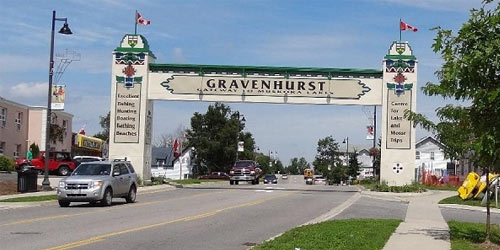
Image source: Muskoka Pest Control


I have aging relatives in Gravenhurst, Ontario. I went there for a visit in August 2016. While there, I was looking into the services and resources available to older adults. What I found, or should I say didn’t find, was quite alarming.

The Aging in Place Strategy for Canada is great in theory, but providing resources and services to meet the needs of the aging population is proving to be quite the challenge.

Gravenhurst is a small, pretty lake town located just 90 minutes north of Toronto. It has a population of 12,179 according to the Gravenhurst Community Profile 2013. A whopping 23% of the residents are 65 and older (compared to 14.6% in all of Ontario). This community is growing older, and the needs of this aging population are also growing.

In the summer the population swells due to the number of cottagers who escape the summer heat to their cool lakeside getaways. Some of the cottages on Lake Muskoka are huge! I took a tour with William of Big 3 Tours and he showed us some cottages that are 1-5 million dollar price range. Celebrities such as Martin Short own cottages in the area.

In terms of at risk seniors and meeting their needs, it seems like Gravenhurst is lacking in the basics. I was told to call “211” to speak to a nurse about health care resources. The lady on the line was very helpful. I ended up talking to a few very nice and well-meaning individuals and sometimes my conversations went full-circle without any definite answers. It seems like there is no one place for all the information I was looking for which proved to be very frustrating. I spent a few hours on the phone but came up with some answers and resources which I’ll share here.


Meal Delivery

There are no hot Meals on Wheels available in Gravenhurst due to the lack of available volunteers. There are services available in Bracebridge, a neighbouring community which is a 15-minute drive north. In Gravenhurst, the only option recommended to me is a company called Apetito.ca. They will deliver frozen meals once monthly. All of the information is online, so it can be difficult for those who do not have access to a computer, or do not know how to use a computer. It appears to me that the only meals on wheels available to older adults are the fast food restaurants such as McDonald’s and Tim Hortons which also conveniently have a drive-thru. I am also assuming that the local grocery stores have ready prepared meals, which may be a better option. For those with special diets (cardiac, diabetic, gluten free), this can pose a challenge.


Housekeeping and Yard Work (Home Support)

homesupport

Image source: Closing the Gap Healthcare

In terms of housekeeping, the Ontario government does not offer any services. In Winnipeg, to those who cannot afford to hire privately. In Gravenhurst, I was given a few different private companies to follow up with:

Seniors for Seniors – 1-705-645-0199 (Tom)

Closing the Gap Healthcare – 1-877-560-0202

Happy at Home Support Services – 1-705-703-9980 (light housekeeping and yard work)

Bayshore Healthcare – 1-705-722-8993 (Barrie office)

Red Cross Community Support Services – 1-705-721-3313

Busy Lizzie Cleaning Services – 1-877-207-8718 or 1-705-687-6183


Transportation

van1

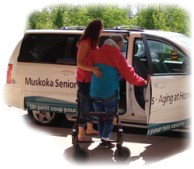
Image source: Muskoka Seniors

There are two taxi companies in Gravenhurst – OK Taxi (705-684-8294) and Gravenhurst Taxi (705-687-2246). I’ve been told that Red Cross will provide transportation to the nearest hospital  if needed (South Muskoka Memorial Hospital), which is in Bracebridge, at 75 Ann Street. There are two bus companies that serve Gravenhurst – Ontario Northland for service north or south, and the Corridor 11 bus which can take you directly to the front door of the hospital in Bracebridge for $7.00. OK Taxi will pick you up from the hospital and bring you back to your home in Gravenhurst for $25.00. (Prices from 2017 and subject to change without notice.)

Aging at Home Vans or Registered Volunteers are offered through Muskoka Seniors.


Housing for Seniors

In terms of seniors’ housing, there are a few options. There are “retirement residences” and a “long term care” facility.

The Manor at Gravenhurst (operated by Lifetimes Living Inc.) is a quaint little 40-bed retirement residence I toured in August 2016. It was originally a hotel, and there are studio apartments with attached washrooms, studio apartments with shared washrooms, and double rooms (two studios with an attached washroom). All meals, medications, housekeeping, laundry, recreation and parking are included in the rent which ranges from $1,900/month to $4,000/month. Residents are free to come and go as they please and the ages range from 60 to 100. 1-705-687-3356.

Granite Ridge Retirement Residence Assisted Care – 1-705-687-0007

Muskoka Shores Care Community – Transitions operated by Sienna Senior Living (formerly Leisure World) – 1-705-687-3444

The Pines Long-Term Care Home – 160 beds, located in Bracebridge.

Affordable Housing Programs

Social Housing (Low Income Housing) 


Other Important Resources

Your doctor. Physicians have access to and knowledge of resources that I may have missed here.

North Simcoe Muskoka Community Care Access Centre  (CCAC)- Accessing Home Care services. Office located in Huntsville, Ontario. 1-888-721-2222 or 1-705-721-8010

Seniors Assessment and Support Outreach Team (SASOT) – Operated out of the hospital in Bracebridge. I spoke to a very nice person there, and she says they “dig deeper” and all you need to do is get the doctor to make a referral to their team. 1-705-645-4400. ext. 3505.

Muskoka Seniors – Helping Seniors Live at Home. 1-705-789-6676.

Assisted Living Services for High Risk Seniors – Currently a six-month wait list. Services provided by The Friends (1-705-697-5100, ext. 22). It is a not-for-profit organization. There is also an Adult Day Program available for socialization and a meal. It costs $15 a day and $2 for transportation one way. There is a wait list of about six months. The wait list for homemaking is five years. They do not do yard work. For information on Assisted Living Services for High Risk Seniors, go through the CCAC case manager or call 1-888-721-2222 or 1-705-721-8010.

Long-Term Care Homes in North Simcoe Muskoka – 9-page document with information on long-term care homes.

North Simcoe Muskoka Healthline – Online listing of health services in the area.

The District of MuskokaSeniors Wellness Outreach Coordinator, 1-705-645-2412, ext. 444.


seniorscentre

Image source: Seniors Centre – Town of Gravenhurst


Seniors Centre – The Town of Gravenhurst has an active seniors’ centre and there is plenty of socialization and things to do for those wanting to remain active and involved.


Working Towards Age-Friendly Solutions

As I was doing my research, I was happy to find out that the District of Muskoka is working on a Master Aging Plan with assistance from an Age-Friendly Community grant received from the Ontario government. Here is a link for more information on how you can get involved: www.muskoka.on.ca//AgeFriendlyCommunities. I hope that they will be able to fill in the gaps soon to enable the residents of Gravenhurst remain in their homes as long as possible.

Overall, I would say that it is a very complex and frustrating experience to get information on services for older adults in need in Gravenhurst. The Seniors Wellness Outreach Coordinator at The District of Muskoka was most helpful. Those who have limitations or who have limited family support will especially find it difficult to get the services they require. If you have any further information to add to this list, please let me know in the comments below.

If you are planning a trip to Gravenhurst, check out the travel guide on wikivoyage for more information. For current events, check out the Muskoka Region News.


purple-swirl-separator-hi


Angela G. Gentile, M.S.W., R.S.W. is a clinical social worker and author of the book, “Caring for a Husband with Dementia: The Ultimate Survival Guide” and the “Dementia Caregiver Solutions” app for iPhone and iPad. She lives in Winnipeg, Manitoba with her husband and two adult children. For more information, visit: www.AngelaGGentile.com

Water is a Great Emotional Healer

SAMSUNG CAMERA PICTURES

Water – A Classical Element

One of my specialties and passions is mental health. My social work and clinical background has taught me a lot about how important mental health is in terms of our overall health and quality of life. As I age I am learning what’s important to me, personally, as well.

I advocate for a healthy lifestyle – both physical and mental. We have been inundated with advice, research and recommendations on how to keep ourselves physically fit and well. We are now starting to learn more about the importance of a healthy and happy mind.

Over the last few years I have noticed I am drawn to bodies of water.

I realize that my attraction to water is not new. As I age I am learning more about myself and what I need for positive and vital aging.

As a young child I enjoyed swimming in pools and small lakes. Both sets of grandparents had lakefront cottages. I taught myself how to swim. I enjoyed jumping off the dock, snorkeling and rowing across the lake to the small convenience store. Fishing with my grandfather was always special.

We lived on a house on the water when I was growing up. I spent many hours walking up and down the shore of the river. I took canoe rides against and with the current. I always felt good when I was around water (except for that one time I got heat stroke.)

Nowadays I enjoy taking a walk through my neighbourhood.  I make sure my route includes the path near one of the small man-made lakes. I check out the birds and plants that inhabit the water and surrounding areas. I feel at peace when I am near the water. It’s very good for my mental health.

It’s no surprise that blue is my favourite colour.

Sometimes I use my sound machine to help soothe myself to sleep. My favourite sound is the waterfall.

One of my favourite kinds of vacations is taking a cruise. A cruise ship is always in the water. I am surrounded by beautiful ocean scenes. The fresh, moist salty air is refreshing. There are pools and hot tubs on the ship. The ports have beautiful beaches. A cruise ship offers the ultimate experience for those who love to be near the water.

Knowing what helps keep our minds healthy is an important part of self care. For me, being in, on or near water rejuvenates and nourishes my soul.

We are learning more about the psychological and cognitive benefits of water – one of the classical elements. Being on, near or in water is within our grasp, even well into our older years.


Angela G. Gentile MSW, RSW

http://www.AngelaGGentile.com


Memory and Aging Program™ is Motivating and Uplifting


MAP_Logo_Baycrest_Health_Sciences_large

Creative Retirement Manitoba – Memory and Aging Program™

I first heard Dr. Ronak Patel, clinical neuropsychologist, speak about the Memory and Aging Program™ last fall here in Winnipeg. This is an evidence-based program that comes out of Baycrest Centre for Geriatric Care in Toronto, Ontario. Many of us fear developing dementia in our older years, and many of us start to get worried when we have memory problems. Now there is a program to help enhance memory skills that works. (It doesn’t prevent Alzheimer’s or related dementias, however.)

I met up with a friend, Sherry Cels, a retired social worker, who completed the Memory and Aging Program™. She says it is a very popular program, and there is a wait list for people who want to go. It’s very popular with those 60 and over who are experiencing memory problems.

For Sherry, at 70, she was worried about her own cognitive health and memory skills. One of her parents had Lewy Body dementia, and she was concerned she may have inherited the condition.

I asked her, if after taking the course, was she still worried about developing Lewy Body dementia and she replied,

“There is no predicting that. But for now, I believe my memory problems are very normal for my age group. Sharing with others in the class helped me see that.”

Not everyone has problems in this area, but she learned it is quite normal to experience changes and there are things that can be done to combat these memory problems. I asked her to tell me about the Memory and Aging Program™ she attended.

logo.png

The workshop was $150.00 and it is held at the classroom at 1075 Portage Avenue in Winnipeg (The Creative Retirement Manitoba office). Free parking is available. The building has an elevator, but unfortunately it isn’t reliable. Space is limited to 25 participants. They met once weekly for five sessions, of two-hours duration (1:30-3:30pm). She said everyone, except for one man, attended every session. No one stayed home!

They are given a 74-page participant workbook, “A Practical Guide to Managing your Memory: Memory and Aging Program™.” It has “Baycrest” on the cover, and it is authored by Dr. Angela K. Troyer and Dr. Susan Vandermorris. It’s unfortunate that the binding is already falling apart, but the content is very useful (it’s well-used!). This was the book that Dr. Patel used during the course. It includes worksheets and space for notes. Each participant had “at home” activities to complete between sessions.

The content includes three sections:

  1. The Science of Memory
  2. Memory Strategies
  3. Putting your Skills to Practice

The main focus of the course was on the Memory Strategies portion. The acronym SHARP is used, which stands for:

SHARP:

  • Seeing and Saying

  • Habits

  • Associations

  • Records

  • Practice Retrieval

4a633c666b74a911cc5dc23cfab3ec79

Sherry learned about associations, and how it can help her learn names. For example, she has a beautiful garden in her backyard. In order to remember the names of flowers, she makes an association with them. She doesn’t forget the name of the “climbing” Clematis anymore. She is able to remember her license plate by giving each letter a name of the people she knows or knew. I was impressed when she told me the names of the new neighbours, including their kids names, based on association!

She uses the same purse she’s had for years because it helps with remembering where everything is. This is an example of the the “Habit” strategy she learned about. This made me well aware of the fact that I need to decide what purse pocket to put my keys in because I can never remember which pocket I put my keys in! Sherry learned we can develop new habits to help us remember things more easily.

Sometimes habit can backfire though. We laughed as we could both relate to our forgetfulness in the shower. For example, we both use shampoo and conditioner. We sometimes forget if we’ve used the conditioner or not!

“Hmm, let me think? Does my hair feel like it was conditioned? Did I use conditioner?”

To help correct this memory issue, we are to pay attention to what we are doing, instead of doing activities on autopilot. At least if we put our seat belt on without thinking about it, we can easily check to make sure it’s fastened. This reminded me of the term “mindfulness” and how we can be more in tune with our actions if we pay more attention and be mindful of what we are doing.

brainmapprintv4_green-1008x661.jpg

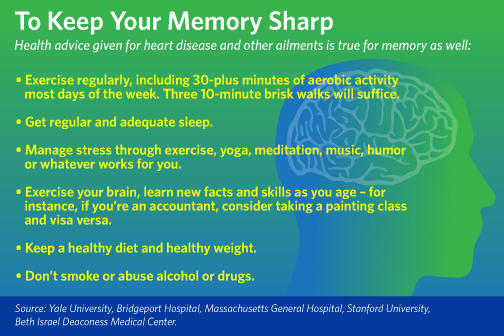
Deep breathing and visualization (such as meditation) is recommended for managing stress and promoting relaxation.

An important part of the program is keeping a log of your activities. The program recommends at least 100 minutes a week of physical activity (to get the blood flowing to the brain for good brain health) and cognitive activity which includes brain exercises and socializing with others. Good nutrition is also an important part of nurturing our bodies and brains for good brain health.  Canada’s Food Guide can also be helpful.

Sherry and I were also discussing the different ways we prefer to learn and remember things. I like to write things down, as doing this can help me remember. How many of us write our shopping list out, then can still remember the items on the list although we forgot the list at home? When receiving and retaining information, some of us need to see it, others need to hear it. Some of us may also say it out loud to ourselves to help remember. Others like to do or act it out. The four main learning styles are: Visual, Auditory, Kinesthetic (movement) and Tactile (touch). Exploring what your preference is and implementing it can make a big difference in remembering.

The main takeaway for Sherry was the emphasis on lifestyle and memory strategies. She felt very uplifted. The group discussions among the participants were quite helpful. She says with the cocooning phase of a Winnipeg winter, she found her “memory slipping,” and this course has motivated her to make lifestyle changes, such as “more physical and cognitive activity.” Adding to this, several new strategies practiced in the five weeks of the course has resulted in an improved memory and more positive attitude. She would highly recommend it anyone 60 or older who is experiencing mild memory problems.

Memory_Sharp


Angela G. Gentile, MSW, RSW

http://www.AngelaGGentile.com

“Tax Fraud” Scam Phone Call Alert

PhoneScam

I received a message on my answering machine on Monday July 11, 2016. The message went like this:

“The reason behind this call is to notify you that we have registered a criminal case against ‘your name’ concerning ‘tax agency’ and tax fraud. So, if you need more information about this case, you can call our direct line number which is: 613-505-4790. I will repeat the number, 613-505-4790. Call back as soon as possible. Thank you.”

Have a listen:

I also received an email from a dear friend warning me of these kinds of scams going around. Many people have become victims, unfortunately. The send money to the perpetrators thinking that they are actual government officials.

These scams can cause people a lot of worry and fear. Older adults and newcomers to our country are especially at risk. I even know of a middle-aged woman who was dragged into this as she thought it was real.

I also know of a woman with early dementia who has taken this kind of scam to heart. She truly believes she is going to be arrested and she is fearing for her safety. Her family worry about her mental health.

If you receive a call like this, report it to the Canadian Anti-Fraud Centre or your national anti-fraud unit in your country (e.g., FBI in USA).

If you or anyone you know has been defrauded, deceived, tricked or robbed contact your local police.

Check out this Canada Revenue Agency article: Protect Yourself Against Fraud


Angela G. Gentile, MSW, RSW

http://www.AngelaGGentile.com


Senior Moments: Should I Be Worried?

senior-moment2

Although I don’t particularly like the term “senior moment,” most older people know what that means. When someone who is at middle age or beyond has difficulty remembering something such as, “Where did I put my reading glasses?” or “I can’t remember her name” he/she may find someone else responding in a joking fashion, “Are you having a ‘senior moment?'” The other person is replying with a joke about having a poor memory. I have heard people themselves make jokes about their own “senior moments” in hopes of making light of the situation. It’s true that as people age there are normally changes in memory and thinking skills. On one end of the spectrum there is normal aging that affects everyone. At the other end is dementia which is common but not normal.  In between is a condition known as mild cognitive impairment. I will touch on all three.

We all have memory lapses on occasion

It’s true we all have occasional lapses in our memory. I even see my teenage children doing it. I even remember walking into a room years ago, forgetting what I went in there for, having to go back to what I was doing in order to jog my memory. Little lapses in memory is common for everyone. We get distracted or side-tracked especially when it is something that is not really that significant. Forgetting names is a common occurrence for example.

I have been working with older adults for over 25 years now and I see all different types of memory and thinking problems. I also know many older people (including caregivers) who do not show any signs of cognitive (brain function) decline.

I often note increased anxiety in people who are struggling with the loss of cognitive abilities. It must be a scary feeling to know that they are losing their faculties.

One of the common fears people have is developing dementia. Declining memory skills are often one of the first signs of dementia. The good news is that memory problems do not always lead to dementia.

Normal aging, mild cognitive impairment and dementia

Slowed thinking and minor problems with remembering things is quite common and almost expected in our later years. There are some things we can do to help reduce our risks of further problems with our cognition such as exercising (to get the blood pumping to our organs including the brain) and doing brain exercises (such as crosswords and learning a new musical instrument). Normal aging causes us to slow down in more ways than one.

Sometimes our memory problems become more problematic and they are noticed by other people. If you are continuously forgetting someone’s name or miss appointments, this may start to interfere with your relationships and daily functioning. You may have to learn new ways of coping with the normal changes in your brain such as keeping lists handy and using your calendar more regularly. Memory and thinking problems that can be noticed by others but don’t really affect your day-to-day functioning is called Mild Cognitive Impairment (MCI).

By the way, it’s a good sign if a person is aware of or concerned about their changing memory skills as one of the skills lost in dementia is the ability to know they have problems with their memory. If you ask someone with dementia if he/she has memory problems, he/she will most likely say “No.” It’s true that long term memory may still be intact.  It’s the ability to remember recent events and learn new information that is lost.

In some cases your memory skills, thinking and cognitive functioning may be impaired to the point where you can no longer do things on your own. For example, you may need someone to give you your medication on a daily basis or else you will forget. Or you can no longer drive because your sense of direction is off. Dementia is a syndrome and can be found in a variety of conditions  that affect cognition (such as Alzheimer’s disease). In early stages of dementia you can  live on your own as long as you can enlist the support you need to keep yourself safe. Dementia can create a variety of problems. For example, sometimes people with dementia forget to eat, or think they have already eaten. In this case it’s important to have someone provide a reminder or stop by to ensure he/she eats. In the later stages of dementia, it is not possible to live alone.

Seek a memory assessment if you are concerned

If you are concerned about your memory skills or other brain-related functions (such as language, problem-solving or judgment skills), please speak to your doctor for a memory assessment. Let your doctor know if you are concerned your problems are beyond the changes seen in normal aging (such as slowed thinking, and the occasional difficulty remembering things). Only a skilled practitioner can diagnose and determine the difference between normal aging, mild cognitive impairment and dementia, and provide treatment and management solutions.

For more information, check out National Institute on Aging’s  Memory, Forgetfulness, and Aging: What’s Nomal and What’s Not.

You may also like to check out Senior Moments Explained by Terry Hollenbeck, M.D.

Angela G. Gentile, MSW RSW

www.AngelaGGentile.com