Intermittent Fasting – A New Way of Eating for Health and Weight Loss

white tableware

Photo by Kaboompics .com on Pexels.com

A couple of months ago, I read an article in a newsletter written by an acquaintance about her five-day “fasting” experience. For health reasons, she drank only water for five days. I was both shocked by this news (how could any live for five days without food?!) and curious (she said she felt better and wants to try for seven days next time.) I tucked this knowledge away in my back pocket, with the intent of learning more.

Then a few weeks after that, I listened to an interview by D’vorah Lansky, bestselling author, who interviewed Gin Stephens who wrote the bestseller, “Delay, Don’t Deny.” D’vorah had adopted the “intermittent fasting” lifestyle and Gin was talking about this way of living and her book sales. This interview was so powerful, I hung on to every word Gin said about how the time-restricted feeding pattern freed her from years of dieting. She lost 80 pounds and has kept it off.

Intermittent fasting (IF) is when you choose to not eat anything for at least 12 hours and for as long as 24 hours. It can be done for religious or health reasons.

I purchased her book (ebook for Kindle) and read it in one day. I loved everything about this new way of eating (WOE) and vowed to myself that I would start on December 26, 2018. I was going to start by not eating after supper and skip breakfast, and only consume water and black tea during my 16-hour fast.

It was much easier than I thought! I felt in control. My hunger pains were short-lived and I soon realized that I was not only eating too much but TOO FREQUENTLY. We are a “well fed” society, and the more I learn about this, the more I understand why there is so much obesity and other related health problems (central abdomen obesity, high blood pressure, high bad cholesterol, low good cholesterol, and high blood sugar). Metabolic syndrome –– which includes three of the five previously-mentioned conditions –– causes an increased risk of cardiovascular disease (heart problems) and type 2 diabetes. Increasing age also causes us to have an increased risk in these areas. I realized in order to reduce my caloric intake, instead of “dieting,” I needed to give myself a “window” of time where it was okay to eat. I am learning how to delay my meals, instead of denying them.

As I write this I am on Day 12 of my new WOE. There is a lot of flexibility with intermittent fasting. For example, my usual pattern is 16 hours of fasting with an 8-hour window of feasting or eating. This is a good place for most people to start. I “close my window” at 8pm, and I don’t eat anything until noon the next day. This gives my body a good 16-hour break from eating. I can drink all the water or black tea (or coffee if I wanted) during the fast. I found I was closing my window earlier, so some of my days were 17 hours of fasting (or more).

Some people choose this 16:8, others choose 18:6 or 20:4 – or some other variation. There are also other patterns, and “extended fasting” which is what the lady did who I mentioned at the beginning of this article. (I’ve also read any fast over 72 hours is dangerous, so be mindful of that.)

For special occasions, where I know I will want to eat or drink outside of my regular window, I can switch up the fasting time. For example, I went for a 21.5-hour fast before new year’s eve so I could have champagne and snacks during the evening. This weekend, I knew I would be having two different family meals, so I did a 24-hour fast. This is also called “alternate day fasting” (ADF) which is another pattern of eating. There is also one-meal-a-day (OMAD) in which the eating window is very short, which could be anywhere between 2-4 hours. Each person finds their own “sweet spot” and you learn how to listen to your body. The Mediterranean diet is what I prefer, as it has the most research behind it for health and longevity. Oh, and my sugar addiction is being curbed as the fasts force me to abstain.

Many people find a lot of benefits associated with intermittent fasting (IF). Improved health and weight loss are the two biggest reasons why people try it. I belong to a few groups on Facebook, and the success stories and non-scale victories (NSV) are very inspiring and encouraging.

IF isn’t for everyone, however, and there isn’t a lot of research on it as it is quite new. I’ve read Gin Stephens’ books and I am also learning from Dr. Jason Fung and will be reading his books, too. Gin says IF is not for pregnant women or children. For those who have pre-existing medical conditions, they should talk to their doctor. In fact, I’ve heard of a few people now who say their doctor recommended IF for their health! It’s been known to reverse type 2 diabetes. If you are considering trying it, please speak to your doctor first.

I am enjoying this new WOE and I am already feeling less bloated and I am sleeping better. I lost 30 pounds a couple of years ago going through my cancer ordeal, and I put most of it back on. The way I lost it was not in a good way. This time I want to lose it in a way that is intentional and will benefit my well-being. I want to reap the benefits of a healthier body that is well fed –– not frequently fed. I also have my own group on Facebook for women who are 40 and better. If you’d like to join us, please drop me a line.

Age well, my friend.

Angela G. Gentile, MSW, RSW


The Path to Mending a Broken Heart

broken-heart-2680920

I have assessed and treated a lot of broken hearts in my career. There are many causes of a broken heart, and the main ones being the loss of a loved one, or the loss of your own own health (and the anticipated loss of the future).

When a person breaks a limb, such as an arm or leg they immediately receive medical attention. The motivation is to get the broken pieces to heal back together so it can be functional again. The broken limb is promptly given a very snug-fitting, long-lasting hug in the form of a cast. Sometimes a brace. There are instructions to wear this cast for about six weeks. For some, that’s the longest six weeks of their lives. Everything changes. The way they do things changes. How they look changes. They are looked at as being somewhat disabled…broken.

When someone’s heart is broken, if they are lucky, they are given a nice warm hug. The hug doesn’t last for weeks, however, but many doses are recommended over the coming weeks and months. There is no specific doctor’s orders given on how many hugs, how long, what to expect, etc. There will be lots of tears, sadness and possibly self-isolation. I believe this is the equivalent to the cast for the broken limb. It’s a way of protecting and immobilizing the broken parts so it can heal.

Much like a broken arm or leg, the heart takes time to heal.

Although the outward signs of brokenness are not there (you can’t see the hole left in the heart, or the crack in it), there is a real, bonafide injury. I consider the spirit, soul and “heart” of a person as one and the same. When we’ve had an emotional trauma or injury to our spirit, it takes a very special form of healing. It’s something that can’t be rushed, and there is no specific time frame on when it will be healed.

A broken heart will never be the same. Neither will a broken arm or leg. For some, the heart will have permanent scarring, emptiness, or pain. For others, the pain will eventually subside, and the emptiness will eventually be filled. But we know this is not something that can be rushed. And it’s different for everybody.

If you or someone you know is healing from a broken heart, make sure you take your time.

  • Don’t force it or use pressure.
  • A broken arm can’t heal any faster if you try to use it.
  • The broken leg may become more damaged if you try to walk on it before it’s strong enough.
  • The broken heart will only get worse if you ignore it and try to push it.

When the time is right, you will start to try things that won’t emotionally or spiritually hurt you. For example, you may be encouraged to “get out” more, but you may feel it’s too soon to be around others. Answering questions such as “How are you?” may be too much for you to handle. When you feel you are strong enough, and you are ready to start getting back into “real life,’ you may want to try rehabilitating your heart first. Baby-steps towards repairing the soul can help. Do things that make your heart feel good. The soul knows what it needs. Listen to that. The practice of self-compassion is so important on this path to healing a broken heart.

Bottom line is, don’t rush and don’t push. Any broken bone or heart takes time to heal. Give yourself that time and honour your body’s natural process of healing.


purple-swirl-separator-hi

Angela G. Gentile  MSW, RSW is a clinical social worker and author of the book, “Caring for a Husband with Dementia: The Ultimate Survival Guide”, “A Book About Burnout: One Social Worker’s Tale of Survival” and the “Dementia Caregiver Solutions” app for iPhone and iPad. She lives in Winnipeg, Manitoba with her husband and has two adult children. She is creator of the Facebook communities – “Aging Well for Women” as well as “Living Well With and After Cancer” For more information, visit: www.AngelaGGentile.com


SaveSave

What a Cancer Diagnosis Taught Me About Hope and Faith


ID-100185502

Image courtesy of Evgeni Dinev at FreeDigitalPhotos.net

A cancer diagnosis in April 2017 has jerked my world. Just hearing the words “You have cancer” changed my whole perception of life. There are no other three words I have ever heard that have impacted me so greatly, in a negative way. My initial reaction was all about How do I tell the kids? Then it moved to I am not ready to die. I want to see Simone graduate. I want to grow old. I want to see my grandchildren. I became very sad and scared. I was mourning the loss of my future. I found myself not only turning to loved ones in my life but God.

My gut instinct was telling me to go to church. I saw the priest and he performed an “Anointing of the sick.” I cried as he did this. I also attended a “Spirit Room” where they pray for people’s healing. I went to Sunday mass. I went to Novena. Most times I had loved ones with me. I bought a Catholic prayer book. I wore a rosary bracelet, gifted to me by a dear friend. I prayed to God. I prayed for strength and courage to get me through. I asked the priest how I will get through this. He said, “Let God carry you.”

As I went through tests and learned about my treatment plan (chemotherapy and radiation), I continued to pray. I found myself questioning why this happened to me. I was a good person. I lived a healthy lifestyle. I read a book called, “When Bad Things Happen to Good People.” I read all kinds of books and articles on the internet. Articles written by people of faith. People who had cancer. I tried to understand why this happens in God’s world.

I started to question natural disasters. The year of 2017 has been the most tragic I can ever remember in terms of hurricanes, wildfires, earthquakes and mass shootings. I questioned why God would allow this to happen. Many people pray for those who are suffering, grieving, ill and forlorn. We pray to God who we expect to make things better.

I have learned throughout my cancer treatment for anal cancer (which was torturous) that God has a plan. He has given us human will. He has not taken this away from us. There are tragic events that will happen due to malicious human will whether it be from mental illness or a criminal mind. As examples, the mass shootings or terrorist massacres are a direct result of human will. In addition, tragic events happen due to human error. God does not “will” these things to happen. But He gives us the strength and courage to come together to aid and comfort one another. He gives us the capacity to love and support one another.

When God creates such a magnificent world in which we live, we have to learn how to live with the natural events that occur. Severe weather patterns, the earth’s shifts, and other disasters such as widespread fires happen which I believe is beyond God’s control. We take the beauty of a rainbow, or a sunset, or in the tiny petals of a flower as signs of God’s creation and love for us. We seek God’s good as He is an all-powerful, loving God.

When illness or suffering strikes, I witness many people praying for God’s healing powers. There are faiths based on the Bible that believe God can heal. In the Bible it says Jesus healed those who were ill.

I believe that God gives the healers in our lives the ability to learn and use their God-given talents to help when one is sick. For example, when I went through radiation, I believe it was God working through the doctor who determined where to aim the destructive beams of radiation. I trust that the specialist did her best and that God helped guide her. I also believe that God was working with all the support staff, such as the radiation therapists, who ensured the proper administration of my treatment. This is an example of my faith.

The way my body responds to the treatment is all part of the bigger plan set out by God. I believe the plan is already designed. Praying for “health and healing” won’t matter because the determination of my fate has already be set. Instead, I HOPE for these things but accept what is meant to be. This belief helps me cope with the unknown. I focus on my day-to-day life and avoid thinking about my unknown future. I think about that infamous line in the Lord’s Prayer, “Thy will be done”, and find comfort knowing that my future is in God’s hands.

God helped me through my darkest, most traumatic times during my treatment. I pray for strength, courage, and patience. At times I called out for God to help me. The pain was so severe that one time I asked Jesus to help and I actually saw him standing by my side in his white robe. This was very comforting in the most painful time of my life.

When people pray for God to heal someone or themselves, some will be disappointed. Some people will not be healed, and they will succumb to their ailments. So if someone does not make it, does that mean God did not answer his or her prayers? Does it mean they did not pray hard enough? Maybe their faith wasn’t strong enough? This is where it gets difficult to keep the faith. It may leave people wondering why God did not answer their prayers.

I think the better way to go about praying for healing is to pray that the person has the courage, strength, and patience to get through whatever is happening and they don’t have to suffer too long. If it is God’s will that they suffer, we must remember that the reason for suffering may have an answer, or it may not. A priest I talked to even said sometimes we don’t know why some things happen. It’s a test of our faith, to know that God has a plan, and we need to accept it.

Encouraging people with cancer to “fight the fight” can also create the same kind of outcomes. If they did not “fight” hard enough – if they decide to “give up the fight” – does that mean they were bad or weak? We want to believe we have control over our health and our outcomes. We only have so much control. The rest is in God’s hands.

Hoping for a speedy recovery, hoping for the end of suffering, hoping for a positive outcome is what we all wish for. No one wants to see suffering. No one wants to lose a loved one. But if it is God’s plan that the outcome is other than what we hoped for, we need to accept it. How many times have we heard, “Now she won’t be suffering anymore.” “His pain is gone.”

Faith and hope are two concepts which are very closely related. I now understand the difference. Faith in an all-knowing, all-powerful God with a master plan helps me cope with my circumstances and what is happening to others who are facing adversity. He knows best. We can learn from these adversities. It usually helps us become more compassionate, and loving if we look for the positive in these situations. I actually admitted that having cancer and going through treatment was a gift. It has helped me become more understanding and compassionate towards those suffering or diagnosed with a life-threatening illness. I understand what “torture” is. I understand what depression feels like.

Hope is what we need to keep us going. Hope helps us sort out what is important to us and what we want and need in life. Hope is the belief in positive outcomes. It helps us cope and cling on to what we value and love. Hope is a way to show others that we care.

My faith is strong and will continue to be strong throughout my healing journey. I put my trust in God and will accept whatever His plan is for me. I will continue to hope for the end of suffering and many more years of health and happiness. I hope that I can see my daughter graduate from university, start a career (like my son Lorenzo has) and see my children get married and have children of their own. I hope that I can grow old with my husband, Agapito. God-willing.

Peace, love and hugs,

Angela G. Gentile


purple-swirl-separator-hi

Angela G. Gentile  MSW, RSW is a clinical social worker and author of the book, “Caring for a Husband with Dementia: The Ultimate Survival Guide”, “A Book About Burnout: One Social Worker’s Tale of Survival” and the “Dementia Caregiver Solutions” app for iPhone and iPad. She lives in Winnipeg, Manitoba with her husband and has two adult children. She is passionate about all things related to Aging Well. For more information, visit: www.AngelaGGentile.com


SaveSave

Finding a Cure for Sleepless Nights is Not An Easy Task – Tips for Better Sleep

image-courtesy-of-theerapong82-at-freedigitalphotos-net

Image courtesy of theerapong82 @ FreeDigitalPhotos.net

I believe one of the most important foundations of a healthy and happy life is adequate and regular sleep. Our day starts the moment we wake up. Waking up from a night of good quality slumber is very different from starting our day after a night of restless, interrupted insufficient sleep.

Finding a way to help you with sleeplessness can get frustrating. There is so much information out there. Forget about counting sheep, research indicates it may, in fact, take you longer to fall asleep!

I asked some of my Facebook friends to give me some ideas on natural sleep aids, and they were very eager to share their tips with me. I’ll include them here as well.

Ages and Stages of Life

Everyone has different sleep habits and routines. It depends on your lifestyle, life stage, personality, and overall physical and mental health. For example, a busy and socially active teenaged university student may have many late nights going out with friends or studying, causing her to need to sleep in later in the day. Another example is a middle-aged full-time employee who works Monday-Friday, 9:00 am – 5:00 pm. The sleep habits of this mature person are most likely very different from the younger student. An anxious person may also have problems falling asleep.

Ages and stages cause us to have changing sleep needs during our lifetime. When we are very young, as babies, we need a lot more sleep than when we are adults. Older adults need about 7-8 hours of sleep a night.

Problems occur when we have trouble getting the required sleep to “recharge” our batteries. The occasional restless night usually isn’t that much of a concern. We can usually catch up the next night. Chronic, long-term issues with either falling asleep or staying asleep can cause other problems in our lives. Sleep deprivation can cause us to be disorientated, agitated or less able to handle the stressors in our lives. Insomnia is often a serious health condition that requires intervention. Research tells us that women over the age of 60 are at higher risk of having insomnia.

For those of us women who are menopausal, we have other issues to contend with such as hot flashes and night sweats. Hormone changes can cause sleep disturbances, and a visit to a health care professional is highly recommended.

Caregivers of people with dementia often have trouble getting enough rest. As do new parents, especially mothers.

Sleep Hygiene, Sleep Aids and Other Tips

The basics for a good night’s rest include a comfy bed/mattress, the perfect pillow/s, sheets and blankets that provide just the right amount of warmth. If you don’t have these basics, you will need to get those things sorted out. If you have a bed partner, make sure they don’t take up too much room, snore too loud or steal your covers! (Some people have sleep apnea and this is a serious condition that requires a medical assessment).

There are many articles and books written on how to get a good night’s sleep by implementing some lifestyle changes and habits. The term commonly used is “sleep hygiene.” Some ideas to try include:

  • Avoid caffeinated beverages such as colas, coffee, and tea too close to bedtime
  • Participate in some kind of physical activity during the day but not too close to bedtime
  • Get some sunlight and/or fresh air on a daily basis
  • Don’t eat a heavy meal right before going to bed
  • Keep your room cool, dark and quiet
  • Manage stress to help keep a relaxed mind
  • Meditate, pray, breathe deeply, practice yoga or listen to music before bed
  • Avoid blue light found on cell phones, tablets and computers at least one hour before sleep
  • Avoid long naps during the day

If you can’t sleep – Instead of lying in bed awake,

get up and do something else before returning to bed.

For those who are looking for a “sleep aid,” these can come in many forms. A medicated sleep aid can be prescribed by a doctor or other healthcare professional. Home remedies can be tried. Products found in nature can also be tried, such as herbs and essential oils. Tools such as sound machines or white noise can work, too. Some ideas to try include:

  • “Sound Machine” with white noise or nature sounds
  • Apps for your smartphone or tablet such as “White Noise”
  • Turn on a bathroom fan to drown out other noises if it’s close to your bedroom
  • Essential oils such as lavender (Lavandula angustifolia) – in a diffuser, rubbed on your feet (put socks on after if the oil is in a carrier oil or lotion!), sprayed on your sheets or on a cotton ball by your head
  • Herbal tea to take before bed such as Sleep and Relax Tea or Nighty Night with ingredients such as chamomile, passionflower and/or valerian root
  • Supplements such as “Super Sleep” also known as Melatonin Plus from Webber Naturals or those that contain melatonin, 5-HTP and/or L-theanine; or Healthy Sleep supplement by Jamieson that contains melatonin, skullcap, Rhodiola, rosavin chamomile and L-theanine (be aware melatonin can cause depressive symptoms in some people)
  • Herbs such as ashwagandha are also helpful for some people
  • Amino acid such as gamma-aminobutyric acid (GABA) can help you feel calmer
  • Magnesium can help people relax
  • Vitamin B3 (Niacinamide) has been known to help in some cases (ask your healthcare practitioner about this)
  • Gentle massage with an aromatic essential oil such as peppermint or lavender
  • Try some yoga poses before bed
  • Bath with Epsom salts
  • 30 minutes before bedtime, use passive heat then cool off. A shower, bath, hot water bottle or wheat bag may work for some for as the body cools, it naturally releases melatonin (a naturally-occurring hormone related to the sleep-wake cycle)
  • A glass of milk

Other ideas to help you feel calm and relaxed include:

  • Get an easy-to-do crossword puzzle book or do some light reading right before bed
  • Write in a journal, include things you are grateful for
  • Avoid the news, especially if it upsets you
  • Try eating some kiwi before bed

Techniques to help you fall asleep, especially for those whose thoughts keep them awake:

  • Counting backwards from 100 combined with deep breathing can relax your mind and body. While lying in bed in a comfortable position, with your eyes closed, say the number 100 in your mind. Then take a deep breath in through your nose, hold it for 1-2 seconds, then slowly exhale through your mouth (or nose). Pause. Imagine the next number which would be 99. Repeat the breath in and breath out. Continue counting down and deep breathing. Concentrate on your breath and remembering which number you are on. If your mind wanders, go back to the last number you remembered. Number – breath in – pause – breath out – pause. Repeat until asleep!
  • Word games can also help you relax. While lying in bed in a comfortable position, with your eyes closed,  pick a letter in the alphabet. For example, start with A. In your mind, start thinking of 5-7 (or more) words that start with A. “Angela, Asia, apple, achieve, angst, approve…” Then when you are done with that letter,  go on to the next. “B – Baby, boy, balloon, bubble, Bill, Boston, brush…” Continue going through the alphabet. If your mind wanders, go back to the same letter you were on or move on to the next. You can start at any letter in the alphabet.

Medicated sleep aids to be used with caution include:

  • Zopiclone (by prescription, not to be taken long-term)
  • Gravol for nausea (contains dimenhydrinate which is an antihistamine and anticholinergic and can cause drowsiness)
  • Vick’s NyQuil Complete Cold & Flu liquid (contains doxylamine succinate, an antihistamine which can cause make people feel drowsy, relaxed, and help them fall asleep and can cause dependence)
  • Benadryl for colds (contains diphenhydramine HCl, an antihistamine which can make you feel drowsy)

You can also try finding a therapist to help you with CBTi – Cognitive Behaviour Therapy to treat insomnia. It is considered the first-line treatment for insomnia and is safer and more effective than sleeping pills. You can even try doing it on your own.

Caution: Older adults are advised to avoid medicated sleep aids as mentioned above as they can increase the risk of confusion, falls and car accidents.

Some not-so-common ideas to consider:

I would recommend a trial-and-error approach to find what works for you. What worked for you when you were younger may no longer work for you now. Ages and stages create different stressors and needs.

When you find something that works, use it for only 3-4 nights in a row and alternate with other methods. Your body will get used to it and you will benefit from switching it up.

And remember, never go to bed angry.

If All Else Fails

I saw this on Facebook so it must be true (insert a laugh here):

Did you know?

Convincing yourself you slept well

tricks your brain into thinking it did.

Please share your tips on how to get a good night’s sleep.

Sleep well, my friend. Sweet dreams.

Angela G. Gentile, MSW, RSW

For more information on insomnia, check out this Mayo Clinic article.

purple-swirl-separator-hi

Angela G. Gentile  MSW, RSW is a clinical social worker and author of the book, “Caring for a Husband with Dementia: The Ultimate Survival Guide”, “A Book About Burnout: One Social Worker’s Tale of Survival” , “Cancer Up the Wazoo”, and the “Dementia Caregiver Solutions” app for iPhone and iPad. She lives in Winnipeg, Manitoba with her husband and has two adult children. She is passionate about all things related to Aging Well. For more information, visit: www.AngelaGGentile.com

Save

SaveSave

SaveSave

Aging Specialist Offering Two New Courses This Spring (Winnipeg)

7fd3c75caf166af80aef7cb58709152dWinnipeg, Manitoba – There are two new courses being offered by Angela Gentile, a registered clinical social worker. Angela has a Master’s degree in Social Work and a graduate specialization in aging. She has worked with many older adults and their families and she has written two books and an app. She is passionate about helping people and exploring what it means to age well. Attend these informative and interactive sessions and get Angela’s professional advice. Come away feeling confident and empowered.

10 Tips for Graceful Aging

Learn what you can do to help yourself thrive in your middle years and beyond. The dimensions of wellness will also be covered.

►Date and Time: Tuesday April 25, 2017; 7:00 – 9:00 pm.

►Location: St. James Civic Centre, 2055 Ness Avenue, Winnipeg Manitoba.

►Fee: $25.00

When a Loved One Has Memory Loss

Are you living with or do you know someone who has been experiencing memory loss and you’re not sure how to help? Get some information and tips on how to approach this sensitive and difficult topic.

►Date and Time: Thursday May 11, 2017;  7:00 – 9:00 pm.

►Location: St. James Civic Centre, 2055 Ness Avenue, Winnipeg Manitoba.

►Fee: $25.00

Registration Information:

Both courses are listed in the City of Winnipeg Leisure Guide, Spring/Summer 2017 pages 69 and 70. See page 4 of the guide for registration information which begins Wednesday March 15, 2017 at 8:00 am. It can be done online, by phone, or in-person. Limited spots available!

Contact Angela toll-free at: 1-(855) 974-4219 or online at www.AngelaGGentile.com for more information.

Learn About Burnout at the Transform Conference

transform-ad-1

From Burned Out to Fired Up!

Angela G. Gentile MSW, RSW

I am honoured to be one of six guest speakers at the Transform Conference to be held on February 21, 2017 in Winnipeg, Manitoba. I will be presenting on my knowledge and experience with job burnout and compassion fatigue. In addition to discussing the issues of the costs of caring too much, I will share my personal story of burnout. I will offer advice, tips and solutions to nurses, social workers, healthcare professionals, students and other helping professionals on how to recognize, cope and survive in the demanding yet rewarding field of healthcare.

What better way to learn. Be inspired. Some consider it a gift from a wounded healer.

You may also want to read my eBook, “A Book About Burnout: One Social Worker’s Tale of Survival“. Paper copies will be available at the conference.

For more information on Transform, the conference, please visit Sycamore Care.

www.AngelaGGentile.com


This Self-Help Book for Caregivers Educates, Supports and Comforts

THUMBNAIL_IMAGE

When I titled my book “Caring for a Husband with Dementia: The Ultimate Survival Guide” (2015) I did not expect to have people mistakenly assume that I am a wife caring for a husband with dementia. The warmth and sympathy I receive from people who don’t know me personally has been incredible. I gently explain that I am not a wife caregiver and that the book is inspired by the experience I had in counseling eight amazing caregiving women.

When I was deciding on a topic for my master’s degree final project, I decided to focus on older women. I explored what issues are affecting them, and the subject of caregiving came up quite often. I did some research on the subject and discovered that there was very little written about women who care for husbands with Alzheimer’s or a related dementia. My career as a geriatric clinician and social worker exposes me to many different mental health issues, and dementia is unfortunately a common one. I quickly became an expert in assessing and screening for dementia, and recognizing the symptoms of caregiver stress and burnout.

The short-term, individual counseling program I designed, implemented and evaluated with eight caregiving wives was very rewarding and successful. It inspired me to want to help others like the women I had learned so much from. What started out as a small booklet turned into a 16-chapter book. “Caring for a Husband with Dementia” was written specifically to help women who care for husbands who have been diagnosed with a dementing illness such as vascular dementia or Alzheimer’s disease. I dedicated this book to caregiving wives, everywhere.

Writing this book came surprisingly easy to me. I called it a “Divine Intervention.” I received help from colleagues and other experts in the field who generously donated their time reviewing, editing and offering feedback. It is a unique, informative and therapeutic self-help type of book. The book offers opportunity to make it personal for the reader. There is space for self-reflection on important questions. Don’t know what to “Google” to find your local resources? I’ll help with that, too. There is a listing of helpful and important resources, plus more.

All of the reviews and feedback I have received thus far has been very positive. Some of the more helpful feedback has been that this book is written not only for wives, but for all caregivers. I have been told this book is like a bible and it is kept at the bedside and is read every night. It’s a reference guide, a companion, and a source of education and support. It’s like a year’s worth of therapy all in one book.

I know this book has helped spouses and other caregivers. They have told me, “Everything I was thinking, feeling and wondering about was written in this book.” I am honoured to be able to help those who are struggling with the issues of diagnosis, getting help, difficult behaviours, grief and loss, legal issues and more. I have been at book signing events where even men say they want their wives to buy this book as they want them to be prepared – “…just in case.”

My hope is that this book reaches those who are in need of education, support and tips on how to survive the difficult task of caring for a loved one with dementia. It is also a great gift for someone in need.

Angela G. Gentile, MSW, RSW

Link to original article on #AlzAuthors, published 23 Nov 2016.


purple-swirl-separator-hi


Angela G. Gentile  MSW, RSW. is a clinical social worker and author of the book, “Caring for a Husband with Dementia: The Ultimate Survival Guide”, “A Book About Burnout: One Social Worker’s Tale of Survival” and the “Dementia Caregiver Solutions” app for iPhone and iPad. She lives in Winnipeg, Manitoba with her husband and two adult children. She is passionate about all things related to Aging Well. For more information, visit: www.AngelaGGentile.com

Watch Your Step! Fall Prevention Tips

used-image-courtesy-of-simon-howden-at-freedigitalphotos-net

Source: Simon Howden, Free Digital Photos.net

Did you know that one in three Canadians over the age of 65 will fall this year?

Some of these falls are life-threatening. In fact, falls are the leading cause of injury-related hospitalizations of older adults in Canada (Smith, Wager & Elliott, 2010). In 2004 Statistics Canada reported falls cost the health care system an estimated $2 billion.

In Canada, falls are the leading cause of head injury hospitalizations in adults (Canadian Institute for Health Information). Thirty-five percent of injuries from a fall result in broken or fractured bones (Statistics Canada). The cost to the health care system and to personal quality of life is staggering.

It is important to know the risks and to prevent falls from happening.

These falls happen everywhere; be it in the home, the community or in long-term care. There are some helpful online risk assessment tools and other resources to help older adults who are at risk, or who simply want to be pro-active in fall prevention. A study done in 2009/10 showed that fall related injuries from simply walking comprise forty-five percent of self-reported injury. (Statistics Canada, Community Health Survey).

Self-Assessment for Older Adults Who Live Independently

For older adults who live alone, the Staying on Your Feet website provides a self-assessment questionnaire for older adults, called Prevent Falls Check-Up. Once completed, a Check-Up report is provided which offers a variety of suggestions and tips for falls prevention. The main message here is that most falls are preventable, and steps can be taken to reduce risk.

Safety is far more important than what preventative and risk-reducing measures “look like.”

Concerns about getting in and out of the bathtub? Arrange to have grab bars installed. The Canadian Mortgage and Housing Corporation has released guidelines on the best placement for grab bars for maximum effect and ease of use. We have to get past the idea that grab bars may make us look weak or frail.

Taking medication? For those on three or more medications who are experiencing bouts of feeling light headed or dizzy, regular medication reviews are recommended. Medication adjustments may be required to help reduce unwanted and potentially harmful side effects that can cause an increased risk for falls.

Could the home surroundings be made safer? When a person has lived in a place for many years, they tend to not see where improvements can be made. If the person tires easily, perhaps a relative can help select rest areas where small chairs can be set to provide breaks. If the person tends to walk the same path through his/her home, move furniture to ensure a clear pathway.  If a small pet tends to get underfoot, install a bell on its collar. Move commonly used kitchen items to easy-to-reach areas to reduce the need for step stools. For hard to reach items, never stand on a chair – always use an appropriate stool or short step-ladder made for such a purpose, and preferably one with a handle at the top to provide steady support.

Is footwear safe? Slippers or mules with no backs, overly worn soles or shoes that are too tight, can all contribute to falls. Ensure the person has a good pair of well-fitting shoes, preferably without laces that could cause tripping, and with lots of room in the toe box. Wear these shoes in the house. Shoes that move with one’s feet will help reduce falls in the home.

Problems with blood pressure? Postural hypotension, or a sudden lowering of blood pressure when changing head elevation, is common among those 65 and older. A good tip is to get in the habit of sitting on the edge of the bed for a few seconds upon awaking before standing up. This allows the blood pressure to adjust to reduce the risk of dizziness upon rising.

Overactive bladder? If bladder incontinence or urgency poses problems, rushing to the bathroom can be a fall risk, especially in the night, and especially for homes where the bathroom is not close to the bedroom. Consider purchasing a bedside commode. The commodes of today are much more user-friendly and attractive than in our grandmother’s day, and we should not be embarrassed to install one in our bedroom. Purchase a screen to hide it during the day if embarrassment is an issue.

Need to use the stairs? Falling on stairs is the third most reported reason for falls, (Statistics Canada, Community Health Survey) after walking and snow/ice slips. 12 Steps to Stair Safety at Home is a one-page checklist on stair hazards and ways to look at stair issues effectively. First and foremost handrails should be on both sides of the staircase and should be used in every instance, no exceptions.

fall

What to Do After A Fall is a poster that can be printed off and kept in various places around the home. It is especially recommended for those who live alone and have already experienced a fall.

Personal Response System to Ensure Safety

If the risk for falls is high or family members are concerned about their loved one falling, one popular option is to get a personal response system. The Philips Lifeline AutoAlert service is a great optional feature that will automatically summon help if the person falls. There are many other such services and some of them are:  ADT, Alert1, Bay Alarm, Care Innovations, LifeAlert, LifeFone, LifeStation, Medical Guardian, Mobilehelp, and RescueAlert. Some research may be needed to find the one right for the circumstances, and these may not all be available in Canada. Some people are worried about the appeal of wearing a device such as a necklace or bracelet but modern technology makes many of these devices appear as regular jewellery. In Canada, Costco stores provide two such devices – Medical Alert and Direct Alert.

Buddy Systems

Although there are reportedly only one fifth as many falls in residential care facilities as in private homes (according to Statistics Canada), it is still important to be aware of fall risks and prevention strategies in seniors’ residences.

Some seniors’ residences have a buddy system or a safety check program in place. Examples would be where the tenant puts a door knob hanger or other signal (garbage can for example) outside their doors at night and remove them in the morning to signal that all is well. Alternatively, a phone call once or twice a day can ensure one’s safety with the added bonus of social interaction.

The Prevalence of Falls in Long-Term Care and Residential Facilities

Some people who live alone move into long-term care settings because of their complex medical needs and increased risk for falls. Nursing Home (NH) residents who fall are at risk for injury such as a fractured hip or other bones. Sometimes a fall results in death.

The Winnipeg Regional Health Authority listing of Critical Incidents Reported to Manitoba Health from October 1, 2013 – December 31, 2013 identified 34 NH resident falls over the three-month period. One of these falls resulted in death. Seven of the falls were witnessed by a staff member, and 27 were unwitnessed. Of these unwitnessed falls, 16 resulted in a fractured hip and a trip to the hospital for surgical repair.

According to a 2008 Winnipeg Regional Health Authority publication, the Personal Care Home View, 18,868 falls were reported in nursing homes in Winnipeg in one year. Most falls occurred in residents’ rooms on evenings and weekends.

Falls Risk Assessment Tool for Long-Term Care Facilities

The Johns Hopkins Falls Risk Assessment Tool (FRAT) helps identify the level of risk in NH residents, based on the following criteria:

  • Recent falls
  • Medications
  • Psychological factors
  • Cognitive status

If a person has had recent falls, it increases the risk for a repeat occurrence. Certain medications, such as sedatives, antidepressants, antipsychotics, anti-Parkinson’s, antihypertensive, diuretics or hypnotics can also increase risk. Psychological factors such as dementia, anxiety, depression, decreased cooperation, impaired insight or judgment (esp. re: mobility) also increases risk for falls. Finally, the higher the level cognitive impairment, the higher the potential for an incident.

The overall FRAT score is out of 20, with a higher score indicating increased risk. A low, medium or high Fall Risk Status is identified on the resident’s care plan. For those with identified risks, intervention strategies can be formulated, and referrals to other specialists may be initiated. For example, a geriatric psychiatrist or pharmacist may be consulted to review medications. Additionally, an occupational therapist may be required to assess mobility to determine the need for mobility aids and appropriate footwear. For example, hip protectors may be recommended. Also, anti-slip etching can be applied on the floor around the bed and most certainly should be in the bathroom in the shower area.

Identify, Prevent and Reduce Risk

Most falls can be prevented, and education is key. If You Fall is a guideline that can be kept on hand regarding what to do if a person has a fall including “How to get up” and the importance of “Telling the doctor.”

Regular exercise can help strengthen muscles and keep the body limber. It can also help with balance issues. Seek out the help of a qualified professional such as a physiotherapist for a tailor-made exercise program.

A healthy balanced diet and regular doses of sunshine (or Vitamin D) are also important to help keep bones and muscles strong and healthy.

Whether the older adult is living independently or in a long-term care setting, education and assessment can help identify, prevent and reduce the risk for falls. If you are keen on the subject, consider holding an awareness month, week or day like the Fall Prevention Awareness Month promoted in British Columbia and consider what kinds of activities you would like to include.


Angela G. Gentile, MSW, RSW

August Janice Bailey, Dip. Herb, HCA

 

purple-swirl-separator-hi

Angela G. Gentile, M.S.W., R.S.W. is a clinical social worker and author of the book, “Caring for a Husband with Dementia: The Ultimate Survival Guide”, “A Book About Burnout: One Social Worker’s Tale of Survival” and the “Dementia Caregiver Solutions” app for iPhone and iPad. She lives in Winnipeg, Manitoba with her husband and two adult children. For more information, visit: www.AngelaGGentile.com

August Janice Bailey, Dip. Herb, HCA is a Health Care Aide, an herbalist, a writer, and a falls prevention researcher and analyst. She is interested in many aspects of healthy aging including  nutrition and movement strategies. She works with seniors to reduce fall risks in their homes. August lives on the West Coast in Courtenay, British Columbia with her daughter. She can be reached through LinkedIn.


Additional References/Resources:

Government of Manitoba (2014). Critical Incidents Reported to Manitoba Health. Retrieved from http://www.gov.mb.ca/health/patientsafety/docs/ciq31314.pdf

Preventing Falls in Older Adults – Winnipeg Regional Health Authority, Manitoba, Public Health Resources  http://www.wrha.mb.ca/community/publichealth/PREVENTINGFALLSINOLDERADULTS_000.php

Partners Seeking Solutions with Seniors and Manitoba Pharmaceutical Association. Date Unknown. Fall Prevention: How does what I take or what I drink affect my risk of falling?  Retrieved from http://mpha.in1touch.org/uploaded/web/Legislation/Practice%20Resources/PSSSFallsPreventionPamphlet%20Updated%20Nov2014.pdf

Scott, V., Wager, L. and Elliott, S. (2010). Falls and Related Injuries Among Older Canadians. Retrieved from http://www.hiphealth.ca/media/research_cemfia_phac_epi_and_inventor_20100610.pdf

Statistics Canada (2014) Seniors’ Falls in Canada: Second Report. Retrieved from http://www.phac-aspc.gc.ca/seniors-aines/publications/public/injury-blessure/seniors_falls-chutes_aines/index-eng.php

Winnipeg Regional Health Authority (2008). Personal Care Home View, April 2008. 5:4. Retrieved from http://www.wrha.mb.ca/ltc/pch/files/PCHView_Apr08.pdf

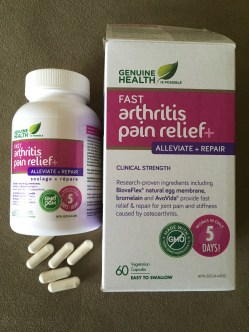
How to Manage Arthritic Pain and Stiffness – A review of Genuine Health’s Fast arthritis pain relief+

image

Genuine Health FAST arthritis pain relief+

I have been living with osteoarthritis for the past 20 years or so. I come by it honestly, as my grandmother had a bad case of it. Arthritis is a condition of inflammation of the joints. It affects one in six Canadians over the age of 15 and is the number one cause of disability in women (and third in men).

Arthritis, like all diseases and conditions, affects people in different ways. For me, the pressure and stress over the years has resulted in sacroiliac (SI) joint and lower back (lumbar vertebrae) issues. The SI joints  are used to transfer movement from the upper body to the lower body and are especially important when you turn over in bed (see diagram below).

There have been times when I wince in bed, with that dreadful reminder that my SI joints are inflamed. There is usually no specific trigger. Sometimes I think it’s the weather – other times I blame hormones.

I was approached by The Publicist Group to see if I was interested in trying out Genuine Health’s FAST arthritis pain relief+ or one of their other products (FAST joint care+ and FAST pain relief+) The claim was it would help relieve pain in five days (hence, the word FAST in the title). They had other products too, but this one seemed to speak to me. I had used Aleve, Advil and Tylenol in the past. I have also purchased a Lumbar Brace and Tens and an ice pack to help when my SI joint is aggravated.

I have also been to physiotherapists in the past. I have been prescribed exercise programs and the main treatments for my problem is core strengthening and stretching. Yoga has also been recommended. Walking, cycling, gentle exercise on the elliptical, weights, calisthenics and stretches are activities I try to do at least twice weekly. I say “try” because sometimes this isn’t a priority in my life – at least not as big of a priority as I know it should be. When the pain is really bad, I usually find laying down for 10-15 minutes helps relieve my pain.

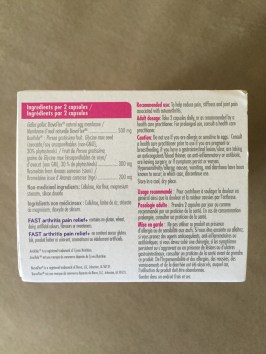
So, I agreed to try out FAST arthritis pain relief+. I was given a complimentary bottle of 60 tablets. The directions say to take two caplets daily. Information on the bottle states:

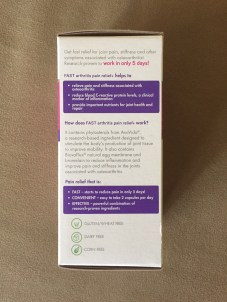
image“How does FAST arthritis pain relief+ work?
It contains phytosterols from AvoVida®, a research-based ingredient designed to stimulate the body’s production of joint tissue to improve mobility. It also contains BiovaFlex® natural egg membrane and bromelain to reduce inflammation and improve pain and stiffness in the joints associated with osteoarthritis.”

I found the study the company did and it showed favourable results by an impressive number of people who had tried out the product. I noticed they did not have a placebo group (a group of people who thought they may have been taking the product to be tested but were given a fake pill). There is a certain amount of placebo effect whenever you are given a treatment. If you believe a treatment will help you, the power of the mind will help you achieve the desired results. This is in fact a phenomenon that is currently perplexing to scientists and we have a lot more to learn about the power of the mind and the placebo effect.

imageI decided to document my experience by recording my level of pain each day on a scale of 1-10 (1 being no pain, 10 being excruciating pain).

I knew this may take a few days to take effect, so I was prepared to focus on this for at least a week. I also decided (as in the study) not to take any other pain-relieving medications during the time I took the easy-to-swallow caplets (although there were days I wanted to!).

Overall,  it took me 7 days (not 5 – this product is “research-proven to work in only 5 days”) to feel pain relief. Over the next couple of weeks I had a couple of times where my arthritis flared up and I had to take some Advil to help alleviate the pain. I probably won’t continue to take this FAST on a regular basis, unless I find a huge change in my arthritic pain once I have completed my 3o-day trial.

I would say the FAST caplets are worth trying out. I have seen the cost for this product at $62.00 – 79.99 for 120 caplets (a two-month supply). Sold on Amazon (see links below) and available at other locations.

Here are some other tips on how to cope with arthritis:

  • Ensure good ergonomics when sitting at the computer
  • Take frequent short breaks when sitting at the computer such as getting up to get a glass of water or standing up and stretching (every 15 minutes or so)
  • Massage can help bring needed blood flow to the area, and loosen and stretch the muscles surrounding the joints. However, avoid aggressive massage such as what is offered in a massage chair can aggravate inflamed joints
  • Chiropractic adjustments may help
  • Laying down for 10-15 minutes can provide much-needed relief
  • Gentle stretches can be helpful (see a physiotherapist for exercises and stretches) or try this SI Joint Stretch
  • Walking and gentle exercise can help provide relief and stretching can keep joints limber
  • Voltaren emulgel can help relieve pain
  • Ice and/or heat can help relieve the pain
  • A warm shower or bath can also provide relief
  • Housework can cause a flare-up (haha)

Check out these resources for more information on how to manage osteoarthritis:

Genuine Health – Natural pain relief proven to reduce inflammation. Find where to buy the product on this website (in stores and online).

Top 3 Tips for Osteoarthritis by Eugene Sims, a physiotherapist

The Arthritis Society – Information, resources, tools and expert access

Buy Now from Amazon:

FAST ARTHRITIS RELIEF+

Genuine Health fast arthritis pain relief+ 60 capsules

Age well, my friend!

Angela G. Gentile, MSW, RSW

purple-swirl-separator-hi

Angela G. Gentile, M.S.W., R.S.W. is a clinical social worker and author of the book, “Caring for a Husband with Dementia: The Ultimate Survival Guide”, “A Book About Burnout: One Social Worker’s Tale of Survival” and the “Dementia Caregiver Solutions” app for iPhone and iPad. She lives in Winnipeg, Manitoba with her husband and two adult children. For more information, visit: www.AngelaGGentile.com

Caring for a Loved One with Dementia? You Are Not Alone

newcover cropped

Our society is greying. For the first time in Canada, we now have more older people (65+) than younger people (under 16). Although there are many benefits and advantages to getting older, the unfortunate facts are that as we age we become more susceptible to age-related diseases.

Alzheimer’s disease and other related dementias (also known as neurocognitive disorders) affect one in 11 Canadians aged 65 or older. For those 80 years of age and over, one in three have some form of dementia. Dementia is a syndrome that is usually of a chronic and progressive nature.The symptoms of dementia may include a loss or impairment of brain functions such as:

  • problems with short-term memory
  • confusion or impaired thinking 
  • disorientation to place or time
  • poor comprehension
  • trouble with calculation
  • decreased or loss of learning capacity
  • problems with language
  • poor reasoning
  • decreased judgement

Dementia can cause problems in everyday functioning and activities. People with dementia may not be able to drive safely, or they may get lost while driving to a doctor’s appointment. It may be more difficult for them to remember to take medications on a regular basis. They may get into more arguments with others.

Dementia can sneak up gradually (as in Alzheimer’s disease) or it can come on suddenly (as in a stroke that affects cognition). It can fluctuate day-to- day. Loved ones often have difficulty spotting the signs, and often mistakenly attribute the changes to aging, or a “stubborn” personality. Personality changes in the person with dementia can cause stress for loved ones.

At times it is difficult for family members to recognize the signs of dementia and to act upon them. Sometimes they are in denial, sometimes they hope the situation will improve. Others may not know what to do or who to talk to.

If a person with dementia requires more help, the main helper becomes the “caregiver.” Often a spouse or adult child (usually a daughter) takes over the primary role. The process of changing or incorporating this new caregiving role into the relationship can cause a variety of challenges. Although the person with dementia may not be aware (or be unable to recognize) he/she requires help, the caregiver can learn how to provide the assistance needed with practice, education and support.

In the early stage of Alzheimer’s disease or vascular dementia, the affected person may be aware of his/her memory problems. He/she may notice changes in frustration levels. He/she may be more open to the idea of accepting help. He/she may look to family members for help answering questions or “filling in the blanks.”

Caregiving for a loved one with dementia can be stressful due to increased demands, roles and responsibilities. A caregiver may worry about Dad’s safety with cooking or worry that Mom may wander off. There is also the issue of grieving. A wife may grieve the “loss” of the husband who no longer remembers who she is. A husband may grieve the loss of the future travel plans he had for himself and his wife.

With education, support, self-compassion and self-care practices, the caregiver can have a positive experience of caring for a loved one amidst all of the strain. Seeking out support and knowledge and knowing he/she is not alone are some of the most beneficial things a caregiver can do.

If you have concerns and think someone you know and care about has memory problems and/or dementia, encourage a thorough medical assessment for diagnosis, support and treatment options.


purple-swirl-separator-hi

Angela G. Gentile, M.S.W., R.S.W. is a clinical social worker and author of the book, “Caring for a Husband with Dementia: The Ultimate Survival Guide” and the “Dementia Caregiver Solutions” app for iPhone and iPad. She lives in Winnipeg, Manitoba with her husband and two adult children. For more information, visit: www.AngelaGGentile.com