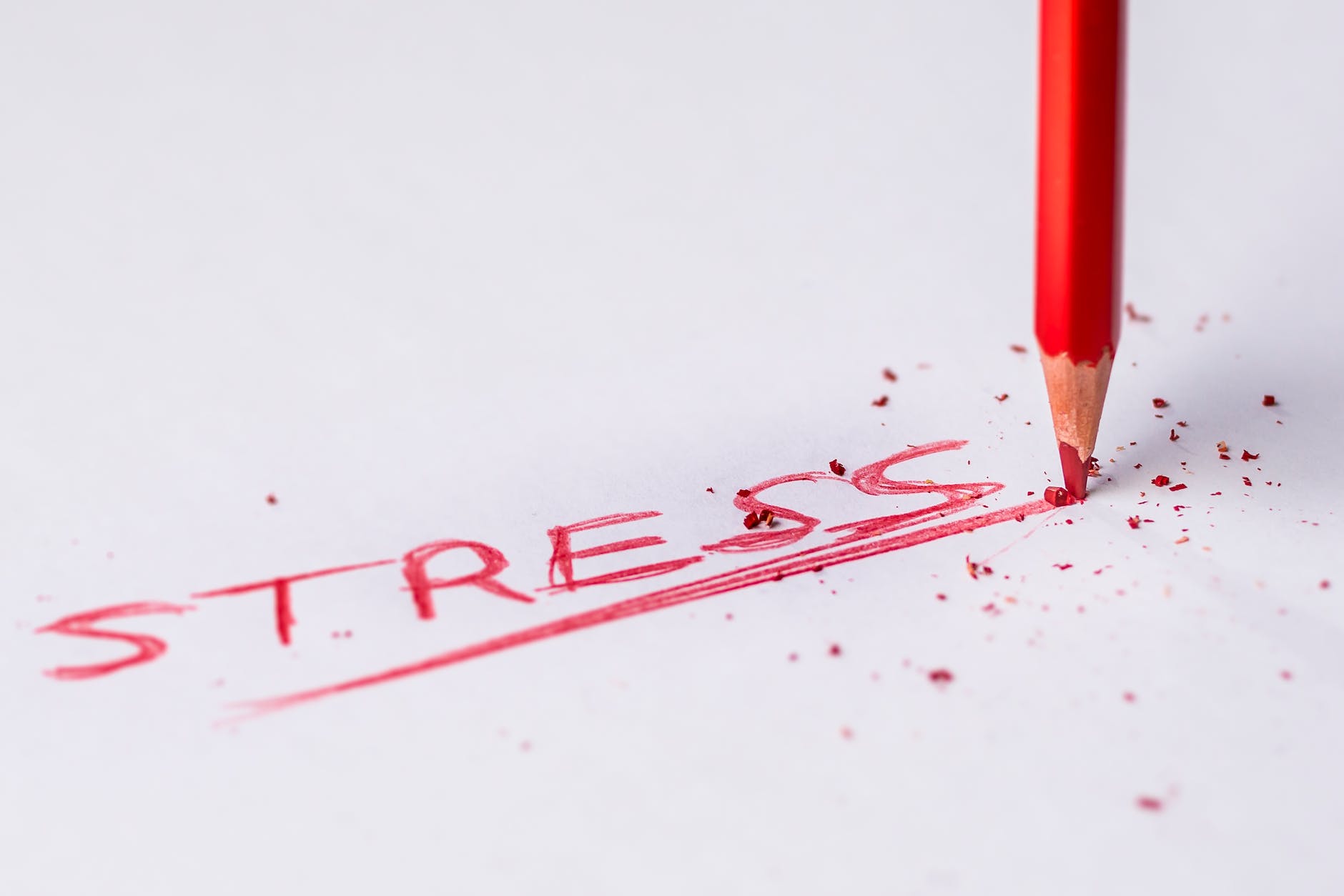
Stress is a normal part of life and can be caused by a wide range of factors such as work, relationships, financial problems, aging, caregiving, and health issues. While some level of stress can be helpful in motivating people to take action and find solutions, chronic stress can have a negative impact on a person’s mental and physical health.
People may seek counselling for stress because it provides a safe and supportive environment to explore and understand their thoughts, feelings, and behaviours related to stress. A therapist can help individuals identify the root cause of their stress, develop coping strategies to manage it, and learn relaxation techniques to reduce symptoms of stress.
Therapy can also provide an opportunity for people to process their experiences, address past traumas or negative life events that may be contributing to their stress levels, and develop a better understanding of their emotions and thoughts.
In addition, counselling can also help individuals with stress-related conditions such as anxiety, depression, and burnout. By working with a therapist, people can gain a deeper understanding of their patterns of behavior and thought, and develop a more holistic approach to managing stress.
Overall, therapy for stress can provide people with the tools and support they need to manage and reduce stress levels, and improve their overall mental and physical well-being.
Check out my Psychology Today profile for up-to-date information on my counselling services.
Quality Senior Services – Trusted Professionals for All Your Needs. Member Angela G. Gentile.
Edit: I left the group on 12 Sep 2024.
Who can you trust to provide you with services and products that tried, tested, and true? Who do you call when you need professional services, products, or advice? If you are not sure, I have the answer for you!
I am proud to announce I am now a member of the Quality Senior Servicesnetwork of trusted professionals in Winnipeg, Manitoba. Who are we?
We are dedicated to providing quality products and services to seniors.
Are you a senior looking for assistance or someone caring for an older person? The goal of QSS is to help meet the diverse needs of older adults providing easy access to a variety of products and services. Call one of our trusted professionals or visit our website at qualityseniorservices.com to discover how SQQ members can help you or someone you care about.
Quality Senior Services, 2023
Our brochure and website lists an impressive variety of professionals, including:
Realtor
Financial Planner
Disability Tax Credit Advisor
Licensed Insolvency Trustee (Accountant)
Lawyer
Mortgage Broker
Clinical Social Worker (me!)
Dental Care
Nurse Practitioner
Pharmacist
Speech and Swallowing Therapy (SLP)
Private Home Care
Home Medical Supplies
Professional Movers, Transition Specialists, and Estate Sales
Funeral Services
and MORE!
Quality Seniors Services (QSS) was founded in 2007 to provide a trusted and reliable space for seniors and caregivers alike, to find credible professionals with a strong rapport in the older adult community. QSS strives to offer a comprehensive variety of health services providers, professional service providers, and quality of life services providers. Each member of QSS is held to a high standard and is required to have an up-to-date criminal record check, vulnerable persons abuse registry check, and industry certification and professional requirements.
Quality Senior Services, 2023
Many of our members provide mobile or home visits. Accessibility is key. We know.
Our membership is always evolving and we are open to having new members who provide services to older adults and their families. All service providers are vetted and trusted, whether they are health sector, quality of life, or general professionals. We all come with a wealth of experience.
You will see us out at the “Pros Know Expos” and we are always willing to chat with you about your needs.
Angela G. Gentile, MSW, RSW
Clinical Social Worker for Quality Senior Services
For more information on QSS or email us at qseniorservice@gmail.com.
I would like to tell you about my recent therapy experience. I believe in order to be a good therapist, one should be seeking therapy as needed to deal with their own issues. Even the best therapists need a therapist occasionally! To optimize my emotional and psychological health, I occasionally seek outside help. With this in mind, I saw Clinical Social Worker Ruth B.Z. Thomson of Winnipeg, Manitoba, for a therapy session. She used a therapy technique called “Brainspotting” (BSP) which was new to me and which I was very curious about.
“Brainspotting is a powerful, focused treatment method that works by identifying, processing, and releasing core neurophysiological sources of emotional/body, pain, trauma, disassociation, and a variety of other challenging symptoms. Brainspotting is a simultaneous form of diagnosis and treatment, enhanced with bilateral sound, which is deep, direct, and powerful, yet focused and containing.”
David Grand, Phd, Brainspotting Developer and Trainer
By the way, bi-lateral and BIO-lateral are two different things. It sounds confusing, but here is a way to explain the difference. Also, there is a link between brainspotting and EMDR therapy (Eye Movement Desensitization Reprocessing).
After filling out forms and consenting to treatment I entered Ruth’s beautifully decorated and comfortable office. She said I could choose any chair to sit on. There were about six chairs. I scanned the room, chose a chair, sat down, and got comfortable. I rearranged the cushions and used a little step stool. She sat across from me. She told me after a brief talking session, I would be listening to music with headphones, and she would use a wand for me to look at and focus on. The wand looked like one of those telescopic back scratchers and it had a dark blue handle.
We chatted for a bit to discuss my issues and then she told me we were going to get started with the brainspotting treatment. She passed me the headphones and made sure I could hear the music in both ears. It was not too loud as she also wanted me to be able to hear her. She said she was going to be watching me and I was to focus on my physical and emotional responses related to the issues I had presented to her with.
The music she chose for me is called “bilateral” and it’s not exactly music. It was calming peaceful sounds such as chimes, waves, and birds chirping. The sounds alternated between the left and right ears.
The music was very relaxing and calming. I noticed a yellow “glow” around the wand. (It almost looked like a magic wand!) Ruth held the wand to the left of her, almost at an outstretched arm’s reach, at eye level and I stared at it. She moved the wand slowly and watched my physical reaction. Sometimes I blinked more or fidgeted or took deep breaths. She also watched my facial expressions.
After a few minutes she moved the wand and asked me to follow it. She moved it to the right of her body. It was about eye level. Very slowly and methodically she would move the wand up or down all the while watching my reaction.
She asked me what I was feeling and thinking. I shared my thoughts, then she took the wand and moved it back to her right side.
The music was very calming. I processed some feelings and thoughts. At one point I felt mad, and this was a bit of a revelation. This was good!
She then had me talk it out some more until I was done with my observations and feelings about the issue at hand.
Then Ruth had me close my eyes and brought the wand closer to me. She had me open my eyes and I followed the wand, and she brought it back to her right then circled downward and back up closer to me. She repeated this closeup – back to the right – downward swoop movement in a fluid moderately paced motion about 4-5 times. It was like drawing a sideways “D” in the air with the wand. We then paused for a bit.
She then had me do a relaxing visualization. I found myself on a hammock in Hawaii! All the while the bilateral music played quietly in my ears, alternating between left and right.
After the guided imagery was over, she had me take off my headphones. There was a long pause as we sat in silence. She then asked me for my thoughts.
I told her I like analogies to explain things when I can’t quite put my feelings and thoughts into words. I told her it felt like I was put into a long, dark tunnel and now I’ve come out of the tunnel and I’m not quite sure where I am. I’m looking around, but I’m not quite sure what just happened and where I ended up. It feels good though. I told her I think it’s going to take me a little while to process what just happened. She agreed and said that it will take a few days for the neural pathways to change. She told me to drink lots of water and gave me a couple pages to read on brainspotting.
I am hopeful that this treatment will help me with my issue, and I could already tell just a couple hours later that I was already feeling some benefit.
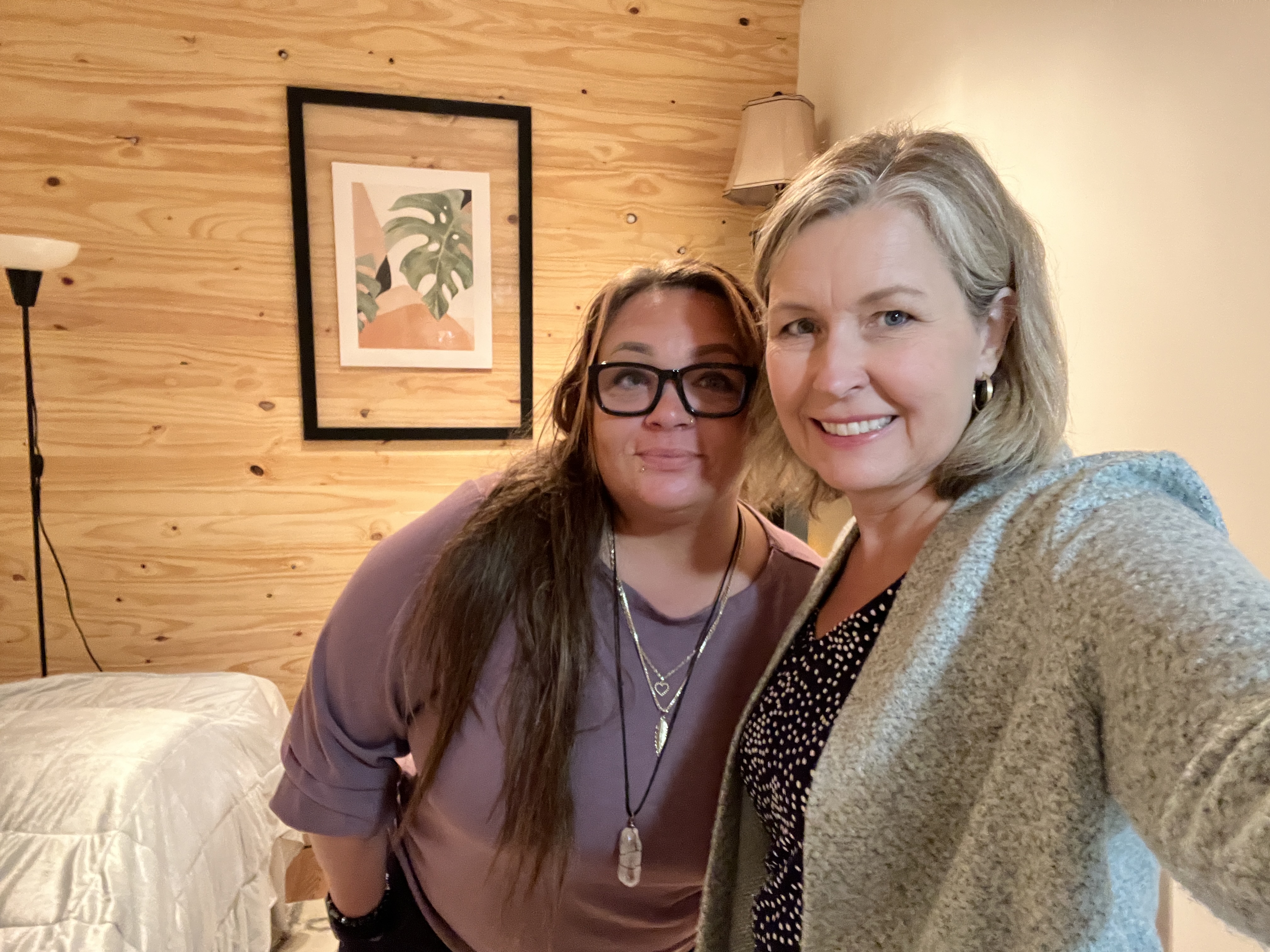
Priscilla (L) and I in the treatment room at Just for Today Reiki
I went to my first official Reiki session and it was fabulous! The experience left me feeling more happy, settled, and confident, right down to my soul. Priscilla Robert, certified Medium, Reiki Master, Crystal Therapy Practitioner, delighted and thrilled me in a one hour Reiki session.
Just for Today Reiki
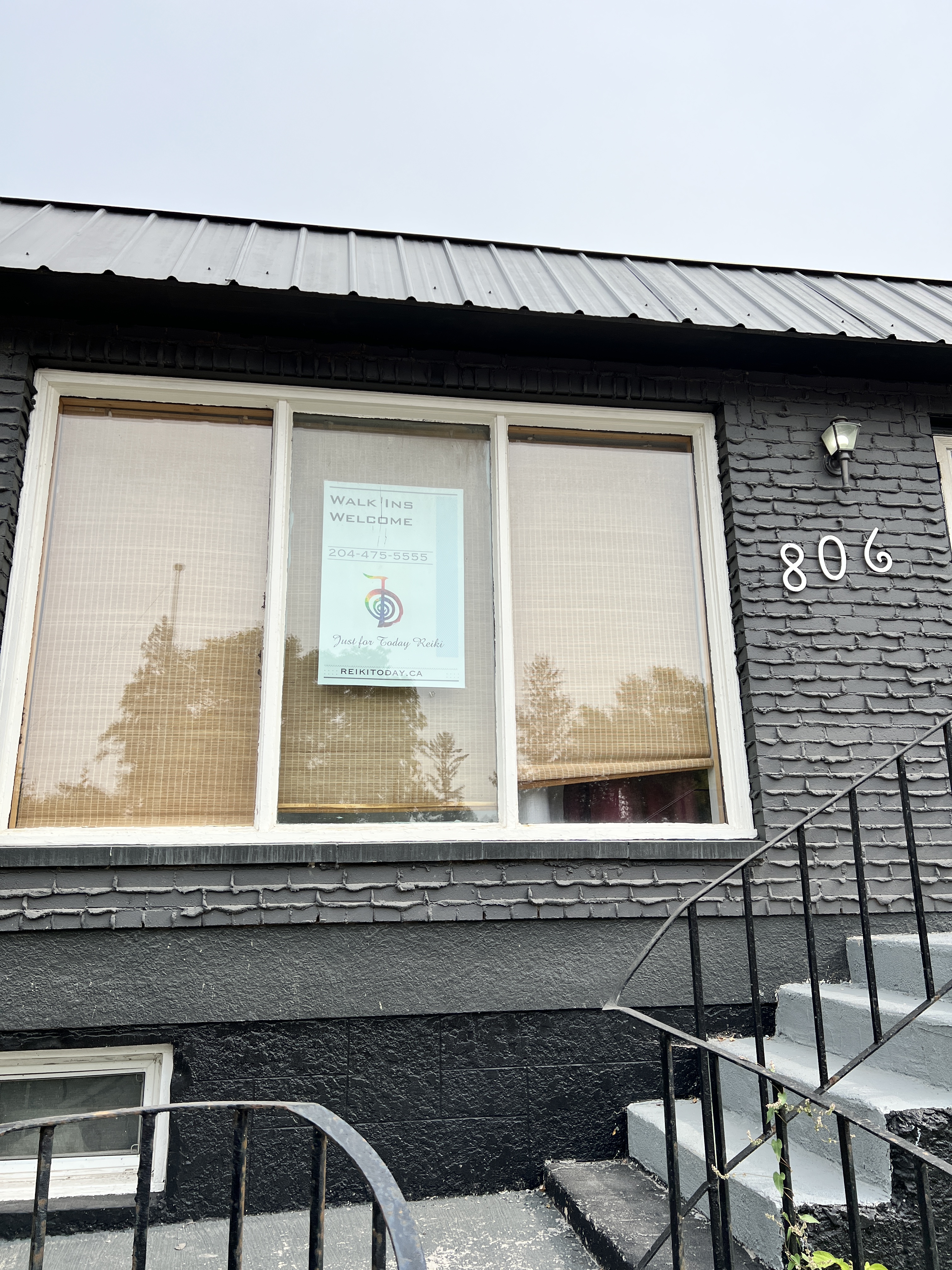
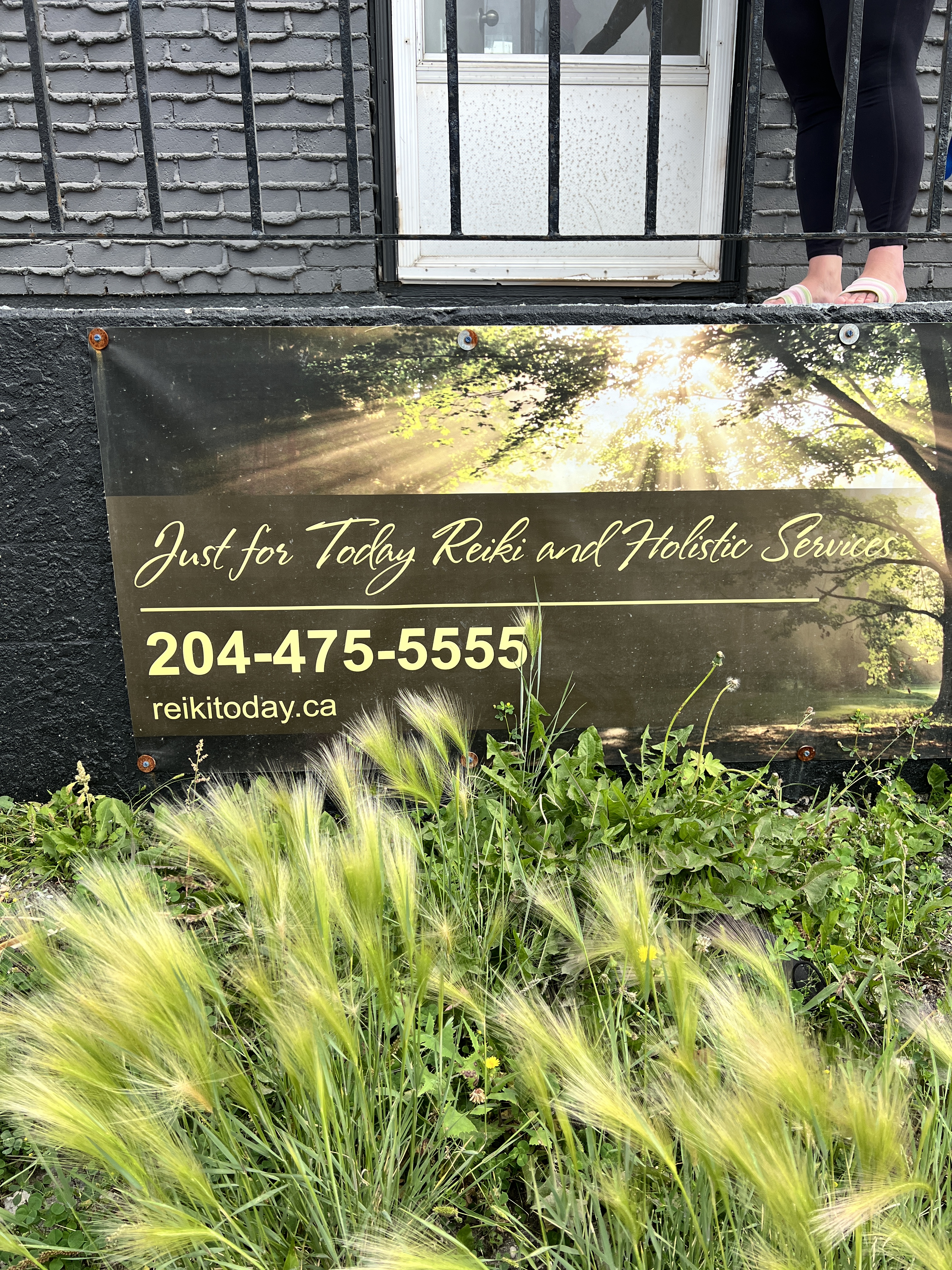
Priscilla practices out the the “Just for Today Reiki and Holistic Services” clinic at 806 Osborne Street in Winnipeg, Manitoba. Once I found the place, I had a little trouble finding parking. I found a free parking spot on Clare Avenue, which was nearby.
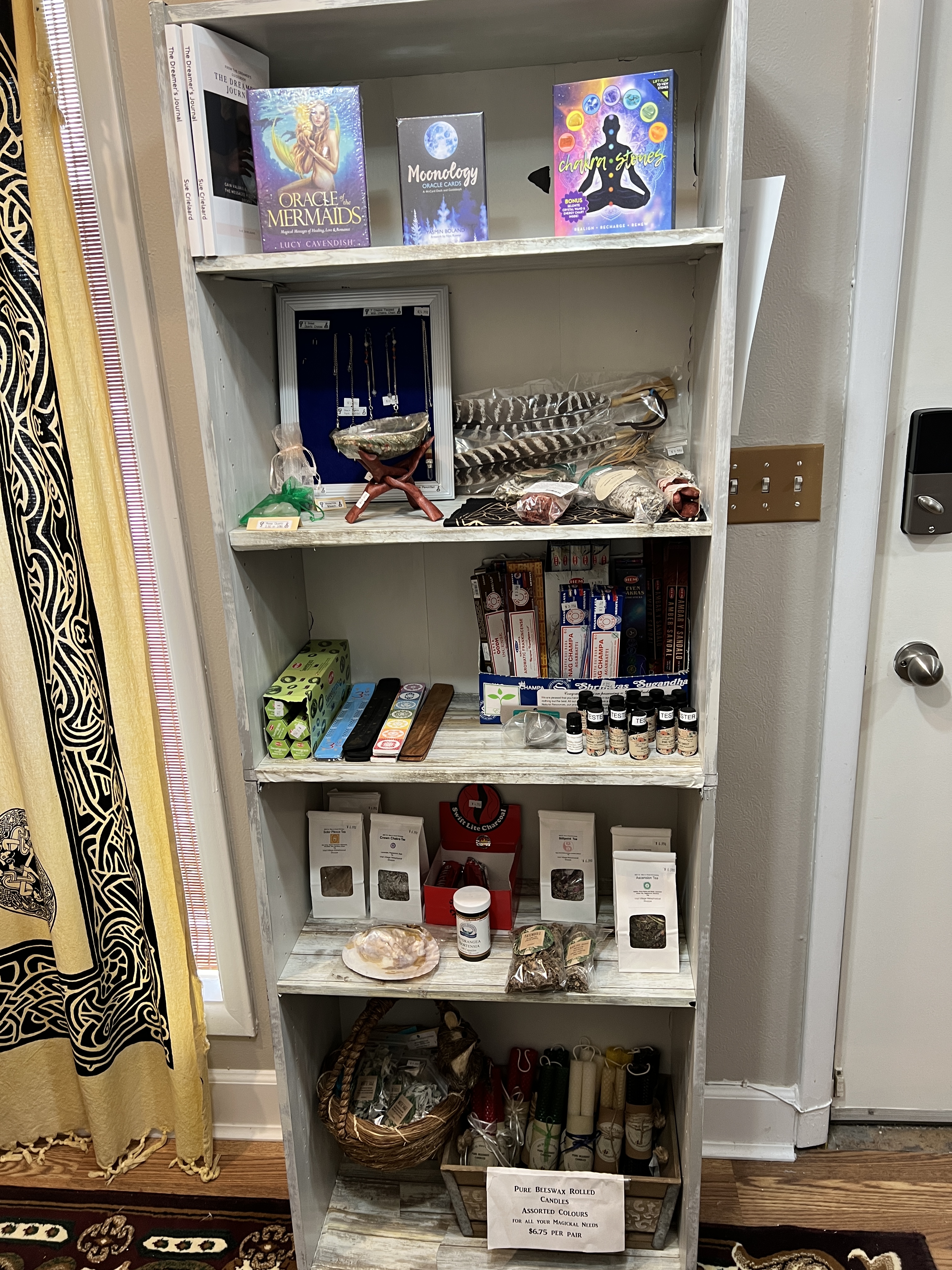
The door was open when I arrived. To the right was a small reception desk with lots of interesting items for sale. The sign painted on the wall, “Just for Today”, set the mood. The sign reads: “Just for Today. I will not be angry. I will not worry. I will be grateful. I will do my work honestly. I will be kind to every living thin.”
The second thing I noticed was the smell of burning incense. I am not sure what the fragrance was, but it was pleasant. Not too overwhelming. I hadn’t smelled incense for years, so that was a real treat!
Priscilla greeted me and she was getting the treatment room ready (there are two). I told her a little about what I was dealing with and what kind of help I was looking for. She explained to me that she was going to do a combined treatment, depending on what she felt was needed. There could be a combination of mediumship (spirits, both past and present, around me that have messages for me), Reiki (energy healing), Crystal Therapy, and Chakra balancing. She may be touching my head, but most likely no other body parts would be physically touched. She added that in terms of mediumship, sometimes she sees more than others, so it will all depend on how things go.
The clinic room was warm and had dimmed lights and some candles burning. There was some pleasant, relaxing, instrumental music playing. The volume was very low. She showed me the massage table and said I would be laying on my back. There was a pillow for my head, and one for under my knees. There were sheets and a weighted blanket. The eye pillow would also be used, as she pointed out.
Priscilla said she would leave me for a minute or two, and asked me to get comfortable on the bed. I have had many massages over the years so I had to remember to lay on my back, not my front, as would be required if I was getting a massage. The weighted blanket was a nice touch. I felt safe and secure.
Priscilla came back shortly after and put the eye pillow on me then started the treatment. She walked me through every step of the way. She started with a pendulum, and said she was checking my chakras. If the pendulum went in a circle, that meant my chakras were good.
A big portion of our time together was her use of her gift of mediumship. There were many special messages passed along to me from people who I had been in contact over the years. It was very emotional, touching, enlightening, and sometimes it brought a tear to my eye. There was even a discussion about fairies!
The crystals were also used. There was mention that I should put a big piece of rose quartz near my bedside. I just happened to have purchased a piece of rose quartz so that was perfect advice!
The Reiki portion of the session was very short. She did not touch me, but placed her hands just above my body. I have taken Reiki Level 1 so I understand how this type of energy treatment helps promote balance and healing.
I left with many good words of advice and a clear focus on what I needed to do. I felt enlightened.
Priscilla works with all people including those who have a history of trauma. She said many people who have trauma tend to hold it in their stomachs and a few sessions with her can help heal that trauma. Priscilla is currently accepting new clients.
If you are at all interested in learning more about energy healing, or if you are curious and want to give it a try, I would highly recommend Priscilla Robert. Her bio can be found at ReikiToday.ca. Follow Just for Today Reiki on Facebook. She has a new crystal shop called, “Crystals and Beyond” here in Winnipeg. Contact Priscilla to book an appointment or to find out more about how she can help you.
Crystal Healing Bracelets by Angela Gentile, Gentle Angel Treasures
In the fall of 2021 I decided that my counselling skills were not going to go to waste. I started seeking out office space that was comfortable, wheelchair accessible and affordable. I found a great office in the heart of downtown Winnipeg in an area called Osborne Village. The office is on the main floor and it overlooks the Assiniboine River. I can see the Golden Boy on top of the Manitoba Legislature from one of my windows.
My client list is growing, and I have a few regular clients now. Some come in to the office, some prefer home visits, some like telephone, and many prefer virtual or “teletherapy.” I use the platform called Sessions by Psychology Today. They also have an app so my clients can use their mobile devices instead of having to be on a desktop or laptop computer. This makes counselling and therapy very convenient!
As my private practice thrives I have to be careful that I take time to look after myself. Burnout can happen to anyone in any kind of caring profession. I have been burnt out before, so I am very careful and will not let that happen again.
To keep myself balanced, a work-life balance, I have decided to work with my private practice Monday to Thursday. Friday to Sunday are my days off. I have also developed a new passion and hobby which allows me to be creative and nourishes my passion for helping people.
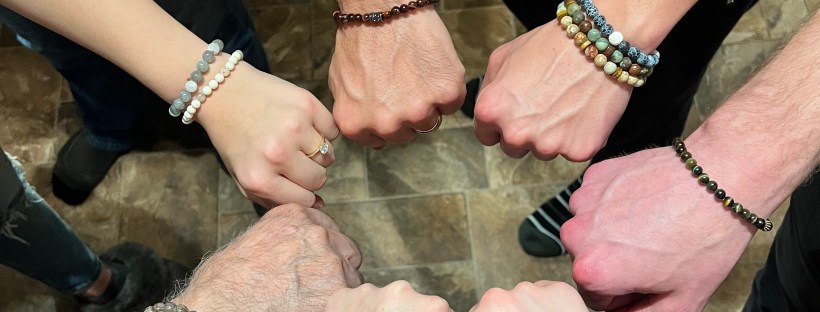
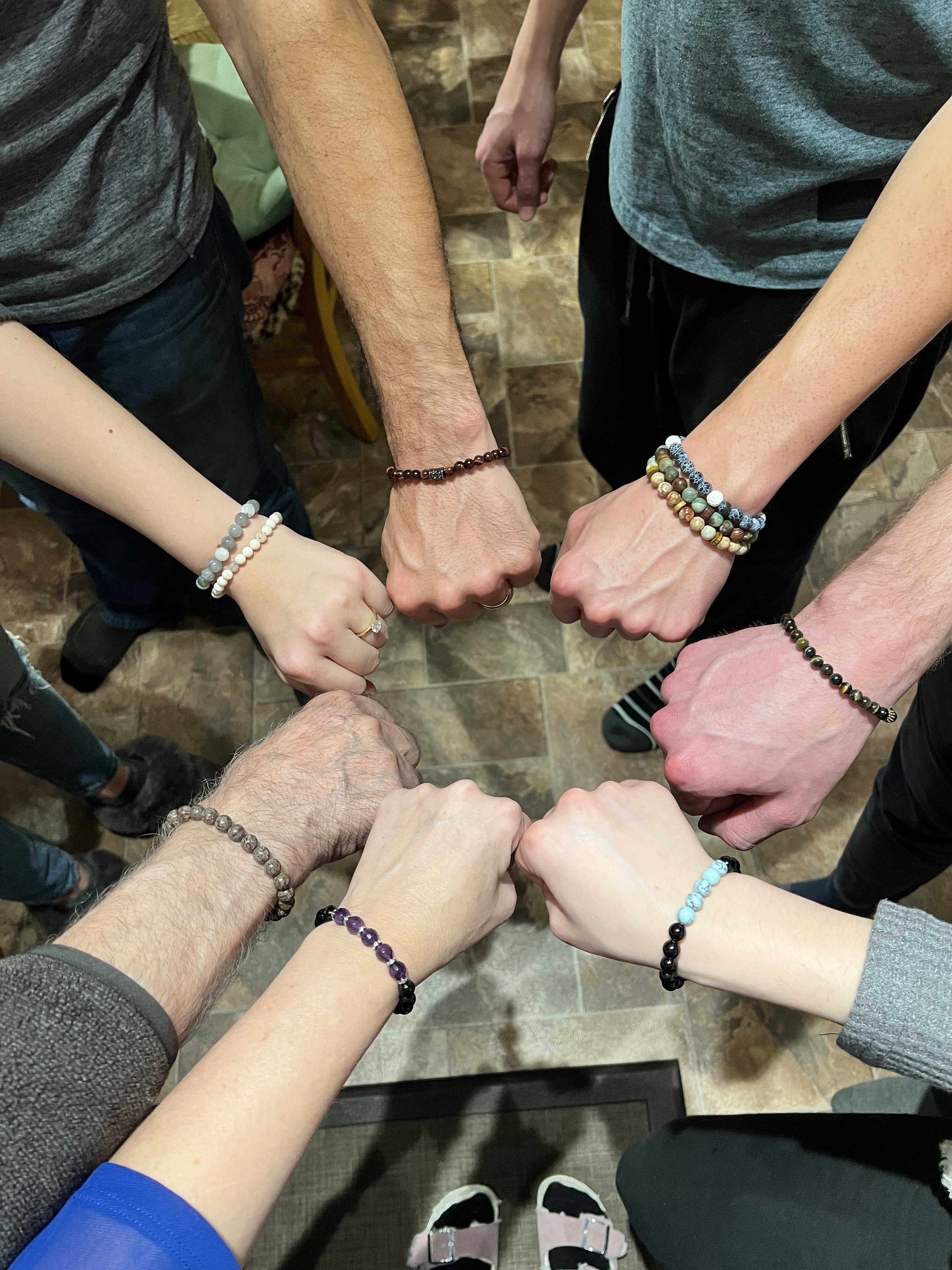
In my spare time, I make semiprecious gemstone bracelets. These bracelets are said to have crystal healing properties and some people believe the energy that comes from them can help them feel better. Some wear them for the healing properties, others just like the visual appeal of wearing natural stones. I have been wearing these types of bracelets since my cancer diagnosis in 2017. The designing, creating, assembling, and sale/gifting of these beautiful and natural gem bracelets is very “recreationally therapeutic” for me. I love making these bracelets, and I have also started making custom orders for people. Some of the most popular types of stones I use are onyx, obsidian, howlite, amethyst, rose quartz, jade, jasper, agate, hematite and lava. My supply has grown leaps and bounds since October 2021, and I think I have almost every type of bead now!
Counselling and therapy is hard work. Making crystal healing bracelets is fun and energizing. The combination of these two activities creates a great balance for me. I am very well mental-health wise, and feel energized and grounded. I remember years ago listening to Dr. Laura Schlessinger on SiriusXM Satellite Radio. In addition to her marriage and family advice talk show, she would talk about selling her jewelry that she handcrafted. Now I get it. A therapist who has a creative and fun outlet is better equipped to handle any stress, trauma, grief, and conflict that a client brings to them. It just makes good sense.
If you are interested in booking an appointment for counselling or would like to see what I have for sale in my Gentle Angel Treasures shop, please send me a message in the comment box below.
Flourish or Fade: A guide to total well-being for women at midlife and beyond provides you with the information and tools needed to improve life satisfaction. The Flower of Wellness Method will help you devise a plan to balance your body, mind, and soul.
You will learn how to enhance your overall well-being by exploring the ten dimensions of wellness:
This anti-ageist, realistic, and optimistic approach to life in the middle years and beyond will provide you with inspiration and tips that will have you feeling confident, happy, and satisfied with whatever may come your way.
The Flower of Wellness Method is a fresh and contemporary approach to finding balance.
Do you want to flourish or fade in the later years? It’s your choice.
Angela G. Gentile, M.S.W., R.S.W., is a registered clinical social worker/specialist in aging with more than 25 years of experience working with older adults and their families. She was born and raised in Ontario and now lives in Winnipeg, Manitoba.
Celebrate National Women’s Health Week with us! On May 11, 2021, at 8:00 pm CST, Angela G. Gentile will be hosting a Zoom book launch for her newest book, “Flourish or Fade.” Register on Eventbrite to attend. There are a number of awesome books, services, and products that have been donated by some amazing women to help make this book event special. Please see the list below and enter to win! (see Contest Details below).
Flourish or Fade
1. Angela G. Gentile: “Flourish or Fade: A guide to total well-being for women at midlife and beyond” (paperback, $21.00 CAD value). Now available!
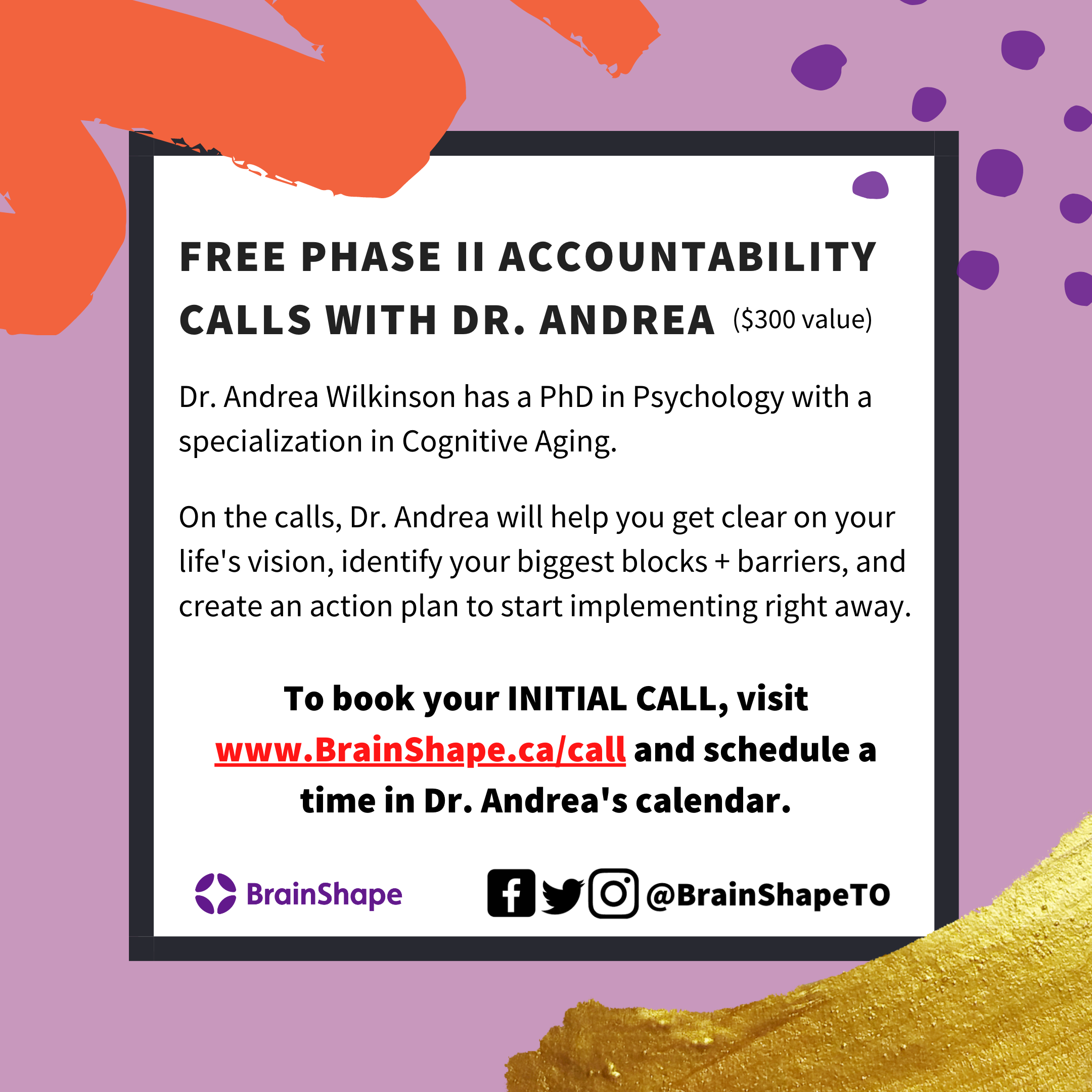
BrainShape Accountability Calls
2. Dr. Andrea Wilkinson: BrainShape Accountability Calls ($300.00 CAD value)
“Free Phase II Accountability Calls with Dr. Andrea of BrainShape” ($300 CAD value)
Accountability Appointments take place via TWO 60-minute video calls.
CALL 1: Discuss your concerns and struggles + build a plan to help you address them (e.g., sleeping difficulties, chronically stressed, low energy, lacking mental focus, etc.) Whatever the problem, let’s talk about it & build a plan you can implement right away.
CALL 2: Accountability Appointment to check-in on the goals you set out in Call 1.
The winner of the BrainShape Services prize will book their INITIAL CALL by visiting www.BrainShape.ca/call and book a time in Dr. Andrea’s calendar. This is a free offering of the supportive elements provided inside the Brain Vitality Blueprint, and helps people take the first step towards improving their health and well-being.
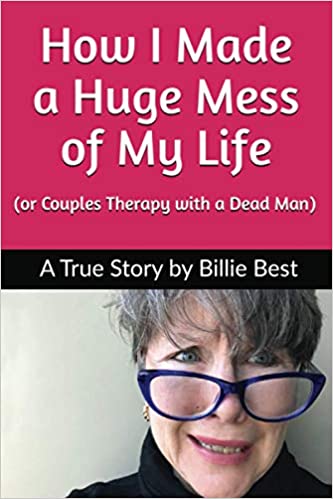
How I Made a Huge Mess of My Life
3. Billie Best:“How I Made a Huge Mess of My Life” (paperback, $12.99 USD value)
5. Kay Ross: “The Playground of Possibilities” (card deck, $20.00 USD value)
This card deck is a self-help, personal-development tool with 52 questions for you to ask yourself. Every question starts with “What would be possible for me if I…?”, to prompt you to let go of your old, limiting thoughts, beliefs and stories about yourself and the world, choose more useful ones, take inspired action, and improvise more resourceful, joyful ways of being. Kay was born in Scotland, grew up in Australia, and has lived in Hong Kong for 27 years. She’s passionate about personal development and healing, and is also an improv performer. The deck costs $20 USD plus postage from Hong Kong (the full amount depends on the number of decks ordered and the destination).
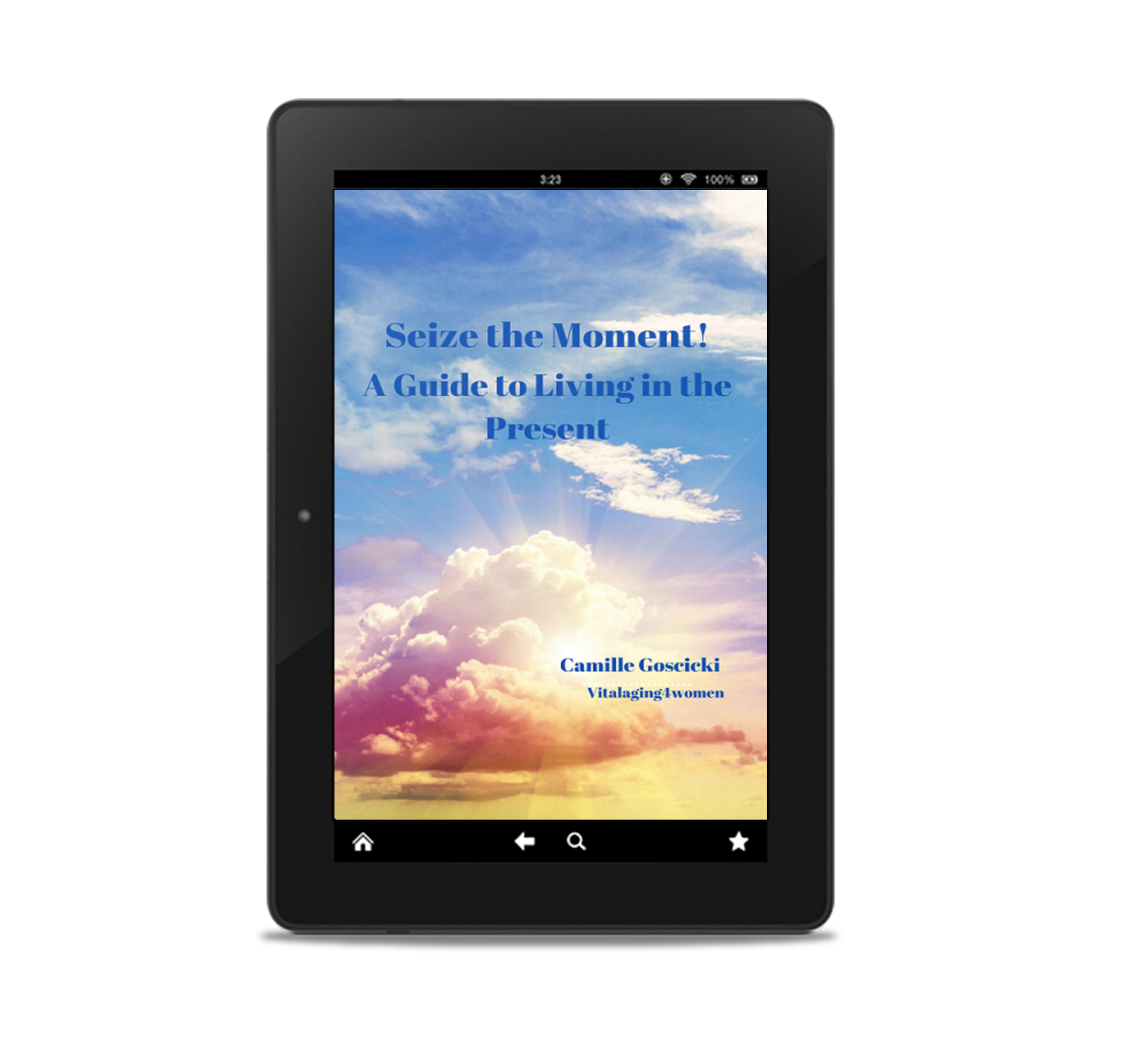
6. Camille Goscicki, of Vitalaging4women, “Seize the Moment! A Guide to Living in the Present” (ebook, $4.99 USD value)
Do you live with regrets from the past, and fear the unknowns of the future?
It’s time to let go of fears and regrets and live for today. Seize the Moment! is your mini-guide to grab the present moment and live for today. It includes three bonus worksheets that will help you become more mindful. (Everyday mindfulness tips, practicing mindfulness, and becoming present for peace of mind.) Note: eReader not included.
7. Donna Thomson: The Unexpected Journey of Caring (hardcover book, $39.00 CAD value).
“The Unexpected Journey of Caring: The Transformation From Loved One to Caregiver” by Donna Thomson and Zachary White, PhD with a foreword by Judy Woodruff (Rowman & Littlefield, 2019) Available at all online booksellers Hardcover – $39.00 CAD)
With a foreword by Judy Woodruff, The Unexpected Journey of Caring is a practical guide to finding personal meaning in the 21st century care experience.
Personal transformation is usually an experience we actively seek out—not one that hunts us down. Becoming a caregiver is one transformation that comes at us, requiring us to rethink everything we once knew. Everything changes—responsibilities, beliefs, hopes, expectations, and relationships. Caregiving is not just a role reserved for “saints”—eventually, everyone is drafted into the caregiver role. It’s not a role people medically train for; it’s a new type of relationship initiated by a loved one’s need for care. And it’s a role that cannot be quarantined to home because it infuses all aspects of our lives.
Caregivers today find themselves in need of a crash course in new and unfamiliar skills. They must not only care for a loved one, but also access hidden community resources, collaborate with medical professionals, craft new narratives consistent with the changing nature of their care role, coordinate care with family, seek information and peer support using a variety of digital platforms, and negotiate social support—all while attempting to manage conflicts between work, life, and relationship roles. The moments that mark us in the transition from loved one to caregiver matter because if we don’t make sense of how we are being transformed, we risk undervaluing our care experiences, denying our evolving beliefs, becoming trapped by other’s misunderstandings, and feeling underappreciated, burned out, and overwhelmed.
Informed by original caregiver research and proven advocacy strategies, this book speaks to caregiving as it unfolds, in all of its confusion, chaos, and messiness. Readers won’t find well-intentioned clichés or care stereotypes in this book. There are no promises to help caregivers return to a life they knew before caregiving. No, this book greets caregivers where they are in their journey—new or chronic—not where others expect (or want) them to be.
“Nobody grows up planning to be a caregiver, but many of us will become one and sometimes when we least expect it. Thomson and White bring powerful insights to help understand what it means to be a caregiver and how to truly support those of us who will travel this unexpected journey.” – Samir K. Sinha, director of geriatrics, Sinai Health System and University Health Network, Toronto; health policy research director, National Institute on Ageing
Contest open to adults aged 18+, worldwide. No purchase necessary.
Identify which prize(s) you would like to win. Submit the item name/number, your name and email address to Angela at caretoage@gmail.com. (Your name and email address will not be given out to anyone else, unless it is required in order for you to obtain your prize(s)).
One entry per person, per item.
Entries accepted from Wednesday April 21, 2021 at 5:00 pm CST until Saturday May 15, 2021 at 12:00 noon CST.
Winners will be drawn on or before Sunday May 16, 2021 at 12:00 noon CST.
Qualified winners will be notified by email and your mailing address will be required so we can ship you your prize.
Every attempt will be made to get your prize to you, however, in the unfortunate event there are restrictions in your country, you will be ineligible. In that case, another draw will be made to seek a suitable winner.
Many people, especially women, develop feelings of anxiety and worry. Some call it “bad nerves.” This predisposition to feeling anxious can cause problems with everyday living, coping, and sleeping. I have assessed and interviewed many older people with a range of problems with anxiety. Feeling anxious is a completely normal reaction to stress or a situation where you may feel fearful. However, being in a continuous state of feeling afraid can cause problems both mentally and physically. Some say they feel like they are “trembling inside.”
Anti-anxiety medications (also known as “nerve pills”) are used by many people. These pills come from the family of “benzodiazepines.” Some of the commonly prescribed anxiolytics in Canada or the United States include (but not limited to):
Clonazepam (Rivotril)
Alprazolam (Xanax)
Lorazepam (Ativan)
Diazepam (Valium)
A commonly prescribed non-benzodiazepine that acts like one is Zopiclone (eszopiclone in the USA). It is commonly used as a “sleeping pill.”
Generally, benzodiazepines end in “pam” or “lam.” Use of these medications can initially improve symptoms by offering a sedating effect, however, they can also be addictive. Side effects of these drugs include increasing the risk of cognitive impairment, confusion, delirium, falls, fractures, drowsiness, and motor vehical accidents. They are not recommended for use by older adults. In fact, older people are recommended to gradually reduce their dosage (a slow and steady decrease is recommended over a sudden discontinuance due to withdrawal symptoms). Always talk to a doctor about any changes to your medication. As the dose is gradually reduced and preferably stopped, it is important to identify and optimize alternatives to managing any underlying issues. These alternatives are preferably not other medicines.
Sometimes these medications are used on an “as needed” basis. For example, if you are afraid of flying, and you need to go on an airplane, you can take one of these medications (prescribed by your doctor) to use in specific situations. Or, if you have claustrophobia and you need to go for a scan such as an MRI, taking this medication may make it more bearable.
I have also seen where these medications are prescribed for help with sleep. People who have an anxiety disorder may be prescribed this classification of medications to see if it helps reduce anxiety or panic attacks. In older people, antidepressants are the preferred class of medications to help with anxiety.
Some other key tips to remember:
Avoid taking benzodiazepines with opioids or alcohol.
These medications are more often prescribed to women (Almost 1 in 5 Canadian women report to have used in the past year).
Almost 1 in 10 Canadians in Quebec have been reported to have an addiction to benzodiazepines.
If a benzodiazepine addiction is present, consider there may also be other substance use disorders or behaviours present (e.g, alcohol, opioids, marijuana, gambling).
If you are older, it’s best not to start taking benzodiazepines.
If the addiction is getting worse, an admission to a treatment facility may be necessary.
If you are finding yourself feeling “addicted” or “dependent” on these medications (or other substances or behaviours), you are “craving” these drugs, or you are needing to increase your dosage, you may want to see your doctor to discuss alternatives. Reducing the risk of harm is key.
Most adults enjoy drinking alcohol on occasion. Sometimes, though, this occasional drink turns into a daily habit. One drink turns into two or more. If a person is not mindful, this habit could turn into an addiction. Addiction is also known as dependency or substance use disorder.
People can become addicted to not only alcohol but drugs, including prescription drugs (such as benzodiazepines and opiates). For example, nicotine, the drug found in cigarettes, is very addictive. Addictive behaviour can also be problematic, as in gambling, sex, or online gaming.
Addiction is a complex condition, a brain disease that is manifested by compulsive substance use despite harmful consequences. People with addiction (severe substance use disorder) have an intense focus on using a certain substance(s), such as alcohol or drugs, to the point that it takes over their life. They keep using alcohol or a drug even when they know it will cause problems. Yet a number of effective treatments are available and people can recover from addiction and lead normal, productive lives. – American Psychiatric Association, retrieved 03 Dec 2019.
For a number of reasons, it is essential to keep in mind that as we age, it is recommended we reduce our consumption of alcohol. For adults aged 65 and older, it is important to be aware of the low-risk guidelines.
Canada’s Low-Risk Guidelines (DrinkSense for Seniors) which is provided by the “Canadian Centre on Substance Use and Addiction”, states that limits for adults (not older adults) who drink alcohol should be 10 drinks a week for women with no more than two per day, and 15 drinks a week for men with no more than three drinks a day on most days. There is no specific limit for older adults, but one of their “Safer Drinking Tips” includes the advice of “Always consider your age, body weight, and health problems that might suggest lower limits.”
Note: Not all wines are created equal. Some wines start at 5% alcohol content, some go as high as 18%!
I attended an “Aging and Addictions” course in November 2019 which was held by the Addictions Foundation of Manitoba, and they supported the drafted recommendations entitled “Prevention: Low-Risk Drinking Guidelines” for those 65 and older (noted below).
Low-Risk Drinking Limits (65+)
Women: No more than 1 standard drink per day, with no more than 5 drinks in total per week.
Men: No more than 1-2 standard drinks per day, with no more than 7 per week in total.
Non-drinking days are recommended every week.
Source: Canadian Coalition for Seniors’ Health. Canadian Guidelines for Older Adults. Prevention, Assessment, and Treatment of Alcohol Use Disorder, 2019.
These drafted guidelines are more in line with what I would recommend. I have seen what alcohol dependence can do to people and it is heartbreaking. And as noted in a previous post here on my website, to help preserve cognitive health, experts recommend no more than 2-4 drinks per week (see my Memory Rescue book review.)
For those who have a drinking problem, there is often stigma and shame attached. Many people can’t abstain or reduce their drinking behaviour on their own (harm reduction) and need help. If you or someone you know has a drinking problem, addiction or dependence, please contact the Addictions Helpline in your area.
If you are considering getting on top of your drinking problem and need someone to talk to, please contact me and I can assist you in finding the help you need.
I saw this quote on Instagram, on the Optimal Living Daily account (@oldpodcast) — “The more willing you are to face your weaknesses, the less likely they are to remain weaknesses.” I wanted to know more about Tynan, the person who was quoted. I took his quote, put it onto a picture my husband took while on vacation in Hawaii, and wanted to share it. I hope this inspires you to face your weaknesses, too.



















 Angela G. Gentile, BSW, MSW