How to Thrive in Assisted Living with Confidence and Heart [Guest Post]

Image via Pexels

Sharon Wagner, Wisconsin

There comes a moment when the house that once echoed with life becomes too still, too large, or simply too difficult to manage. The decision to transition into assisted living is rarely easy—it’s emotional, complex, and often wrapped in memories that don’t let go without a fight. But within this major life shift lies an opportunity for reinvention. It’s a new chapter, not a closing one, and how that chapter unfolds depends greatly on mindset, preparation, and a willingness to discover new rhythms of living.

Reframing the Narrative Around the Move

One of the hardest parts of transitioning into assisted living is the sense of loss—of independence, routine, and in some cases, pride. But what helps ease the emotional toll is reframing the move not as giving something up, but as gaining something else. Assisted living communities can offer structured support, safety, and peace of mind, not to mention built-in companionship. It’s not about leaving behind what was, but about choosing what will be—with intentionality and a measure of hope.

The Power of Personal Touches

Turning a new apartment or room into a home starts with the tangible. Bringing familiar objects into the space—family photographs, a favorite armchair, well-loved books—helps preserve identity and continuity. These personal items are more than decoration; they’re emotional anchors. They tell the story of a life well lived and remind both resident and visitor that the move is just geography, not erasure. The more the space feels like theirs, the quicker comfort takes root.

Better Fuel, Better Focus

Healthy eating doesn’t have to mean overhauling your entire routine. Swapping out processed snacks for a handful of almonds, a crisp apple, or a homemade smoothie can give your body what it actually craves—real nourishment. These choices help curb hunger longer and provide steadier energy throughout the day, unlike the crash that follows sugar-heavy drinks or salty treats. With a few simple changes, staying alert and feeling good becomes a habit, not a chore.

Use Staff as a Resource, Not a Crutch

The care team in an assisted living facility isn’t just there to dispense meds or serve meals—they’re daily partners in well-being. Residents who actively communicate with staff about preferences, needs, and boundaries tend to feel more in control. That autonomy matters. It reinforces a sense of agency, which can slip during life transitions. Asking questions, making requests, and even offering feedback strengthens a collaborative environment where dignity leads the way.

Practical Tips to Smooth the Transition

Adjusting to assisted living is easier with a few thoughtful strategies. Here are some grounded ways to settle in and start strong:

  • Plan Visits in the First Month
    Familiar faces help anchor the new routine. Coordinate visits from friends or family during the early weeks to create soft landings after a day of change.
  • Label Personal Belongings
    A simple step, but invaluable in communal living. Marking clothing, books, or items with names ensures possessions don’t wander.
  • Stay Curious
    Trying a new class or hobby—even just once—can lead to surprising satisfaction. Growth doesn’t retire.
  • Keep One Foot in the Outside World
    Staying in touch with former neighbors, attending services, or keeping old routines alive bridges the past and the present.
  • Use the Community Bulletin
    Most residences offer calendars packed with activities. Treat it like a menu—circle what sounds interesting and commit to one new event each week.

Assisted living isn’t an ending. For many, it becomes a doorway to a different version of life—one with community, safety, and moments of joy folded into the everyday. The fear around such a move is real, but it doesn’t have to define the experience. What comes next can still feel deeply personal, still hold purpose, still carry pride. The second act is already underway, and the script is far from finished.

Discover a wealth of knowledge and support with Angela G. Gentile’s insightful books and resources—visit Care to Age to explore her work and enhance your journey today!

***

Sharon Wagner is a former bank manager who now spends her time helping seniors reach health and well-being goals. She created Senior Friendly to offer advice geared specifically toward seniors to help them make healthier choices and enjoy their golden years. She is also the author of the upcoming book, The Ultimate Guide to Senior-Friendly Workouts, Fitness Gear, Healthy Recipes, and More.

How to Find an Apartment in Winnipeg, Manitoba

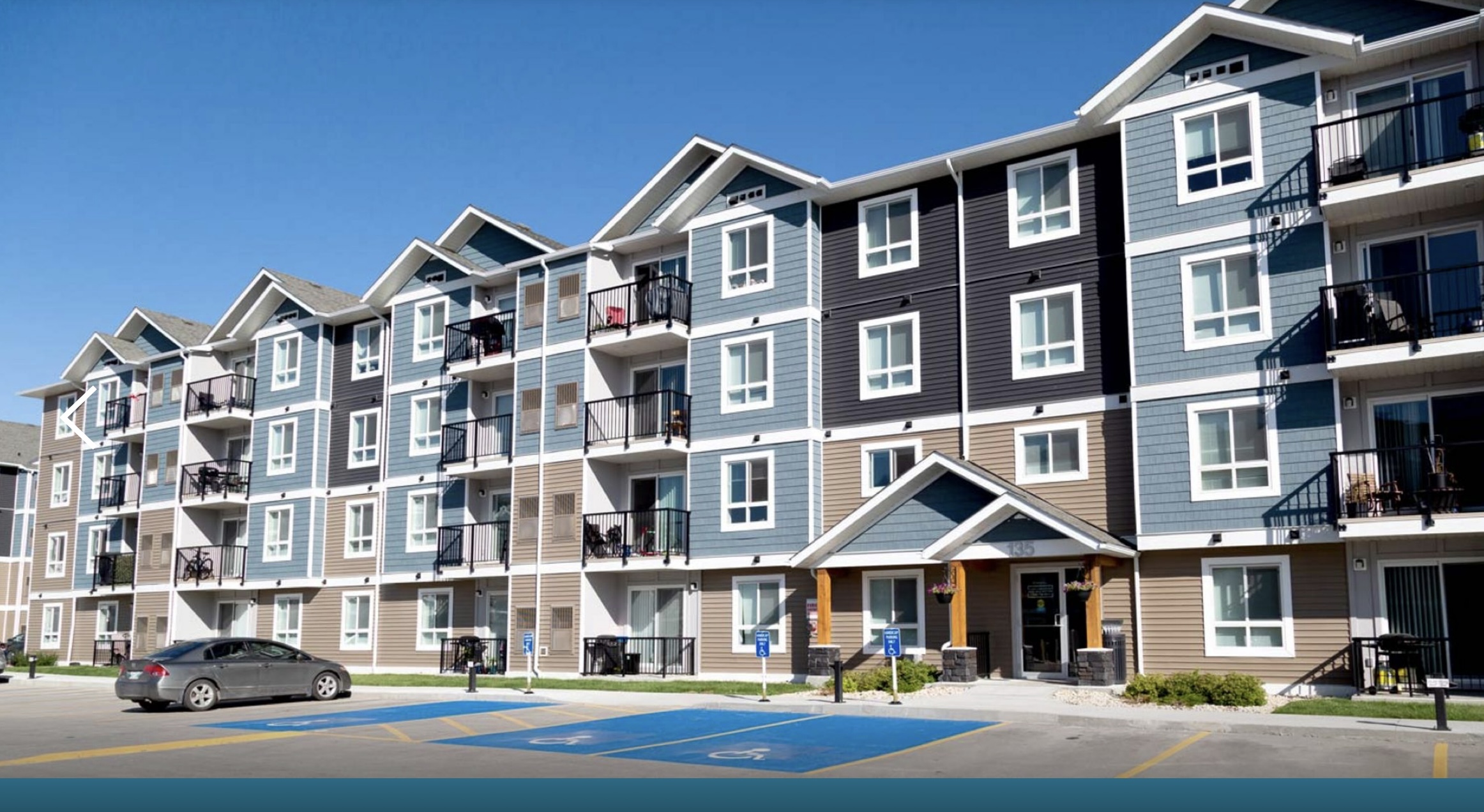
Aurora Heights Apartment, Winnipeg (Broadstreet Properties)

Home ownership has become very costly. A lot of people can’t afford to buy a house. Apartment rental can be expensive as well, but it is usually more cost efficient. Also consider renting a small house, condo, townhouse, or duplex. When looking for an apartment to rent, there are several things you should keep in mind:

Budget: Determine how much you can afford to spend on rent, including any additional fees such as utilities, parking, pet fees, and damage or security deposit. FYI – In Winnipeg (in 2023), a nicer newer modern two-bedroom apartment may range from $1400-$1700/month CAD. Smaller, older apartments may start at half that cost. Manitoba Housing also has subsidized apartments.

Sunlight: How much sunlight do you want? Are there lots of windows? Do you want morning sun (east-facing) or late-day sun and sunsets (west-facing)? A south-facing apartment will get more sun in general than one that faces to the north.  

Accessibility: Consider if the entrance to your building accessible by wheelchair or walker. Are there ramps or an elevator? 

Location: Consider the location of the apartment in relation to your work, school, bus routes, and other amenities such as grocery stores, restaurants, and entertainment.

Walkability: This is important for some people. Everything you need should be about 10-15 minute walk. From Reddit user YYZtoYWG: “If you want to be walking distance to grocery stores and amenities:  St Boniface, The Exchange, Broadway/Assiniboine, Osborne Village, Corydon, South Osborne, Wolseley, West End (west of Arlington).” I would add the strip on Grant across from the Grant Park Shopping Centre is a great location, too. 

Size and layout: Determine the size and layout of the apartment that would work best for you, taking into account the number of bedrooms, bathrooms, and overall living space.

Amenities: Consider what amenities the apartment complex offers, such as an air conditioner or central air, a patio or balcony, dishwasher, shower or tub, in-suite laundry or on-site laundry facilities, on-site storage, indoor parking, gym access, and security features.

Lease agreement: Read and understand the lease agreement, including the terms of the lease, the duration of the lease, and any fees or penalties that may be incurred.

Safety and security: Consider the safety and security of the apartment complex, including the availability of security cameras, on-site security personnel, and the overall safety of the neighborhood. Walk around the neighborhood. See it both in the daytime and nighttime. 

Maintenance and repairs: Inquire about the process for reporting maintenance and repairs, as well as the average response time for addressing these issues.

Rental history and credit score: Landlords often conduct background checks on prospective tenants, so be prepared to provide your rental history and credit score. You may need to provide a reference or two as well. 

Winnipeg, at the Forks in winter (Pexels)

How do you find an apartment to rent in Winnipeg?

I have seen people putting out a message on Facebook if anyone knows of an apartment for rent. This is always a good way to start.

Visit neighbourhoods: If you’re already in Winnipeg, you can visit neighborhoods that you are interested in living in and look for “For Rent” signs on apartment buildings. This is a good way to find apartments that may not be listed online. You can then go to the front door and see who manages the property. Take down the name and number and call for more information.

Google search: Next, you can Google “Winnipeg apartment rentals.” You will get a list of sponsored ads, but this would give you an idea of what property companies are seeking tenants. If you know the area you want to look in, add the area to the end of the search term. Example: Google “Winnipeg apartment rentals Osborne Village.” I will provide an example of some of property management companies below.

Rental websites: There are some websites that keep lists of apartment rentals. Many of them have filters and maps so you can explore the options and areas. Some of the websites I came across follow (in no particular order):

Rentals – https://rentals.ca/winnipeg

Rent Board – https://www.rentboard.ca/winnipeg-mb

Pad Mapper – https://www.padmapper.com/apartments/winnipeg-mb?box=-97.39311218261719,49.707164332873155,-96.90696716308594,50.025828752356176

Rent Cafe – https://www.rentcafe.com/apartments-for-rent/ca/mb/winnipeg/

RentFaster – https://www.rentfaster.ca/mb/winnipeg/

Kijiji and Facebook Marketplace are good to find options for rentals:

Kijiji – Apartments and condos for rent: https://www.kijiji.ca/b-apartments-condos/winnipeg/apartment__condo/c37l1700192a29276001

FB Marketplace – Property Rental: https://www.facebook.com/marketplace/category/propertyrentals

For older adults, there is a listing called the Winnipeg Housing Directory for Older Adults (mainly independent living): https://www.aosupportservices.ca/wp-content/uploads/2020/05/Housing-Directory-2020-for-website.pdf

There is also an online Winnipeg Renters Guide (this is an example of an issue from April 7, 2023) – https://issuu.com/wall2wall/docs/renters-guide-april-7-2023

Contact property management companies: You can contact property management companies in Winnipeg that manage multiple apartment buildings. These companies often have vacancies in their buildings and can help you find an apartment that suits your needs. The Top 3 Best Property Management Companies may also be a place to start. Property management companies to consider (there are more, just do a Google search, here are some in no particular order):

Sunrex property offers some pet-friendly suites – https://www.sunrex.ca/home

Urban Square with Centurion Property Associates Inc. (pet-friendly) – https://www.cpliving.com/apartments/urban-square

Broadstreet Properties – https://www.broadstreet.ca/residential/cities/winnipeg

Forthright Properties – https://www.forthrightproperties.ca/residential/cities/winnipeg

Know your rights! Make sure that you read through the Tenancies Act for Manitoba.  https://www.gov.mb.ca/cca/rtb/

Take your time when searching for an apartment to ensure that you find a space that meets your needs and fits within your budget. Keep notes on each place you are considering as you may not remember all the details! Let me know if there are any other things people should know when looking for an apartment to rent in Winnipeg, Manitoba.

Angela G. Gentile, MSW, RSW

Written with the help of ChatGPT

Aging in Place is Preferred by Nearly 80% of Adults Aged 50+

Guest post by Carolina Jimenez.

Aging in place is the process of staying in your own home as you grow older instead of moving to an outside facility. To properly age in place, you should create a budget, discuss options with your family, connect with home health services and identify necessary home modification projects. 

Nearly 80 percent of adults ages 50 and older want to remain in their current homes as they age, according to American Association of Retired People (AARP). Aging in place is often more affordable than transitioning to institutionalized care and allows someone to retain independence in a comfortable, familiar setting. However, aging in place isn’t right for everyone. It requires careful planning, research and coordination. 

What Is Aging in Place? 

Aging in place occurs when someone makes a conscious decision to grow older in their current residence instead of moving to an assisted living or long-term care facility. Aging in place works best for people who create a plan, modify their home and establish a supportive network of family and home care services. Affordable, accessible and suitable housing options also make it easier for older adults to age in place and remain in their community for years to come. 

The choice to either age in place or transition to assisted care is a complex and personal decision influenced by emotional, physical and financial factors. 

Is Aging in Place Right for You? 

Staying in a familiar setting is a priority for many seniors. But aging in place isn’t always as easy as it sounds. Maintaining independence can become increasingly difficult as age increases and health declines. 

Everyone’s situation is different. It’s important to evaluate and be realistic about your own circumstances. 

For more information on Aging in Place and the RetireGuide website> www.retireguide.com 

Myths or Truths? A Guide to Achieving Retirement Community Gold Standard

id-100378628-1

Image courtesy of pixatawan at FreeDigitalPhotos.net

(This article was written in collaboration with guest Alan S. Wolkenstein, MSW, ACSW)

As an administrator or manager of a retirement community, you likely hold specific beliefs and understandings of the residents (or tenants) and the workings of the facility. These understandings may be ones that you have learned from others, or perhaps you have come to believe based on your own experiences. Sometimes beliefs about your retirement community can hinder growth and success due to the fact that they are myths (widely held false beliefs).

Myths can hold us back from achieving our full potential for success. While myths exist to help us explain and make sense of our experiences, they can be, and often are not helpful in that they simply are not true. Sometimes these traditional stories are widely held but are not based on facts. Taking our head out of the sand and taking a close look at reality can help us move forward.

Do You Hold Any Myths About Your Retirement Community?

It is important to identify if there are any myths you hold about your retirement community and those you serve. By asking yourself if there is truth or if it is simply myth to each of the following thirteen statements will place you in a more favorable position to exert constructive political, cultural or systems energy. By answering these statements honestly, you will be able to identify them as either truths or myths.

If you happen to recognize some of these statements as myths, you may come to realize that these untruths can inhibit the functioning of your retirement community in meeting the best needs of the residents (and families), staff and institution (bottom-line). The acknowledgement and examination of these falsely held beliefs can challenge you to take on the potentially arduous task of transforming them into truths.

There is a potential for great change in the overall success of your retirement community by focusing on challenging or debunking any myths and doing something about it. Myths are generally difficult to disbelieve due to your strong emotional attachments to them. For example, you may find it a bit troubling to realize your residents may or may not be provided all the services that are essential, available or needed.

Myths or Truths?                                            

While we have developed thirteen statements, we believe there will not be less. There may be some that have not been included that can be exchanged or added for conversation and potential action. They are not mutually exclusive, but designed in a way to encourage thoughtful reflection by individuals and for discussion within the staff or team at your retirement community.

Consider these thirteen statements and decide if these statements are myths or truths when it comes to your retirement community:

  1. Our residents are a priority, and our retirement community has all the amenities, staff and services the residents need for enhancing their quality of life.
  1. We understand that older adults who have chosen to come to our retirement community may or may not have completed and successfully coped with their Family Life Cycle¹ tasks (such as launching adult children, retirement, widowhood, accepting bodily changes and dealing with the realities of their living arrangements), eliminated their intra-familial conflicts and made all important amends. They may or may not be emotionally and psychologically prepared to handle potential losses, grief experiences and transformation.
  1. Our retirement community adopts a holistic approach to care and has fully trained and specialized staff to identify, assess, treat and monitor the physical, emotional, psychological, cultural and spiritual needs of our residents. Administrative personnel and managers are up-to-date on the resources available and continuously strive for improvements in this area.
  1. Residents are properly screened and/or assessed by qualified personnel for anxiety, depression, mood and thought disorders and mental status (including Alzheimer’s disease and related dementias). If these services are not available in-house, staff are trained to identify issues. Residents and/or family advocates are encouraged to seek out advice from an appropriate health care or mental health professional.
  1. There is an active involvement with families and social/cultural communities of residents for continuity of attitudes, values and belief systems. In addition, all elders need connections with their significant others and our retirement community fosters and encourages these relationships.
  1. Administrators, managers and select staff are encouraged and trained to provide continuing adult education programming and support within our community to individuals and families in troubled elder-parent and adult-children relationships.
  1. Our retirement community welcomes and embraces the roles of residents’ advocates and an ombudsman in the holistic and total care concept of our residents.
  1. Our retirement community has sufficient and ongoing staff training opportunities, supervision and evaluation of all appropriate staff.
  1. If present, frequent staff turnover is vigorously addressed. We believe a disjointed or fragmented system can lead to a less than viable milieu for residents and staff morale. We strive for continuity and consistency. Satisfied staff leads to satisfied residents.
  1. Administrative personnel have a clear understanding of and methodology to deal effectively with staff burnout or impairments (permanent or temporary).
  1. Our retirement community has a Human Resource Department that is staffed with (or has access to) professional mental health personnel: those who can identify, assess, and refer for proper treatment (or other actions) staff who are troubled, deficient, show signs of burnout and impairment, and those in violation of local, state, federal and institutional laws and guidelines.
  1. Our retirement community understands and encourages interagency cooperation within our communities.
  1. Our retirement community interacts with educational and academic resources to foster community public awareness and psychosocial services for older adults within our community. This includes placement, internships and fieldwork for learners in the field of geriatrics and mental health services. All such learners are supervised and guided by specialists in eldercare from appropriate professions within the institution.

While self-imposed institutional denial that services are not lacking and provided, or rationalizing that if they were needed, they would be adequately provided, ultimately such institutional defenses are insufficient and hinder best care and utilization of accumulated knowledge and skills in residential care for older adults.

No retirement community consciously chooses to deny services to their residents and staff, but may be acting only from a strong and important fiscal basis. However, this is insufficient. Boards and administrators may be very good at their roles, but not sufficiently trained to assess the holistic need of their residents and staff. They may ultimately fear resources are not sufficient to turn any of the myths into real-time community truths.

If we believe we are functioning from a more enlightened perspective than the one that a retirement community is meeting all these beliefs as truths when they are not, then conceptual shifts are in order.

Your Score and What To Do About It

If you answered “Myth” to any of the above statements, then an action plan for remediation and change may be essential.

This action plan may include:

  • an examination of policy and procedures
  • reassessment of priorities
  • modification of scarce resources
  • finding and securing new funding to change some specific myths to truths
  • a review of long-range goals and objectives

Achieving Gold Standard

We have painfully learned that if a system remains profit and profit margin motivated and not sufficiently focused on customer/family/consumer needs and satisfaction, it will not survive in these difficult and challenging times. There will be intra-system anxiety when confronted with the two, apparently opposite, goals. Anxiety can be a powerful force in creating a milieu that fosters change, enlightenment and growth. If guided and properly mentored, anxiety can help individuals achieve their full potential. We believe this is also true for retirement communities.

It is a truth that a society is best measured by how it cares for its very young and very old. Let your retirement community be the gold standard of care for its residents and their families. Maybe now is the time to secure and support consultation to reach new visions for your retirement community.

Alan S. Wolkenstein, MSW, ACSW
Clinical Professor of Family Medicine (Ret.)
University of Wisconsin School of Medicine and Public Health
Wolkenstein and Associates, LLC
Mequon, Wisconsin, 53092
Alan.Wolkenstein@gmail.com

Angela G. Gentile, MSW, RSW
Specialist in Aging

¹ Wolkenstein, A. S., Lawrence, S. L., & Butler, D. J. (1985). Teaching “family”: The Family Medicine Chart Review. Family Systems Medicine, 3(2), 171-178.

purple-swirl-separator-hi

Angela G. Gentile  MSW, RSW. is a clinical social worker and author of the book, “Caring for a Husband with Dementia: The Ultimate Survival Guide”, “A Book About Burnout: One Social Worker’s Tale of Survival” and the “Dementia Caregiver Solutions” app for iPhone and iPad. She lives in Winnipeg, Manitoba with her husband and two adult children. She is passionate about all things related to Aging Well. For more information, visit: www.AngelaGGentile.com


Twelve Areas to Consider When Thinking About a Retirement Community with Lifelong Services

id-100468984

Image courtesy of powerbee-photo at FreeDigitalPhotos.net

(This article has been written with guest blogger, Alan Wolkenstein MSW, ACSW)

As family members age, there may come a time when an older person’s needs can no longer be met in his/her current home. It may be unsafe, there may be too many worries, or it may be stressful for all involved. For example, if Mom and Dad lived in their moderate-sized bungalow for the past 40 years, things may change dramatically when one of them passes away. Maybe Mom is now left in this house on her own, and she is overwhelmed with all there is to do. Even with family support, and the supports from other agencies and programs, Mom is still not being cared for the same way she was when dad lived with her. Although Mom does not want to move from the home she has known for so many years, sometimes a move to a more supportive environment is needed. Having this discussion can be difficult.

There are many issues that can arise with respect to an aging family member and housing needs. Illness, finances, mobility, socialization, recreation and access to services are some of the issues that may have to be considered. How does one make the right choice? Should the older family member stay in the house longer, or move to an appropriate “elderly persons housing”? Maybe he/she should move to a retirement community, or a place that also has lifelong service options. Should the person move to a 24-hour care facility like a nursing home? A good quality of life is usually the overall goal.

Conversations About Moving Can Be Difficult

Conversations about relocation may become uncomfortable and anxiety-provoking because they usually consist of making major changes in where one lives, relationships and even in family dynamics. The older person him/herself or other family members may be thinking about these issues, but the conversations may be avoided in order to prevent upset or problems in the relationship. We already know that everyone seems to have a slightly different opinion on the subject.

For those directly involved, the stakes are very high, and previous attempts to have such conversations may have not turned out very well. People can feel unsure of themselves and the older adult may experience that their own wishes may be disregarded by their children who push for changes to ensure a more safe and healthy environment. Relocation usually involves downsizing, a major disruption, adjustment issues, loss, and a change in daily routines. Ultimately, it should also come with benefits that outweigh the negatives.

This may be the first time adult children have seen their parent(s) unsure of themselves, possibly afraid of the future, and even angry or refusing to participate in these talks. It seems that no matter what is decided, many feelings may be hurt and someone will feel disregarded and not appreciated for their wishes.

Conversations About Moving Can Be Welcomed

However, in many situations, the family discussions around this topic go well. For example, an older adult may want to move on. In this case, the family can come together with a unified plan that seems positive and helpful to the whole family. Then the issues become where to look, how to assess, and when to choose a place.

Making Decisions Regarding Housing Needs Can Be Confusing and Complex

For others navigating the housing dilemma, the situation is confusing and complex, and there seems to be no way to satisfy all. In the end, no one feels or experiences satisfaction. If an older person moves into a retirement community following this scenario, the likelihood of a successful adjustment is deeply compromised.

Many situations regarding decision-making related to relocating an older family member require and benefit from professional intervention. Professional assistance could come in the form of:

  • helping the older person and his/her family members choose a suitable place
  • mentor and support the family so they can choose for themselves
  • help them sort through the levels of conflict

12 Areas to Consider When Choosing Seniors’ Housing

The following are a number of questions to be used as a working outline in maneuvering through these scenarios. Each requires input and shared conversation with a guide or mentor to monitor and direct the conversations and the powerful emotions they generate. In order to get answers to these question, you (the person seeking housing and/or the person’s advocate) will have to make arrangements for tours and meetings with key people. A trusted professional or seniors’ organization can help you get a list of possible options to choose from. Keep a log of the answers so when decision time comes, you will have some notes to look back on. The questions are not listed in any rank order of importance, but as they come to our mind as we have worked with older adults and families during these potentially troubling and stressful times. As always, take with you what seems most helpful to your unique situation. Note: These questions are written for the person who will be moving. Sometimes a trusted family member or advocate (someone who knows the older person very well) can assist through this process.

1. Costs and how they will be paid for. Remember that the highest cost establishments may not be the most rewarding one. Many have entrance fees that may or may not be refundable in some degree if you leave or pass on. All require fees for their services. Ask if there are any move-in incentives. What is included in the costs (i.e., meals, housekeeping, recreation, etc.). Do they have a free or low-cost “trial stay” option? In the United States, some may take Medicare. In Canada, some of the facilities may be government subsidized. Get the facts down right. Higher cost is not always an indicator of better service and dedication to you. You may also want facts about the establishment’s financial health to guarantee their viability.

2. Location, location, location. How far is it from your family and friends? How close or far are familiar places such as services, restaurants, theatre, clubs, church or synagogue? Are there plans to establish all these in the retirement community once there, or will your time be split? Remember that connection with important people in your life is a definite component of good quality of life.

3. Values and commitment. Ask the management or representative at the establishment about values and commitment to each person. Get this from the people you talk with, not the brochures they send out. While it is good to talk to folks who are available to talk and share their experiences there, they will probably have you speak with the most satisfied members.. Ask for a list of complaints they have received and dealt with. Seek a place that shares your values about what is important in your life and maintaining a high quality of life: continuity here is also important to your quality of life. Ask what procedures are in place to ensure they uphold their commitment to these core values. Ask how these core values are implemented and evaluated. Are they open to improvements? Is there a “Comment Card” system where the residents/tenants can forward their comments and concerns anonymously? Alternatively, what avenues are in place to motivate, celebrate and encourage outstanding service and achievements by staff?

4. Religious affiliation is only part of the equation. Try not to select by religion alone. You may find the system falls far short of meeting your overall needs. While many families share they receive much comfort if the community is of their religion, this does not guarantee a successful placement.

5. Processes in place to ensure a warm welcome and adjustment. What processes are in place to help you or your loved one transition into their system and become part of their “community”? Who is the “go-to” person if there are questions?

6. Supports to help with the adjustment. How will they assist you or your loved one in coping and adapting to their environment? You or your loved one may find it more complicated and anxiety-provoking to move through the process of adjusting there. Who are the staff and what are their qualifications to do this with you or your loved one?

7. Availability of care and counseling after a major life stressor. Many people and families seek out a place following a serious loss to them, such as death of a loved one; illness; financial problems; or diminished ability to provide activities of daily living (ADLs). Attempting to adjust now can strain an individual’s ability to cope and adapt. How will the community provide care and counseling? Does administration view the need for counseling as necessary for enhanced quality of life for some tenants/residents? Is this included in the overall fee? Is it an add-on expense? If counseling is an additional expense (versus an available built-in service), administration does not view this need as a normative cost to them.

8. Counseling and advocacy for relocation concerns. Most people have some degree of ambivalence and uncertainty about such an important move. Who is there to smooth the way and champion their concerns?

9. Counseling for family members. What family counseling services are available to your family? Not all of us have made our amends with our family, dealt with the issues that cause us strife and worry, and resolved any family guilt or anger between members.

10. Regular assessments to assist with adjustment. Are there regularly scheduled assessments of how you or your loved one is coping and adapting? Who are the people and what are their qualifications?

11. Health services. Your health is crucial. How do they incorporate physicians, nursing, and allied health services into their system?

12. Future care needs. What does the facility offer in terms of long-term care needs? Do they adhere to an “aging in place” concept? Meaning, if your health or condition declines, do they continue to support you in their facility, or do you have to move again? Ask them how long you could stay, and what are the reasons you may be asked to leave (“Exit-criteria” or reasons for “eviction”).

We have listed for you 12 areas of concern we feel are important. There are certainly more and some may be equally as important or more important that any on this list. Think for a moment what they might be for you or your loved one. You may be surprised how these questions and concerns bring other ones to the surface. For example, is there a pet involved? Is the pet welcomed?

Reconsidering a Move

What if you began to rethink about your loved one remaining in their home? What services would they need? What services would they accept? Where would the funds come from? Is this just a temporary measure, and if so, would it give everyone time to breathe easier and simply let the person remain in his/her home for a little while longer? Would this be reasonable for a family with many different opinions? Would it be reasonable for an older person who may perceive these service providers as strangers intruding their home further solidifying their sense and awareness of growing frailty and needs?

Seek Professional Consultation

Consider a consultation by a specialist during this challenging time. Seek out someone who has the experience and expertise to guide you and your family with and through this process. Meeting with this person can illuminate a path that you may not have thought of, and provide guidance to see you through.

Many older adults and their families find selecting appropriate seniors’ housing and the accompanying transition somewhat stress-free. Many do not. If your loved one or family is finding this transition difficult, there is help available. There are many fine people in the community to serve you. Start by discussing with your loved one’s mental health professional or doctor. Start by making an appointment.

We wish you and your family well.

Alan S. Wolkenstein, MSW, ACSW
Clinical Professor of Family Medicine (Ret.)
University of Wisconsin School of Medicine and Public Health
Wolkenstein and Associates, LLC
Mequon, Wisconsin, 53092
Alan.Wolkenstein@gmail.com

Angela G. Gentile MSW, RSW
Specialist in Aging


purple-swirl-separator-hi


Angela G. Gentile  MSW, RSW. is a clinical social worker and author of the book, “Caring for a Husband with Dementia: The Ultimate Survival Guide”, “A Book About Burnout: One Social Worker’s Tale of Survival” and the “Dementia Caregiver Solutions” app for iPhone and iPad. She lives in Winnipeg, Manitoba with her husband and two adult children. She is passionate about all things related to Aging Well. For more information, visit: www.AngelaGGentile.com