Watch Your Step! Fall Prevention Tips

used-image-courtesy-of-simon-howden-at-freedigitalphotos-net

Source: Simon Howden, Free Digital Photos.net

Did you know that one in three Canadians over the age of 65 will fall this year?

Some of these falls are life-threatening. In fact, falls are the leading cause of injury-related hospitalizations of older adults in Canada (Smith, Wager & Elliott, 2010). In 2004 Statistics Canada reported falls cost the health care system an estimated $2 billion.

In Canada, falls are the leading cause of head injury hospitalizations in adults (Canadian Institute for Health Information). Thirty-five percent of injuries from a fall result in broken or fractured bones (Statistics Canada). The cost to the health care system and to personal quality of life is staggering.

It is important to know the risks and to prevent falls from happening.

These falls happen everywhere; be it in the home, the community or in long-term care. There are some helpful online risk assessment tools and other resources to help older adults who are at risk, or who simply want to be pro-active in fall prevention. A study done in 2009/10 showed that fall related injuries from simply walking comprise forty-five percent of self-reported injury. (Statistics Canada, Community Health Survey).

Self-Assessment for Older Adults Who Live Independently

For older adults who live alone, the Staying on Your Feet website provides a self-assessment questionnaire for older adults, called Prevent Falls Check-Up. Once completed, a Check-Up report is provided which offers a variety of suggestions and tips for falls prevention. The main message here is that most falls are preventable, and steps can be taken to reduce risk.

Safety is far more important than what preventative and risk-reducing measures “look like.”

Concerns about getting in and out of the bathtub? Arrange to have grab bars installed. The Canadian Mortgage and Housing Corporation has released guidelines on the best placement for grab bars for maximum effect and ease of use. We have to get past the idea that grab bars may make us look weak or frail.

Taking medication? For those on three or more medications who are experiencing bouts of feeling light headed or dizzy, regular medication reviews are recommended. Medication adjustments may be required to help reduce unwanted and potentially harmful side effects that can cause an increased risk for falls.

Could the home surroundings be made safer? When a person has lived in a place for many years, they tend to not see where improvements can be made. If the person tires easily, perhaps a relative can help select rest areas where small chairs can be set to provide breaks. If the person tends to walk the same path through his/her home, move furniture to ensure a clear pathway.  If a small pet tends to get underfoot, install a bell on its collar. Move commonly used kitchen items to easy-to-reach areas to reduce the need for step stools. For hard to reach items, never stand on a chair – always use an appropriate stool or short step-ladder made for such a purpose, and preferably one with a handle at the top to provide steady support.

Is footwear safe? Slippers or mules with no backs, overly worn soles or shoes that are too tight, can all contribute to falls. Ensure the person has a good pair of well-fitting shoes, preferably without laces that could cause tripping, and with lots of room in the toe box. Wear these shoes in the house. Shoes that move with one’s feet will help reduce falls in the home.

Problems with blood pressure? Postural hypotension, or a sudden lowering of blood pressure when changing head elevation, is common among those 65 and older. A good tip is to get in the habit of sitting on the edge of the bed for a few seconds upon awaking before standing up. This allows the blood pressure to adjust to reduce the risk of dizziness upon rising.

Overactive bladder? If bladder incontinence or urgency poses problems, rushing to the bathroom can be a fall risk, especially in the night, and especially for homes where the bathroom is not close to the bedroom. Consider purchasing a bedside commode. The commodes of today are much more user-friendly and attractive than in our grandmother’s day, and we should not be embarrassed to install one in our bedroom. Purchase a screen to hide it during the day if embarrassment is an issue.

Need to use the stairs? Falling on stairs is the third most reported reason for falls, (Statistics Canada, Community Health Survey) after walking and snow/ice slips. 12 Steps to Stair Safety at Home is a one-page checklist on stair hazards and ways to look at stair issues effectively. First and foremost handrails should be on both sides of the staircase and should be used in every instance, no exceptions.

fall

What to Do After A Fall is a poster that can be printed off and kept in various places around the home. It is especially recommended for those who live alone and have already experienced a fall.

Personal Response System to Ensure Safety

If the risk for falls is high or family members are concerned about their loved one falling, one popular option is to get a personal response system. The Philips Lifeline AutoAlert service is a great optional feature that will automatically summon help if the person falls. There are many other such services and some of them are:  ADT, Alert1, Bay Alarm, Care Innovations, LifeAlert, LifeFone, LifeStation, Medical Guardian, Mobilehelp, and RescueAlert. Some research may be needed to find the one right for the circumstances, and these may not all be available in Canada. Some people are worried about the appeal of wearing a device such as a necklace or bracelet but modern technology makes many of these devices appear as regular jewellery. In Canada, Costco stores provide two such devices – Medical Alert and Direct Alert.

Buddy Systems

Although there are reportedly only one fifth as many falls in residential care facilities as in private homes (according to Statistics Canada), it is still important to be aware of fall risks and prevention strategies in seniors’ residences.

Some seniors’ residences have a buddy system or a safety check program in place. Examples would be where the tenant puts a door knob hanger or other signal (garbage can for example) outside their doors at night and remove them in the morning to signal that all is well. Alternatively, a phone call once or twice a day can ensure one’s safety with the added bonus of social interaction.

The Prevalence of Falls in Long-Term Care and Residential Facilities

Some people who live alone move into long-term care settings because of their complex medical needs and increased risk for falls. Nursing Home (NH) residents who fall are at risk for injury such as a fractured hip or other bones. Sometimes a fall results in death.

The Winnipeg Regional Health Authority listing of Critical Incidents Reported to Manitoba Health from October 1, 2013 – December 31, 2013 identified 34 NH resident falls over the three-month period. One of these falls resulted in death. Seven of the falls were witnessed by a staff member, and 27 were unwitnessed. Of these unwitnessed falls, 16 resulted in a fractured hip and a trip to the hospital for surgical repair.

According to a 2008 Winnipeg Regional Health Authority publication, the Personal Care Home View, 18,868 falls were reported in nursing homes in Winnipeg in one year. Most falls occurred in residents’ rooms on evenings and weekends.

Falls Risk Assessment Tool for Long-Term Care Facilities

The Johns Hopkins Falls Risk Assessment Tool (FRAT) helps identify the level of risk in NH residents, based on the following criteria:

  • Recent falls
  • Medications
  • Psychological factors
  • Cognitive status

If a person has had recent falls, it increases the risk for a repeat occurrence. Certain medications, such as sedatives, antidepressants, antipsychotics, anti-Parkinson’s, antihypertensive, diuretics or hypnotics can also increase risk. Psychological factors such as dementia, anxiety, depression, decreased cooperation, impaired insight or judgment (esp. re: mobility) also increases risk for falls. Finally, the higher the level cognitive impairment, the higher the potential for an incident.

The overall FRAT score is out of 20, with a higher score indicating increased risk. A low, medium or high Fall Risk Status is identified on the resident’s care plan. For those with identified risks, intervention strategies can be formulated, and referrals to other specialists may be initiated. For example, a geriatric psychiatrist or pharmacist may be consulted to review medications. Additionally, an occupational therapist may be required to assess mobility to determine the need for mobility aids and appropriate footwear. For example, hip protectors may be recommended. Also, anti-slip etching can be applied on the floor around the bed and most certainly should be in the bathroom in the shower area.

Identify, Prevent and Reduce Risk

Most falls can be prevented, and education is key. If You Fall is a guideline that can be kept on hand regarding what to do if a person has a fall including “How to get up” and the importance of “Telling the doctor.”

Regular exercise can help strengthen muscles and keep the body limber. It can also help with balance issues. Seek out the help of a qualified professional such as a physiotherapist for a tailor-made exercise program.

A healthy balanced diet and regular doses of sunshine (or Vitamin D) are also important to help keep bones and muscles strong and healthy.

Whether the older adult is living independently or in a long-term care setting, education and assessment can help identify, prevent and reduce the risk for falls. If you are keen on the subject, consider holding an awareness month, week or day like the Fall Prevention Awareness Month promoted in British Columbia and consider what kinds of activities you would like to include.


Angela G. Gentile, MSW, RSW

August Janice Bailey, Dip. Herb, HCA

 

purple-swirl-separator-hi

Angela G. Gentile, M.S.W., R.S.W. is a clinical social worker and author of the book, “Caring for a Husband with Dementia: The Ultimate Survival Guide”, “A Book About Burnout: One Social Worker’s Tale of Survival” and the “Dementia Caregiver Solutions” app for iPhone and iPad. She lives in Winnipeg, Manitoba with her husband and two adult children. For more information, visit: www.AngelaGGentile.com

August Janice Bailey, Dip. Herb, HCA is a Health Care Aide, an herbalist, a writer, and a falls prevention researcher and analyst. She is interested in many aspects of healthy aging including  nutrition and movement strategies. She works with seniors to reduce fall risks in their homes. August lives on the West Coast in Courtenay, British Columbia with her daughter. She can be reached through LinkedIn.


Additional References/Resources:

Government of Manitoba (2014). Critical Incidents Reported to Manitoba Health. Retrieved from http://www.gov.mb.ca/health/patientsafety/docs/ciq31314.pdf

Preventing Falls in Older Adults – Winnipeg Regional Health Authority, Manitoba, Public Health Resources  http://www.wrha.mb.ca/community/publichealth/PREVENTINGFALLSINOLDERADULTS_000.php

Partners Seeking Solutions with Seniors and Manitoba Pharmaceutical Association. Date Unknown. Fall Prevention: How does what I take or what I drink affect my risk of falling?  Retrieved from http://mpha.in1touch.org/uploaded/web/Legislation/Practice%20Resources/PSSSFallsPreventionPamphlet%20Updated%20Nov2014.pdf

Scott, V., Wager, L. and Elliott, S. (2010). Falls and Related Injuries Among Older Canadians. Retrieved from http://www.hiphealth.ca/media/research_cemfia_phac_epi_and_inventor_20100610.pdf

Statistics Canada (2014) Seniors’ Falls in Canada: Second Report. Retrieved from http://www.phac-aspc.gc.ca/seniors-aines/publications/public/injury-blessure/seniors_falls-chutes_aines/index-eng.php

Winnipeg Regional Health Authority (2008). Personal Care Home View, April 2008. 5:4. Retrieved from http://www.wrha.mb.ca/ltc/pch/files/PCHView_Apr08.pdf
How to Manage Arthritic Pain and Stiffness – A review of Genuine Health’s Fast arthritis pain relief+

image

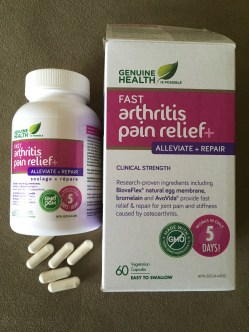
Genuine Health FAST arthritis pain relief+

I have been living with osteoarthritis for the past 20 years or so. I come by it honestly, as my grandmother had a bad case of it. Arthritis is a condition of inflammation of the joints. It affects one in six Canadians over the age of 15 and is the number one cause of disability in women (and third in men).

Arthritis, like all diseases and conditions, affects people in different ways. For me, the pressure and stress over the years has resulted in sacroiliac (SI) joint and lower back (lumbar vertebrae) issues. The SI joints  are used to transfer movement from the upper body to the lower body and are especially important when you turn over in bed (see diagram below).

There have been times when I wince in bed, with that dreadful reminder that my SI joints are inflamed. There is usually no specific trigger. Sometimes I think it’s the weather – other times I blame hormones.

I was approached by The Publicist Group to see if I was interested in trying out Genuine Health’s FAST arthritis pain relief+ or one of their other products (FAST joint care+ and FAST pain relief+) The claim was it would help relieve pain in five days (hence, the word FAST in the title). They had other products too, but this one seemed to speak to me. I had used Aleve, Advil and Tylenol in the past. I have also purchased a Lumbar Brace and Tens and an ice pack to help when my SI joint is aggravated.

I have also been to physiotherapists in the past. I have been prescribed exercise programs and the main treatments for my problem is core strengthening and stretching. Yoga has also been recommended. Walking, cycling, gentle exercise on the elliptical, weights, calisthenics and stretches are activities I try to do at least twice weekly. I say “try” because sometimes this isn’t a priority in my life – at least not as big of a priority as I know it should be. When the pain is really bad, I usually find laying down for 10-15 minutes helps relieve my pain.

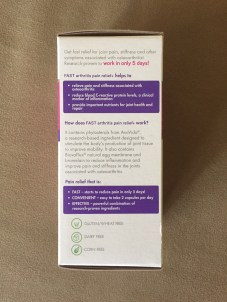
So, I agreed to try out FAST arthritis pain relief+. I was given a complimentary bottle of 60 tablets. The directions say to take two caplets daily. Information on the bottle states:

image“How does FAST arthritis pain relief+ work?
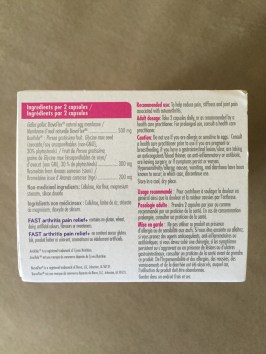
It contains phytosterols from AvoVida®, a research-based ingredient designed to stimulate the body’s production of joint tissue to improve mobility. It also contains BiovaFlex® natural egg membrane and bromelain to reduce inflammation and improve pain and stiffness in the joints associated with osteoarthritis.”

I found the study the company did and it showed favourable results by an impressive number of people who had tried out the product. I noticed they did not have a placebo group (a group of people who thought they may have been taking the product to be tested but were given a fake pill). There is a certain amount of placebo effect whenever you are given a treatment. If you believe a treatment will help you, the power of the mind will help you achieve the desired results. This is in fact a phenomenon that is currently perplexing to scientists and we have a lot more to learn about the power of the mind and the placebo effect.

imageI decided to document my experience by recording my level of pain each day on a scale of 1-10 (1 being no pain, 10 being excruciating pain).

I knew this may take a few days to take effect, so I was prepared to focus on this for at least a week. I also decided (as in the study) not to take any other pain-relieving medications during the time I took the easy-to-swallow caplets (although there were days I wanted to!).

Overall,  it took me 7 days (not 5 – this product is “research-proven to work in only 5 days”) to feel pain relief. Over the next couple of weeks I had a couple of times where my arthritis flared up and I had to take some Advil to help alleviate the pain. I probably won’t continue to take this FAST on a regular basis, unless I find a huge change in my arthritic pain once I have completed my 3o-day trial.

I would say the FAST caplets are worth trying out. I have seen the cost for this product at $62.00 – 79.99 for 120 caplets (a two-month supply). Sold on Amazon (see links below) and available at other locations.

Here are some other tips on how to cope with arthritis:

  • Ensure good ergonomics when sitting at the computer
  • Take frequent short breaks when sitting at the computer such as getting up to get a glass of water or standing up and stretching (every 15 minutes or so)
  • Massage can help bring needed blood flow to the area, and loosen and stretch the muscles surrounding the joints. However, avoid aggressive massage such as what is offered in a massage chair can aggravate inflamed joints
  • Chiropractic adjustments may help
  • Laying down for 10-15 minutes can provide much-needed relief
  • Gentle stretches can be helpful (see a physiotherapist for exercises and stretches) or try this SI Joint Stretch
  • Walking and gentle exercise can help provide relief and stretching can keep joints limber
  • Voltaren emulgel can help relieve pain
  • Ice and/or heat can help relieve the pain
  • A warm shower or bath can also provide relief
  • Housework can cause a flare-up (haha)

Check out these resources for more information on how to manage osteoarthritis:

Genuine Health – Natural pain relief proven to reduce inflammation. Find where to buy the product on this website (in stores and online).

Top 3 Tips for Osteoarthritis by Eugene Sims, a physiotherapist

The Arthritis Society – Information, resources, tools and expert access

Buy Now from Amazon:

FAST ARTHRITIS RELIEF+

Genuine Health fast arthritis pain relief+ 60 capsules

Age well, my friend!

Angela G. Gentile, MSW, RSW

purple-swirl-separator-hi

Angela G. Gentile, M.S.W., R.S.W. is a clinical social worker and author of the book, “Caring for a Husband with Dementia: The Ultimate Survival Guide”, “A Book About Burnout: One Social Worker’s Tale of Survival” and the “Dementia Caregiver Solutions” app for iPhone and iPad. She lives in Winnipeg, Manitoba with her husband and two adult children. For more information, visit: www.AngelaGGentile.com

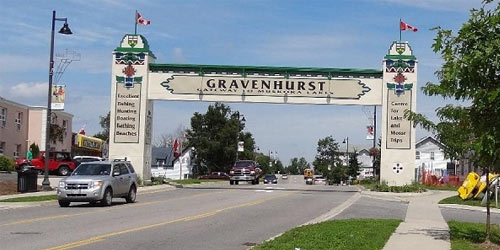
Supports and Services for Older Adults in Gravenhurst, Ontario

untitled-2

Image source: Muskoka Pest Control


I have aging relatives in Gravenhurst, Ontario. I went there for a visit in August 2016. While there, I was looking into the services and resources available to older adults. What I found, or should I say didn’t find, was quite alarming.

The Aging in Place Strategy for Canada is great in theory, but providing resources and services to meet the needs of the aging population is proving to be quite the challenge.

Gravenhurst is a small, pretty lake town located just 90 minutes north of Toronto. It has a population of 12,179 according to the Gravenhurst Community Profile 2013. A whopping 23% of the residents are 65 and older (compared to 14.6% in all of Ontario). This community is growing older, and the needs of this aging population are also growing.

In the summer the population swells due to the number of cottagers who escape the summer heat to their cool lakeside getaways. Some of the cottages on Lake Muskoka are huge! I took a tour with William of Big 3 Tours and he showed us some cottages that are 1-5 million dollar price range. Celebrities such as Martin Short own cottages in the area.

In terms of at risk seniors and meeting their needs, it seems like Gravenhurst is lacking in the basics. I was told to call “211” to speak to a nurse about health care resources. The lady on the line was very helpful. I ended up talking to a few very nice and well-meaning individuals and sometimes my conversations went full-circle without any definite answers. It seems like there is no one place for all the information I was looking for which proved to be very frustrating. I spent a few hours on the phone but came up with some answers and resources which I’ll share here.


Meal Delivery

There are no hot Meals on Wheels available in Gravenhurst due to the lack of available volunteers. There are services available in Bracebridge, a neighbouring community which is a 15-minute drive north. In Gravenhurst, the only option recommended to me is a company called Apetito.ca. They will deliver frozen meals once monthly. All of the information is online, so it can be difficult for those who do not have access to a computer, or do not know how to use a computer. It appears to me that the only meals on wheels available to older adults are the fast food restaurants such as McDonald’s and Tim Hortons which also conveniently have a drive-thru. I am also assuming that the local grocery stores have ready prepared meals, which may be a better option. For those with special diets (cardiac, diabetic, gluten free), this can pose a challenge.


Housekeeping and Yard Work (Home Support)

homesupport

Image source: Closing the Gap Healthcare

In terms of housekeeping, the Ontario government does not offer any services. In Winnipeg, to those who cannot afford to hire privately. In Gravenhurst, I was given a few different private companies to follow up with:

Seniors for Seniors – 1-705-645-0199 (Tom)

Closing the Gap Healthcare – 1-877-560-0202

Happy at Home Support Services – 1-705-703-9980 (light housekeeping and yard work)

Bayshore Healthcare – 1-705-722-8993 (Barrie office)

Red Cross Community Support Services – 1-705-721-3313

Busy Lizzie Cleaning Services – 1-877-207-8718 or 1-705-687-6183


Transportation

van1

Image source: Muskoka Seniors

There are two taxi companies in Gravenhurst – OK Taxi (705-684-8294) and Gravenhurst Taxi (705-687-2246). I’ve been told that Red Cross will provide transportation to the nearest hospital  if needed (South Muskoka Memorial Hospital), which is in Bracebridge, at 75 Ann Street. There are two bus companies that serve Gravenhurst – Ontario Northland for service north or south, and the Corridor 11 bus which can take you directly to the front door of the hospital in Bracebridge for $7.00. OK Taxi will pick you up from the hospital and bring you back to your home in Gravenhurst for $25.00. (Prices from 2017 and subject to change without notice.)

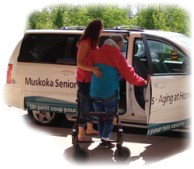
Aging at Home Vans or Registered Volunteers are offered through Muskoka Seniors.


Housing for Seniors

In terms of seniors’ housing, there are a few options. There are “retirement residences” and a “long term care” facility.

The Manor at Gravenhurst (operated by Lifetimes Living Inc.) is a quaint little 40-bed retirement residence I toured in August 2016. It was originally a hotel, and there are studio apartments with attached washrooms, studio apartments with shared washrooms, and double rooms (two studios with an attached washroom). All meals, medications, housekeeping, laundry, recreation and parking are included in the rent which ranges from $1,900/month to $4,000/month. Residents are free to come and go as they please and the ages range from 60 to 100. 1-705-687-3356.

Granite Ridge Retirement Residence Assisted Care – 1-705-687-0007

Muskoka Shores Care Community – Transitions operated by Sienna Senior Living (formerly Leisure World) – 1-705-687-3444

The Pines Long-Term Care Home – 160 beds, located in Bracebridge.

Affordable Housing Programs

Social Housing (Low Income Housing) 


Other Important Resources

Your doctor. Physicians have access to and knowledge of resources that I may have missed here.

North Simcoe Muskoka Community Care Access Centre  (CCAC)- Accessing Home Care services. Office located in Huntsville, Ontario. 1-888-721-2222 or 1-705-721-8010

Seniors Assessment and Support Outreach Team (SASOT) – Operated out of the hospital in Bracebridge. I spoke to a very nice person there, and she says they “dig deeper” and all you need to do is get the doctor to make a referral to their team. 1-705-645-4400. ext. 3505.

Muskoka Seniors – Helping Seniors Live at Home. 1-705-789-6676.

Assisted Living Services for High Risk Seniors – Currently a six-month wait list. Services provided by The Friends (1-705-697-5100, ext. 22). It is a not-for-profit organization. There is also an Adult Day Program available for socialization and a meal. It costs $15 a day and $2 for transportation one way. There is a wait list of about six months. The wait list for homemaking is five years. They do not do yard work. For information on Assisted Living Services for High Risk Seniors, go through the CCAC case manager or call 1-888-721-2222 or 1-705-721-8010.

Long-Term Care Homes in North Simcoe Muskoka – 9-page document with information on long-term care homes.

North Simcoe Muskoka Healthline – Online listing of health services in the area.

The District of MuskokaSeniors Wellness Outreach Coordinator, 1-705-645-2412, ext. 444.


seniorscentre

Image source: Seniors Centre – Town of Gravenhurst


Seniors Centre – The Town of Gravenhurst has an active seniors’ centre and there is plenty of socialization and things to do for those wanting to remain active and involved.


Working Towards Age-Friendly Solutions

As I was doing my research, I was happy to find out that the District of Muskoka is working on a Master Aging Plan with assistance from an Age-Friendly Community grant received from the Ontario government. Here is a link for more information on how you can get involved: www.muskoka.on.ca//AgeFriendlyCommunities. I hope that they will be able to fill in the gaps soon to enable the residents of Gravenhurst remain in their homes as long as possible.

Overall, I would say that it is a very complex and frustrating experience to get information on services for older adults in need in Gravenhurst. The Seniors Wellness Outreach Coordinator at The District of Muskoka was most helpful. Those who have limitations or who have limited family support will especially find it difficult to get the services they require. If you have any further information to add to this list, please let me know in the comments below.

If you are planning a trip to Gravenhurst, check out the travel guide on wikivoyage for more information. For current events, check out the Muskoka Region News.


purple-swirl-separator-hi


Angela G. Gentile, M.S.W., R.S.W. is a clinical social worker and author of the book, “Caring for a Husband with Dementia: The Ultimate Survival Guide” and the “Dementia Caregiver Solutions” app for iPhone and iPad. She lives in Winnipeg, Manitoba with her husband and two adult children. For more information, visit: www.AngelaGGentile.com

Senior Moments: Should I Be Worried?

senior-moment2

Although I don’t particularly like the term “senior moment,” most older people know what that means. When someone who is at middle age or beyond has difficulty remembering something such as, “Where did I put my reading glasses?” or “I can’t remember her name” he/she may find someone else responding in a joking fashion, “Are you having a ‘senior moment?'” The other person is replying with a joke about having a poor memory. I have heard people themselves make jokes about their own “senior moments” in hopes of making light of the situation. It’s true that as people age there are normally changes in memory and thinking skills. On one end of the spectrum there is normal aging that affects everyone. At the other end is dementia which is common but not normal.  In between is a condition known as mild cognitive impairment. I will touch on all three.

We all have memory lapses on occasion

It’s true we all have occasional lapses in our memory. I even see my teenage children doing it. I even remember walking into a room years ago, forgetting what I went in there for, having to go back to what I was doing in order to jog my memory. Little lapses in memory is common for everyone. We get distracted or side-tracked especially when it is something that is not really that significant. Forgetting names is a common occurrence for example.

I have been working with older adults for over 25 years now and I see all different types of memory and thinking problems. I also know many older people (including caregivers) who do not show any signs of cognitive (brain function) decline.

I often note increased anxiety in people who are struggling with the loss of cognitive abilities. It must be a scary feeling to know that they are losing their faculties.

One of the common fears people have is developing dementia. Declining memory skills are often one of the first signs of dementia. The good news is that memory problems do not always lead to dementia.

Normal aging, mild cognitive impairment and dementia

Slowed thinking and minor problems with remembering things is quite common and almost expected in our later years. There are some things we can do to help reduce our risks of further problems with our cognition such as exercising (to get the blood pumping to our organs including the brain) and doing brain exercises (such as crosswords and learning a new musical instrument). Normal aging causes us to slow down in more ways than one.

Sometimes our memory problems become more problematic and they are noticed by other people. If you are continuously forgetting someone’s name or miss appointments, this may start to interfere with your relationships and daily functioning. You may have to learn new ways of coping with the normal changes in your brain such as keeping lists handy and using your calendar more regularly. Memory and thinking problems that can be noticed by others but don’t really affect your day-to-day functioning is called Mild Cognitive Impairment (MCI).

By the way, it’s a good sign if a person is aware of or concerned about their changing memory skills as one of the skills lost in dementia is the ability to know they have problems with their memory. If you ask someone with dementia if he/she has memory problems, he/she will most likely say “No.” It’s true that long term memory may still be intact.  It’s the ability to remember recent events and learn new information that is lost.

In some cases your memory skills, thinking and cognitive functioning may be impaired to the point where you can no longer do things on your own. For example, you may need someone to give you your medication on a daily basis or else you will forget. Or you can no longer drive because your sense of direction is off. Dementia is a syndrome and can be found in a variety of conditions  that affect cognition (such as Alzheimer’s disease). In early stages of dementia you can  live on your own as long as you can enlist the support you need to keep yourself safe. Dementia can create a variety of problems. For example, sometimes people with dementia forget to eat, or think they have already eaten. In this case it’s important to have someone provide a reminder or stop by to ensure he/she eats. In the later stages of dementia, it is not possible to live alone.

Seek a memory assessment if you are concerned

If you are concerned about your memory skills or other brain-related functions (such as language, problem-solving or judgment skills), please speak to your doctor for a memory assessment. Let your doctor know if you are concerned your problems are beyond the changes seen in normal aging (such as slowed thinking, and the occasional difficulty remembering things). Only a skilled practitioner can diagnose and determine the difference between normal aging, mild cognitive impairment and dementia, and provide treatment and management solutions.

For more information, check out National Institute on Aging’s  Memory, Forgetfulness, and Aging: What’s Nomal and What’s Not.

You may also like to check out Senior Moments Explained by Terry Hollenbeck, M.D.

Angela G. Gentile, MSW RSW

www.AngelaGGentile.com

Malnutrition: A Hidden Epidemic in Older Adults

Over the years, many older adults have let me into their homes because they have been referred to one of the health programs I work for. Part of my job as a geriatric clinician requires me to assess the person and to ask them information about their private lives, including their appetite. I then ask for their height and weight and if they have gained or lost any weight over the last few months. I am even required to ask if it is okay to open their fridges to see what kind of food they consume (I also check expiry dates to be sure no one is neglecting to dispose of rotten food).

Sometimes I come across older adults who have lost a lot of weight. Most of them live on their own. Many of these people have other conditions such as memory loss, decreased mobility, and serious medical problems such as diabetes or heart disease.

Some of the most remarkable weight loss situations in my experience has been found in people with Alzheimer’s or a related dementia. Someone with dementia may forget to eat, forget how to prepare a meal, or have a decreased appetite. They may simply forget how to get food (arrange transportation, grocery shop, order groceries) or have an inability to problem solve their situation.

Proper nutrition and hydration are very important to help keep a person’s body (and mind) strong and running optimally. Here’s a great video from Alliance for Aging Research that explains the hidden epidemic of malnutrition in older people.

If the video doesn’t work for you, try this YouTube link: https://youtu.be/iPNZKyXqN1U

Check out the YouTube channel for Alliance for Aging Research for more great videos like this.


Angela G. Gentile, MSW, RSW

www.AngelaGGentile.com


How to Improve Memory Skills

ID-100349509

Photo credit: satit_srihin, freedigitalphotos.net

I work in Geriatric Mental Health. I see all kinds of people in my practice, and surprisingly I am rarely asked questions about preventative health measures when it comes to maintaining and improving brain health. One day I was asked by a man in his 80s, “How can I improve my short-term memory?”

I brought this question about brain health back to my team (which includes a psychiatrist, and an occupational therapist/clinician). Here is the latest advice that we are recommending. I didn’t want to keep it all to myself, so here it is:

1. Keep your body healthy. Your brain is an organ just like any other. Feed it nutritious foods (see the Mediterranean Diet for example), keep stress levels down, don’t smoke, limit alcohol, keep active (at least 30 minutes of exercise a day) and get an adequate amount of rest. Consider when you do something good for your body, you are doing it for your brain health, too.

2. Try practicing “mindfulness,” a nonjudgmental and present moment awareness way of being in the world. When you keep your mind focused on what your body is doing, it offers a sense of peace and relaxation. It connects the body to the mind. Instead of daydreaming while you wash the dishes, notice the feel of the warm water on your hands. The smell of the soap. The noise the dishes make. Google search “mindfulness” and see what the latest research is showing.

3. Try a “mindful” awareness practice like Tai Chi or Yoga. These exercises combine both exercise and mindfulness and are easily adapted to suit almost everyone.

4. Do novel things. Your mind needs to be challenged. Learning and doing new things is like exercising a muscle. If you want your muscles to grow, you need to add more resistance or weights. Similarly, your brain needs to be challenged in order to grow. Learn a new language. Take music lessons. Learn how to tango. Go back to school. Try something new.

5. Try a brain games and brain training programs like “Luminosity.” Do crossword puzzles or try Sudoku. “BrainyApps” and “Elevate” are applications you can get for your smartphone or tablet. Do a Google search on “brain training” or “brain games” and find something suited for you. For fun, try playing “Words With Friends,” a mobile app version of Scrabble.

I would add a few more things: Having a variety of social connections (all ages) and healthy relationships is very important. Taking care of ourselves helps us focus on what we need to do to keep healthy. Focusing on the health and well-being of others helps us feel good about the world and each other. Caregivers need to be mindful to ensure they take care of themselves, too, so they don’t burn out. Managing our chronic illnesses like diabetes and high blood pressure help reduce our likelihood of having a stroke.

No matter what your age, keeping active and living a healthy purposeful life helps us keep engaged and thriving.

Angela G. Gentile, M.S.W., R.S.W.

Disclaimer: This information is not intended to replace the advice of your health care professional. Always consult your doctor before starting a new exercise regime.

________________________________________________________________

Angela G. Gentile, M.S.W., R.S.W. is a clinician and older adult specialist who has more than 25 years of experience working with older adults and their families in a variety of capacities. She is currently employed as a Geriatric Mental Health Clinician and enjoys writing, traveling, photography and exploring what it means to age well. She is a realistic optimist who lives in Winnipeg, Manitoba with her husband and two children.