1 in 2 Canadians Will Develop Cancer in Their Lifetime; 89% Will Be 50 and Older

a3e4d4_2161a15a5f1241e99aa172358b73c6demv2

With age comes the increased risk for certain diseases and health problems. At age 51 I was hit with a diagnosis of cancer. When I reviewed the statistics and information on cancer and who gets it, I was quite surprised to realize that one of the risk factors is aging. There were other things I learned about cancer that was quite alarming. I think we all want to believe we are immune to it. It can strike anyone, anytime, but those 50 and older are more susceptible.

“Ageing is another fundamental factor for the development of cancer. The incidence of cancer rises dramatically with age, most likely due to a build-up of risks for specific cancers that increase with age. The overall risk accumulation is combined with the tendency for cellular repair mechanisms to be less effective as a person grows older.” – World Health Organization

The Canadian Cancer Society states cancer is the leading form of death in Canada and is responsible for 30% of all deaths. The most common types of cancer are lung, breast, prostate, and colorectal (not including non-melanoma skin cancer). Most people who are affected by cancer are aged 50 and older. In fact, 89% of all cancers occur in those 50 and up.

Unfortunately, 1 in 2 Canadians (49% men and 45% women) are expected to develop cancer in their lifetime; 1 in 4 will die from cancer.

Research is always being done and we know that about half of all cancers can be prevented by lifestyle choices. The Mayo Clinic states there are seven things we can do to reduce our cancer risk:

  1. Don’t use tobacco.
  2. Maintain a healthy body weight and be physically active.
  3. Eat a healthy, well-balanced diet.
  4. Get vaccinated (Hep B and HPV)
  5. Practice sun safety.
  6. Avoid risky behaviour (practice safe sex, don’t share needles).
  7. Get regular medical care (cancer screening tests)

More Cancer Prevention Tips

Cancer is caused by changes (gene mutations) to the DNA within cells. The cells receive errors and normal functioning is interrupted, allowing the cell to become cancerous. Some of these mutations are inherited from your parents, and others you acquire after birth. There are a number of known triggers that can cause gene mutations, such as smoking, radiation, viruses, cancer-causing chemicals (carcinogens), obesity, hormones, chronic inflammation and a lack of exercise. Who and why someone develops cancer while others do not still remains a mystery for the most part. Research is ongoing to answer these questions.

There are over 100 types of this life-threatening disease. There is currently no cure for cancer, but there are treatments that help extend life (such as chemotherapy, radiation, and surgery). Early detection is the best way to help ensure the best chances for survival. Unfortunately, many cancers don’t have any symptoms until it has spread to lymph nodes or other organs. Cancer often gets found when patients are having tests done for other health concerns.

The 10th common cancer found in women that can be successfully treated and prevented if detected early is cervical cancer. Regular screening for this type of cancer is recommended and it is performed in the doctor’s office. This is called a Pap test.

Lung cancer, colorectal cancer, breast cancer (in women) and prostate cancer (in men) are most frequent types of cancers that develop in those 50 and older. 2 out of 3 people who get lung cancer are aged 65 and older and the average age of diagnosis is 70. Lung cancer is the leading cause of cancer death in both men and women. Smokers are at a high risk for lung cancer.

Cancer screening looks for cancer before it causes symptoms. When I turned 50, I remember getting a notice in the mail for me to get a test to check for blood in my stool. The Canadian Cancer Society recommends screening for early signs of health problems that could lead to cancer. The areas that they recommend screening for those who are “older” are:

  • Breast cancer – breast exam, mammography
  • Colorectal cancer – Fecal Occult Blood Test
  • Other screening tests include digital rectal exams and prostate cancer screening.

Although age is the number one risk factor for cancer, a family history of cancer is the second risk factor. Those who have close family relatives who have developed cancer should discuss this with their doctor. The third risk factor is obesity. Achieving or maintaining a healthy weight can reduce the risk of some cancers.

Cancer is a disease that no one likes to think about or talk about. It’s a condition that affects people of all ages but is more commonly found in those 50 and older. There are steps that can be taken to reduce our risk of getting cancer, and there are screening tests that can be done when we are feeling well. Being in tune with our bodies, reporting any unusual symptoms such as pains, bleeding, lumps or sores that don’t heal to your doctor are important steps in early detection.

Angela G. Gentile, MSW, RSW


Resources:

Cancer Fact Sheet, World Health Organization. Feb. 2017. http://www.who.int/mediacentre/factsheets/fs297/en/

Canadian Cancer Statistics 2017. http://www.cancer.ca/en/cancer-information/cancer-101/canadian-cancer-statistics-publication/?region=bc

Mayo Clinic – https://www.mayoclinic.org/healthy-lifestyle/adult-health/in-depth/cancer-prevention/art-20044816

Cancer – Diseases and Conditions, Mayo Clinic. https://www.mayoclinic.org/diseases-conditions/cancer/basics/causes/con-20032378

Key Statistics for Lung Cancer, The American Cancer Society. https://www.cancer.org/cancer/non-small-cell-lung-cancer/about/key-statistics.html

 

purple-swirl-separator-hi

Angela G. Gentile  MSW, RSW is a clinical social worker and author of four books, including Cancer Up the Wazoo: Stories, information, and hope for those affected by anal cancer (2018). She lives in Winnipeg, Manitoba with her husband and has two adult children. She is the creator of the Facebook community – “Aging Well for Women.” For more information, visit: www.AngelaGGentile.com

 

Call For Submissions for Upcoming Book on Anal Cancer

Write-It-

Call for Summary/Ideas – Deadline for Submissions December 10, 2017

Re: Anal Cancer (AC) Book – A Collection Compiled by Angela Gentile (title to be determined)


Dear Potential Co-Author,

This is your chance to become a published author and to help you promote any other work you may have (books, blogs, etc.). Your contribution to this book on anal cancer will provide your invaluable insight, advice and support to others who may be going through something similar. It could help end the stigma of this disease and educate others on the importance of the HPV vaccine.

I am putting together a collection of works by many authors. I have written two other books and they are both on Amazon. This will be my first “anthology.” This book is intended to educate, inspire, strengthen and empower those affected. I am looking for chapters written by anal cancer patients/survivors/caregivers.

At this time, I am looking for 10-20 authors to provide a total of 10-20 chapters for this self-published book. I will put my time, money and energy into making this a meaningful book for those who are affected by anal cancer. It will also be of interest for those who want to learn more about the disease. If you are successful in being selected as one of the co-authors, I will help you write and refine your chapter(s) and I will also have it professionally edited.

There is no cost to you, and there is no compensation (other than knowing you will be helping others!). However, I will ensure you get two copies of the paperback book. Additionally, a portion of the proceeds will go to charity, and we will decide which one.

I have put together a listing of chapter ideas for you to review (see FILES in the closed members only Facebook group: AC Book or ask me for a listing). If you would like to do something else that is not on the list that is fine, too.

Please submit the following information via the form below, or ask me for my email address:

1. Your Name, Full Address, Phone Numbers (Home, work, cellular), Email.

2. Summary of your idea (up to 500 words). You can submit as many summaries as you’d like. Include the topic, what you want the main points to be, and whom you think will benefit most from your story or topic. The more personal and original the better! (Have a friend or family member review and proofread if you’d like a little more feedback before submitting.) Keep in mind, your completed chapter should be between 2,000 – 5,000 words.

3. Deadline for summary submission: Sunday December 10, 2017. Submit via email in form below. (.doc or .docx is acceptable. Google Docs is also accepted.)

If you already have a completed work (between 2,000-5,000 words), please feel free to submit that instead of a summary. Ideally, each chapter will be about 2,500 words but this is only a guideline.

I will review the submissions and get back to you, either way, on or before January 7, 2018.

Thank you for your interest and I look forward to your submission(s)!

Warm regards,

Angela Gentile

P.S. If you have a Facebook account and would like to be a part of the AC Book group, please request to join!

Contact me, here:

← Back

Thank you for your response. ✨

purple-swirl-separator-hi

Angela G. Gentile  MSW, RSW is a clinical social worker and author of the book, “Caring for a Husband with Dementia: The Ultimate Survival Guide”, “A Book About Burnout: One Social Worker’s Tale of Survival” and the “Dementia Caregiver Solutions” app for iPhone and iPad. She lives in Winnipeg, Manitoba with her husband and has two adult children. She is creator of the Facebook communities – “Aging Well for Women” as well as “God, Cancer and Me.” For more information, visit: www.AngelaGGentile.com

A Story of Cancer Survival That Will Touch Your Heart and Soul (and Funny Bone!) – Book review

517hwQWIpUL

Brown Ribbon by Robbi Woolard

Psychologist Dr. Robbi Woolard is a survivor of a rare form of cancer. She was encouraged by two of her friends to put her experiences and thoughts into a book (eBook for Kindle). “Brown Ribbon” is part memoir, part self-help book and is written with a humorous slant (a story about a doctor and a commode made me laugh out loud!). She has an “incredibly strong faith” and her beliefs in God and heaven are referred to throughout the book. She is clearly not afraid of death and is a very brave and courageous woman. She believes accidents, illnesses such as cancer and other traumas are random events and no one is immune (no matter how well one lives their life).

Woolard writes in an entertaining, yet educational and inspiring tone. The book could have used some editing, however, the reader can forgive this oversight as she speaks in a conversational tone and the stories flow nicely. There are some repetitive themes, but overall it’s an easy and pleasurable read.

The warrior spirit in Woolard spares us the gruesome details of her anal cancer treatment. She gives the reader just enough information which helps one to imagine the suffering she experienced. She writes in a way that reassures the reader that although cancer and it’s treatment are difficult, the alternative is worse.

For those who want closure, they will find the last story of her post-anal cancer treatment to get a “colposcopy” a bit frustrating. The chapter called “Caving” does not provide the reader with the results of her biopsy, but Woolard states she hopes she had experienced the last appointment with that doctor (we can only hope along with her!).

In the final chapter, Woolard shares her own personal growth experience. I found this chapter called “Everything I Have Learned from Cancer” especially inspiring (as I am also affected by anal cancer myself). Many of her insights such as “setting new goals after cancer” and “improving connections with others” are very positive and uplifting. I can definitely identify with her lessons learned. She states, “As I age, I’ve begun to believe something that I’d never pondered in years past. I’ve always assumed that all of both the good and the bad that we experience culminate in who we become. Now, drawing upon many decades of both ends of the experience spectrum, I think all of it should be credited with making us richer, deeper, more complete human beings.”

A recommended read for those affected by cancer, especially newly diagnosed anal cancer patients, their families and survivors of cancer.

Get your copy – Brown Ribbon: A Personal Journey Through Anal Cancer and the Adventure it Entailed (2016) by Robbi Woolard.

Angela G. Gentile

purple-swirl-separator-hi

Angela G. Gentile  MSW, RSW is a clinical social worker and author of the book, “Caring for a Husband with Dementia: The Ultimate Survival Guide”, “A Book About Burnout: One Social Worker’s Tale of Survival” and the “Dementia Caregiver Solutions” app for iPhone and iPad. She lives in Winnipeg, Manitoba with her husband and has two adult children. She is creator of the Facebook communities – “Aging Well for Women” as well as “God, Cancer and Me.” For more information, visit: www.AngelaGGentile.com


The Journey to Kidney Health Starts with this Book (Book review)


61SAdDEwr9L._SX260_

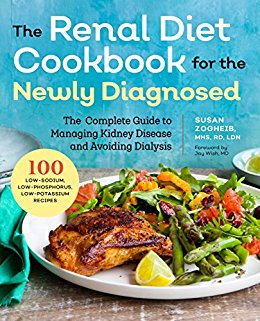
The Renal Diet Cookbook for the Newly Diagnosed: The Complete Guide to Managing Kidney Disease (2017) is not your average cookbook. Author Susan Zogheib is a registered dietician and is considered to be a leader in the field of renal nutrition. Her expertise, experience and client-centred, holistic approach to kidney health makes this book an enjoyable read (her third book on the subject). The book is full of tools, tips, advice and practical help for the newly diagnosed. It is set up in a way so that the advice can be personalized to suit the reader’s situation.

This helpful, empowering book is written for the person newly diagnosed with early stage chronic kidney disease (CKD). Sprinkled into the book is advice about the helpfulness of a “positive attitude”, “supportive people” and “happy activities” as well as exercise and smoking cessation. It is a pleasure to read due to the colourful photographs of healthy food, and the occasional green and orange colour in the titles. The foreword is written by a doctor and the introduction provides an empowering message of taking control of your kidney disease by advocating a “kidney-friendly lifestyle.”

The first of 14 chapters start out with positivity and education about CKD and gives hope that although kidney disease has no cure, it is completely manageable with diet and lifestyle –“kidney disease will allow you to take control of managing it.” Zogheib explains the role that diabetes and high blood pressure has for people with CKD. She uses encouragement, education and her professional expertise which helps the reader trust the information provided.

Zogheib explains information about the “CKD 1-4 Diet”, with the main premise being a careful monitoring of protein, sodium, potassium, phosphorus and in some cases, fluid. This diet, as well as her book’s main purpose is to help slow or avoid CKD progression (avoiding need for dialysis). She often refers to having a doctor and the health care team (including a dietician) review the person’s personal health history as well as encouraging regular checkups and reviews.

Daily Meal Plans, Pantry and Shopping Lists, Worksheets, Tables, Tips, Dos and Don’ts, How To’s, Recipes, Appendices, Resources, References, Indices (2!) make this book very useful and a great reference for those starting out in their quest for successful management of their kidney disease. Zogheib didn’t leave anything out.

Of the 100 Recipes (in chapters 5-13), I found a few that stood out that I’d like to try (and I don’t have kidney disease!). Roasted Broccoli, Asparagus Lemon Soup, Creamy Pesto Pasta and Lemon Garlic Halibut all sound good to me! All the recipes look great and include serving size, preparation time, cook time (no more than 30 minutes), nutrition info, description and tips.

Zogheib notes that people aged 60 and older are at a higher risk for CKD. She also notes high blood pressure (hypertension) is the leading cause of kidney disease – which I know is a very common affliction of many. The book provides unique tips and strategies for anyone who is on a restricted diet (e.g., sodium) or watching their intake. The “Strategies for Dining Out” is a section that everyone should read especially if they like going to the “all-you-can eat buffet.” Any newly diagnosed kidney disease patient or their family members would benefit from this book. Highly recommended.

*I was provided a digital review copy of this book for a fair and honest review.

Angela G. Gentile

purple-swirl-separator-hi

Angela G. Gentile  MSW, RSW is a clinical social worker and author of the book, “Caring for a Husband with Dementia: The Ultimate Survival Guide”, “A Book About Burnout: One Social Worker’s Tale of Survival” and the “Dementia Caregiver Solutions” app for iPhone and iPad. She lives in Winnipeg, Manitoba with her husband and has two adult children. She is creator of the Facebook communities – “Aging Well for Women” as well as “God, Cancer and Me.” For more information, visit: www.AngelaGGentile.com
Sugar, Cancer and the Link

IMG_1399

Cookies from the CancerCare Manitoba treat trolley

There are a few simple pleasures in life that we all take for granted. For example, a sweet treat like a cookie or a piece of pie can make us feel happy due to the sugar high (dopamine) we get when that sweet goodness hits our taste buds. Some people say sugar is much like an addictive drug.

However these sweet treats are not good for some of us. Especially if we indulge. Especially if we have an illness or condition that requires us to restrict the consumption of simple carbohydrates and too much sugar. For example, those who are diabetic are required to reduce the consumption of sweets and simple carbohydrates in order to keep their bodies running optimally.

One area that has caused a lot of debate is the consumption of sugar and how it relates to causing or feeding cancer. Some people believe that a diet including too much sugar causes cancer. Just do a Google search on “sugar feeds cancer” and you will find sensational articles such as this or this which don’t necessarily have all the correct information.  There have been many reliable scientific studies on this subject, and so far there is no conclusive evidence that eating more sugar leads to more cancer. However, according to the Canadian Cancer Society, we do know that being overweight or obese can cause an increased risk for developing cancer.

News agencies are always reporting on this topic, as people are desperately wanting to know how to prevent and treat cancer. CNN reported on “Sugar and cancer: Is there a link?” and it provides an overview of some of the research that has been done on the subject. The bottom line is that Thevelein, the researcher, does not believe that eating more sugar leads to more cancer. He goes on to say that eating a lot of sugar can cause one to become obese, and obesity is linked to a higher risk of cancer.

If anything, Thevelein suggests cancer patients eat less simple sugars and more complex sugars as those found in starch and whole grains. He recommends looking for alternative ways of providing sugar and energy to cancer patients rather than rapidly metabolized simple sugars.

My experience with cancer and sugar

This brings me to my own experience with cancer and my relationship to sugar. When I was diagnosed with anal cancer, my body and perhaps my mind, started to reject simple sugars. I avoided eating sweets, and I think my body was somehow rejecting the simple sugars. Intuitively my body and mind decided what my body needed was protein and complex sugars. I had read or heard over the years that sugar can cause cancer (true or not), so I guess this message was internalized.

I remember I used to love “Fibre One” bars. These are snack bars made with granola and chocolate chips. When I found out I had cancer, I couldn’t enjoy them anymore due to the extreme sweetness that I didn’t notice before. Other sweet treats I used to enjoy like chocolate were off my shopping list (for the time being).

To my surprise, as I was going through cancer treatment (chemotherapy and radiation), the volunteers would come around with cookies and drinks like coffee, tea and juice. It was a nice little treat to have while us cancer patients and sometimes our family or friends were with us. But it made me wonder, why, with all the fear of the link between sugar and cancer, would this be a refreshment of choice? I guess this was NOT an issue with the CancerCare Manitoba dieticians, doctors and other health care professionals. So at that point, I thought it must be okay to eat sweets like cookies during cancer treatment. Maybe everything I’d heard was hogwash.

Cancer risks include obesity and aging

As research progresses regarding the link between simple sugars and cancer, I will be curious to see what recommendations come out from leading cancer treatment centres. Will they still be serving cookies? Is this in the best interests of their patients? Are they encouraging the obesity epidemic, therefore increasing the risks for cancer? Perhaps there is a healthier alternative, such as some naturally sweet options or those made with natural sugars (i.e. fruit or applesauce)? For now, I will cut back on sugary sweets and have them in moderation.

“Getting older” is on the top of most lists regarding who is at risk for developing cancer. The American Cancer Society reports that nearly 9/10 cancers are diagnosed in people aged 50 and older. About half of men will be diagnosed and a third of women will be diagnosed with some form of cancer in their lifetime.

If you have cancer and you are concerned about your diet and how sugar affects your treatment and recovery, I would suggest you talk to a dietician who specializes in oncology. Your medical team can help direct you. If you don’t have cancer and you’d like to reduce your risk, please talk to your healthcare professional.

Be well.

Angela G. Gentile


Additional info:

University of Texas MD Anderson Cancer Centre (top-ranked cancer hospital in the USA in 2016) – Does sugar cause cancer?

Dana-Farber Cancer Institute – Does sugar feed cancer?

Mayo Clinic – Cancer causes: Popular myths about the causes of cancer

Oncology Nutrition – Sugar and Cancer

purple-swirl-separator-hi

Angela G. Gentile  MSW, RSW is a clinical social worker and author of the book, “Caring for a Husband with Dementia: The Ultimate Survival Guide”, “A Book About Burnout: One Social Worker’s Tale of Survival” and the “Dementia Caregiver Solutions” app for iPhone and iPad. She lives in Winnipeg, Manitoba with her husband and has two adult children. She is creator of the Facebook communities – “Aging Well for Women” as well as “God, Cancer and Me.” For more information, visit: www.AngelaGGentile.com


What a Cancer Diagnosis Taught Me About Hope and Faith


ID-100185502

Image courtesy of Evgeni Dinev at FreeDigitalPhotos.net

A cancer diagnosis in April 2017 has jerked my world. Just hearing the words “You have cancer” changed my whole perception of life. There are no other three words I have ever heard that have impacted me so greatly, in a negative way. My initial reaction was all about How do I tell the kids? Then it moved to I am not ready to die. I want to see Simone graduate. I want to grow old. I want to see my grandchildren. I became very sad and scared. I was mourning the loss of my future. I found myself not only turning to loved ones in my life but God.

My gut instinct was telling me to go to church. I saw the priest and he performed an “Anointing of the sick.” I cried as he did this. I also attended a “Spirit Room” where they pray for people’s healing. I went to Sunday mass. I went to Novena. Most times I had loved ones with me. I bought a Catholic prayer book. I wore a rosary bracelet, gifted to me by a dear friend. I prayed to God. I prayed for strength and courage to get me through. I asked the priest how I will get through this. He said, “Let God carry you.”

As I went through tests and learned about my treatment plan (chemotherapy and radiation), I continued to pray. I found myself questioning why this happened to me. I was a good person. I lived a healthy lifestyle. I read a book called, “When Bad Things Happen to Good People.” I read all kinds of books and articles on the internet. Articles written by people of faith. People who had cancer. I tried to understand why this happens in God’s world.

I started to question natural disasters. The year of 2017 has been the most tragic I can ever remember in terms of hurricanes, wildfires, earthquakes and mass shootings. I questioned why God would allow this to happen. Many people pray for those who are suffering, grieving, ill and forlorn. We pray to God who we expect to make things better.

I have learned throughout my cancer treatment for anal cancer (which was torturous) that God has a plan. He has given us human will. He has not taken this away from us. There are tragic events that will happen due to malicious human will whether it be from mental illness or a criminal mind. As examples, the mass shootings or terrorist massacres are a direct result of human will. In addition, tragic events happen due to human error. God does not “will” these things to happen. But He gives us the strength and courage to come together to aid and comfort one another. He gives us the capacity to love and support one another.

When God creates such a magnificent world in which we live, we have to learn how to live with the natural events that occur. Severe weather patterns, the earth’s shifts, and other disasters such as widespread fires happen which I believe is beyond God’s control. We take the beauty of a rainbow, or a sunset, or in the tiny petals of a flower as signs of God’s creation and love for us. We seek God’s good as He is an all-powerful, loving God.

When illness or suffering strikes, I witness many people praying for God’s healing powers. There are faiths based on the Bible that believe God can heal. In the Bible it says Jesus healed those who were ill.

I believe that God gives the healers in our lives the ability to learn and use their God-given talents to help when one is sick. For example, when I went through radiation, I believe it was God working through the doctor who determined where to aim the destructive beams of radiation. I trust that the specialist did her best and that God helped guide her. I also believe that God was working with all the support staff, such as the radiation therapists, who ensured the proper administration of my treatment. This is an example of my faith.

The way my body responds to the treatment is all part of the bigger plan set out by God. I believe the plan is already designed. Praying for “health and healing” won’t matter because the determination of my fate has already be set. Instead, I HOPE for these things but accept what is meant to be. This belief helps me cope with the unknown. I focus on my day-to-day life and avoid thinking about my unknown future. I think about that infamous line in the Lord’s Prayer, “Thy will be done”, and find comfort knowing that my future is in God’s hands.

God helped me through my darkest, most traumatic times during my treatment. I pray for strength, courage, and patience. At times I called out for God to help me. The pain was so severe that one time I asked Jesus to help and I actually saw him standing by my side in his white robe. This was very comforting in the most painful time of my life.

When people pray for God to heal someone or themselves, some will be disappointed. Some people will not be healed, and they will succumb to their ailments. So if someone does not make it, does that mean God did not answer his or her prayers? Does it mean they did not pray hard enough? Maybe their faith wasn’t strong enough? This is where it gets difficult to keep the faith. It may leave people wondering why God did not answer their prayers.

I think the better way to go about praying for healing is to pray that the person has the courage, strength, and patience to get through whatever is happening and they don’t have to suffer too long. If it is God’s will that they suffer, we must remember that the reason for suffering may have an answer, or it may not. A priest I talked to even said sometimes we don’t know why some things happen. It’s a test of our faith, to know that God has a plan, and we need to accept it.

Encouraging people with cancer to “fight the fight” can also create the same kind of outcomes. If they did not “fight” hard enough – if they decide to “give up the fight” – does that mean they were bad or weak? We want to believe we have control over our health and our outcomes. We only have so much control. The rest is in God’s hands.

Hoping for a speedy recovery, hoping for the end of suffering, hoping for a positive outcome is what we all wish for. No one wants to see suffering. No one wants to lose a loved one. But if it is God’s plan that the outcome is other than what we hoped for, we need to accept it. How many times have we heard, “Now she won’t be suffering anymore.” “His pain is gone.”

Faith and hope are two concepts which are very closely related. I now understand the difference. Faith in an all-knowing, all-powerful God with a master plan helps me cope with my circumstances and what is happening to others who are facing adversity. He knows best. We can learn from these adversities. It usually helps us become more compassionate, and loving if we look for the positive in these situations. I actually admitted that having cancer and going through treatment was a gift. It has helped me become more understanding and compassionate towards those suffering or diagnosed with a life-threatening illness. I understand what “torture” is. I understand what depression feels like.

Hope is what we need to keep us going. Hope helps us sort out what is important to us and what we want and need in life. Hope is the belief in positive outcomes. It helps us cope and cling on to what we value and love. Hope is a way to show others that we care.

My faith is strong and will continue to be strong throughout my healing journey. I put my trust in God and will accept whatever His plan is for me. I will continue to hope for the end of suffering and many more years of health and happiness. I hope that I can see my daughter graduate from university, start a career (like my son Lorenzo has) and see my children get married and have children of their own. I hope that I can grow old with my husband, Agapito. God-willing.

Peace, love and hugs,

Angela G. Gentile


purple-swirl-separator-hi

Angela G. Gentile  MSW, RSW is a clinical social worker and author of the book, “Caring for a Husband with Dementia: The Ultimate Survival Guide”, “A Book About Burnout: One Social Worker’s Tale of Survival” and the “Dementia Caregiver Solutions” app for iPhone and iPad. She lives in Winnipeg, Manitoba with her husband and has two adult children. She is passionate about all things related to Aging Well. For more information, visit: www.AngelaGGentile.com


SaveSave

Finding a Cure for Sleepless Nights is Not An Easy Task – Tips for Better Sleep

image-courtesy-of-theerapong82-at-freedigitalphotos-net

Image courtesy of theerapong82 @ FreeDigitalPhotos.net

I believe one of the most important foundations of a healthy and happy life is adequate and regular sleep. Our day starts the moment we wake up. Waking up from a night of good quality slumber is very different from starting our day after a night of restless, interrupted insufficient sleep.

Finding a way to help you with sleeplessness can get frustrating. There is so much information out there. Forget about counting sheep, research indicates it may, in fact, take you longer to fall asleep!

I asked some of my Facebook friends to give me some ideas on natural sleep aids, and they were very eager to share their tips with me. I’ll include them here as well.

Ages and Stages of Life

Everyone has different sleep habits and routines. It depends on your lifestyle, life stage, personality, and overall physical and mental health. For example, a busy and socially active teenaged university student may have many late nights going out with friends or studying, causing her to need to sleep in later in the day. Another example is a middle-aged full-time employee who works Monday-Friday, 9:00 am – 5:00 pm. The sleep habits of this mature person are most likely very different from the younger student. An anxious person may also have problems falling asleep.

Ages and stages cause us to have changing sleep needs during our lifetime. When we are very young, as babies, we need a lot more sleep than when we are adults. Older adults need about 7-8 hours of sleep a night.

Problems occur when we have trouble getting the required sleep to “recharge” our batteries. The occasional restless night usually isn’t that much of a concern. We can usually catch up the next night. Chronic, long-term issues with either falling asleep or staying asleep can cause other problems in our lives. Sleep deprivation can cause us to be disorientated, agitated or less able to handle the stressors in our lives. Insomnia is often a serious health condition that requires intervention. Research tells us that women over the age of 60 are at higher risk of having insomnia.

For those of us women who are menopausal, we have other issues to contend with such as hot flashes and night sweats. Hormone changes can cause sleep disturbances, and a visit to a health care professional is highly recommended.

Caregivers of people with dementia often have trouble getting enough rest. As do new parents, especially mothers.

Sleep Hygiene, Sleep Aids and Other Tips

The basics for a good night’s rest include a comfy bed/mattress, the perfect pillow/s, sheets and blankets that provide just the right amount of warmth. If you don’t have these basics, you will need to get those things sorted out. If you have a bed partner, make sure they don’t take up too much room, snore too loud or steal your covers! (Some people have sleep apnea and this is a serious condition that requires a medical assessment).

There are many articles and books written on how to get a good night’s sleep by implementing some lifestyle changes and habits. The term commonly used is “sleep hygiene.” Some ideas to try include:

  • Avoid caffeinated beverages such as colas, coffee, and tea too close to bedtime
  • Participate in some kind of physical activity during the day but not too close to bedtime
  • Get some sunlight and/or fresh air on a daily basis
  • Don’t eat a heavy meal right before going to bed
  • Keep your room cool, dark and quiet
  • Manage stress to help keep a relaxed mind
  • Meditate, pray, breathe deeply, practice yoga or listen to music before bed
  • Avoid blue light found on cell phones, tablets and computers at least one hour before sleep
  • Avoid long naps during the day

If you can’t sleep – Instead of lying in bed awake,

get up and do something else before returning to bed.

For those who are looking for a “sleep aid,” these can come in many forms. A medicated sleep aid can be prescribed by a doctor or other healthcare professional. Home remedies can be tried. Products found in nature can also be tried, such as herbs and essential oils. Tools such as sound machines or white noise can work, too. Some ideas to try include:

  • “Sound Machine” with white noise or nature sounds
  • Apps for your smartphone or tablet such as “White Noise”
  • Turn on a bathroom fan to drown out other noises if it’s close to your bedroom
  • Essential oils such as lavender (Lavandula angustifolia) – in a diffuser, rubbed on your feet (put socks on after if the oil is in a carrier oil or lotion!), sprayed on your sheets or on a cotton ball by your head
  • Herbal tea to take before bed such as Sleep and Relax Tea or Nighty Night with ingredients such as chamomile, passionflower and/or valerian root
  • Supplements such as “Super Sleep” also known as Melatonin Plus from Webber Naturals or those that contain melatonin, 5-HTP and/or L-theanine; or Healthy Sleep supplement by Jamieson that contains melatonin, skullcap, Rhodiola, rosavin chamomile and L-theanine (be aware melatonin can cause depressive symptoms in some people)
  • Herbs such as ashwagandha are also helpful for some people
  • Amino acid such as gamma-aminobutyric acid (GABA) can help you feel calmer
  • Magnesium can help people relax
  • Vitamin B3 (Niacinamide) has been known to help in some cases (ask your healthcare practitioner about this)
  • Gentle massage with an aromatic essential oil such as peppermint or lavender
  • Try some yoga poses before bed
  • Bath with Epsom salts
  • 30 minutes before bedtime, use passive heat then cool off. A shower, bath, hot water bottle or wheat bag may work for some for as the body cools, it naturally releases melatonin (a naturally-occurring hormone related to the sleep-wake cycle)
  • A glass of milk

Other ideas to help you feel calm and relaxed include:

  • Get an easy-to-do crossword puzzle book or do some light reading right before bed
  • Write in a journal, include things you are grateful for
  • Avoid the news, especially if it upsets you
  • Try eating some kiwi before bed

Techniques to help you fall asleep, especially for those whose thoughts keep them awake:

  • Counting backwards from 100 combined with deep breathing can relax your mind and body. While lying in bed in a comfortable position, with your eyes closed, say the number 100 in your mind. Then take a deep breath in through your nose, hold it for 1-2 seconds, then slowly exhale through your mouth (or nose). Pause. Imagine the next number which would be 99. Repeat the breath in and breath out. Continue counting down and deep breathing. Concentrate on your breath and remembering which number you are on. If your mind wanders, go back to the last number you remembered. Number – breath in – pause – breath out – pause. Repeat until asleep!
  • Word games can also help you relax. While lying in bed in a comfortable position, with your eyes closed,  pick a letter in the alphabet. For example, start with A. In your mind, start thinking of 5-7 (or more) words that start with A. “Angela, Asia, apple, achieve, angst, approve…” Then when you are done with that letter,  go on to the next. “B – Baby, boy, balloon, bubble, Bill, Boston, brush…” Continue going through the alphabet. If your mind wanders, go back to the same letter you were on or move on to the next. You can start at any letter in the alphabet.

Medicated sleep aids to be used with caution include:

  • Zopiclone (by prescription, not to be taken long-term)
  • Gravol for nausea (contains dimenhydrinate which is an antihistamine and anticholinergic and can cause drowsiness)
  • Vick’s NyQuil Complete Cold & Flu liquid (contains doxylamine succinate, an antihistamine which can cause make people feel drowsy, relaxed, and help them fall asleep and can cause dependence)
  • Benadryl for colds (contains diphenhydramine HCl, an antihistamine which can make you feel drowsy)

You can also try finding a therapist to help you with CBTi – Cognitive Behaviour Therapy to treat insomnia. It is considered the first-line treatment for insomnia and is safer and more effective than sleeping pills. You can even try doing it on your own.

Caution: Older adults are advised to avoid medicated sleep aids as mentioned above as they can increase the risk of confusion, falls and car accidents.

Some not-so-common ideas to consider:

I would recommend a trial-and-error approach to find what works for you. What worked for you when you were younger may no longer work for you now. Ages and stages create different stressors and needs.

When you find something that works, use it for only 3-4 nights in a row and alternate with other methods. Your body will get used to it and you will benefit from switching it up.

And remember, never go to bed angry.

If All Else Fails

I saw this on Facebook so it must be true (insert a laugh here):

Did you know?

Convincing yourself you slept well

tricks your brain into thinking it did.

Please share your tips on how to get a good night’s sleep.

Sleep well, my friend. Sweet dreams.

Angela G. Gentile, MSW, RSW

For more information on insomnia, check out this Mayo Clinic article.

purple-swirl-separator-hi

Angela G. Gentile  MSW, RSW is a clinical social worker and author of the book, “Caring for a Husband with Dementia: The Ultimate Survival Guide”, “A Book About Burnout: One Social Worker’s Tale of Survival” , “Cancer Up the Wazoo”, and the “Dementia Caregiver Solutions” app for iPhone and iPad. She lives in Winnipeg, Manitoba with her husband and has two adult children. She is passionate about all things related to Aging Well. For more information, visit: www.AngelaGGentile.com

Save

SaveSave

SaveSave

Aging Specialist Offering Two New Courses This Spring (Winnipeg)

7fd3c75caf166af80aef7cb58709152dWinnipeg, Manitoba – There are two new courses being offered by Angela Gentile, a registered clinical social worker. Angela has a Master’s degree in Social Work and a graduate specialization in aging. She has worked with many older adults and their families and she has written two books and an app. She is passionate about helping people and exploring what it means to age well. Attend these informative and interactive sessions and get Angela’s professional advice. Come away feeling confident and empowered.

10 Tips for Graceful Aging

Learn what you can do to help yourself thrive in your middle years and beyond. The dimensions of wellness will also be covered.

►Date and Time: Tuesday April 25, 2017; 7:00 – 9:00 pm.

►Location: St. James Civic Centre, 2055 Ness Avenue, Winnipeg Manitoba.

►Fee: $25.00

When a Loved One Has Memory Loss

Are you living with or do you know someone who has been experiencing memory loss and you’re not sure how to help? Get some information and tips on how to approach this sensitive and difficult topic.

►Date and Time: Thursday May 11, 2017;  7:00 – 9:00 pm.

►Location: St. James Civic Centre, 2055 Ness Avenue, Winnipeg Manitoba.

►Fee: $25.00

Registration Information:

Both courses are listed in the City of Winnipeg Leisure Guide, Spring/Summer 2017 pages 69 and 70. See page 4 of the guide for registration information which begins Wednesday March 15, 2017 at 8:00 am. It can be done online, by phone, or in-person. Limited spots available!

Contact Angela toll-free at: 1-(855) 974-4219 or online at www.AngelaGGentile.com for more information.

Learn About Burnout at the Transform Conference

transform-ad-1

From Burned Out to Fired Up!

Angela G. Gentile MSW, RSW

I am honoured to be one of six guest speakers at the Transform Conference to be held on February 21, 2017 in Winnipeg, Manitoba. I will be presenting on my knowledge and experience with job burnout and compassion fatigue. In addition to discussing the issues of the costs of caring too much, I will share my personal story of burnout. I will offer advice, tips and solutions to nurses, social workers, healthcare professionals, students and other helping professionals on how to recognize, cope and survive in the demanding yet rewarding field of healthcare.

What better way to learn. Be inspired. Some consider it a gift from a wounded healer.

You may also want to read my eBook, “A Book About Burnout: One Social Worker’s Tale of Survival“. Paper copies will be available at the conference.

For more information on Transform, the conference, please visit Sycamore Care.

www.AngelaGGentile.com


This Self-Help Book for Caregivers Educates, Supports and Comforts

THUMBNAIL_IMAGE

When I titled my book “Caring for a Husband with Dementia: The Ultimate Survival Guide” (2015) I did not expect to have people mistakenly assume that I am a wife caring for a husband with dementia. The warmth and sympathy I receive from people who don’t know me personally has been incredible. I gently explain that I am not a wife caregiver and that the book is inspired by the experience I had in counseling eight amazing caregiving women.

When I was deciding on a topic for my master’s degree final project, I decided to focus on older women. I explored what issues are affecting them, and the subject of caregiving came up quite often. I did some research on the subject and discovered that there was very little written about women who care for husbands with Alzheimer’s or a related dementia. My career as a geriatric clinician and social worker exposes me to many different mental health issues, and dementia is unfortunately a common one. I quickly became an expert in assessing and screening for dementia, and recognizing the symptoms of caregiver stress and burnout.

The short-term, individual counseling program I designed, implemented and evaluated with eight caregiving wives was very rewarding and successful. It inspired me to want to help others like the women I had learned so much from. What started out as a small booklet turned into a 16-chapter book. “Caring for a Husband with Dementia” was written specifically to help women who care for husbands who have been diagnosed with a dementing illness such as vascular dementia or Alzheimer’s disease. I dedicated this book to caregiving wives, everywhere.

Writing this book came surprisingly easy to me. I called it a “Divine Intervention.” I received help from colleagues and other experts in the field who generously donated their time reviewing, editing and offering feedback. It is a unique, informative and therapeutic self-help type of book. The book offers opportunity to make it personal for the reader. There is space for self-reflection on important questions. Don’t know what to “Google” to find your local resources? I’ll help with that, too. There is a listing of helpful and important resources, plus more.

All of the reviews and feedback I have received thus far has been very positive. Some of the more helpful feedback has been that this book is written not only for wives, but for all caregivers. I have been told this book is like a bible and it is kept at the bedside and is read every night. It’s a reference guide, a companion, and a source of education and support. It’s like a year’s worth of therapy all in one book.

I know this book has helped spouses and other caregivers. They have told me, “Everything I was thinking, feeling and wondering about was written in this book.” I am honoured to be able to help those who are struggling with the issues of diagnosis, getting help, difficult behaviours, grief and loss, legal issues and more. I have been at book signing events where even men say they want their wives to buy this book as they want them to be prepared – “…just in case.”

My hope is that this book reaches those who are in need of education, support and tips on how to survive the difficult task of caring for a loved one with dementia. It is also a great gift for someone in need.

Angela G. Gentile, MSW, RSW

Link to original article on #AlzAuthors, published 23 Nov 2016.


purple-swirl-separator-hi


Angela G. Gentile  MSW, RSW. is a clinical social worker and author of the book, “Caring for a Husband with Dementia: The Ultimate Survival Guide”, “A Book About Burnout: One Social Worker’s Tale of Survival” and the “Dementia Caregiver Solutions” app for iPhone and iPad. She lives in Winnipeg, Manitoba with her husband and two adult children. She is passionate about all things related to Aging Well. For more information, visit: www.AngelaGGentile.com