Caring for Parents with Memory Issues (Video; 28 minutes)


Where does one begin when memory problems become an issue with an aging parent?

Issues such as getting a diagnosis, terminology (What is the difference between Alzheimer’s and dementia?), resources (Book: Caring for a Husband with Dementia; App: Dementia Caregiver Solutions for iOS; Alzheimer Society), sundowning, and managing difficult behaviours are all discussed in this half-hour video.

Check out my video interview with Nancy Baker from Healing Healthy with Nancy called “Caring for Parents with Memory Issues.”


Angela G. Gentile, MSW, RSW


Keywords: Dementia, Alzheimer’s, Book, App, Essential Oils

The Mighty Ant: An Anthology of Short Stories for Seniors

41KbQpD0l5L._SX326_BO1,204,203,200_

I am a contributor to a collection of short stories, called The Mighty Ant, edited by Jessica Bryan. This collection will delight anyone who enjoys reading or being read to.

My two stories include “You are Never Too Old” and “For the Love of Flowers.” These are my first attempts at short-story writing.

Here’s me reading my short story called “For the Love of Flowers.”

The book is in large print and is a fundraiser for the North Carolina Chatham County Council on Aging.

Get your own copy and enjoy reading and sharing with others! The stories are also great conversation starters!

Happy reading!

Angela G. Gentile


purple-swirl-separator-hi

_DSC6188 4 x 6


Angela G. Gentile, B.S.W., M.S.W., is a registered social worker and is employed as a Geriatric Mental Health Clinician in Winnipeg, Manitoba. She is married to Agapito and has two adult children, Lorenzo and Simone. Angela enjoys writing, reading, and travelling and considers herself a realistic optimist. For more info: www.AngelaGGentile.com

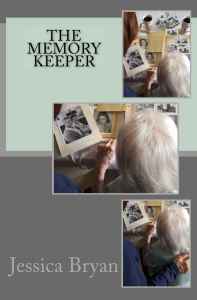
“The Memory Keeper” Will Touch Your Heart and Tickle Your Funny Bone – Book Review

692172687

Five Stars *****

JESSICA BRYAN’S SWEET AND HUMOROUS ACCOUNTS of life with her 99-year-old mother who has Alzheimer’s disease will touch your heart and tickle your funny bone. Jessica states there is never a dull moment in the Bryan household, and you will be entertained as she writes about her experiences in an easy-to-read, conversational tone. Jessica believes “When things get too heavy, you just have to lighten the mood.”

Although it is heart-wrenching when she writes about her mother “disappearing moment by moment, memory by memory,” her stories will encourage you—knowing that caring for a loved one who has Alzheimer’s has its rewards and there is humour to be found in any situation. The photos sprinkled throughout add a beautiful, personal touch. Anyone who values the importance of love and caring for one another in difficult times (especially caregivers and family members) will enjoy reading “The Memory Keeper” (2018).

Available in Kindle and paperback on Amazon.

Angela G. Gentile

purple-swirl-separator-hi

Angela G. Gentile  MSW, RSW is a clinical social worker and author of the book, “Caring for a Husband with Dementia: The Ultimate Survival Guide,” “A Book About Burnout: One Social Worker’s Tale of Survival,” “How to Edit an Anthology: Write or Compile a Collection that Sells,” and the “Dementia Caregiver Solutions” app for iPhone and iPad. She lives in Winnipeg, Manitoba with her husband and has two adult children. For more information, visit: www.AngelaGGentile.com

This Self-Help Book for Caregivers Educates, Supports and Comforts

THUMBNAIL_IMAGE

When I titled my book “Caring for a Husband with Dementia: The Ultimate Survival Guide” (2015) I did not expect to have people mistakenly assume that I am a wife caring for a husband with dementia. The warmth and sympathy I receive from people who don’t know me personally has been incredible. I gently explain that I am not a wife caregiver and that the book is inspired by the experience I had in counseling eight amazing caregiving women.

When I was deciding on a topic for my master’s degree final project, I decided to focus on older women. I explored what issues are affecting them, and the subject of caregiving came up quite often. I did some research on the subject and discovered that there was very little written about women who care for husbands with Alzheimer’s or a related dementia. My career as a geriatric clinician and social worker exposes me to many different mental health issues, and dementia is unfortunately a common one. I quickly became an expert in assessing and screening for dementia, and recognizing the symptoms of caregiver stress and burnout.

The short-term, individual counseling program I designed, implemented and evaluated with eight caregiving wives was very rewarding and successful. It inspired me to want to help others like the women I had learned so much from. What started out as a small booklet turned into a 16-chapter book. “Caring for a Husband with Dementia” was written specifically to help women who care for husbands who have been diagnosed with a dementing illness such as vascular dementia or Alzheimer’s disease. I dedicated this book to caregiving wives, everywhere.

Writing this book came surprisingly easy to me. I called it a “Divine Intervention.” I received help from colleagues and other experts in the field who generously donated their time reviewing, editing and offering feedback. It is a unique, informative and therapeutic self-help type of book. The book offers opportunity to make it personal for the reader. There is space for self-reflection on important questions. Don’t know what to “Google” to find your local resources? I’ll help with that, too. There is a listing of helpful and important resources, plus more.

All of the reviews and feedback I have received thus far has been very positive. Some of the more helpful feedback has been that this book is written not only for wives, but for all caregivers. I have been told this book is like a bible and it is kept at the bedside and is read every night. It’s a reference guide, a companion, and a source of education and support. It’s like a year’s worth of therapy all in one book.

I know this book has helped spouses and other caregivers. They have told me, “Everything I was thinking, feeling and wondering about was written in this book.” I am honoured to be able to help those who are struggling with the issues of diagnosis, getting help, difficult behaviours, grief and loss, legal issues and more. I have been at book signing events where even men say they want their wives to buy this book as they want them to be prepared – “…just in case.”

My hope is that this book reaches those who are in need of education, support and tips on how to survive the difficult task of caring for a loved one with dementia. It is also a great gift for someone in need.

Angela G. Gentile, MSW, RSW

Link to original article on #AlzAuthors, published 23 Nov 2016.


purple-swirl-separator-hi


Angela G. Gentile  MSW, RSW. is a clinical social worker and author of the book, “Caring for a Husband with Dementia: The Ultimate Survival Guide”, “A Book About Burnout: One Social Worker’s Tale of Survival” and the “Dementia Caregiver Solutions” app for iPhone and iPad. She lives in Winnipeg, Manitoba with her husband and two adult children. She is passionate about all things related to Aging Well. For more information, visit: www.AngelaGGentile.com

Myths or Truths? A Guide to Achieving Retirement Community Gold Standard

id-100378628-1

Image courtesy of pixatawan at FreeDigitalPhotos.net

(This article was written in collaboration with guest Alan S. Wolkenstein, MSW, ACSW)

As an administrator or manager of a retirement community, you likely hold specific beliefs and understandings of the residents (or tenants) and the workings of the facility. These understandings may be ones that you have learned from others, or perhaps you have come to believe based on your own experiences. Sometimes beliefs about your retirement community can hinder growth and success due to the fact that they are myths (widely held false beliefs).

Myths can hold us back from achieving our full potential for success. While myths exist to help us explain and make sense of our experiences, they can be, and often are not helpful in that they simply are not true. Sometimes these traditional stories are widely held but are not based on facts. Taking our head out of the sand and taking a close look at reality can help us move forward.

Do You Hold Any Myths About Your Retirement Community?

It is important to identify if there are any myths you hold about your retirement community and those you serve. By asking yourself if there is truth or if it is simply myth to each of the following thirteen statements will place you in a more favorable position to exert constructive political, cultural or systems energy. By answering these statements honestly, you will be able to identify them as either truths or myths.

If you happen to recognize some of these statements as myths, you may come to realize that these untruths can inhibit the functioning of your retirement community in meeting the best needs of the residents (and families), staff and institution (bottom-line). The acknowledgement and examination of these falsely held beliefs can challenge you to take on the potentially arduous task of transforming them into truths.

There is a potential for great change in the overall success of your retirement community by focusing on challenging or debunking any myths and doing something about it. Myths are generally difficult to disbelieve due to your strong emotional attachments to them. For example, you may find it a bit troubling to realize your residents may or may not be provided all the services that are essential, available or needed.

Myths or Truths?                                            

While we have developed thirteen statements, we believe there will not be less. There may be some that have not been included that can be exchanged or added for conversation and potential action. They are not mutually exclusive, but designed in a way to encourage thoughtful reflection by individuals and for discussion within the staff or team at your retirement community.

Consider these thirteen statements and decide if these statements are myths or truths when it comes to your retirement community:

  1. Our residents are a priority, and our retirement community has all the amenities, staff and services the residents need for enhancing their quality of life.
  1. We understand that older adults who have chosen to come to our retirement community may or may not have completed and successfully coped with their Family Life Cycle¹ tasks (such as launching adult children, retirement, widowhood, accepting bodily changes and dealing with the realities of their living arrangements), eliminated their intra-familial conflicts and made all important amends. They may or may not be emotionally and psychologically prepared to handle potential losses, grief experiences and transformation.
  1. Our retirement community adopts a holistic approach to care and has fully trained and specialized staff to identify, assess, treat and monitor the physical, emotional, psychological, cultural and spiritual needs of our residents. Administrative personnel and managers are up-to-date on the resources available and continuously strive for improvements in this area.
  1. Residents are properly screened and/or assessed by qualified personnel for anxiety, depression, mood and thought disorders and mental status (including Alzheimer’s disease and related dementias). If these services are not available in-house, staff are trained to identify issues. Residents and/or family advocates are encouraged to seek out advice from an appropriate health care or mental health professional.
  1. There is an active involvement with families and social/cultural communities of residents for continuity of attitudes, values and belief systems. In addition, all elders need connections with their significant others and our retirement community fosters and encourages these relationships.
  1. Administrators, managers and select staff are encouraged and trained to provide continuing adult education programming and support within our community to individuals and families in troubled elder-parent and adult-children relationships.
  1. Our retirement community welcomes and embraces the roles of residents’ advocates and an ombudsman in the holistic and total care concept of our residents.
  1. Our retirement community has sufficient and ongoing staff training opportunities, supervision and evaluation of all appropriate staff.
  1. If present, frequent staff turnover is vigorously addressed. We believe a disjointed or fragmented system can lead to a less than viable milieu for residents and staff morale. We strive for continuity and consistency. Satisfied staff leads to satisfied residents.
  1. Administrative personnel have a clear understanding of and methodology to deal effectively with staff burnout or impairments (permanent or temporary).
  1. Our retirement community has a Human Resource Department that is staffed with (or has access to) professional mental health personnel: those who can identify, assess, and refer for proper treatment (or other actions) staff who are troubled, deficient, show signs of burnout and impairment, and those in violation of local, state, federal and institutional laws and guidelines.
  1. Our retirement community understands and encourages interagency cooperation within our communities.
  1. Our retirement community interacts with educational and academic resources to foster community public awareness and psychosocial services for older adults within our community. This includes placement, internships and fieldwork for learners in the field of geriatrics and mental health services. All such learners are supervised and guided by specialists in eldercare from appropriate professions within the institution.

While self-imposed institutional denial that services are not lacking and provided, or rationalizing that if they were needed, they would be adequately provided, ultimately such institutional defenses are insufficient and hinder best care and utilization of accumulated knowledge and skills in residential care for older adults.

No retirement community consciously chooses to deny services to their residents and staff, but may be acting only from a strong and important fiscal basis. However, this is insufficient. Boards and administrators may be very good at their roles, but not sufficiently trained to assess the holistic need of their residents and staff. They may ultimately fear resources are not sufficient to turn any of the myths into real-time community truths.

If we believe we are functioning from a more enlightened perspective than the one that a retirement community is meeting all these beliefs as truths when they are not, then conceptual shifts are in order.

Your Score and What To Do About It

If you answered “Myth” to any of the above statements, then an action plan for remediation and change may be essential.

This action plan may include:

  • an examination of policy and procedures
  • reassessment of priorities
  • modification of scarce resources
  • finding and securing new funding to change some specific myths to truths
  • a review of long-range goals and objectives

Achieving Gold Standard

We have painfully learned that if a system remains profit and profit margin motivated and not sufficiently focused on customer/family/consumer needs and satisfaction, it will not survive in these difficult and challenging times. There will be intra-system anxiety when confronted with the two, apparently opposite, goals. Anxiety can be a powerful force in creating a milieu that fosters change, enlightenment and growth. If guided and properly mentored, anxiety can help individuals achieve their full potential. We believe this is also true for retirement communities.

It is a truth that a society is best measured by how it cares for its very young and very old. Let your retirement community be the gold standard of care for its residents and their families. Maybe now is the time to secure and support consultation to reach new visions for your retirement community.

Alan S. Wolkenstein, MSW, ACSW
Clinical Professor of Family Medicine (Ret.)
University of Wisconsin School of Medicine and Public Health
Wolkenstein and Associates, LLC
Mequon, Wisconsin, 53092
Alan.Wolkenstein@gmail.com

Angela G. Gentile, MSW, RSW
Specialist in Aging

¹ Wolkenstein, A. S., Lawrence, S. L., & Butler, D. J. (1985). Teaching “family”: The Family Medicine Chart Review. Family Systems Medicine, 3(2), 171-178.

purple-swirl-separator-hi

Angela G. Gentile  MSW, RSW. is a clinical social worker and author of the book, “Caring for a Husband with Dementia: The Ultimate Survival Guide”, “A Book About Burnout: One Social Worker’s Tale of Survival” and the “Dementia Caregiver Solutions” app for iPhone and iPad. She lives in Winnipeg, Manitoba with her husband and two adult children. She is passionate about all things related to Aging Well. For more information, visit: www.AngelaGGentile.com


Twelve Areas to Consider When Thinking About a Retirement Community with Lifelong Services

id-100468984

Image courtesy of powerbee-photo at FreeDigitalPhotos.net

(This article has been written with guest blogger, Alan Wolkenstein MSW, ACSW)

As family members age, there may come a time when an older person’s needs can no longer be met in his/her current home. It may be unsafe, there may be too many worries, or it may be stressful for all involved. For example, if Mom and Dad lived in their moderate-sized bungalow for the past 40 years, things may change dramatically when one of them passes away. Maybe Mom is now left in this house on her own, and she is overwhelmed with all there is to do. Even with family support, and the supports from other agencies and programs, Mom is still not being cared for the same way she was when dad lived with her. Although Mom does not want to move from the home she has known for so many years, sometimes a move to a more supportive environment is needed. Having this discussion can be difficult.

There are many issues that can arise with respect to an aging family member and housing needs. Illness, finances, mobility, socialization, recreation and access to services are some of the issues that may have to be considered. How does one make the right choice? Should the older family member stay in the house longer, or move to an appropriate “elderly persons housing”? Maybe he/she should move to a retirement community, or a place that also has lifelong service options. Should the person move to a 24-hour care facility like a nursing home? A good quality of life is usually the overall goal.

Conversations About Moving Can Be Difficult

Conversations about relocation may become uncomfortable and anxiety-provoking because they usually consist of making major changes in where one lives, relationships and even in family dynamics. The older person him/herself or other family members may be thinking about these issues, but the conversations may be avoided in order to prevent upset or problems in the relationship. We already know that everyone seems to have a slightly different opinion on the subject.

For those directly involved, the stakes are very high, and previous attempts to have such conversations may have not turned out very well. People can feel unsure of themselves and the older adult may experience that their own wishes may be disregarded by their children who push for changes to ensure a more safe and healthy environment. Relocation usually involves downsizing, a major disruption, adjustment issues, loss, and a change in daily routines. Ultimately, it should also come with benefits that outweigh the negatives.

This may be the first time adult children have seen their parent(s) unsure of themselves, possibly afraid of the future, and even angry or refusing to participate in these talks. It seems that no matter what is decided, many feelings may be hurt and someone will feel disregarded and not appreciated for their wishes.

Conversations About Moving Can Be Welcomed

However, in many situations, the family discussions around this topic go well. For example, an older adult may want to move on. In this case, the family can come together with a unified plan that seems positive and helpful to the whole family. Then the issues become where to look, how to assess, and when to choose a place.

Making Decisions Regarding Housing Needs Can Be Confusing and Complex

For others navigating the housing dilemma, the situation is confusing and complex, and there seems to be no way to satisfy all. In the end, no one feels or experiences satisfaction. If an older person moves into a retirement community following this scenario, the likelihood of a successful adjustment is deeply compromised.

Many situations regarding decision-making related to relocating an older family member require and benefit from professional intervention. Professional assistance could come in the form of:

  • helping the older person and his/her family members choose a suitable place
  • mentor and support the family so they can choose for themselves
  • help them sort through the levels of conflict

12 Areas to Consider When Choosing Seniors’ Housing

The following are a number of questions to be used as a working outline in maneuvering through these scenarios. Each requires input and shared conversation with a guide or mentor to monitor and direct the conversations and the powerful emotions they generate. In order to get answers to these question, you (the person seeking housing and/or the person’s advocate) will have to make arrangements for tours and meetings with key people. A trusted professional or seniors’ organization can help you get a list of possible options to choose from. Keep a log of the answers so when decision time comes, you will have some notes to look back on. The questions are not listed in any rank order of importance, but as they come to our mind as we have worked with older adults and families during these potentially troubling and stressful times. As always, take with you what seems most helpful to your unique situation. Note: These questions are written for the person who will be moving. Sometimes a trusted family member or advocate (someone who knows the older person very well) can assist through this process.

1. Costs and how they will be paid for. Remember that the highest cost establishments may not be the most rewarding one. Many have entrance fees that may or may not be refundable in some degree if you leave or pass on. All require fees for their services. Ask if there are any move-in incentives. What is included in the costs (i.e., meals, housekeeping, recreation, etc.). Do they have a free or low-cost “trial stay” option? In the United States, some may take Medicare. In Canada, some of the facilities may be government subsidized. Get the facts down right. Higher cost is not always an indicator of better service and dedication to you. You may also want facts about the establishment’s financial health to guarantee their viability.

2. Location, location, location. How far is it from your family and friends? How close or far are familiar places such as services, restaurants, theatre, clubs, church or synagogue? Are there plans to establish all these in the retirement community once there, or will your time be split? Remember that connection with important people in your life is a definite component of good quality of life.

3. Values and commitment. Ask the management or representative at the establishment about values and commitment to each person. Get this from the people you talk with, not the brochures they send out. While it is good to talk to folks who are available to talk and share their experiences there, they will probably have you speak with the most satisfied members.. Ask for a list of complaints they have received and dealt with. Seek a place that shares your values about what is important in your life and maintaining a high quality of life: continuity here is also important to your quality of life. Ask what procedures are in place to ensure they uphold their commitment to these core values. Ask how these core values are implemented and evaluated. Are they open to improvements? Is there a “Comment Card” system where the residents/tenants can forward their comments and concerns anonymously? Alternatively, what avenues are in place to motivate, celebrate and encourage outstanding service and achievements by staff?

4. Religious affiliation is only part of the equation. Try not to select by religion alone. You may find the system falls far short of meeting your overall needs. While many families share they receive much comfort if the community is of their religion, this does not guarantee a successful placement.

5. Processes in place to ensure a warm welcome and adjustment. What processes are in place to help you or your loved one transition into their system and become part of their “community”? Who is the “go-to” person if there are questions?

6. Supports to help with the adjustment. How will they assist you or your loved one in coping and adapting to their environment? You or your loved one may find it more complicated and anxiety-provoking to move through the process of adjusting there. Who are the staff and what are their qualifications to do this with you or your loved one?

7. Availability of care and counseling after a major life stressor. Many people and families seek out a place following a serious loss to them, such as death of a loved one; illness; financial problems; or diminished ability to provide activities of daily living (ADLs). Attempting to adjust now can strain an individual’s ability to cope and adapt. How will the community provide care and counseling? Does administration view the need for counseling as necessary for enhanced quality of life for some tenants/residents? Is this included in the overall fee? Is it an add-on expense? If counseling is an additional expense (versus an available built-in service), administration does not view this need as a normative cost to them.

8. Counseling and advocacy for relocation concerns. Most people have some degree of ambivalence and uncertainty about such an important move. Who is there to smooth the way and champion their concerns?

9. Counseling for family members. What family counseling services are available to your family? Not all of us have made our amends with our family, dealt with the issues that cause us strife and worry, and resolved any family guilt or anger between members.

10. Regular assessments to assist with adjustment. Are there regularly scheduled assessments of how you or your loved one is coping and adapting? Who are the people and what are their qualifications?

11. Health services. Your health is crucial. How do they incorporate physicians, nursing, and allied health services into their system?

12. Future care needs. What does the facility offer in terms of long-term care needs? Do they adhere to an “aging in place” concept? Meaning, if your health or condition declines, do they continue to support you in their facility, or do you have to move again? Ask them how long you could stay, and what are the reasons you may be asked to leave (“Exit-criteria” or reasons for “eviction”).

We have listed for you 12 areas of concern we feel are important. There are certainly more and some may be equally as important or more important that any on this list. Think for a moment what they might be for you or your loved one. You may be surprised how these questions and concerns bring other ones to the surface. For example, is there a pet involved? Is the pet welcomed?

Reconsidering a Move

What if you began to rethink about your loved one remaining in their home? What services would they need? What services would they accept? Where would the funds come from? Is this just a temporary measure, and if so, would it give everyone time to breathe easier and simply let the person remain in his/her home for a little while longer? Would this be reasonable for a family with many different opinions? Would it be reasonable for an older person who may perceive these service providers as strangers intruding their home further solidifying their sense and awareness of growing frailty and needs?

Seek Professional Consultation

Consider a consultation by a specialist during this challenging time. Seek out someone who has the experience and expertise to guide you and your family with and through this process. Meeting with this person can illuminate a path that you may not have thought of, and provide guidance to see you through.

Many older adults and their families find selecting appropriate seniors’ housing and the accompanying transition somewhat stress-free. Many do not. If your loved one or family is finding this transition difficult, there is help available. There are many fine people in the community to serve you. Start by discussing with your loved one’s mental health professional or doctor. Start by making an appointment.

We wish you and your family well.

Alan S. Wolkenstein, MSW, ACSW
Clinical Professor of Family Medicine (Ret.)
University of Wisconsin School of Medicine and Public Health
Wolkenstein and Associates, LLC
Mequon, Wisconsin, 53092
Alan.Wolkenstein@gmail.com

Angela G. Gentile MSW, RSW
Specialist in Aging

 

purple-swirl-separator-hi


Angela G. Gentile  MSW, RSW. is a clinical social worker and author of the book, “Caring for a Husband with Dementia: The Ultimate Survival Guide”, “A Book About Burnout: One Social Worker’s Tale of Survival” and the “Dementia Caregiver Solutions” app for iPhone and iPad. She lives in Winnipeg, Manitoba with her husband and two adult children. She is passionate about all things related to Aging Well. For more information, visit: www.AngelaGGentile.com

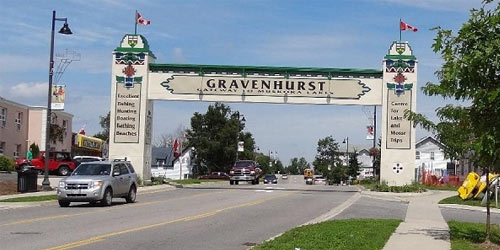
Supports and Services for Older Adults in Gravenhurst, Ontario

untitled-2

Image source: Muskoka Pest Control


I have aging relatives in Gravenhurst, Ontario. I went there for a visit in August 2016. While there, I was looking into the services and resources available to older adults. What I found, or should I say didn’t find, was quite alarming.

The Aging in Place Strategy for Canada is great in theory, but providing resources and services to meet the needs of the aging population is proving to be quite the challenge.

Gravenhurst is a small, pretty lake town located just 90 minutes north of Toronto. It has a population of 12,179 according to the Gravenhurst Community Profile 2013. A whopping 23% of the residents are 65 and older (compared to 14.6% in all of Ontario). This community is growing older, and the needs of this aging population are also growing.

In the summer the population swells due to the number of cottagers who escape the summer heat to their cool lakeside getaways. Some of the cottages on Lake Muskoka are huge! I took a tour with William of Big 3 Tours and he showed us some cottages that are 1-5 million dollar price range. Celebrities such as Martin Short own cottages in the area.

In terms of at risk seniors and meeting their needs, it seems like Gravenhurst is lacking in the basics. I was told to call “211” to speak to a nurse about health care resources. The lady on the line was very helpful. I ended up talking to a few very nice and well-meaning individuals and sometimes my conversations went full-circle without any definite answers. It seems like there is no one place for all the information I was looking for which proved to be very frustrating. I spent a few hours on the phone but came up with some answers and resources which I’ll share here.


Meal Delivery

There are no hot Meals on Wheels available in Gravenhurst due to the lack of available volunteers. There are services available in Bracebridge, a neighbouring community which is a 15-minute drive north. In Gravenhurst, the only option recommended to me is a company called Apetito.ca. They will deliver frozen meals once monthly. All of the information is online, so it can be difficult for those who do not have access to a computer, or do not know how to use a computer. It appears to me that the only meals on wheels available to older adults are the fast food restaurants such as McDonald’s and Tim Hortons which also conveniently have a drive-thru. I am also assuming that the local grocery stores have ready prepared meals, which may be a better option. For those with special diets (cardiac, diabetic, gluten free), this can pose a challenge.


Housekeeping and Yard Work (Home Support)

homesupport

Image source: Closing the Gap Healthcare

In terms of housekeeping, the Ontario government does not offer any services. In Winnipeg, to those who cannot afford to hire privately. In Gravenhurst, I was given a few different private companies to follow up with:

Seniors for Seniors – 1-705-645-0199 (Tom)

Closing the Gap Healthcare – 1-877-560-0202

Happy at Home Support Services – 1-705-703-9980 (light housekeeping and yard work)

Bayshore Healthcare – 1-705-722-8993 (Barrie office)

Red Cross Community Support Services – 1-705-721-3313

Busy Lizzie Cleaning Services – 1-877-207-8718 or 1-705-687-6183


Transportation

van1

Image source: Muskoka Seniors

There are two taxi companies in Gravenhurst – OK Taxi (705-684-8294) and Gravenhurst Taxi (705-687-2246). I’ve been told that Red Cross will provide transportation to the nearest hospital  if needed (South Muskoka Memorial Hospital), which is in Bracebridge, at 75 Ann Street. There are two bus companies that serve Gravenhurst – Ontario Northland for service north or south, and the Corridor 11 bus which can take you directly to the front door of the hospital in Bracebridge for $7.00. OK Taxi will pick you up from the hospital and bring you back to your home in Gravenhurst for $25.00. (Prices from 2017 and subject to change without notice.)

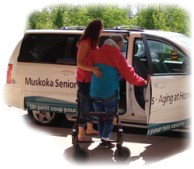
Aging at Home Vans or Registered Volunteers are offered through Muskoka Seniors.


Housing for Seniors

In terms of seniors’ housing, there are a few options. There are “retirement residences” and a “long term care” facility.

The Manor at Gravenhurst (operated by Lifetimes Living Inc.) is a quaint little 40-bed retirement residence I toured in August 2016. It was originally a hotel, and there are studio apartments with attached washrooms, studio apartments with shared washrooms, and double rooms (two studios with an attached washroom). All meals, medications, housekeeping, laundry, recreation and parking are included in the rent which ranges from $1,900/month to $4,000/month. Residents are free to come and go as they please and the ages range from 60 to 100. 1-705-687-3356.

Granite Ridge Retirement Residence Assisted Care – 1-705-687-0007

Muskoka Shores Care Community – Transitions operated by Sienna Senior Living (formerly Leisure World) – 1-705-687-3444

The Pines Long-Term Care Home – 160 beds, located in Bracebridge.

Affordable Housing Programs

Social Housing (Low Income Housing) 


Other Important Resources

Your doctor. Physicians have access to and knowledge of resources that I may have missed here.

North Simcoe Muskoka Community Care Access Centre  (CCAC)- Accessing Home Care services. Office located in Huntsville, Ontario. 1-888-721-2222 or 1-705-721-8010

Seniors Assessment and Support Outreach Team (SASOT) – Operated out of the hospital in Bracebridge. I spoke to a very nice person there, and she says they “dig deeper” and all you need to do is get the doctor to make a referral to their team. 1-705-645-4400. ext. 3505.

Muskoka Seniors – Helping Seniors Live at Home. 1-705-789-6676.

Assisted Living Services for High Risk Seniors – Currently a six-month wait list. Services provided by The Friends (1-705-697-5100, ext. 22). It is a not-for-profit organization. There is also an Adult Day Program available for socialization and a meal. It costs $15 a day and $2 for transportation one way. There is a wait list of about six months. The wait list for homemaking is five years. They do not do yard work. For information on Assisted Living Services for High Risk Seniors, go through the CCAC case manager or call 1-888-721-2222 or 1-705-721-8010.

Long-Term Care Homes in North Simcoe Muskoka – 9-page document with information on long-term care homes.

North Simcoe Muskoka Healthline – Online listing of health services in the area.

The District of MuskokaSeniors Wellness Outreach Coordinator, 1-705-645-2412, ext. 444.


seniorscentre

Image source: Seniors Centre – Town of Gravenhurst


Seniors Centre – The Town of Gravenhurst has an active seniors’ centre and there is plenty of socialization and things to do for those wanting to remain active and involved.


Working Towards Age-Friendly Solutions

As I was doing my research, I was happy to find out that the District of Muskoka is working on a Master Aging Plan with assistance from an Age-Friendly Community grant received from the Ontario government. Here is a link for more information on how you can get involved: www.muskoka.on.ca//AgeFriendlyCommunities. I hope that they will be able to fill in the gaps soon to enable the residents of Gravenhurst remain in their homes as long as possible.

Overall, I would say that it is a very complex and frustrating experience to get information on services for older adults in need in Gravenhurst. The Seniors Wellness Outreach Coordinator at The District of Muskoka was most helpful. Those who have limitations or who have limited family support will especially find it difficult to get the services they require. If you have any further information to add to this list, please let me know in the comments below.

If you are planning a trip to Gravenhurst, check out the travel guide on wikivoyage for more information. For current events, check out the Muskoka Region News.


purple-swirl-separator-hi


Angela G. Gentile, M.S.W., R.S.W. is a clinical social worker and author of the book, “Caring for a Husband with Dementia: The Ultimate Survival Guide” and the “Dementia Caregiver Solutions” app for iPhone and iPad. She lives in Winnipeg, Manitoba with her husband and two adult children. For more information, visit: www.AngelaGGentile.com

Malnutrition: A Hidden Epidemic in Older Adults

Over the years, many older adults have let me into their homes because they have been referred to one of the health programs I work for. Part of my job as a geriatric clinician requires me to assess the person and to ask them information about their private lives, including their appetite. I then ask for their height and weight and if they have gained or lost any weight over the last few months. I am even required to ask if it is okay to open their fridges to see what kind of food they consume (I also check expiry dates to be sure no one is neglecting to dispose of rotten food).

Sometimes I come across older adults who have lost a lot of weight. Most of them live on their own. Many of these people have other conditions such as memory loss, decreased mobility, and serious medical problems such as diabetes or heart disease.

Some of the most remarkable weight loss situations in my experience has been found in people with Alzheimer’s or a related dementia. Someone with dementia may forget to eat, forget how to prepare a meal, or have a decreased appetite. They may simply forget how to get food (arrange transportation, grocery shop, order groceries) or have an inability to problem solve their situation.

Proper nutrition and hydration are very important to help keep a person’s body (and mind) strong and running optimally. Here’s a great video from Alliance for Aging Research that explains the hidden epidemic of malnutrition in older people.

If the video doesn’t work for you, try this YouTube link: https://youtu.be/iPNZKyXqN1U

Check out the YouTube channel for Alliance for Aging Research for more great videos like this.


Angela G. Gentile, MSW, RSW

www.AngelaGGentile.com


Caring for a Loved One with Dementia? You Are Not Alone

newcover cropped

Our society is greying. For the first time in Canada, we now have more older people (65+) than younger people (under 16). Although there are many benefits and advantages to getting older, the unfortunate facts are that as we age we become more susceptible to age-related diseases.

Alzheimer’s disease and other related dementias (also known as neurocognitive disorders) affect one in 11 Canadians aged 65 or older. For those 80 years of age and over, one in three have some form of dementia. Dementia is a syndrome that is usually of a chronic and progressive nature.The symptoms of dementia may include a loss or impairment of brain functions such as:

  • problems with short-term memory
  • confusion or impaired thinking 
  • disorientation to place or time
  • poor comprehension
  • trouble with calculation
  • decreased or loss of learning capacity
  • problems with language
  • poor reasoning
  • decreased judgement

Dementia can cause problems in everyday functioning and activities. People with dementia may not be able to drive safely, or they may get lost while driving to a doctor’s appointment. It may be more difficult for them to remember to take medications on a regular basis. They may get into more arguments with others.

Dementia can sneak up gradually (as in Alzheimer’s disease) or it can come on suddenly (as in a stroke that affects cognition). It can fluctuate day-to- day. Loved ones often have difficulty spotting the signs, and often mistakenly attribute the changes to aging, or a “stubborn” personality. Personality changes in the person with dementia can cause stress for loved ones.

At times it is difficult for family members to recognize the signs of dementia and to act upon them. Sometimes they are in denial, sometimes they hope the situation will improve. Others may not know what to do or who to talk to.

If a person with dementia requires more help, the main helper becomes the “caregiver.” Often a spouse or adult child (usually a daughter) takes over the primary role. The process of changing or incorporating this new caregiving role into the relationship can cause a variety of challenges. Although the person with dementia may not be aware (or be unable to recognize) he/she requires help, the caregiver can learn how to provide the assistance needed with practice, education and support.

In the early stage of Alzheimer’s disease or vascular dementia, the affected person may be aware of his/her memory problems. He/she may notice changes in frustration levels. He/she may be more open to the idea of accepting help. He/she may look to family members for help answering questions or “filling in the blanks.”

Caregiving for a loved one with dementia can be stressful due to increased demands, roles and responsibilities. A caregiver may worry about Dad’s safety with cooking or worry that Mom may wander off. There is also the issue of grieving. A wife may grieve the “loss” of the husband who no longer remembers who she is. A husband may grieve the loss of the future travel plans he had for himself and his wife.

With education, support, self-compassion and self-care practices, the caregiver can have a positive experience of caring for a loved one amidst all of the strain. Seeking out support and knowledge and knowing he/she is not alone are some of the most beneficial things a caregiver can do.

If you have concerns and think someone you know and care about has memory problems and/or dementia, encourage a thorough medical assessment for diagnosis, support and treatment options.


purple-swirl-separator-hi

Angela G. Gentile, M.S.W., R.S.W. is a clinical social worker and author of the book, “Caring for a Husband with Dementia: The Ultimate Survival Guide” and the “Dementia Caregiver Solutions” app for iPhone and iPad. She lives in Winnipeg, Manitoba with her husband and two adult children. For more information, visit: www.AngelaGGentile.com
Blogs and Newsletters I Follow

BTI-Website-tiles-in-the-know

I have been following a number of great bloggers over the years. These writers have been posting about issues related to aging and I appreciate their positive and proactive take on growing older. Sometimes they are amusing, sometimes they are educational. Usually they are insightful and entertaining.

I also subscribe to a few newsletters related to aging and elder care. This is a great way to keep up with current topics.

I receive their posts and newsletters directly to my email inbox. It’s very convenient.

Please consider signing up to receive these blog posts and newsletters. I am sure they would be thrilled to see new followers. Here are my favourites in no particular order:

Blogs:

Time Goes By: What it’s really like to get old by Ronni Bennett

The Generation Above Me by Karen D. Austin

Lines of Beauty: A blog about aging naturally, one wrinkle at a time by Louise Cady Fernandes

Aging Investors by Dr. Mikol Davis and Carol Rosenblatt, R.N., Attorney

Aging But Dangerous

Points of Life org

Newsletters:

Caregiving Matters

Dementia News and Knowledge by Karen Tyrell, Personalized Dementia Solutions

Comforts Connection by Comforts of Home Care

Senior Living from A Place for Mom

The Caregiver’s Voice by Brenda Avadian

ElderCare Matters

Prime Women

Coming of Age NYC

Help for Dedicated Caregivers by Maria Marley, Ph.D.

My Elder Advocate by Jack Halpern, CEO

AlzLive: For those who care

SMARTLiving365

The Taos Institute – Positive Aging Newsletter


Have something to add? Please let me know.

Have a great day!

Angela G. Gentile, MSW RSW

Specialist in Aging

http://www.angelaggentile.com