Surviving and Thriving – Before, During and After an Anal Cancer Diagnosis (Book Review)

41QU9LxgqjL._SX331_BO1,204,203,200_

Kicking Cancer in the Butt by Theresa Mayhew

4/5 Stars

Theresa Mayhew’s part memoir, part self-help book, “Kicking Cancer in the Butt: A Guide to Thriving in Spite of Anal Cancer” (2010) is an account of her experience with a rare form of cancer. She speaks highly of her involvement with the website and online community called “Blog for a Cure” and some of her female blogging friends also share parts of their experiences and advice. They have all been diagnosed with anal cancer.

Mayhew’s book is quite short, and there are lots of empty pages and white space (perhaps for notes?). The layout and formatting came with a couple of errors (such as a small gutter on the left page and page numbering format at the bottom suddenly switches at page 10.) All in all, 66 pages and a bigger font, makes for a quick read. I was able to complete it in two sittings.

Mayhew divides the book into three parts – Before (Diagnosis), During (Treatment) and After (Post-treatment). She comes from a spiritual background, called “Eckankar – Religion of the Light and Sound of God.” I had to look that one up and found out that this religion believes in karma and reincarnation. She also believes in and subscribes to non-traditional forms of healing such as “The Healing Codes” (another topic I had to look up.) She claims her spiritual and healing code practices “helped keep her in balance emotionally.” She also spoke of “MindMovies” and practicing “The Five Rites” which were all topics I was unfamiliar with.

Mayhew provides very basic information on anal cancer and a very long list of questions to ask your doctor (this list would take a long time to discuss!). She provides a list of things you may want to have on hand before your treatment starts, like ointments and baby wipes. There is a very short chapter on financial assistance.

In the first section of part two, “During”, she chronicles her own treatment, week by week, which included chemotherapy and radiation. She also includes some photographs to help the reader envision her and her experience. In this section of the book, her online blogging friends who also have cancer share some of their own experiences. Nova Sprick’s writing is very impressive throughout the book, and she shares some interesting concepts such as “Yoga Nidra” which means sleep yoga. I looked this up on YouTube and found some great relaxation guides (learned something else new!).

Mayhew and her friends at Blog for a Cure include all kinds of tips and terms, side effects, after effects and suggestions of how to navigate and cope with the diagnosis, treatment and how to “thrive” after the treatment of anal cancer. I wish they had talked more about the need for professional help in terms of depression and/or anxiety as I know this is a troublesome area for some (myself included).

The last pages of the book include a page “About the Author” and a page of “Resources.” It was an enjoyable read and I added many of my own notes, as I have been through anal cancer treatment myself. I tried to look up Mayhew via her website as noted in her “About the Author” section, but her page is no longer in service. I later found out that she passed away in 2011.

This book would be a good read and reference tool for anyone who has a diagnosis of anal cancer and it would also be of specific interest to those who are followers of Eckankar practices. Those who believe in God or a higher power would also find it helpful, as there are references to spiritual comfort and meaning throughout the book. Loved ones or caregivers would also benefit as it helps them understand what the person with anal cancer may be going through.

Angela G. Gentile

 

purple-swirl-separator-hi

Angela G. Gentile  MSW, RSW is a clinical social worker and author of the book, “Caring for a Husband with Dementia: The Ultimate Survival Guide”, “A Book About Burnout: One Social Worker’s Tale of Survival” and the “Dementia Caregiver Solutions” app for iPhone and iPad. She lives in Winnipeg, Manitoba with her husband and has two adult children. For more information, visit: www.AngelaGGentile.com


A Holistic Wellness and Rehabilitation Program for Those Who Have Completed Cancer Treatment – Book Review

515HM5o4t9L._SX331_BO1,204,203,200_
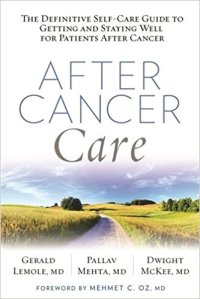
“After Cancer Care: The Definitive Self-Care Guide to Getting and Staying Well for Patients After Cancer” (2015) by doctors Gerald Lemole, Pallav Mehta and Dwight McKee is based on the premise that cancer patients would benefit from a rehabilitation program same as cardiac patients. These doctors who work within an integrative care model argue that a well-designed and personalized program which includes exercise, nutrition and stress management would help those who have been treated for cancer live a better quality of life and help reduce the risk for relapses or recurrences. The body, mind and spirit are well-covered in this holistic approach to wellness after cancer.

Although the font was very small in the paperback I read, I was able to read it although I needed my reading glasses! Most people with cancer are aged over 50 so I was surprised to see such a small font.

The nutrition section talks about the use of coconut oil as a recommended choice for cooking. Even though the authors say coconut oil is a saturated fat, they still recommend it. They also do not recommend canola oil. This information is contradictory to what some Canadian dieticians are recommending now. The recipe section near the end of the book also has coconut oil as an alternate for olive oil. These recipes and the advice re: canola and coconut oils should be researched a bit more before making your own choice in what oils you use.

The book has some repetitive information, however, the repeats seem to stress some of the important points. On the other hand, it completely neglected some important topics (or there was very little information on) such as Human Papilloma Virus (HPV) and Mindfulness. The importance and benefits of journalling and writing were not stressed and it would have been nice to see a little more written about that.

The index is not as good as it could be. I found some key terms were missing such as cervical cancer and paillomavirus.

I would have loved to see a listing of “approved” complementary or supplemental treatments, services and modalities. There is a sprinkling of ideas throughout the book, but it would have been nice to have a chapter that explained each idea and the science around them when it comes to wellness and health. It would have also been helpful to see a listing of harmful modalities or treatments.

Chapter 7, “Avoiding Toxins”, was too unrealistic for me. One of the recommendations was to rid your house of your carpets. This is an extreme measure for those of us who have carpets, and it would be a very costly venture. Some of the advice such as using non-toxic cleaning supplies and avoiding toxins in your food (such as mercury in fish) are more realistic goals to achieve. This would have been a good place to add information about HPV and the vaccine.

Chapter 8, which comprises about a quarter of the book, focuses on 11 common types of cancers and the doctors share their “Cancer Protocols” on cancers such as breast, lung and prostate. The cancer I had, anal cancer, was not mentioned in the book, unfortunately.

Overall, it’s a well-edited and researched book with a lot of scientific references in the “Endnotes” section. The “Conclusion” is an excellent reference as it lists 28 points the doctors call “The Quick Hits.” A great book for anyone who has been diagnosed with cancer, is at or near completion of treatment, and is proactive in restoring, maintaining and maximizing his or her health.

Angela G. Gentile

purple-swirl-separator-hi

Angela G. Gentile  MSW, RSW is a clinical social worker and author of the book, “Caring for a Husband with Dementia: The Ultimate Survival Guide”, “A Book About Burnout: One Social Worker’s Tale of Survival” and the “Dementia Caregiver Solutions” app for iPhone and iPad. She lives in Winnipeg, Manitoba with her husband and has two adult children. She is creator of the Facebook communities – “Aging Well for Women” as well as “God, Cancer and Me.” For more information, visit: www.AngelaGGentile.com

A Wild, Life-Changing Roller Coaster Ride in the Dark (Book Review)

51+TXv-YH+LIt was very hard to put down Michele Longabaugh’s book, If You’re Not Laughing, You’re Dying: The dawning of hope from the shadows of darkness…blogging through Stage 4 Anal Cancer (2012). Being diagnosed with anal cancer myself, I was drawn to read this book in the hopes of getting some insight into the disease and how to manage it. Being diagnosed with this type of cancer in her late 40s makes Michele relatively young (as the average age of diagnosis of anal cancer is in the early 60s). Anal cancer is quite rare, and can be difficult to find support. Not only do some consider it a stigmatizing and shameful disease, the treatment for it is torturous. Michele’s courage and the sharing of her experience helps destigmatize anal cancer and her rise from shame to advocacy is very inspiring.

The book starts with a beautifully written Foreword by Michele’s loving husband, Jerry. The way he describes her writing is “random, raw and honest.” I would definitely agree with the random and raw, as this book is comprised of her blog posts (typos and all!) written over a period of about two years. The honest part, well, we’ll have to take his word for it!

The writings are very engaging, and each chapter (blog post) has a theme and a story or insight to share. The posts are sometimes upbeat and laughable, sometimes they are stories of the hell and torture Michele endures (which is hard to take). Sometimes they are loving tales of family, friends or healthcare providers. The reader can learn a lot about Michele’s experiences with cancer and its treatment (including a lot of crying, grief and scary parts) and she shares stories about things like medications, “narcotic naps”, ointments, radiation, chemotherapy, surgery, and her fondness for “Dr. Cutie” and her blog-worthy visits with the “butt doctor.”

Michele tends to rely heavily on family, friends, and prayer (she’s Lutheran) for support and strength during her cancer ordeal. I like this about her story, because I can totally relate in many ways. In addition to having a loving husband, she has three outstanding children – Maggie, AJ and CJ. Both Michele and her husband sing high praises for Michele’s sister, “sissy” Renee, who is described as an angel on earth. Michele’s two “besties” Laurie and Marie, also shine as two very important and special people in her life. Michele is a very popular, kind and loving person, and it shows in her writing.

Michele’s adventures of checking things off her “Bucket List” makes for some interesting stories and helps her find joy and pleasure. There are plenty of tears and suffering (both physical and mental) in her life, and she is able to appreciate humourus moments by laughing along or making an odd joke here and there. Near the end of the book, Michele shares some insight about her “Un-Bucket List.” These are things she would never want to do.

Overall, this book did what it was supposed to do; it helped inspire me and gave me hope that this fight against cancer can be won. We can all join Michele on this wild roller coaster ride in the dark by continuing to follow her blog on tumbler – ihavebuttwhat.tumblr.com.

Angela G. Gentile

purple-swirl-separator-hi

Angela G. Gentile  MSW, RSW is a clinical social worker and author of the book, “Caring for a Husband with Dementia: The Ultimate Survival Guide”, “A Book About Burnout: One Social Worker’s Tale of Survival” and the “Dementia Caregiver Solutions” app for iPhone and iPad. She lives in Winnipeg, Manitoba with her husband and has two adult children. She is creator of the Facebook communities – “Aging Well for Women” as well as “God, Cancer and Me.” For more information, visit: www.AngelaGGentile.com

Call For Submissions for Upcoming Book on Anal Cancer

Write-It-

Call for Summary/Ideas – Deadline for Submissions December 10, 2017

Re: Anal Cancer (AC) Book – A Collection Compiled by Angela Gentile (title to be determined)


Dear Potential Co-Author,

This is your chance to become a published author and to help you promote any other work you may have (books, blogs, etc.). Your contribution to this book on anal cancer will provide your invaluable insight, advice and support to others who may be going through something similar. It could help end the stigma of this disease and educate others on the importance of the HPV vaccine.

I am putting together a collection of works by many authors. I have written two other books and they are both on Amazon. This will be my first “anthology.” This book is intended to educate, inspire, strengthen and empower those affected. I am looking for chapters written by anal cancer patients/survivors/caregivers.

At this time, I am looking for 10-20 authors to provide a total of 10-20 chapters for this self-published book. I will put my time, money and energy into making this a meaningful book for those who are affected by anal cancer. It will also be of interest for those who want to learn more about the disease. If you are successful in being selected as one of the co-authors, I will help you write and refine your chapter(s) and I will also have it professionally edited.

There is no cost to you, and there is no compensation (other than knowing you will be helping others!). However, I will ensure you get two copies of the paperback book. Additionally, a portion of the proceeds will go to charity, and we will decide which one.

I have put together a listing of chapter ideas for you to review (see FILES in the closed members only Facebook group: AC Book or ask me for a listing). If you would like to do something else that is not on the list that is fine, too.

Please submit the following information via the form below, or ask me for my email address:

1. Your Name, Full Address, Phone Numbers (Home, work, cellular), Email.

2. Summary of your idea (up to 500 words). You can submit as many summaries as you’d like. Include the topic, what you want the main points to be, and whom you think will benefit most from your story or topic. The more personal and original the better! (Have a friend or family member review and proofread if you’d like a little more feedback before submitting.) Keep in mind, your completed chapter should be between 2,000 – 5,000 words.

3. Deadline for summary submission: Sunday December 10, 2017. Submit via email in form below. (.doc or .docx is acceptable. Google Docs is also accepted.)

If you already have a completed work (between 2,000-5,000 words), please feel free to submit that instead of a summary. Ideally, each chapter will be about 2,500 words but this is only a guideline.

I will review the submissions and get back to you, either way, on or before January 7, 2018.

Thank you for your interest and I look forward to your submission(s)!

Warm regards,

Angela Gentile

P.S. If you have a Facebook account and would like to be a part of the AC Book group, please request to join!

Contact me, here:

← Back

Thank you for your response. ✨

purple-swirl-separator-hi

Angela G. Gentile  MSW, RSW is a clinical social worker and author of the book, “Caring for a Husband with Dementia: The Ultimate Survival Guide”, “A Book About Burnout: One Social Worker’s Tale of Survival” and the “Dementia Caregiver Solutions” app for iPhone and iPad. She lives in Winnipeg, Manitoba with her husband and has two adult children. She is creator of the Facebook communities – “Aging Well for Women” as well as “God, Cancer and Me.” For more information, visit: www.AngelaGGentile.com

A Story of Cancer Survival That Will Touch Your Heart and Soul (and Funny Bone!) – Book review

517hwQWIpUL

Brown Ribbon by Robbi Woolard

Psychologist Dr. Robbi Woolard is a survivor of a rare form of cancer. She was encouraged by two of her friends to put her experiences and thoughts into a book (eBook for Kindle). “Brown Ribbon” is part memoir, part self-help book and is written with a humorous slant (a story about a doctor and a commode made me laugh out loud!). She has an “incredibly strong faith” and her beliefs in God and heaven are referred to throughout the book. She is clearly not afraid of death and is a very brave and courageous woman. She believes accidents, illnesses such as cancer and other traumas are random events and no one is immune (no matter how well one lives their life).

Woolard writes in an entertaining, yet educational and inspiring tone. The book could have used some editing, however, the reader can forgive this oversight as she speaks in a conversational tone and the stories flow nicely. There are some repetitive themes, but overall it’s an easy and pleasurable read.

The warrior spirit in Woolard spares us the gruesome details of her anal cancer treatment. She gives the reader just enough information which helps one to imagine the suffering she experienced. She writes in a way that reassures the reader that although cancer and it’s treatment are difficult, the alternative is worse.

For those who want closure, they will find the last story of her post-anal cancer treatment to get a “colposcopy” a bit frustrating. The chapter called “Caving” does not provide the reader with the results of her biopsy, but Woolard states she hopes she had experienced the last appointment with that doctor (we can only hope along with her!).

In the final chapter, Woolard shares her own personal growth experience. I found this chapter called “Everything I Have Learned from Cancer” especially inspiring (as I am also affected by anal cancer myself). Many of her insights such as “setting new goals after cancer” and “improving connections with others” are very positive and uplifting. I can definitely identify with her lessons learned. She states, “As I age, I’ve begun to believe something that I’d never pondered in years past. I’ve always assumed that all of both the good and the bad that we experience culminate in who we become. Now, drawing upon many decades of both ends of the experience spectrum, I think all of it should be credited with making us richer, deeper, more complete human beings.”

A recommended read for those affected by cancer, especially newly diagnosed anal cancer patients, their families and survivors of cancer.

Get your copy – Brown Ribbon: A Personal Journey Through Anal Cancer and the Adventure it Entailed (2016) by Robbi Woolard.

Angela G. Gentile

purple-swirl-separator-hi

Angela G. Gentile  MSW, RSW is a clinical social worker and author of the book, “Caring for a Husband with Dementia: The Ultimate Survival Guide”, “A Book About Burnout: One Social Worker’s Tale of Survival” and the “Dementia Caregiver Solutions” app for iPhone and iPad. She lives in Winnipeg, Manitoba with her husband and has two adult children. She is creator of the Facebook communities – “Aging Well for Women” as well as “God, Cancer and Me.” For more information, visit: www.AngelaGGentile.com


The Journey to Kidney Health Starts with this Book (Book review)


61SAdDEwr9L._SX260_

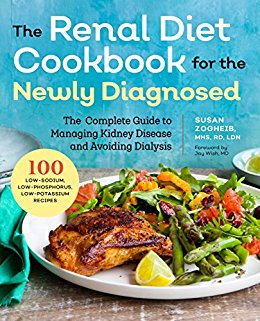
The Renal Diet Cookbook for the Newly Diagnosed: The Complete Guide to Managing Kidney Disease (2017) is not your average cookbook. Author Susan Zogheib is a registered dietician and is considered to be a leader in the field of renal nutrition. Her expertise, experience and client-centred, holistic approach to kidney health makes this book an enjoyable read (her third book on the subject). The book is full of tools, tips, advice and practical help for the newly diagnosed. It is set up in a way so that the advice can be personalized to suit the reader’s situation.

This helpful, empowering book is written for the person newly diagnosed with early stage chronic kidney disease (CKD). Sprinkled into the book is advice about the helpfulness of a “positive attitude”, “supportive people” and “happy activities” as well as exercise and smoking cessation. It is a pleasure to read due to the colourful photographs of healthy food, and the occasional green and orange colour in the titles. The foreword is written by a doctor and the introduction provides an empowering message of taking control of your kidney disease by advocating a “kidney-friendly lifestyle.”

The first of 14 chapters start out with positivity and education about CKD and gives hope that although kidney disease has no cure, it is completely manageable with diet and lifestyle –“kidney disease will allow you to take control of managing it.” Zogheib explains the role that diabetes and high blood pressure has for people with CKD. She uses encouragement, education and her professional expertise which helps the reader trust the information provided.

Zogheib explains information about the “CKD 1-4 Diet”, with the main premise being a careful monitoring of protein, sodium, potassium, phosphorus and in some cases, fluid. This diet, as well as her book’s main purpose is to help slow or avoid CKD progression (avoiding need for dialysis). She often refers to having a doctor and the health care team (including a dietician) review the person’s personal health history as well as encouraging regular checkups and reviews.

Daily Meal Plans, Pantry and Shopping Lists, Worksheets, Tables, Tips, Dos and Don’ts, How To’s, Recipes, Appendices, Resources, References, Indices (2!) make this book very useful and a great reference for those starting out in their quest for successful management of their kidney disease. Zogheib didn’t leave anything out.

Of the 100 Recipes (in chapters 5-13), I found a few that stood out that I’d like to try (and I don’t have kidney disease!). Roasted Broccoli, Asparagus Lemon Soup, Creamy Pesto Pasta and Lemon Garlic Halibut all sound good to me! All the recipes look great and include serving size, preparation time, cook time (no more than 30 minutes), nutrition info, description and tips.

Zogheib notes that people aged 60 and older are at a higher risk for CKD. She also notes high blood pressure (hypertension) is the leading cause of kidney disease – which I know is a very common affliction of many. The book provides unique tips and strategies for anyone who is on a restricted diet (e.g., sodium) or watching their intake. The “Strategies for Dining Out” is a section that everyone should read especially if they like going to the “all-you-can eat buffet.” Any newly diagnosed kidney disease patient or their family members would benefit from this book. Highly recommended.

*I was provided a digital review copy of this book for a fair and honest review.

Angela G. Gentile

purple-swirl-separator-hi

Angela G. Gentile  MSW, RSW is a clinical social worker and author of the book, “Caring for a Husband with Dementia: The Ultimate Survival Guide”, “A Book About Burnout: One Social Worker’s Tale of Survival” and the “Dementia Caregiver Solutions” app for iPhone and iPad. She lives in Winnipeg, Manitoba with her husband and has two adult children. She is creator of the Facebook communities – “Aging Well for Women” as well as “God, Cancer and Me.” For more information, visit: www.AngelaGGentile.com

Ways to Improve Your Memory Skills Podcast Interview

Angela-Gentile-Episode-Image

I had the pleasure of being interviewed by Kathe Kline in March 2017 for the Rock Your Retirement Show and it went live on 23 Oct 2017. Have a listen to my 30-minute audio only podcast (it’s like a radio show) to hear me talk about various topics including tips on how to improve memory skills. You can play it off your device, or download and listen to it later. There is a freebie on this as well, you just have to sign up to get a copy of it (see link below).

Link to the interview – Ways to Improve Memory Skills

Here are links to the show in popular smartphone apps:

iTunes

Stitcher

iHeartRadio

I have also provided a Freebie for the listeners – Five Strategies to Help Improve Memory Skills.

After you’ve had a listen, please feel free to comment on the Rock Your Retirement Show interview link page (see link above), or down below, here. Or just send me a personal note.

About Rock Your Retirement and Kathe Kline.

Rock on!

Angela G. Gentile

purple-swirl-separator-hi

Angela G. Gentile  MSW, RSW is a clinical social worker and author of the book, “Caring for a Husband with Dementia: The Ultimate Survival Guide”, “A Book About Burnout: One Social Worker’s Tale of Survival” and the “Dementia Caregiver Solutions” app for iPhone and iPad. She lives in Winnipeg, Manitoba with her husband and has two adult children. She is creator of the Facebook communities – “Aging Well for Women” as well as “God, Cancer and Me.” For more information, visit: www.AngelaGGentile.com


An Empowering Read for Women, Business Owners and Marketers

grey-new-greem-1

GeroFuturist Karen Sands’ book, “Gray is the New Green: Rock Your Revenues in the Longevity Economy” (2016) is THE book you need to read if you are a middle-aged career women, business owner or marketer and are looking for lucrative opportunities. This small but mighty book covers topics such as ageism in society, business trends, marketing, careers and entrepreneurial opportunities in the field of aging, unretirement, reinvention, and visionaries. Sands intersperses loads of great data and statistics and references other thought leaders throughout the book, providing convincing evidence and support to her thoughts and ideas on “gray is the new green.” She encourages a narrative “re-storying” approach to positively changing the way we think about aging, careers and business.

She uses some familiar and unfamiliar terms such as:

– Longevity Economy
– Ageless Women
– Ageless Technology
– Conscious Aging
– Positive Aging
– Educational Gerontologist
– Age-Friendly Workplace
– Boomerpreneurs
– Solopreneurs
– Grannypreneurs

Hopefully these terms will be defined in Sands’ online glossary (not available at time of printing).

The book is sectioned into three chapters. The last chapter repeats most of what was in the first two. There were many topics that stood out for me as a 50-year-old woman. Sands talks about “The Change” (menopause) and embracing our “Inner Crone.” She empowers the reader when she tells us we can “radically reframe the stories we tell ourselves about aging.” It jolted me a bit when she proclaims 50 is universally “Over the Hill” according to Human Resource (HR) directors.

Sands challenges marketers to get beyond the rampant “malevolent ageism” in corporate marketing. She gives a few examples of how advertisers are inadvertently turning off women aged 50 and up who are the “highest increasing-spenders” in the fashion and beauty industries by creating offensive ads that portray older women in a negative way.

For businesses to succeed in this “Gray Tsunami” era, Sands recommends that diversity, gender equality and work-life balance initiatives must be welcomed and incorporated. She warns businesses that don’t adopt and welcome these changes will be left behind.

For those interested in working with or for the aging population, she states the “field of aging is evolving at warp speed.” She gives a listing of up-and-coming careers and opportunities in the aging field such as “cutting-edge age-friendly technology and devices, home design…and adult education.”

karen-vhw

Karen Sands, GeroFuturist

Sands sheds some light on the notion of retirement and how our extended middle-age is changing the way we view working in our later years. She says, “Aging does not mean retiring.” She discusses how people are reinventing themselves, or they are “unretiring.” Others are choosing not to retire. She predicts employees and leaders alike will be working until they die.

For those Boomer Women who want to reinvent themselves by starting up a new business, she provides lots of great advice and questions to think about in Chapter 2. She offers a great tip for a business idea, which is to offer a product or service that can help people save time. She tells women to “awaken their visionary voice” and states “it is never too late to be a visionary.” In Chapter 3 she states although some women may not be ready for this change yet, she encourages them to do the “prep work” now so that they can “leap with confidence” when they are ready.

Although there is not much new in Chapter 3, I love the advice she gives regarding aging. Sands writes, “Marketing, and society as a whole, need to understand that we no longer wish to be told that aging is something we need to be against. Agelessness is about embracing and enhancing who we are, not blindly following an outdated standard of who we should be.”

“Gray is the New Green” is an empowering book for women. It is a goldmine for those in business. It is a lifesaver for marketers and organizations.

The book is available at Amazon.com in paperback and Kindle versions.

Note: I was given a copy of this book in exchange for an honest review.

Angela G. Gentile, MSW, RSW
http://www.AngelaGGentile.com

Caring for a Loved One with Dementia? You Are Not Alone

newcover cropped

Our society is greying. For the first time in Canada, we now have more older people (65+) than younger people (under 16). Although there are many benefits and advantages to getting older, the unfortunate facts are that as we age we become more susceptible to age-related diseases.

Alzheimer’s disease and other related dementias (also known as neurocognitive disorders) affect one in 11 Canadians aged 65 or older. For those 80 years of age and over, one in three have some form of dementia. Dementia is a syndrome that is usually of a chronic and progressive nature.The symptoms of dementia may include a loss or impairment of brain functions such as:

  • problems with short-term memory
  • confusion or impaired thinking 
  • disorientation to place or time
  • poor comprehension
  • trouble with calculation
  • decreased or loss of learning capacity
  • problems with language
  • poor reasoning
  • decreased judgement

Dementia can cause problems in everyday functioning and activities. People with dementia may not be able to drive safely, or they may get lost while driving to a doctor’s appointment. It may be more difficult for them to remember to take medications on a regular basis. They may get into more arguments with others.

Dementia can sneak up gradually (as in Alzheimer’s disease) or it can come on suddenly (as in a stroke that affects cognition). It can fluctuate day-to- day. Loved ones often have difficulty spotting the signs, and often mistakenly attribute the changes to aging, or a “stubborn” personality. Personality changes in the person with dementia can cause stress for loved ones.

At times it is difficult for family members to recognize the signs of dementia and to act upon them. Sometimes they are in denial, sometimes they hope the situation will improve. Others may not know what to do or who to talk to.

If a person with dementia requires more help, the main helper becomes the “caregiver.” Often a spouse or adult child (usually a daughter) takes over the primary role. The process of changing or incorporating this new caregiving role into the relationship can cause a variety of challenges. Although the person with dementia may not be aware (or be unable to recognize) he/she requires help, the caregiver can learn how to provide the assistance needed with practice, education and support.

In the early stage of Alzheimer’s disease or vascular dementia, the affected person may be aware of his/her memory problems. He/she may notice changes in frustration levels. He/she may be more open to the idea of accepting help. He/she may look to family members for help answering questions or “filling in the blanks.”

Caregiving for a loved one with dementia can be stressful due to increased demands, roles and responsibilities. A caregiver may worry about Dad’s safety with cooking or worry that Mom may wander off. There is also the issue of grieving. A wife may grieve the “loss” of the husband who no longer remembers who she is. A husband may grieve the loss of the future travel plans he had for himself and his wife.

With education, support, self-compassion and self-care practices, the caregiver can have a positive experience of caring for a loved one amidst all of the strain. Seeking out support and knowledge and knowing he/she is not alone are some of the most beneficial things a caregiver can do.

If you have concerns and think someone you know and care about has memory problems and/or dementia, encourage a thorough medical assessment for diagnosis, support and treatment options.


purple-swirl-separator-hi

Angela G. Gentile, M.S.W., R.S.W. is a clinical social worker and author of the book, “Caring for a Husband with Dementia: The Ultimate Survival Guide” and the “Dementia Caregiver Solutions” app for iPhone and iPad. She lives in Winnipeg, Manitoba with her husband and two adult children. For more information, visit: www.AngelaGGentile.com

Self-Compassion by K. Neff – A book review


51lMvyzaYcL._SX331_BO1,204,203,200_


In Kristin Neff’s (Ph.D.) self-help book, “Self-Compassion“, she does a great job of explaining the benefits of a healthy level of self-compassion and self-appreciation. She is heavy on the Buddhist philosophy, recognizing that the human experience involves pain and we are all imperfect. Although she says self-esteem and self-compassion go well together, I appreciate how she makes comparisons and explains the differences between the two. She refers to loads of research, including her own, combined with her own personal stories and anecdotes to drive the messages home in a simple-to-understand way.

I appreciate her easy-to-read and personal style of writing. As a social worker, I can see applying these concepts to not only work I do with others, but also to myself. Her exercises provide practical and easy ways to explore self-compassion in a non-threatening way. The “self-compassion mantra” is especially helpful. “Taking care of the caregiver” exercise gives the caregiver many ideas of ways to meet his/her own needs and enhance quality of life (ex. get a massage, take a walk in nature, go dancing). Many other exercises provide tools and examples of how to explore the subject in a personal way.

Overall, this book makes me think about self-compassion, self-care and how we are not really “taught” how to take care of ourselves. It leaves me with more questions and has ignited my interest and curiosity in the subject.

Angela G. Gentile, MSW, RSW
Author/Specialist in Aging
www.AngelaGGentile.com